
With the rise of padel, you may find yourself wondering about the key differences between it and tennis. Both sports offer unique experiences, but understanding their distinct rules, court designs, and gameplay dynamics can enhance your performance and enjoyment. In this blog post, you’ll discover the advantages and challenges of each sport, empowering you to make informed decisions for your athletic journey.

Key Takeaways:
- Padel is played in a smaller, enclosed court compared to the larger, open court of tennis.
- In padel, walls are used during play, adding a unique aspect to strategy and shot-making.
- Scoring systems in padel and tennis differ, with padel usually using standard point scoring but to 11 or 7 in tiebreaks.
Overview of Padel and Tennis
History of Padel
Padel originated in Mexico in 1969, created by Enrique Corcuera. He wanted a game that combined elements of tennis and squash, which led to the development of an enclosed court. The sport gained popularity in Spain in the 1980s and has since expanded globally, appealing to fans for its accessibility and fun, social environment.
History of Tennis
Tennis has its roots in the late 12th century, evolving from a game played with the palm of the hand in France. The modern version emerged in England during the 19th century, with standardized rules established in 1873. The first Wimbledon championship took place in 1877, marking a significant milestone in tennis history.
This rich history is underscored by numerous legendary players, such as Björn Borg, Serena Williams, and Roger Federer, who have shaped the sport and expanded its global reach. Grand Slam tournaments, including Wimbledon, the US Open, and the French Open, have become iconic, elevating tennis to a top-tier sport worldwide.
Popularity and Growth Trends
Padel’s popularity has surged in recent years, particularly in Europe and Latin America, where it has become a mainstream sport. By 2022, there were over 25 million players globally, with significant increases in court constructions and competitive leagues.
The growth trends for padel highlight its appeal as a social sport, promoting inclusivity and camaraderie. With an estimated annual growth rate of 20%, you will find new clubs opening frequently, catering to a diverse audience and pushing padel into mainstream sports culture alongside tennis.
Court Dimensions and Design
Padel Court Specifications
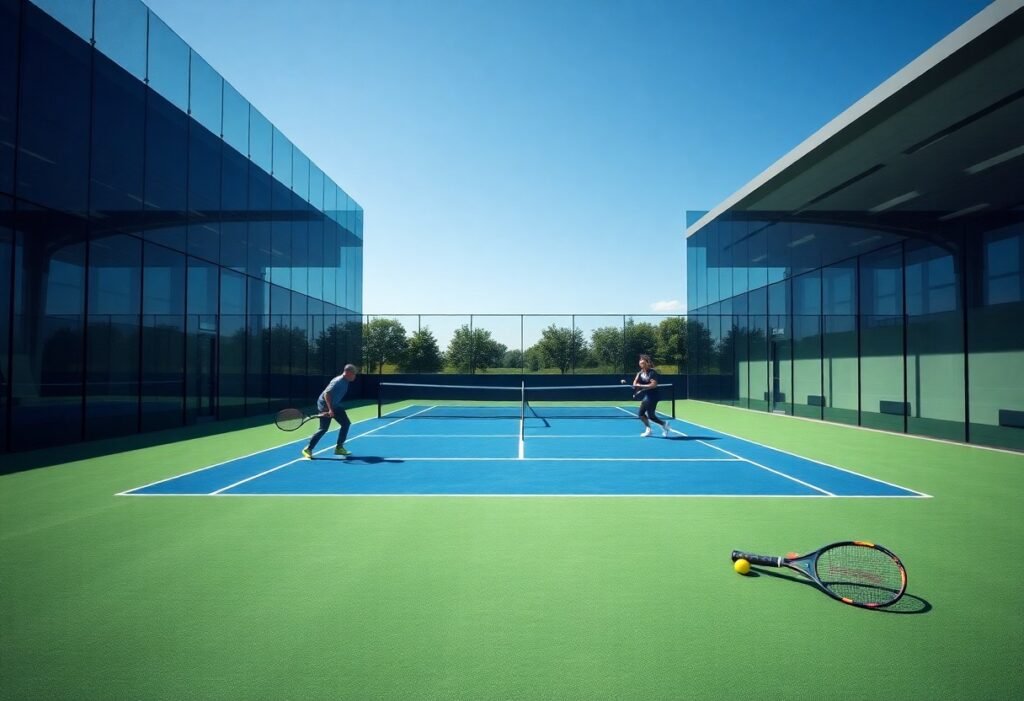
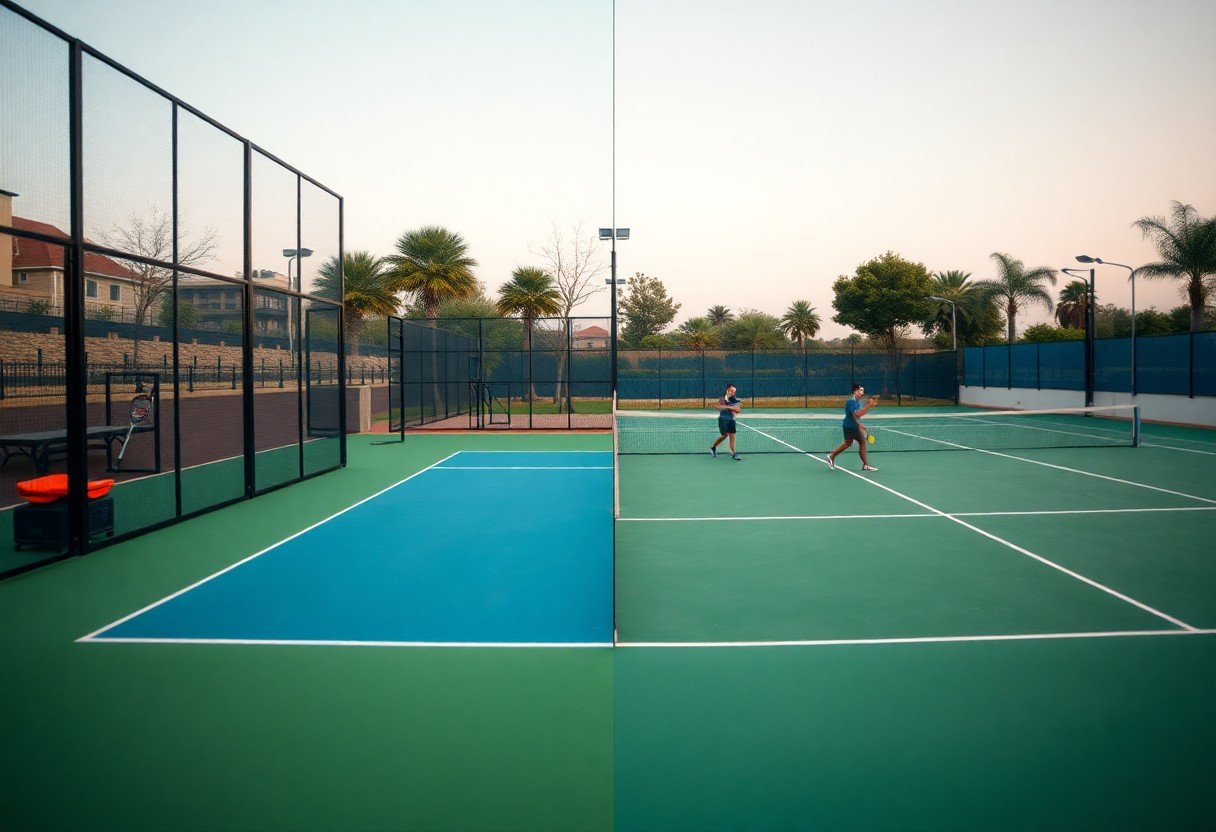
A standard padel court measures 10 meters wide and 20 meters long, surrounded by glass walls that are integral to gameplay. The net height is 88 centimeters at the center, allowing for a dynamic mix of strategy and agility. The enclosed environment encourages rallies and requires quick reflexes, making it distinctive from tennis.
Tennis Court Specifications
The dimensions of a tennis court vary based on play type, with singles courts measuring 8.23 meters wide and 23.77 meters long, and doubles courts 10.97 meters wide. The net is set at 91.4 centimeters high, offering a broader space that facilitates longer rallies and powerful shots.
Most professional tennis courts use specific markings and boundaries, allowing different play formats. Additionally, players often utilize different areas like the baseline, service boxes, and alleys, resulting in a more versatile playing field that encourages a range of styles and strategies.
Surface Types for Both Sports
Your choice of surface can heavily influence your game in both padel and tennis. Padel courts are typically constructed with artificial grass, concrete, or clay, providing various levels of grip and pace. Tennis courts may feature hard, clay, or grass surfaces, each affecting ball speed and player movement, creating diverse competition conditions.
| Padel Court Surface Types | Tennis Court Surface Types |
| Artificial Grass | Hard Court |
| Concrete | Clay |
| Glass Walls | Open Design |
| Enclosed Environment | Various Styles |
| Quick Play | Strategic Play |
The surface type impacts not only the speed of the ball but also how you rally and move. For example, clay surfaces slow down the ball and create longer rallies, whereas hard courts offer faster play. Be aware that these elements significantly affect your playing technique and match strategies. Recognizing how these factors interplay with your personal style will enhance your performance in both sports.
- Padel court dimensions are smaller than tennis courts.
- Court surfaces greatly affect gameplay in both sports.
- Net height varies between padel and tennis.
- Design differences include walls for padel and open space for tennis.
- Recognizing these key differences can inform your training choices.
Equipment Differences
Rackets: Padel vs. Tennis
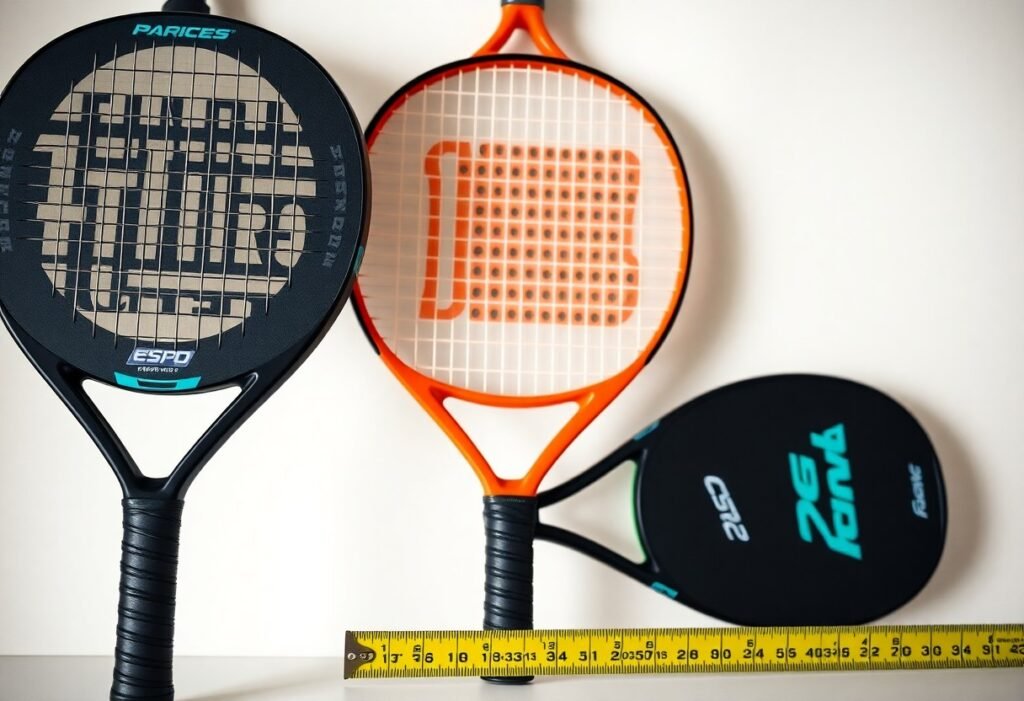
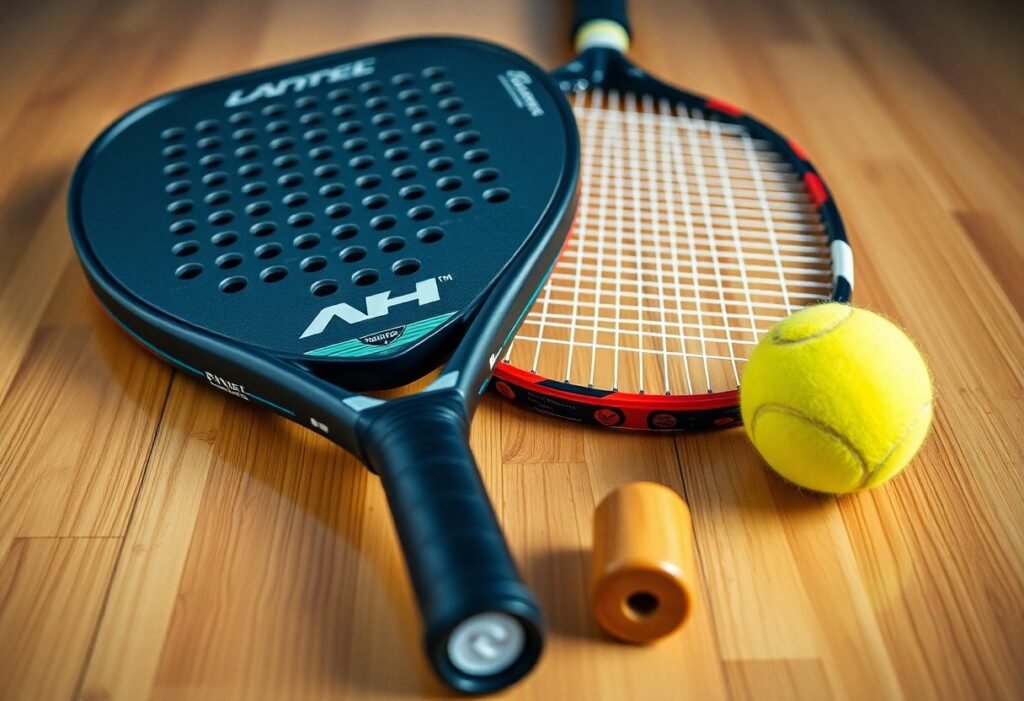
The most evident difference between padel and tennis racks is their design. Padel rackets are solid with no strings and are perforated for reduced air resistance, while tennis rackets have a traditional stringed face, allowing for more power and spin. Your choice of racket can significantly affect your game strategy; a padel racket typically weighs between 320 to 400 grams, providing quick maneuverability on the court.
Balls: Padel vs. Tennis
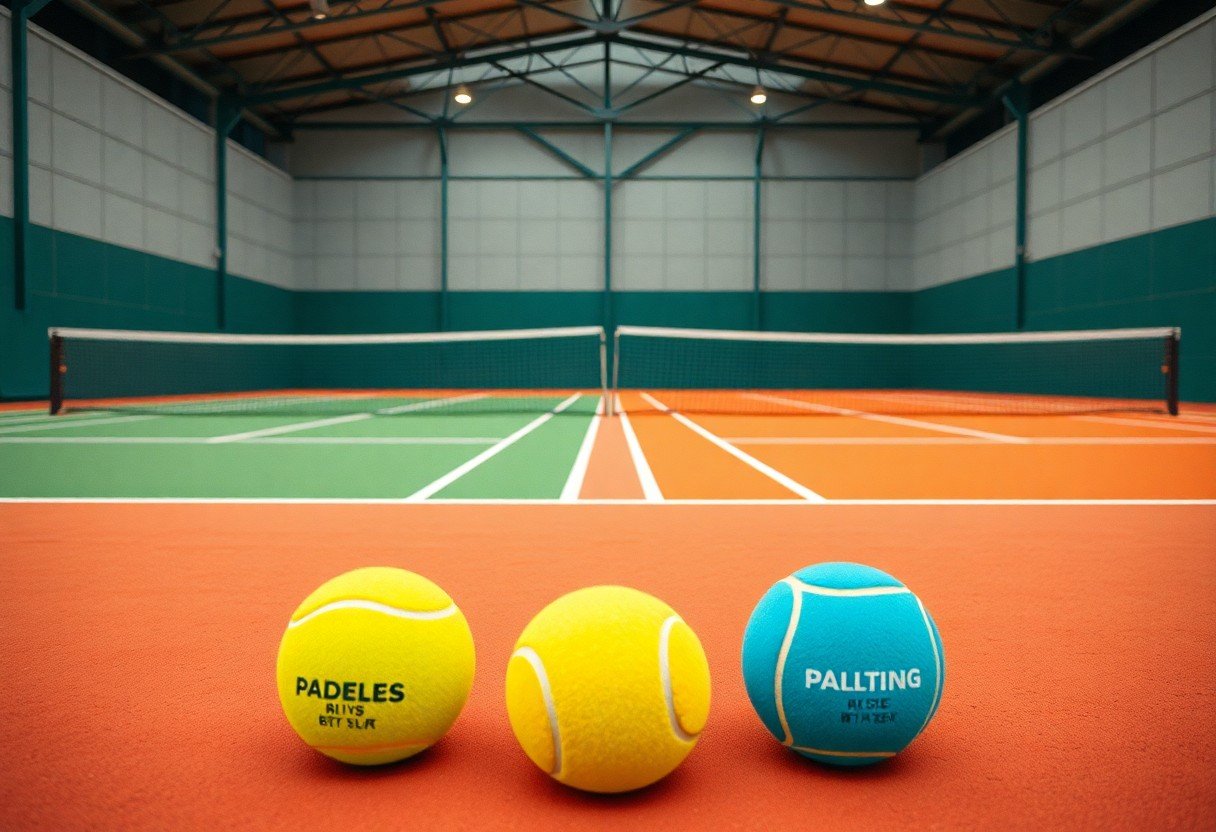
Padel and tennis balls share similarities, yet they are distinctly different. Padel balls are slightly less pressurized compared to tennis balls, resulting in a softer feel and a slower bounce. This is advantageous when playing in enclosed spaces, as it promotes longer rallies and enhances strategic play.
In padel, the ball has a lower pressure, with a typical diameter of 6.35 to 6.77 cm and a weight of 56 to 59.4 grams, making it easier to control during intense exchanges. In contrast, tennis balls maintain higher pressure for an explosive feel on impact, vital for overhead serves and quick volleys. Adapting to the specific ball type will require adjustments in your strokes and timing for effective gameplay.
Footwear Considerations
Footwear plays a vital role in both padel and tennis but varies significantly due to court surfaces and movements. Padel shoes offer specific traction suited for the synthetic turf of a padel court, with a herringbone pattern for better grip and lateral support, whereas tennis shoes cater to a range of surfaces like clay or hard courts.
Choosing the right footwear is vital for optimizing your performance and preventing injuries. Padel shoes often have a lower profile and greater flexibility, allowing for swift lateral movements, vital in a fast-paced game. In tennis, however, you may seek shoes that offer more cushion and support for extensive court coverage. Investing in sport-specific footwear can greatly enhance your gameplay experience. For a deeper exploration of Padel vs tennis: what’s the difference (and which should …, feel free to read further.
Rules and Scoring
Basic Rules of Padel
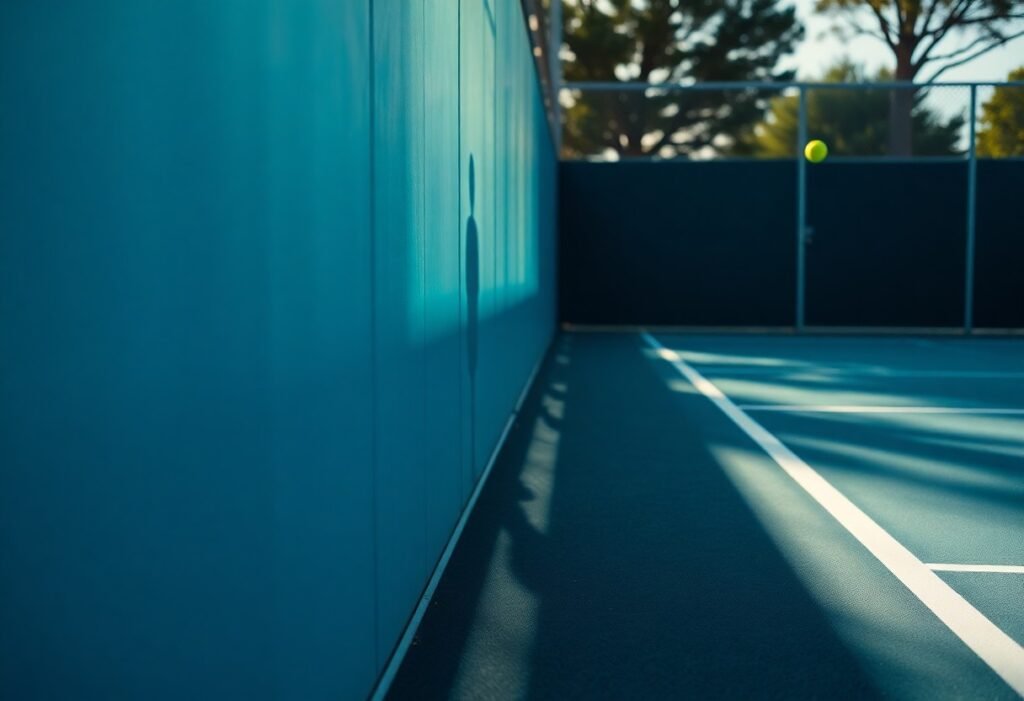
In padel, you play in doubles on a court enclosed by glass walls. The objective is to hit the ball over the net and ensure it bounces within your opponent’s court. You can use the walls to bounce the ball back, allowing for a variety of shots. Points are scored when the opposing team fails to return the ball properly or if the ball lands outside the designated court area.
Basic Rules of Tennis
Tennis is played on either a singles or doubles court, with the goal of hitting the ball over the net into your opponent’s side. Players must allow the ball to bounce once before returning it, and both players can hit the ball off the ground or volley it in mid-air. Each point is earned when the opponent fails to return the ball within the boundaries of the court.
In tennis, each player serves the ball from behind the baseline, alternating every game. The server must hit the ball diagonally into the opponent’s service box. The game progresses through various formats, with sets and matches culminating in a culmination of games won. You aim to win six games to win a set, requiring a margin of two games to clinch the set.
Scoring Systems Explained
Padel follows a scoring system similar to tennis, where games are played to 15, 30, 40, and game point. However, it exclusively utilizes a best-of-three sets format, making the scoring flow quick and engaging. A match can end swiftly, encouraging fast-paced rallying and strategy.
In tennis, the scoring system can appear complex. You start at “love” (zero) and advance to 15, 30, 40, and then game points. If both players reach 40, it’s called “deuce,” requiring a player to win two consecutive points to win the game. This intricate scoring adds to the suspense and strategy, as each game can significantly impact the outcome of the match.
Playing Styles and Tactics
Common Playing Styles in Padel
In padel, you often encounter distinct playing styles, including the net player, who focuses on quick volleys and aggression at the net, and the baseline player, who relies on strong groundstrokes and control from the back of the court. Additionally, the all-rounder combines elements from both styles, adapting to the rhythm of the game and maximizing team dynamics.
Common Playing Styles in Tennis
Tennis players generally adopt one of several common styles: the serve-and-volley player, who looks to finish points quickly at the net; the counter-puncher, who excels at returning shots and forcing errors; and the baseline grinder, who wears down opponents with consistent, powerful groundstrokes. Each style has its own strengths and weaknesses, shaping match dynamics.
The serve-and-volley style demands quick reflexes and precision, while counter-punchers thrive on reading opponents’ shots. Baseline grinders, on the other hand, often engage in long rallies, relying on stamina and accuracy. The choice of style directly affects your tactics, with each requiring skillful execution and smart decision-making during matches.
Strategy Differences on the Court
Your strategic approach in padel often revolves around quick, coordinated movements, utilizing the walls to extend rallies and create deceptive shots. This emphasis on teamwork means you need to communicate effectively with your partner, capitalizing on each other’s strengths.
In contrast, tennis typically involves a more individualized strategy, where positioning and shot selection can dictate the flow of the game. You must anticipate your opponent’s moves while also employing varied tactics ranging from aggressive net play to defensive baseline strategies. The court sizes further influence how tightly you can strategize, as padel’s enclosed environment encourages creativity and shot variety, while tennis allows for more expansive movement.
Physical Demands and Fitness
Workout Regimens for Padel Players
Your training as a padel player should focus on agility, strength, and endurance. Exercises like lateral shuffles, agility ladder drills, and resistance training help improve your quick movements and overall fitness. Incorporating fun drills while practicing serves or volleys can also enhance your game-specific skills while keeping workouts engaging.
Workout Regimens for Tennis Players
Tennis players need a well-rounded fitness routine, balancing cardio with strength training and flexibility work. Focus on high-intensity interval training (HIIT) to boost your stamina, combined with weightlifting sessions that target your legs and core. Stretching and yoga are necessary to maintain flexibility and prevent injuries during competitive play.
A typical workout for tennis players often includes on-court drills, such as serving and baseline rallies, mixed with off-court cardio, like running sprints. Aim for a minimum of three to five days of dynamic training each week, incorporating sport-specific exercises such as footwork drills and explosive movements to mimic match scenarios.
Injury Risks and Prevention
In both sports, being aware of injury risks is important. Padel players often face ankle sprains and shoulder injuries, while tennis players are prone to wrist, elbow, and knee issues. Engaging in proper warm-ups, cooldowns, and balance workouts significantly minimizes these risks.
Prevent injuries by focusing on strengthening key muscle groups, particularly the rotator cuff for tennis and the lower extremities for padel. Regular assessments with a coach can also help you refine your technique, improving your efficiency on the court and reducing strain on your body during play.
To wrap up
With these considerations in mind, understanding the key differences between padel and tennis can significantly enhance your playing experience and strategy on the court. You should focus on court size, equipment, and rules to help determine which sport aligns best with your preferences and skills. Each game offers unique challenges and benefits, making it vital for you to explore both to find your ideal fit. Embrace the nuances of each sport, as they can enrich your overall enjoyment and performance.
FAQ
Q: What are the main differences in court size between padel and tennis?
A: Padel courts are smaller, measuring 20m x 10m, while tennis courts are larger, measuring 23.77m x 10.97m for singles and 23.77m x 8.23m for doubles.
Q: How do the scoring systems differ in padel and tennis?
A: Padel uses the same scoring system as tennis, with games scored as 15, 30, 40, and game, but matches are typically best of three sets, with no tie-breaks at 6-6.
Q: What equipment differences should players be aware of?
A: Padel requires a solid racket with no strings and a smaller ball, while tennis uses a strung racket and a larger, bouncier ball designed to travel further.
Q: How are the serving techniques different between the two sports?
A: In tennis, players serve overhand, while in padel, the serve must be underhand and bounced off the ground before hitting the ball.
Q: What are the key gameplay differences in terms of ball usage?
A: Padel allows players to use walls to play the ball after it bounces, leading to longer rallies and a different strategic approach compared to tennis, where the ball must stay within the court boundaries.