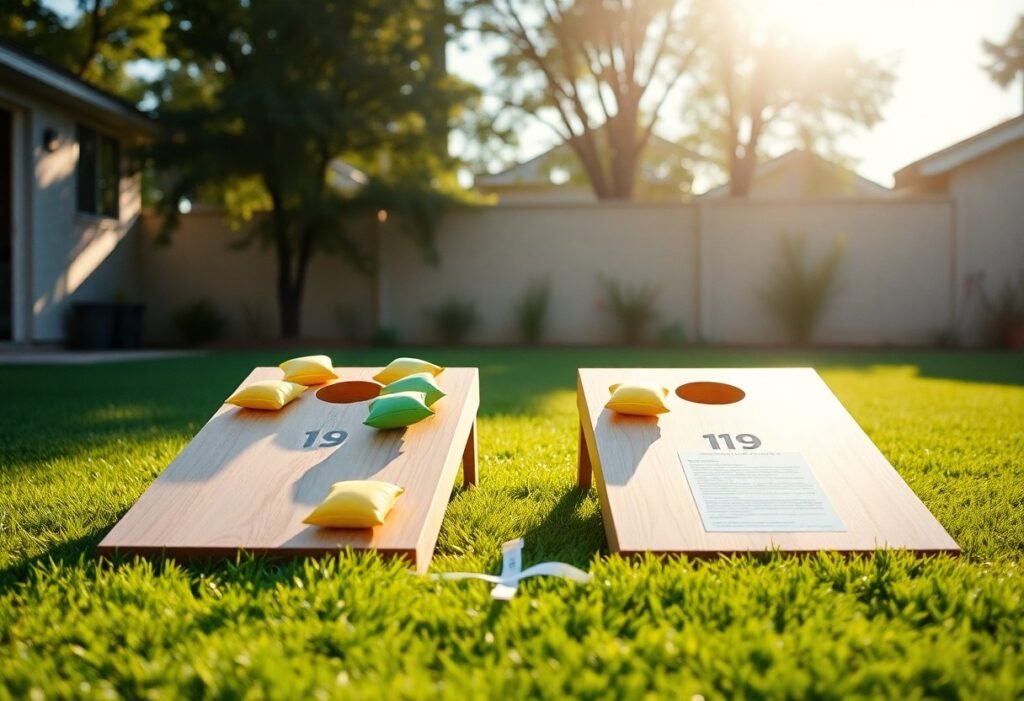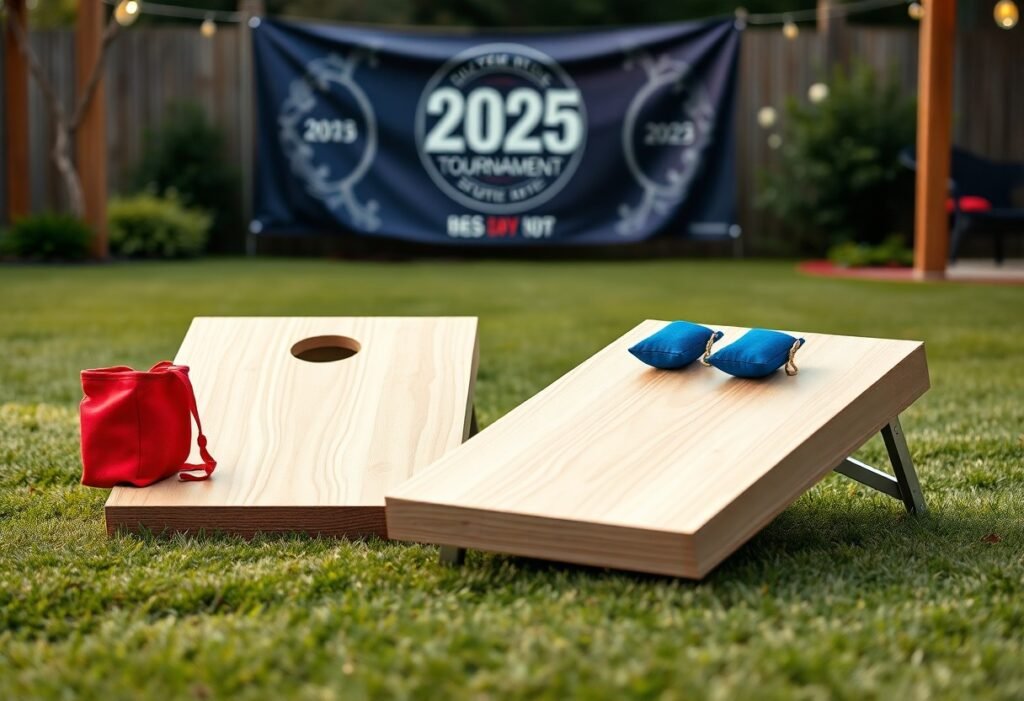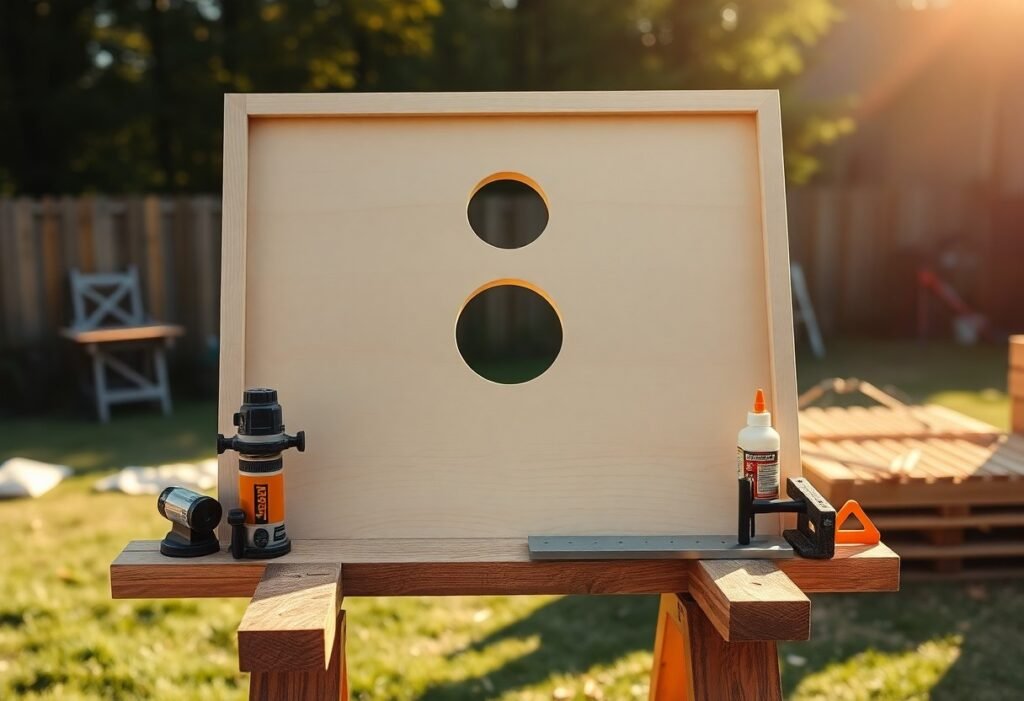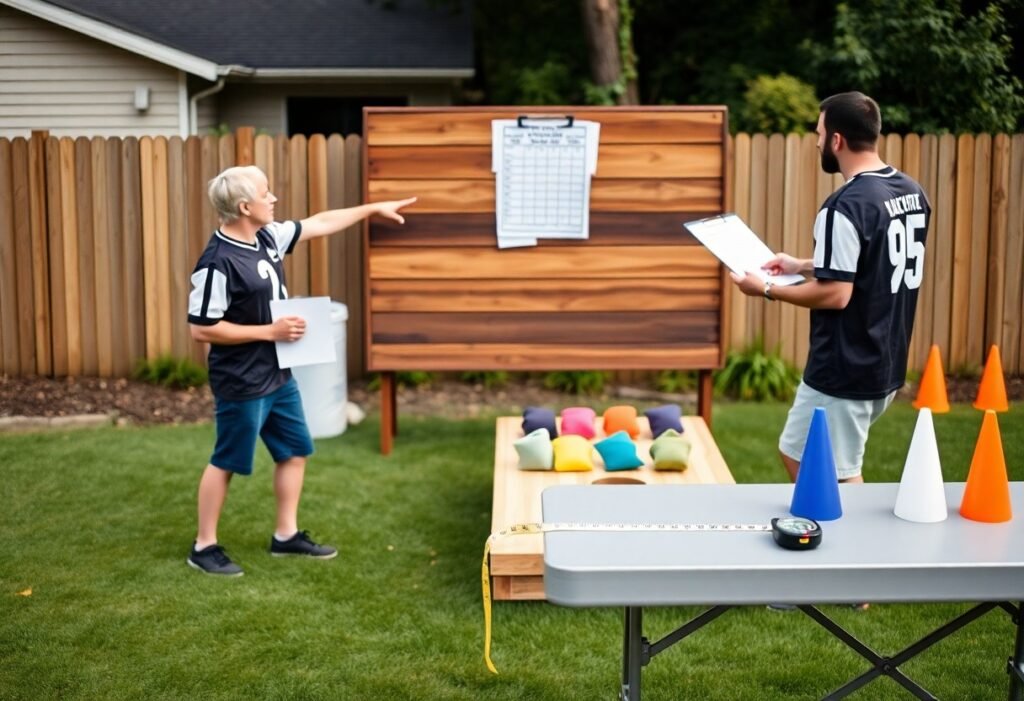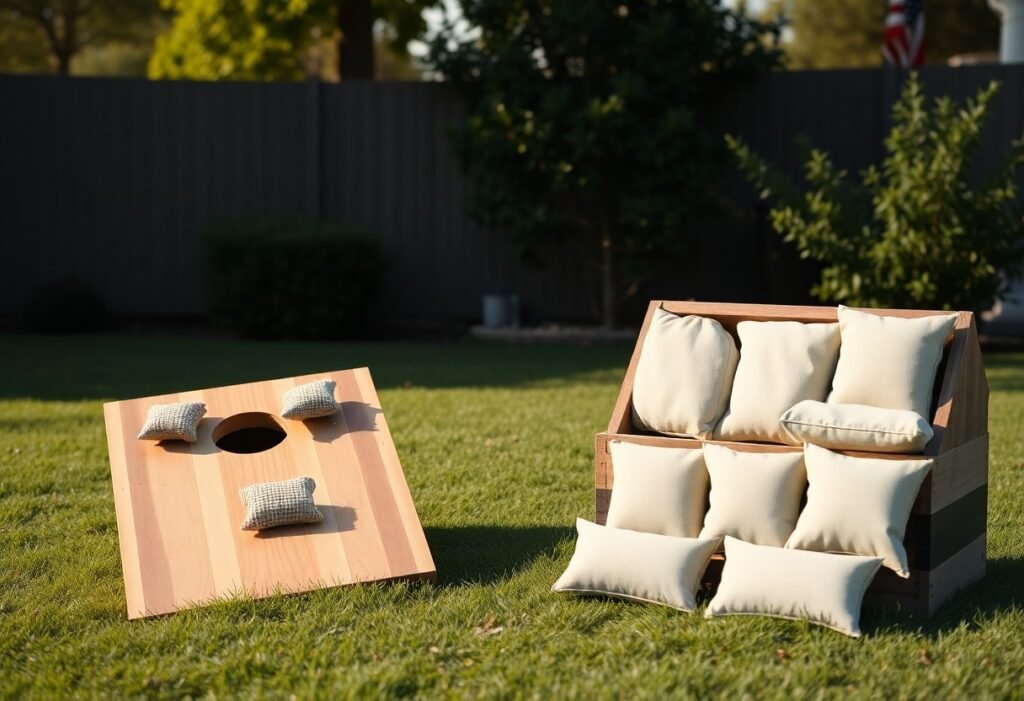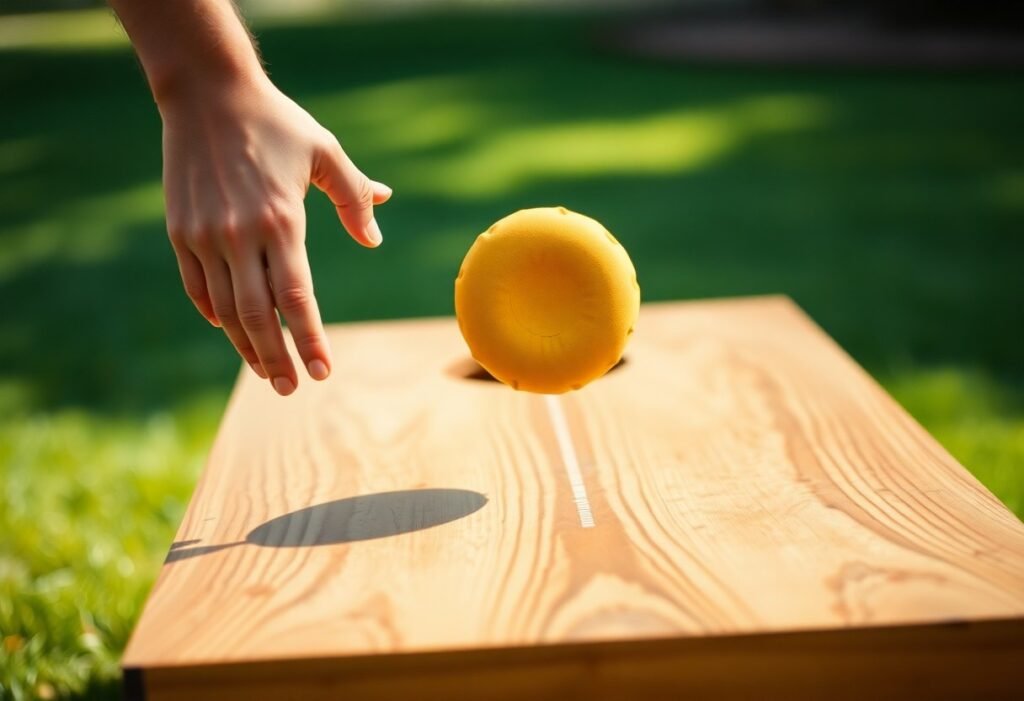

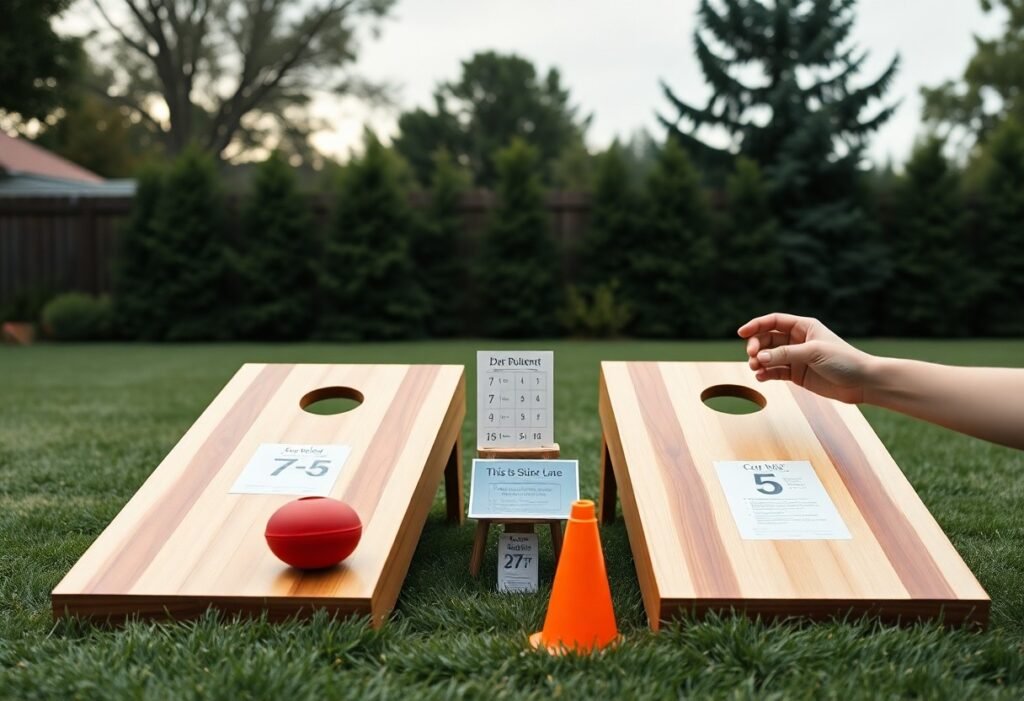
Over a raised wooden board with a 6-inch hole, cornhole tests your aim and tactics: you and an opponent take turns tossing bean bags from about 27 feet to reach 21 points, scoring one for on-board and three for through the hole. Keep your playing area clear to avoid thrown bags striking people – always keep the throwing zone clear. The game is fun and accessible for all ages while rewarding skill and strategy.
Key Takeaways:
- Cornhole is a backyard lawn game where players or teams take turns tossing bean bags at a raised board with a hole; the objective is to score by landing bags on the board or in the hole.
- Scoring: a bag in the hole scores 3 points, a bag on the board scores 1 point, off the board scores 0; cancellation scoring is commonly used (opponent’s points cancel yours each round).
- Typical play: players alternate throws from a foul line, each throws four bags per inning, and the game is usually played to 21 points.
History of Cornhole
Origins of the Game
Historians trace cornhole’s roots to medieval European bag‑toss games brought to North America by settlers, and you still see similar play in 19th‑century Appalachian communities. Bags were traditionally filled with whole‑kernel corn and later standardized to about 15-16 ounces per bag for consistent play. Early setups used homemade lumber boards and feed‑sack fabrics, reflecting its origin as a communal pastime at farm gatherings and county fairs.
Evolution Over Time
By the late 20th and early 21st centuries, the cornhole community witnessed a shift from backyard pastime to organized sport. Organizations wrote official rules and standardized equipment—48″ x 24″ boards featuring a 6″ hole centered 9″ from the top—which players widely adopted. Competitive leagues and televised events in the 2010s turned tailgate tradition into regional tournaments, and manufacturers began producing uniform sets for leagues, bars, and college campuses.
Manufacturers moved from perishable corn fillings to resin or polypropylene pellets to prevent spoilage; consequently, resin‑filled bags provide consistent weight and weather resistance. Boards evolved from rough plywood to sealed birch or melamine for durability, and you should know that old corn‑filled bags can attract rodents and mold-dispose of degraded bags to avoid pest or allergy problems. Tournament rules now enforce the 15-16 oz bag weight and precise board specs to guarantee fair competition.
Equipment and Setup
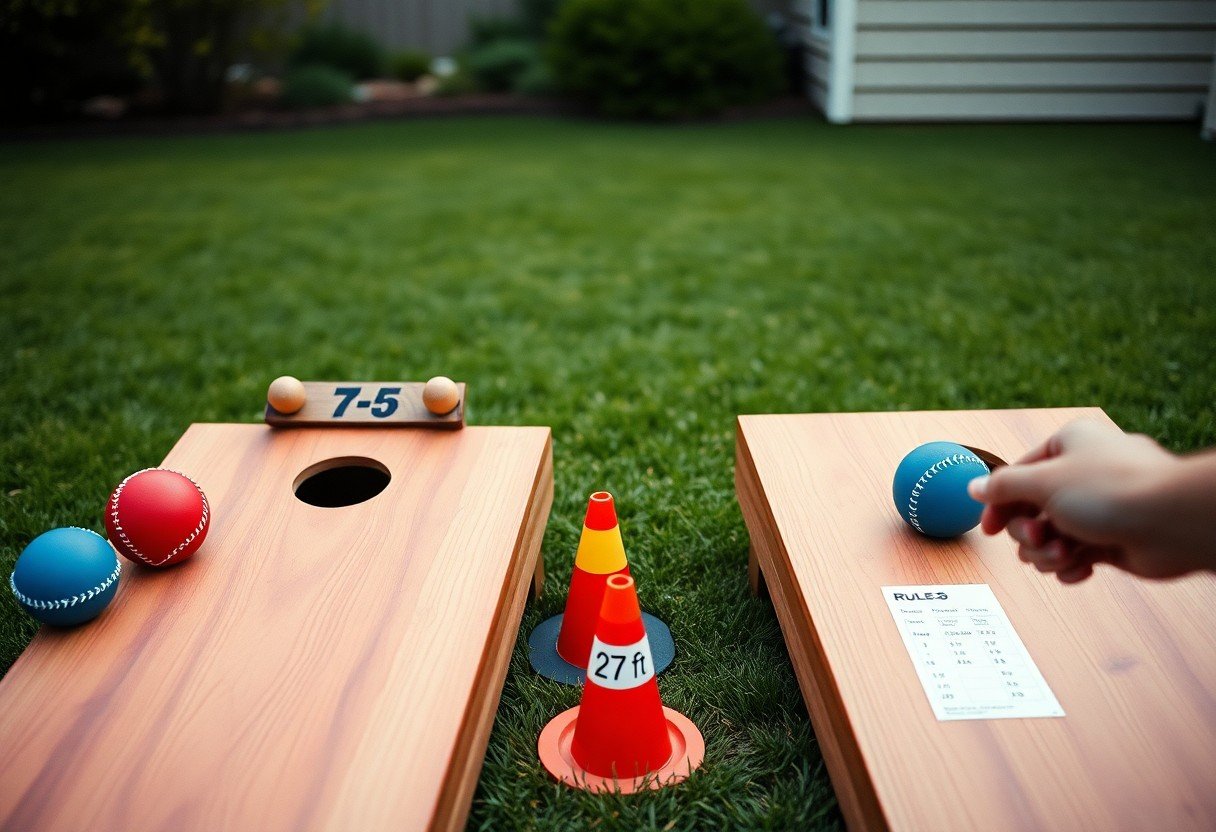
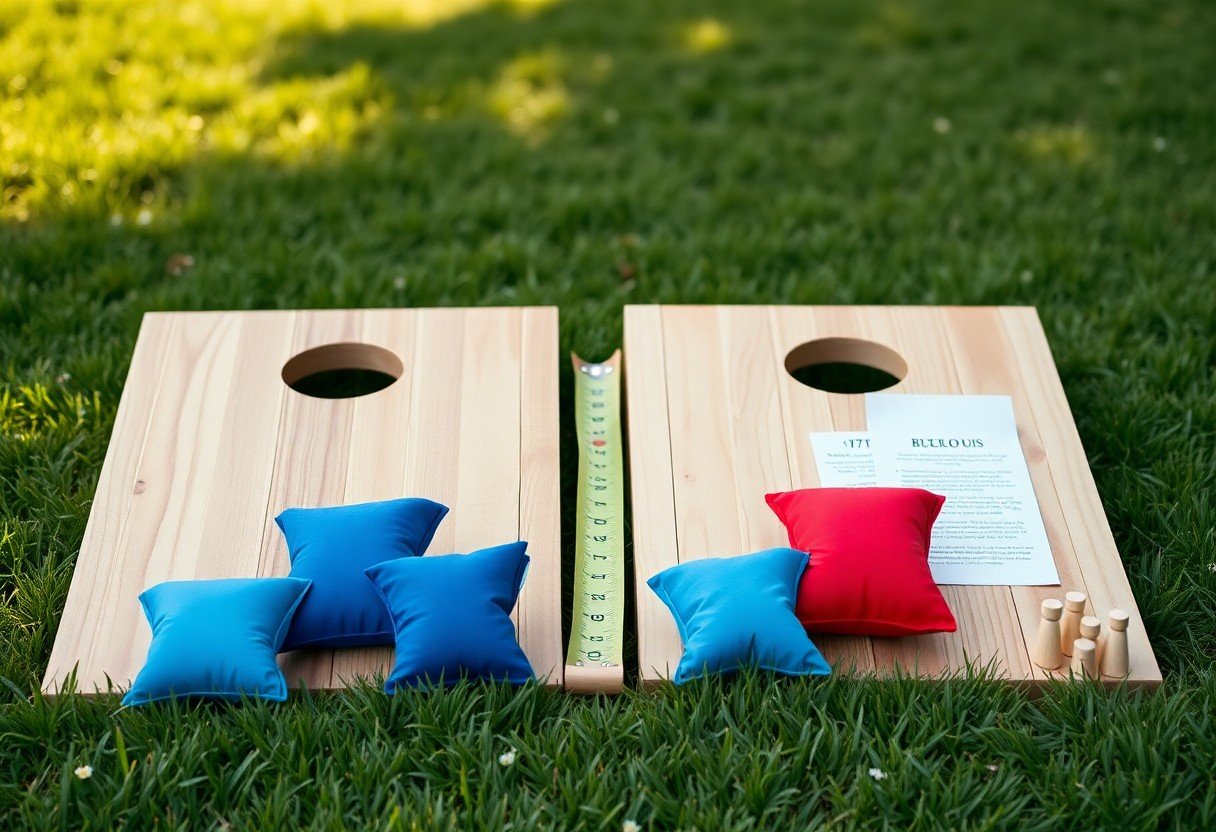
You’ll need a pair of regulation boards and eight bags, placed on a flat surface with the front edges spaced 27 feet apart for adult play (use 21 feet for juniors). Set boards on level, debris-free ground to prevent unpredictable rolls; an uneven surface can make bags slide or bounce unpredictably and create safety hazards. Carry a tape measure, chalk or cones for alignment, and a scoreboard if you keep match play.
Cornhole Boards
Your boards should be 48″ x 24″ with a centered 6″ diameter hole whose center sits 9″ from the top. Standard back height is 12″ and front height 4″, built from 1/2″-3/4″ plywood or composite; legs usually fold for transport. Sand and seal the playing surface for consistency-rough edges or splinters can alter bag flight and damage bags.
Bean Bags
Each set contains eight bags-four per team-measuring approximately 6″ x 6″ and weighing about 15-16 ounces each. Modern tournament bags use plastic resin pellets (avoiding pests) inside durable duck cloth or microsuede covers. Choose contrasting colors for team ID, and avoid soaked or torn bags since wet fill changes weight and throws unpredictably.
For performance, check seams and stitch density: double-stitched seams and reinforced corners extend lifespan. You can select softer-fill bags for more slide-through throws or firmer bags for blocking strategy; many players keep two sets to match board surface: slick bags for smooth plywood, textured for rough or painted boards. Store bags dry and rotate use to maintain even wear.
Rules of the Game
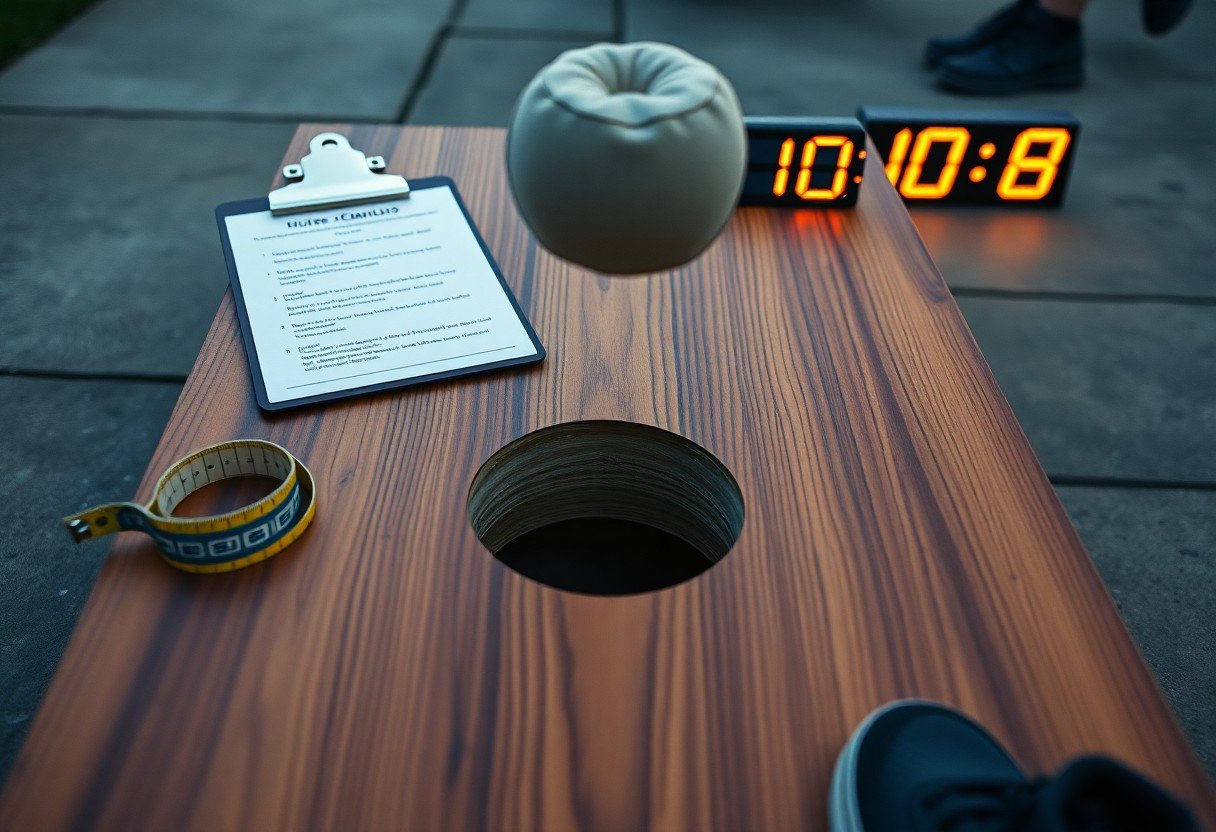
Games are played between two players or two teams of two. Each side uses four bags per inning, throwing from regulation positions with the boards’ front edges placed 27 feet apart. You and your opponent alternate throws until all eight bags are pitched; innings end when the last bag lands. You decide the starting order by coin toss or based on the previous score, and you must throw from behind the board’s front edge — stepping past it is a foul. First team to 21 points typically wins.
Scoring System
A bag that goes through the hole scores 3 points, while a bag resting on the board scores 1 point; bags that hit the ground first or touch a disqualified surface score zero. Most games use cancellation scoring: subtract the lower inning total from the higher, and award only the difference. For example, if your side scores 7 and the opponent scores 4, your net gain is 3 points for that inning.
Gameplay Mechanics
Players alternate throws toward the opposite board, and partners throw from the same board in doubles, staying behind the front edge while pitching. An inning finishes after all eight bags are thrown, then you retrieve and tally points. Be aware of the foot-fault rule: if you step past the board front when releasing, that bag is removed and scores zero. Tournament play enforces a consistent pitching box and strict foul adjudication.
Strategy and consistency matter: you can aim for an airmail (direct hole shot) or place blockers to set up follow-up plays, adjusting release angle and bag rotation to control skip. In competitive play many matches are best-of-3 or use double-elimination brackets, and players track pocket depth, wind, and board surface to refine throws-practical adjustments that often determine close games.
Variations of Cornhole
Across leagues and backyards, cornhole adapts with local variations. Players encounter games to 21 points that use cancellation scoring, “count-up” rounds where points simply accumulate, and house rules where exceeding 21 resets a score to a set number or is allowed. The common tournament standard requires an exact 21, enforced through cancellation scoring. Adults typically use boards set at 27 feet; juniors often play at 21-24 feet to balance skill levels.
Different Gameplay Styles
In formal play you’ll see cancellation scoring (opponent scores cancel each other), while casual groups prefer count-up or timed rounds for tournaments. Try cutthroat if you have three players-each throws three bags and the highest per inning scores-or match-play formats like best-of-five games; tournaments often use pool play then single-elimination brackets to rank teams.
Regional Rules
Local traditions affect rules: some Midwest leagues strictly enforce ACO specs (boards at 27 feet, exact 21), while Southern backyard games shorten distance to 24-25 feet or allow “over-21 wins.” You should check local league bylaws for bag materials and fouls before playing.
Foot-fault enforcement varies widely-tournament play deems a front-edge violation a dead throw, but casual games often warn first. Additionally, you may encounter region-specific scoring tweaks like a skunk rule that ends games early at an 11-point lead, or mandatory bag weight ranges (commonly 15-16 ounces) in sanctioned events.
Strategies for Success
Sharpen your edge by focusing on three pillars: consistent release, shot selection, and situational awareness. At the standard 27 feet between boards and a 6‑inch hole, tiny adjustments change outcomes-practice 50 targeted throws per session, alternating high-arc and low-spin shots. Track your hit rate (hits per 100 throws) to measure improvement, and rotate between offense (going for the hole) and defense (burying or blocking) depending on score and who throws last.
Throwing Techniques
You generate reliability by dialing in stance, grip, and release: stand with your lead foot slightly forward, grip the bag across the middle, and release at waist height for a flat slide or slightly higher for backspin. Use a controlled wrist snap to add backspin that helps bags stop on the board; many players aim for a 45° arc on loft shots to clear blockers. Drill 20 reps of each shot type to build muscle memory.
Game Tactics
Understand scoring-3 points for a bag in the hole and 1 point for a bag on the board-and exploit cancellation scoring each round. If you throw last, you have the advantage to cancel or score after seeing opponents’ results; if you throw first, prioritize placing a blocker near the hole to force difficult shots. Play to 21, and adapt whether you need to protect a lead or take calculated risks to close a gap.
When the score is tight, adjust tactics by example: if your opponent leads 18-20 and you have 16, play conservative defense-place a low blocker within 6 inches of the hole to deny easy 3s and force them to miss. Conversely, if you trail by 4-6 points, favor aggressive flush shots to score multiple 3‑point bags; professionals often alternate a high‑arc “drop” to clear blockers and a low backspin “slide” to bury and set up follow-up rounds.
Popularity and Culture
Across suburbs, college campuses and brewery patios, cornhole has become a staple of casual competition and community gatherings since the 2010s; you’ll find it at tailgates, company picnics and backyard weddings. Major organizers like the American Cornhole League (founded 2015) boosted visibility with organized events, and many players consult an official Cornhole Rules guide to standardize play. Expect wide accessibility and rapidly growing local leagues in cities nationwide.
Cornhole in Tournaments
When you enter tournaments, formats typically shift from casual play to structured pools, round-robin or double-elimination brackets, with singles and doubles divisions. Organizers use seeding and point systems to rank players across qualifiers, and prize pools range from modest cash to sponsored payouts at national events. Tournament play forces you to refine shot selection, manage pressure and adapt to tight scoring formats under timed schedules.
Social Aspects of Playing Cornhole
You’ll notice cornhole’s social pull: it invites conversation between throws, suits mixed-age groups, and scales from 4-player rotations to larger festival setups. The low equipment cost and simple rules make it ideal for casual play, while house rules and friendly wagers keep things lively. Expect fast integration into any social event where mingling and light competition matter most.
In leagues and recurring meetups you’ll experience organized social bonding-teams form over weeks, sponsors host themed nights, and corporate events use cornhole for team-building. You can run a casual rotation with 4-12 players, adopt handicaps to balance skill gaps, and use league standings to track progress. That structure helps you build rivalries, mentorships and regular meetups that extend play beyond a single afternoon.
Conclusion
Upon reflecting on cornhole, you recognize a simple yet strategic game that blends skill, etiquette, and social fun. When you master grip, stance, and aim, you improve your consistency. Furthermore, understanding scoring and practicing good sportsmanship elevates the experience for you, your partner, and your opponents. Whether playing casually or competitively, practicing fundamentals and adapting to conditions helps you enjoy and excel at cornhole.
FAQ
Q: What is cornhole?
A: Cornhole is a backyard and competitive throwing game in which players or teams take turns tossing small fabric bags filled with corn kernels or synthetic pellets at a raised platform with a centered hole. The objective is to score points by landing bags on the platform or putting them through the hole. It originated in folk games and has grown into organized league play with standardized equipment and rules.
Q: What equipment do I need to play cornhole?
A: Standard equipment includes two wooden or composite boards (playing surfaces) and eight bags. Official regulations specify boards that measure 24 inches wide by 48 inches long. These boards feature a 6-inch diameter hole located near the top. The design elevates the front edge roughly 3–4 inches, while the back edge rests about 12 inches above the ground. Bags are typically 6 inches square and weigh about 14-16 ounces. Many casual games use portable or foldable boards and either corn-filled or plastic pellet bags.
Q: How do you set up the game and begin play?
A: Place the two boards facing each other with the front edges 27 feet apart for standard adult play (shorter distances are common for casual or youth play). Players form two teams of one or two players. In doubles, teammates stand at opposite boards and throw from the same side; in singles, both players throw from the same board. Toss order alternates between teams until four bags are thrown per side for an inning. A coin toss or bag throw can determine which team throws first; players switch sides each inning.
Q: How is cornhole scored?
A: Common scoring awards 3 points for a bag that goes through the hole (a “cornhole”) and 1 point for a bag that lands and stays on the board (a “woody” or “on”). After both teams have thrown their bags for an inning, opposing scores cancel out (for example, if Team A scores 7 and Team B scores 5, Team A nets 2 points). Games are typically played to 21 points; some leagues require reaching exactly 21 while others allow exceeding 21. Local or tournament rules may vary, so confirm before play.
Q: What are common fouls and helpful tips for beginners?
A: Fouls include stepping past the front edge of the board (the foul line) while throwing, throwing out of turn, and using a damaged or illegal bag. Fouled throws do not count and are removed from play. Beginner tips: adopt a comfortable stance with a controlled arm swing, focus on a smooth release and a gentle arc so the bag lands soft on the board, aim for a consistent spot on the board rather than only the hole, practice both push and loft throws, and develop a rhythm with your partner in doubles. Follow basic etiquette: wait for opponents to finish an inning before retrieving bags and avoid distracting throws.