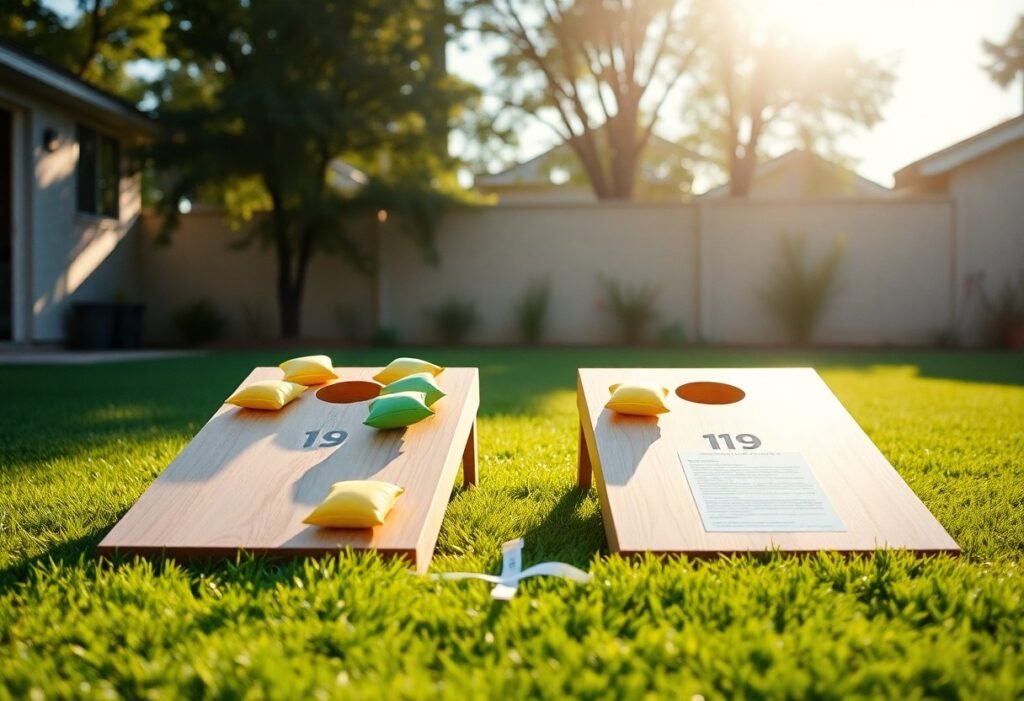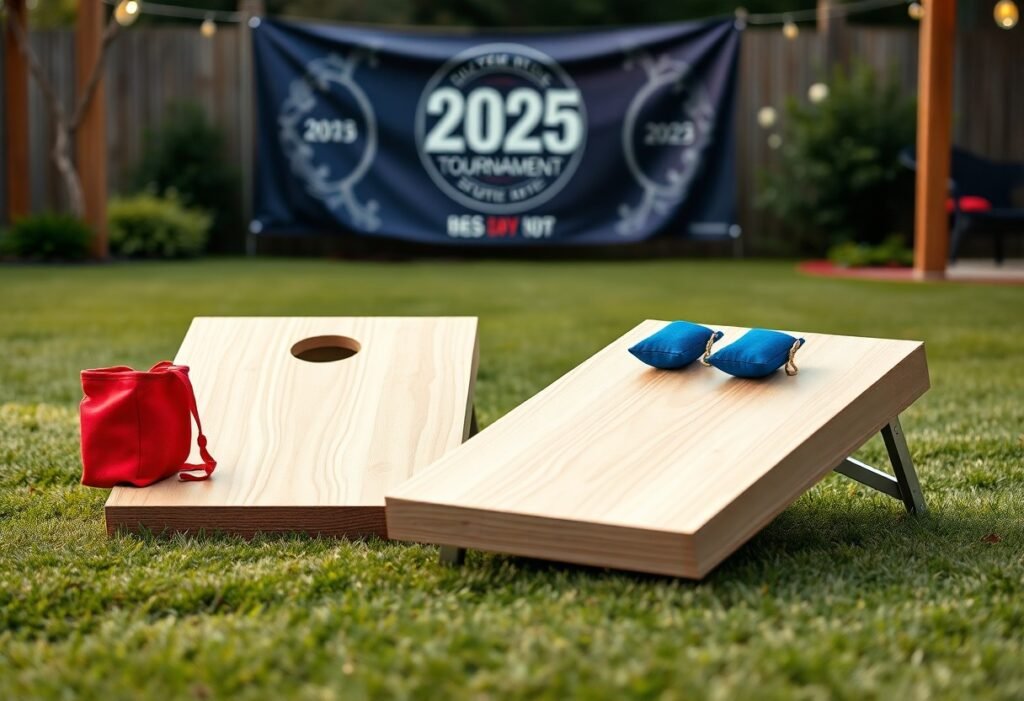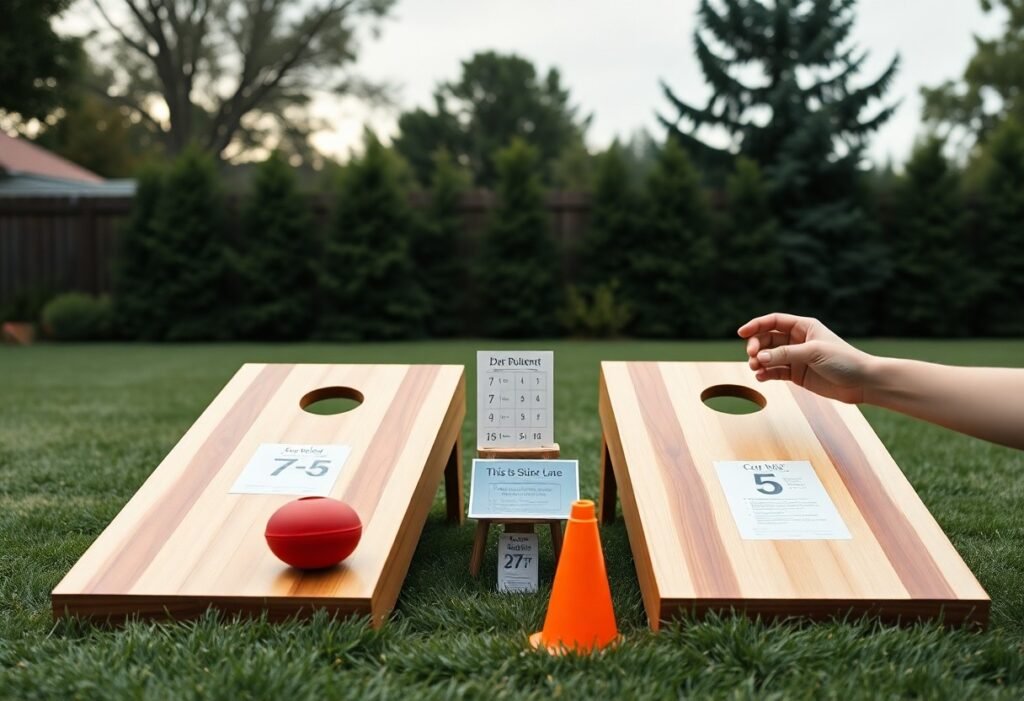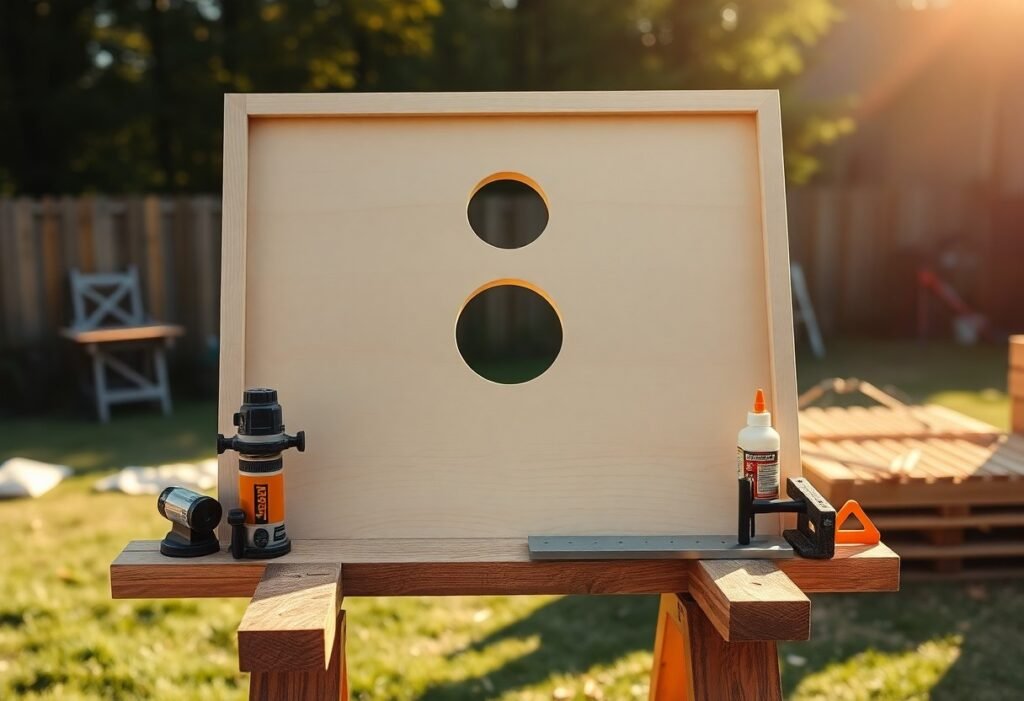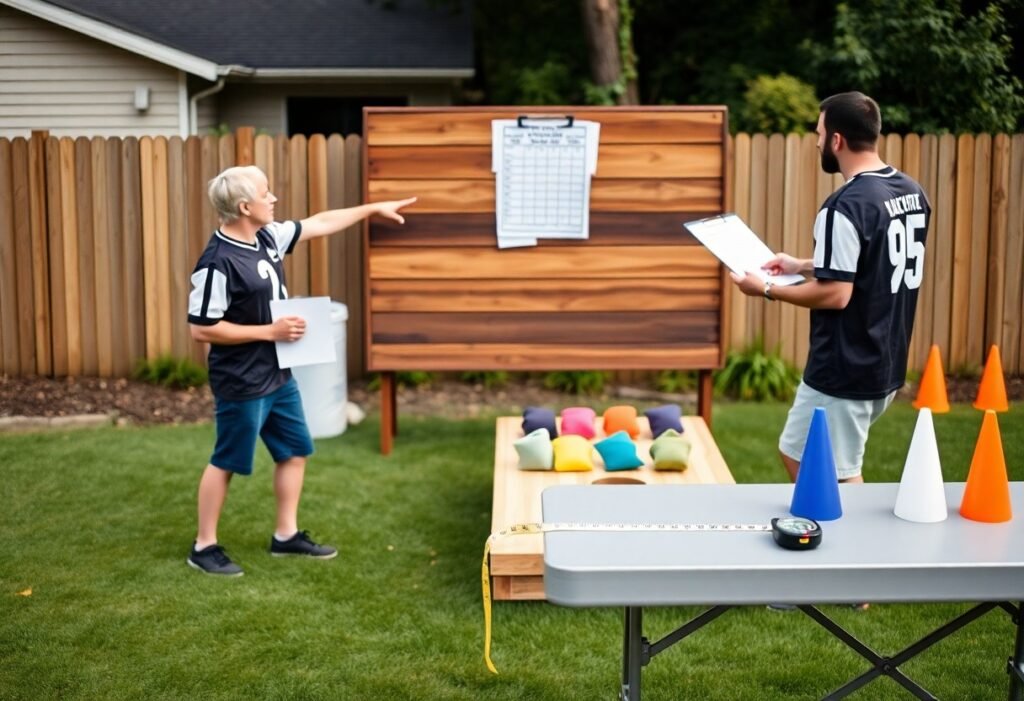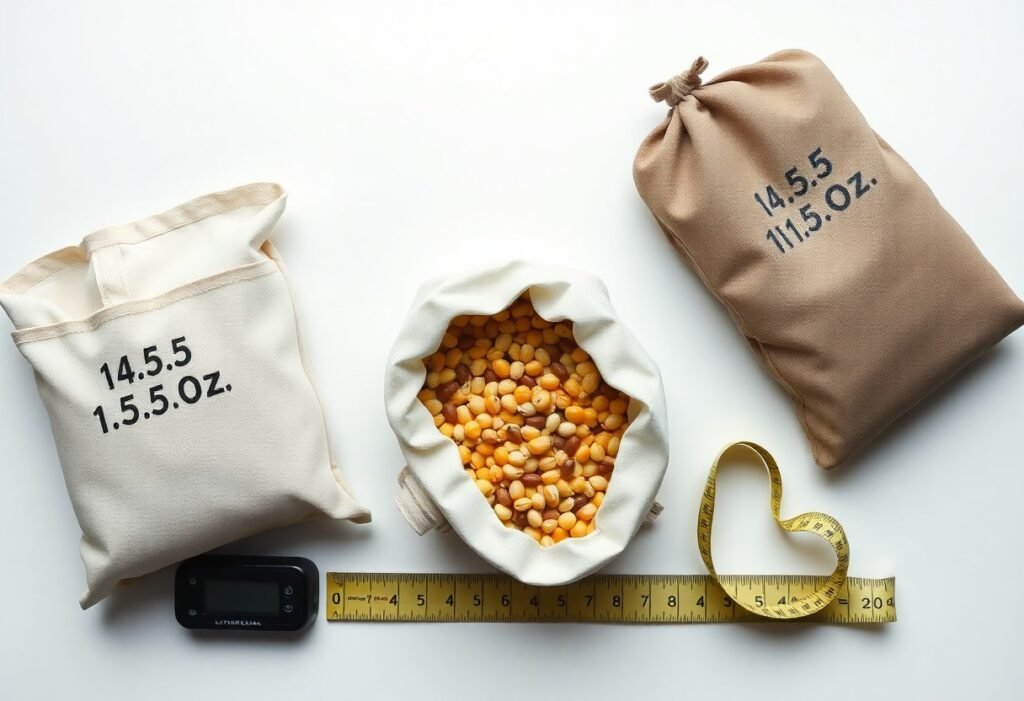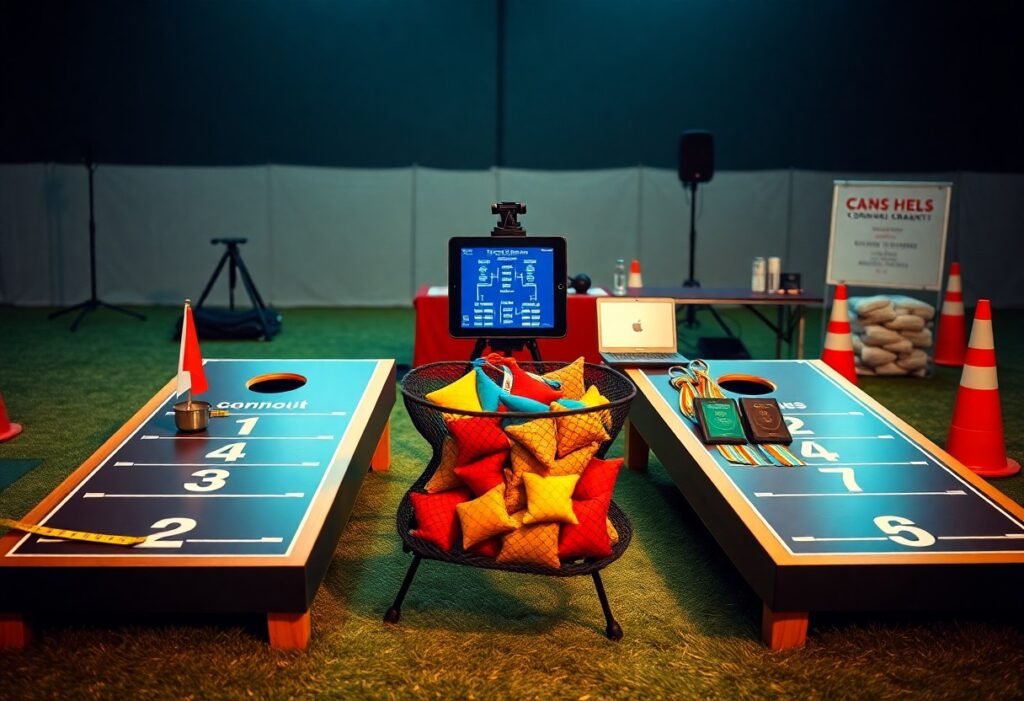

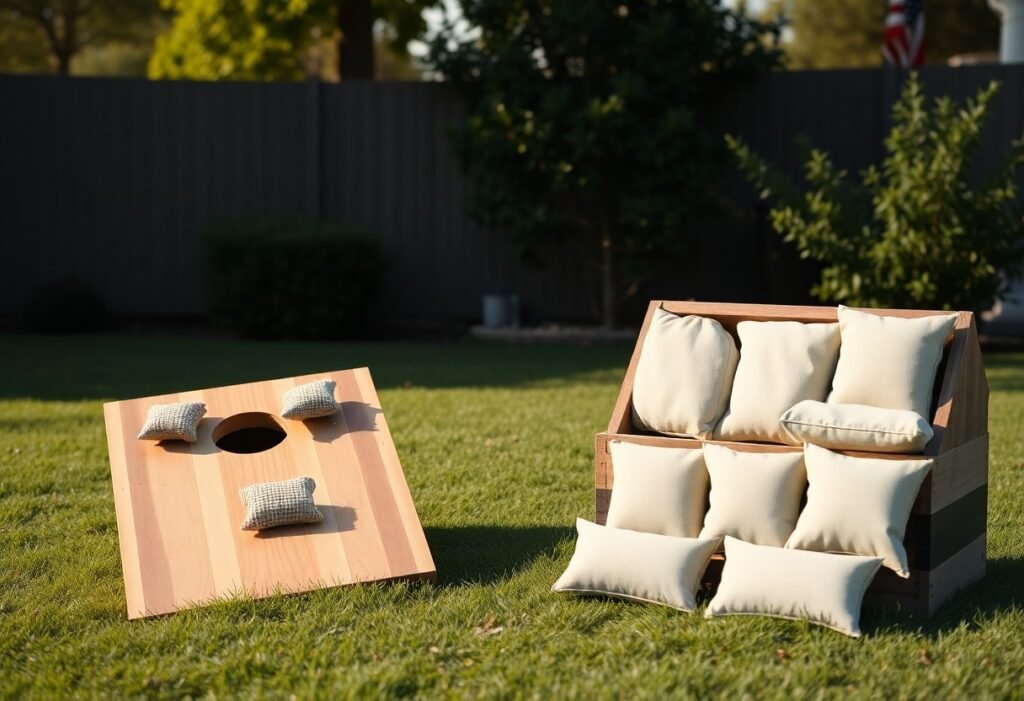
With similar equipment but different rules, you need to know that Cornhole uses an angled board with a hole and standardized scoring, while bean bag toss often refers to broader backyard or tabletop variants with varied targets and points; bag size, fill, and board angle affect your play, and you should consider safety-small bags and rough play can pose choking or injury risks-yet both are easy to set up, social, and great for all skill levels.
Key Takeaways:
- Cornhole is a specific, standardized game played with slanted boards that have a hole and regulation corn-filled bags; “bean bag toss” is a broader term that can mean cornhole or any informal game of throwing bags at a target.
- Scoring differs: cornhole uses a defined system (3 points for a bag through the hole, 1 point for a bag on the board, with cancellation scoring); bean bag toss variants often use simpler or house rules and may score differently.
- Setup and equipment are more standardized for cornhole (board dimensions, distance between boards, bag size/weight), while bean bag toss setups vary widely by region and casual play.

History of Cornhole
Origins of Cornhole
You can trace similar bag‑toss games to 14th‑century Germany, where villagers played with bean‑filled sacks; over time the pastime crossed to America and by the 19th century it was common in the Midwest and Appalachia, especially around Ohio and Kentucky. Local fairs, family tailgates and college campuses kept variations alive, so your regional rules often reflect decades of informal play.
Evolution of the Game
By the late 20th and early 21st centuries equipment and rules became standardized: regulation boards are 24×48 inches with a 6‑inch hole, bags are typically 6×6 inches and weigh 14-16 ounces, and the official pitching distance is 27 feet, so your backyard setup can match tournament conditions.
Organized competition surged in the 2000s-2010s, and you now find national circuits and televised events; the American Cornhole League (ACL) was founded in 2015 to professionalize tours. Equipment also shifted from corn‑filled sacks to synthetic pellets to prevent rot and maintain weight tolerances, which you’ll notice changes bag flight, grip and strategy during play.
History of Bean Bag Toss
Tracing a separate lineage, bean bag toss shows up in 19th-20th century parlor and carnival culture, where you’d find simple toss-and-land booths at fairs. Street vendors and home crafters kept the game alive, and innovations like synthetic pellet fillings made bags more durable and weather-resistant. Today you’ll see portable sets for patios, arcade variants, and casual leagues that preserve the old toss mechanics while adapting materials and rules for modern play.
Origins of Bean Bag Toss
Early forms grew out of general tossing games-often improvised with cloth sacks filled with beans or grain-and became fixtures at Victorian parlors and traveling shows. If you study fairground catalogs from the late 1800s, you’ll find vendors advertising pocket‑style toss games alongside ring and ball booths, illustrating how public entertainment economies spread the format into everyday leisure for families and children.
Evolution of the Game
Equipment and rules gradually diversified: manufacturers standardized bag sizes and you’ll commonly find bags weighing 4-6 ounces and measuring about 4-6 inches, while casual player distances settled around 10-15 feet. Variants introduced target shapes, point systems, and team formats (1v1 or 2v2), so you can choose a quick backyard match or a longer points-based session depending on skill and space.
As the hobby professionalized, organizers began enforcing consistent bag construction and surface types for tournaments, and you’ll notice indoor carpet versions use softer fabrics to slow bags. For safety and longevity, inspect seams-loose stitching can release small pellets that pose a choking hazard-and adapt distances or bag weight for juniors and players with limited mobility to keep the game inclusive.
Game Rules and Setup
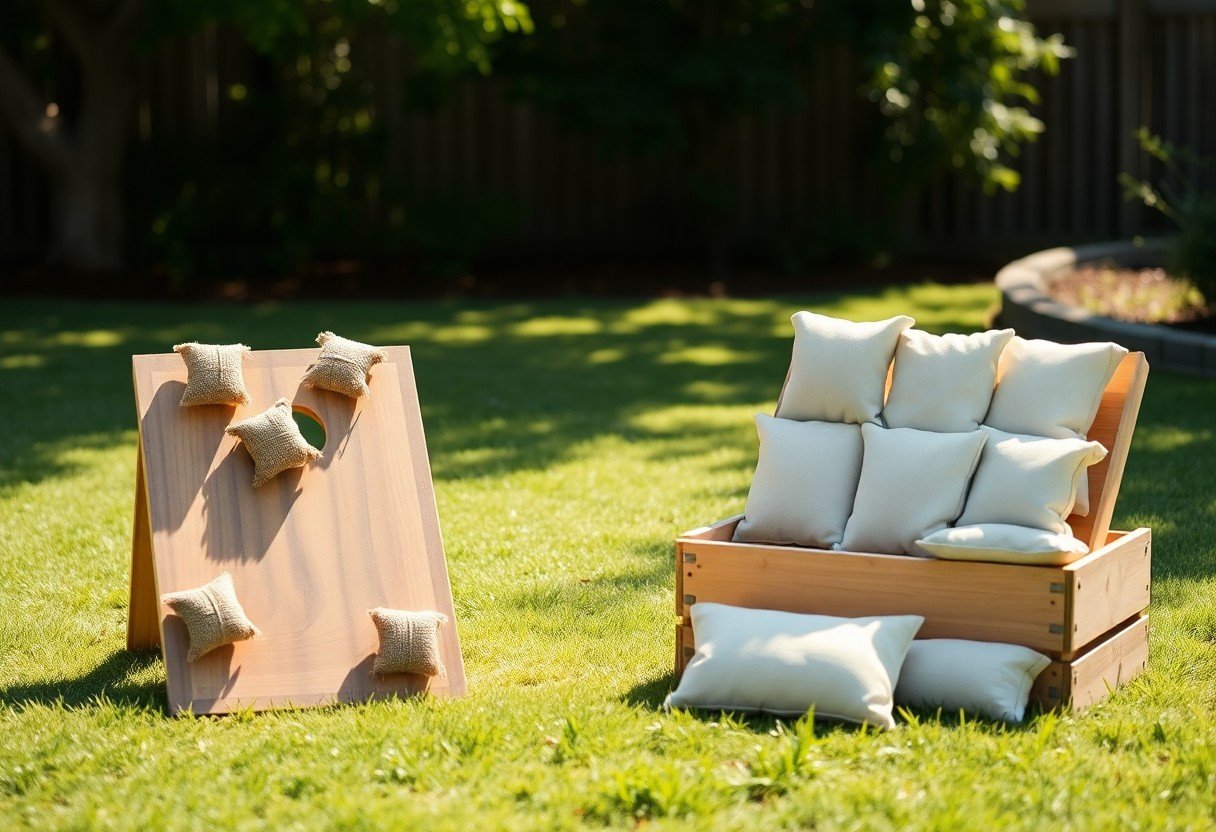
You’ll set up different footprints: for cornhole use two slanted boards 48″×24″ with a 6″ diameter hole (centered 9″ from the top) and place the front edges 27 ft apart; each side gets four 6″×6″ bags (~15-16 oz). Bean bag toss variations use flat targets, multiple holes or bins, and shorter lines so you’ll often mark 10-15 ft for casual play-choose the layout to match space and skill.
Cornhole Rules
You alternate throws with an opponent using four bags each inning; a bag in the hole scores 3 points, on the board scores 1 point, and opposing points cancel out using cancellation scoring. Play continues by innings until one side reaches the agreed target-commonly 21 points in backyard games-while tournament play follows official association rules for foul lines, pitching order, and bag construction.
Bean Bag Toss Rules
You’ll find no single standard: most bean bag toss setups use flat boards or vertical targets with multiple scoring zones (for example 1-5 points per hole), and you usually throw a set number of bags per round-often 3-5-then total scores. Distances are typically shorter than cornhole (10-15 ft), scoring is cumulative, and formats range from timed rounds to first-to-a-target games with widely varying point structures.
For more detail, consider a common carnival variant: you toss five lightweight bags (about 3-5 oz, 3-4″ square) at a board with five holes labeled 1-5; each round’s maximum score is 25, and casual play often sets a match to 50 points. You should watch for bounce-outs and crowded play areas-they increase frustration and risk-so mark clear throwing lanes and rotate players to keep games fair and safe.
Equipment Differences
You’ll find cornhole uses larger, standardized gear while bean bag toss kits vary widely. Official cornhole boards are 48″×24″ with a 6″ hole centered 9″ from the top and bags at 14-16 oz. Bean bag toss tends to have smaller, multi-target boards (commonly 30-36″ long) and lighter bags around 3-8 oz, favoring portability and family play.
Cornhole Boards and Bags
Official cornhole boards measure 48″ by 24″, with the hole centered 9″ from the top, rear height ~12″ and front 3-4. Your cornhole bags should be 6″ squares weighing 14-16 oz, usually filled with corn or synthetic pellets for predictable flight. Tournament-grade plywood and tight-sewn duck cloth influence slide and bounce, so you’ll see consistent, durable construction in regulated sets.
Bean Bag Toss Boards and Bags
Casual bean bag toss boards are often 30-36″ long and 18″ wide, featuring multiple holes or painted target zones; the variability lets you choose sets for backyard, carnival, or indoor play. Bags are lighter-typically 3-8 oz-so you and kids can toss comfortably, and materials range from molded plastic to thin plywood for easier transport.
Different hole layouts (3, 5, or cluster targets) change scoring strategy and force shorter, more accurate throws from you; bag fill alters carry and bounce-heavier fillings travel farther, lighter ones drop sooner. Weather resistance matters: synthetic-filled bags and plastic boards resist moisture, while untreated wood and natural-fill bags can warp or mildew. For family use, aim for 4-6 oz bags and foldable plastic boards for easy storage and durability.
Popularity and Cultural Impact
You’ll find cornhole woven into American social life-from tailgates and backyard BBQs to organized city leagues-driven by national bodies like the American Cornhole League and American Cornhole Organization; leagues exist in all 50 states, ACL events draw thousands of entrants, and televised championship matches have expanded sponsorships and merchandise sales.
Cornhole in Popular Culture
You’ve seen cornhole at NFL tailgates, college reunions and summer festivals, where branded tournaments (beer companies and local sponsors) blend leisure and competition; social media tags amplify local scenes, and pro circuits with televised finals have legitimized it as both a pastime and spectator sport.
Bean Bag Toss in Popular Culture
Bean bag toss shows up at county fairs, school fundraisers and carnival midways as a quick, low‑cost attraction; retailers stock compact sets for backyards and apartments, while schools and community centers use simplified versions for inclusive games and beginner skill building.
Because the term covers many variants, you’ll encounter therapeutic versions for pediatric motor skills alongside commercial midway booths; its low cost and easy setup make it highly accessible, but you should note
Competitive Play
Professional circuits and local leagues both exist, and if you want specifics see Cornhole, bean bag toss or bags: What’s the name of this …. Major events draw hundreds of entrants and use strict equipment rules, so you must master scoring, stance and release. Expect televised finals in elite cornhole and growing prize pools; organizational rules and consistent equipment separate casual tailgates from true competition.
Cornhole Tournaments
ACL and ACO tours run sanctioned events with standardized play: board size 48×24 inches and a 6-inch hole, 27 feet pitching distance in regulation play, and pro divisions offering cash prizes ranging from hundreds to tens of thousands. You’ll encounter seeding, round-robin pools and televised finals; mastering legal bag construction and match strategy raises your chance to progress in large fields of competitors.
Bean Bag Toss Tournaments
Many community and fair events use bean bag toss as a flexible discipline; rules vary by organizer, so you should check distances, target dimensions and scoring before you play. You’ll find smaller fields, mixed-age divisions and quicker formats than pro cornhole, making it easier for you to enter and practice competitive play in local circuits or charity events.
Formats commonly include single-elimination, double-elimination and round-robin pools, often with best-of-three matches; you should prepare for varied seeding and time limits. Equipment differences-bag fill, size and target surface-affect slide and hold, so testing gear under event conditions gives you an edge. Expect regional tournaments to run brackets of 16-128 players, so stamina and match consistency matter in longer events.
To wrap up
Now you can see that while cornhole and bean bag toss are often used interchangeably, they differ in board shape, hole versus target design, scoring conventions, and typical bag fill, so you should choose based on your space, rules preference, and whether your group favors casual backyard play or standardized competition.
FAQ
Q: What is the main difference between cornhole and bean bag toss?
A: Cornhole is a specific, standardized game played with two raised boards that each have a centered hole; it has widely accepted dimensions, bag specifications, and scoring conventions used in leagues and tournaments. Bean bag toss” is a broader term for any game where players throw bags at a target-these games can use different board shapes, targets (holes, circles, boxes), distances, bag sizes, and scoring systems. In casual settings the names are often used interchangeably, but cornhole refers to the formalized version with consistent rules.
Q: How do equipment and board specifications differ between them?
A: Official cornhole boards are 24″ wide by 48″ long with a 6″ diameter hole centered 9″ from the top edge; the front of the board is about 3-4″ high and the back about 12″ high, creating a slope. Regulation cornhole bags are typically 6″ x 6″ and weigh about 15-16 ounces, filled with whole corn or synthetic pellets. Bean bag toss sets vary widely: boards may be smaller or flat, targets can be painted circles or raised cups, bag dimensions and weights differ, and materials often prioritize portability or kid-friendliness over strict weight/size standards.
Q: Are scoring and rules the same for both games?
A: Cornhole commonly uses cancellation scoring: a bag in the hole scores 3 points, a bag on the board scores 1 point, and opponents’ points cancel each other out each round; many leagues play to 21 points with specific foul rules. Bean bag toss rules are not uniform-some versions award points based on target zones, some use cumulative scoring without cancellation, and some are turn-based mini-games. When playing a nonstandard or homemade bean bag toss, agree on rules, target values, and winning conditions before starting.
Q: Can I use cornhole bags for other bean bag toss games, and vice versa?
A: Yes-most bags will work across similar lawn-throwing games-but performance will vary. Corn-filled bags have a distinct flight and tendency to “stick” or settle differently than synthetic-pellet bags; bag weight and fabric affect slide, grip, and how the bag reacts on impact. Using regulation cornhole bags on a nonstandard target may change scoring and difficulty; for tournaments always use the prescribed bag type and for casual play pick whichever set suits durability and weather resistance (synthetic fills handle moisture better).
Q: Which game should I choose for backyard parties, family play, or league competition?
A: For organized competition and consistent practice, choose cornhole because of its standardized boards, bag specs, and well-established rules. For casual gatherings, family fun, or travel, a generic bean bag toss set can be more portable and flexible-choose lighter, softer bags for kids and durable synthetic-filled bags if you’ll play in damp conditions. If you want a balance, buy regulation cornhole boards and a secondary, portable set for casual play so you can switch depending on space, players’ ages, and formality.