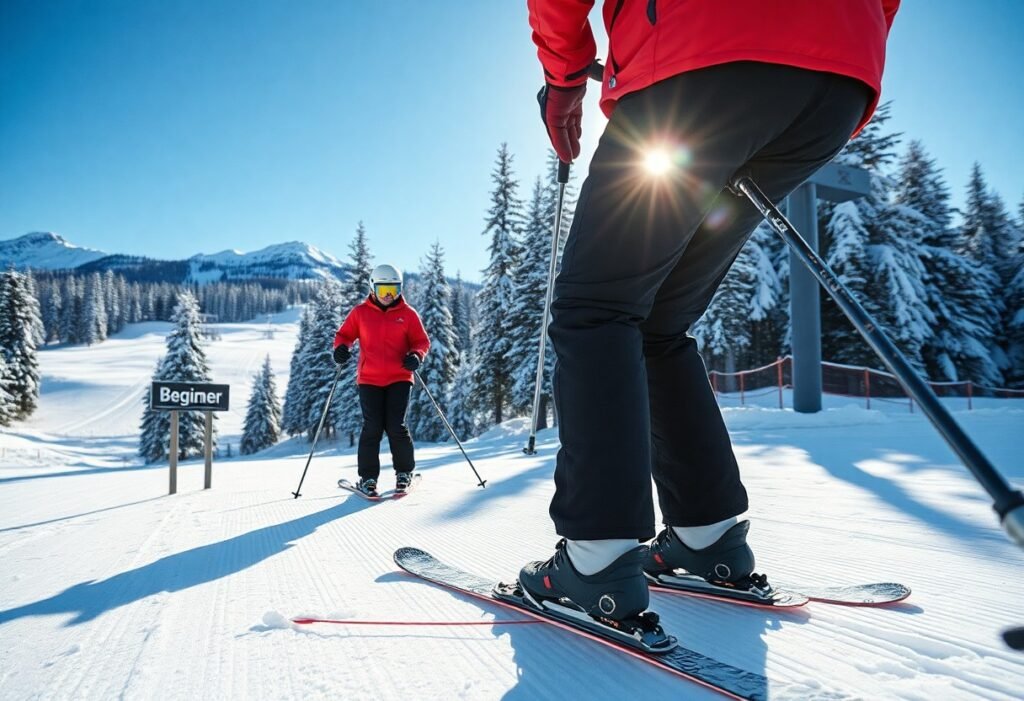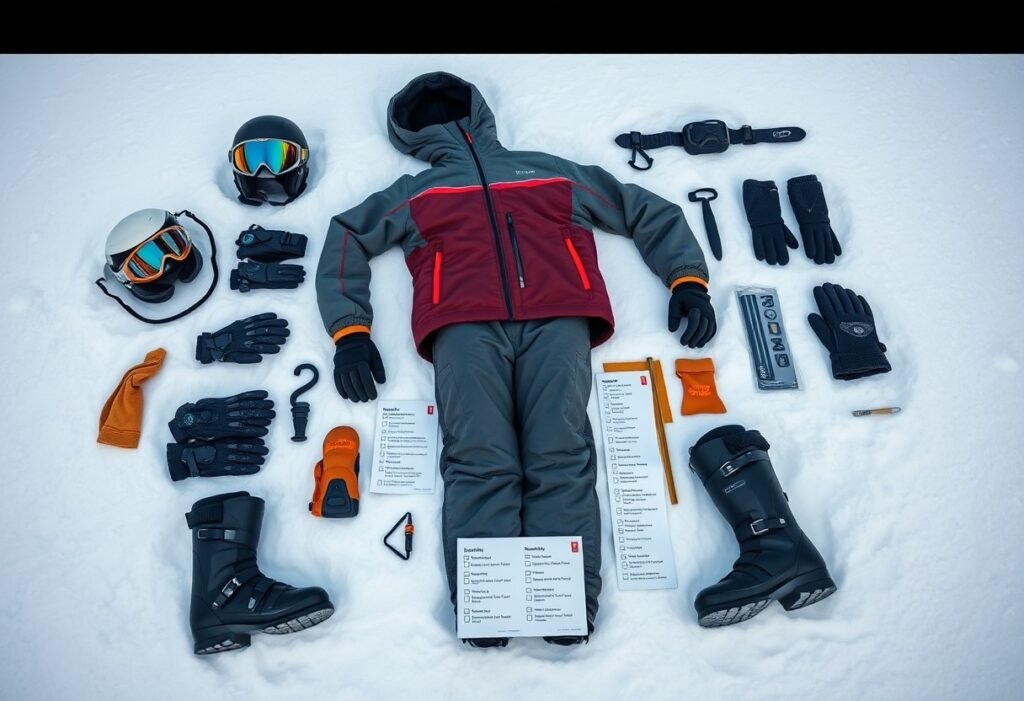

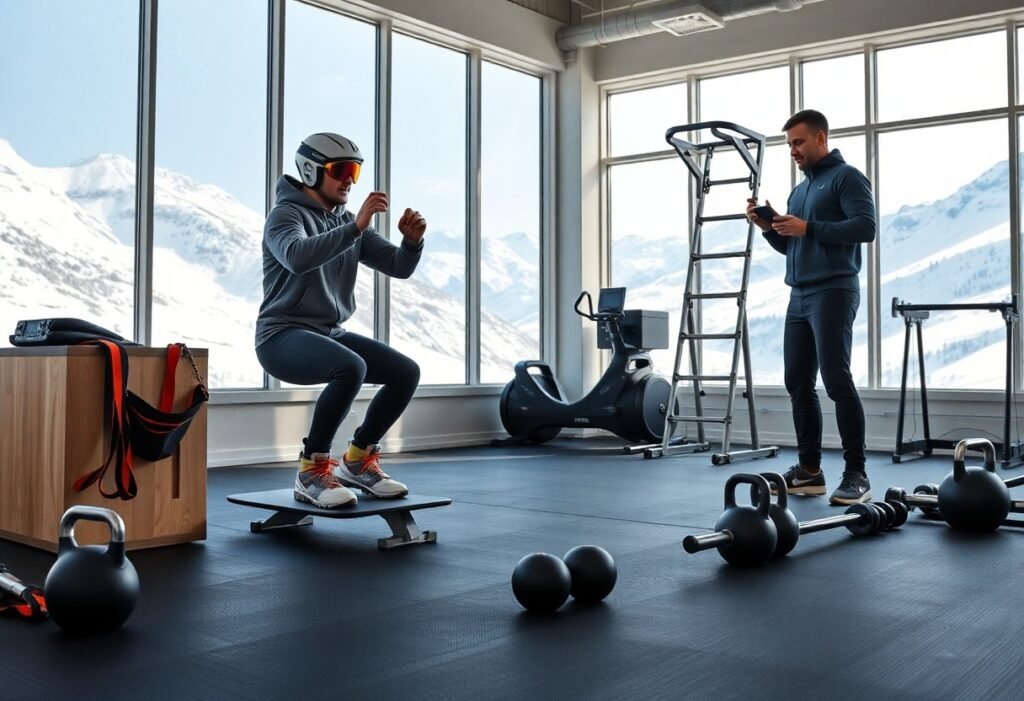
Overbuild your program around ski-specific strength so you maximize performance: you must train leg strength, core stability, and explosive power, and reduce ACL injury risk with balance, mobility, and eccentric control.
Physiological Demands of Alpine Skiing
Skiing forces you into repeated high-intensity efforts that combine explosive leg power, anaerobic bursts, and aerobic recovery, while demanding sustained core control and proprioception to keep technique under fatigue; train to produce maximal leg force, tolerate high G-loads, and reduce injury risk through targeted conditioning.
Biomechanical Requirements of Technical and Speed Disciplines
Technical courses push you to execute rapid edge changes and fine balance, whereas speed runs test aerodynamic stability and sustained tuck; you must develop precise edge control, hip and ankle stiffness, and reactive strength to limit knee and ACL injury at velocity.
The Critical Role of Eccentric Loading in High-G Force Turns
Eccentric muscle actions allow you to absorb very high G-forces during carved turns, controlling deceleration and protecting line, but they raise tendon and joint loads and increase injury risk unless you build specific tolerance.
Your eccentric training should prioritize slow, controlled decelerations at high loads to mimic turn forces and reduce peak joint moments. Implement heavy eccentric squats, single-leg negatives, drop-landing drills, and Nordic-style hamstring work to build muscle-tendon tolerance and protect the ACL. Increase load incrementally across weeks, combine with plyometric deceleration drills, and use isometric holds to reinforce joint stability. Unchecked eccentric overload can cause tendon injury, so monitor soreness and sharp pain and maintain recovery strategies like soft-tissue work and progressive loading to ensure safe adaptation.
Lower Body Strength and Hypertrophy Foundation
Work heavy, controlled lower-body lifting to build the leg mass and force needed for sustained, powerful turns; you should prioritize multi-joint lifts, tempo control, and progressive overload, while monitoring fatigue and knee and lumbar stress to prevent overuse injuries.
Compound Movements for Maximal Force Production
Barbell squats, deadlifts and Olympic variations force you to produce maximal ground reaction forces; perform low-rep, high-load sets to raise peak torque and transfer to carving power, while watching for spinal and knee loading.
Unilateral Strength Training for Edge Control and Symmetry
Single-leg training forces balance and hip control, helping you sharpen edge pressure and correct asymmetries; include split squats, Bulgarian split squats, and step-ups with progressive loading to improve symmetry and on-snow precision.
Emphasize unilateral work across frontal and sagittal planes: slow eccentrics for hypertrophy, explosive lateral reps for rate of force, and loaded single-leg Romanian deadlifts for posterior chain control. You should test single-leg strength regularly, program 3-5 sets of 6-12 reps for size or 3-6 reps for strength, and correct any valgus collapse to lower injury risk and improve edge control.
Explosive Power and Plyometric Progression
You progress plyometrics from controlled hops to loaded Olympic derivatives, prioritizing rate of force development, eccentric control and single-leg strength; monitor fatigue and technique to prevent ACL and knee injuries, and aim for sport-specific transfer via angled and weighted jumps.
Lateral Power Development for Rapid Directional Changes
Train lateral power with progressive skater hops, single-leg bounds and resisted lateral jumps to sharpen your edge-to-edge transitions. Emphasize quick ground contact and hip drive, while monitoring knee valgus to avoid ligament strain.
Optimizing the Stretch-Shortening Cycle for Slalom Performance
Exploit the stretch-shortening cycle with short-contact hops, tuck-to-jump drills and high-frequency bounding to sharpen your turn speed and rhythm. Keep volumes low early and monitor landing softness to prevent overuse tendon strain.
Measure progression: begin with bilateral pogo hops, advance to single-leg reactive bounds, then add slalom-specific cuts and short-rest, high-intensity sets; prioritize short ground contact times and controlled eccentrics, and validate gains with on-snow timing drills to ensure true transfer.
Metabolic Conditioning and Energy Systems
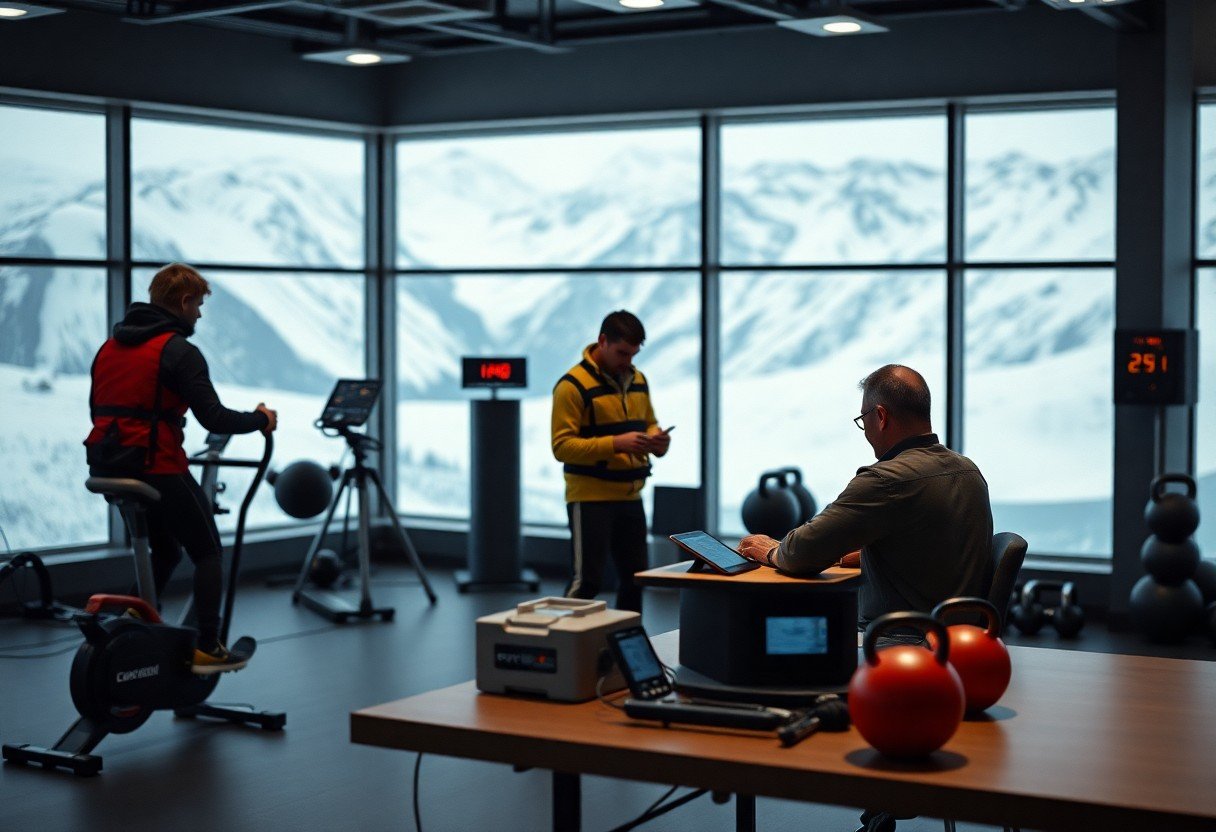
Metabolic conditioning ties your interval work, strength sessions and recovery strategies to the energy demands of alpine skiing, helping you sustain repeated high-power efforts while managing fatigue; prioritize anaerobic power, pacing and recovery to reduce injury risk.
Anaerobic Capacity for High-Intensity Descent Durations
Sprint intervals and short maximal efforts train your anaerobic power and lactate tolerance for intense descents, but pushing too hard raises injury risk and systemic fatigue.
Aerobic Foundation for Enhanced Recovery and Training Volume
Steady aerobic sessions build your base so you recover faster between runs, sustain longer training weeks and raise VO2max, improving session quality while limiting overtraining when monitored.
Consistent aerobic training-long steady rides, tempo runs and extended intervals-improves mitochondrial density, capillary delivery and glycogen resynthesis, which speeds recovery between high-intensity efforts; you should prioritize mostly easy miles, add one targeted aerobic threshold session weekly, and watch load metrics to prevent excessive fatigue or heightened injury risk.
To wrap up
Conclusively, you should combine strength, balance, plyometrics and sport-specific endurance with on-snow technique drills; a periodized program emphasizing hip stability, eccentric quads, reactive agility and core control improves your speed, precision and injury resilience.
FAQ
Q: What physical attributes most directly improve alpine skiing performance?
A: Lower-body strength drives edge grip, turn force and stability; prioritize quads, glutes and hamstrings with heavy compound lifts and unilateral work. Power and rate of force development determine quick edge changes and explosive exits from turns; include plyometrics, Olympic lift derivatives and short sprint efforts. Core stability and anti-rotation capacity hold trunk position under high forces and during asymmetric loading. Balance, proprioception and single-leg control reduce wobble on variable snow and help absorb terrain changes. Aerobic capacity supports long training days and recovery between runs while high-intensity anaerobic conditioning supports race efforts and repeated short maximal efforts.
Q: How should an off-season training program for alpine skiers be structured?
A: A periodized 10-16 week training block works well. Start with a general preparation phase lasting 4-6 weeks. Focus on hypertrophy, movement quality, and aerobic base during this time.
Move into a strength phase for 3-5 weeks. Use heavier compound lifts with 3-6 sets of 3-6 reps. Increase load on single-leg patterns throughout this phase.
Follow with a power and plyometric phase for 2-4 weeks. Emphasize rate of force development with lower volume. Use higher intensity plyos and Olympic variations. Program 3-5 sets of 3-6 reps or jumps.
Finish with a sport-specific phase lasting 1-3 weeks. Shift toward eccentric control and directional power. Include on-snow technical sessions during this phase.
Include planned deloads every 3-4 weeks. Apply progressive overload consistently across all phases.
Q: Which exercises deliver the best transfer to skiing and how should they be programmed?
A: Bilateral strength exercises include back squats, front squats, and deadlifts. These build maximal force capacity. Program 3-6 sets of 3-8 reps in the strength phase.
Unilateral strength exercises include split squats and single-leg Romanian deadlifts. These improve balance and side-to-side symmetry. Program 3-4 sets of 6-12 reps.
Power exercises include trap bar jumps, box jumps, hang cleans, and kettlebell swings. These train explosive hip extension. Program 3-6 sets of 3-6 reps with full recovery.
Eccentric hamstring work like Nordic curls reduces ACL risk and improves braking. Program 2-3 sets of 5-8 slow eccentrics.
Core and anti-rotation exercises include Pallof press, single-arm carries, and deadbugs. These build trunk stiffness under load. Program 2-4 sets of 8-20 reps or timed holds.
Include balance and perturbation drills on single-leg surfaces 2-3 times weekly.
Q: What training strategies reduce injury risk, especially to the knee and lower back?
A: Progressive eccentric strength for the hamstrings and quadriceps improves load acceptance and deceleration capacity; include Nordic curls, eccentric step-downs and controlled single-leg descents. Neuromuscular control and movement quality training for cutting, landing and trunk positioning lowers harmful valgus and rotation moments; use jump-landing drills with video feedback and reactive balance challenges. Hip abductor and external rotator strengthening protects the knee from inward collapse; include clams, band walks and hip thrust variations. Load management that limits excessive volume and schedules recovery days prevents fatigue-related technical breakdown. Mobility work for ankle dorsiflexion, hip extension and thoracic rotation maintains joint positions that distribute forces safely.
Q: How can on-snow sessions be integrated with gym work during the competitive season?
A: Prioritize on-snow technical work and race preparation; reduce gym volume but keep intensity to preserve strength and power. Typical weekly template: 1-3 on-snow sessions, 1 heavy strength session (low volume, 3-5 sets of 2-5 reps), 1 power/plyo session with short sets and full recovery, plus mobility and light aerobic recovery. Use low-load maintenance sessions to avoid stiffness before important runs and schedule a full rest or active recovery day after heavy travel or racing. Nutrition that supports recovery includes carbohydrate timing around sessions and 20-40 g protein within 1-2 hours post-exercise. Regular monitoring of fatigue, sleep and soreness guides short-term adjustments to training load.