

It’s vital that you balance sport-specific drills, strength training, mobility work, and recovery to boost your game while reducing injury risk. Emphasize proper technique to avoid dangerous shoulder and knee problems, integrate targeted strength and conditioning to increase speed and power, and prioritize smart load management and rehab for sustained performance gains.
Key Takeaways:
- Prioritize sport-specific strength and power (posterior chain, core, single-leg work) plus agility and sprint mechanics to improve cutting, dodging, and shot speed.
- Develop conditioning with a mix of high-intensity interval efforts and aerobic base work to match lacrosse’s stop‑and‑go, repeated‑sprint demands.
- Reduce injury risk with consistent dynamic warm-ups, mobility and neuromuscular control drills, targeted prehab for shoulders/groin/hamstrings/ankles, and progressive load management with prompt rehab for injuries.
Understanding Lacrosse Fitness
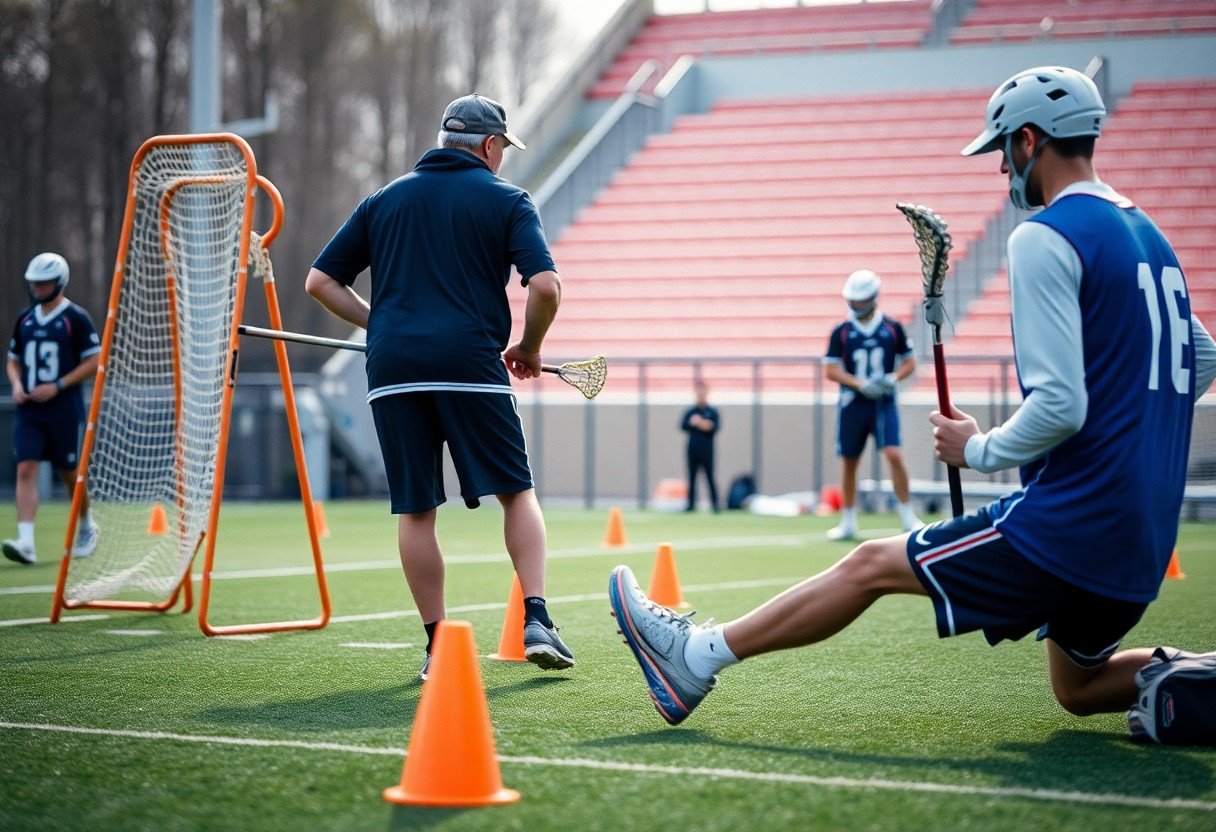
Your fitness for lacrosse blends speed, power, endurance, mobility and resilience; you should balance on-field skills with gym work so your peak sprint, change-of-direction and contact tolerance come together. Aim for a weekly split of roughly 2-3 strength sessions, 2 interval/agility sessions and 1-2 low-intensity recovery sessions; that structure helps you improve match-specific outputs like repeated 15-30m sprints and sustained high-intensity bouts without overloading connective tissue. Work-to-rest ratios drive match readiness.
Physical Conditioning
You develop force production and durability through targeted lifts and unilateral work: perform heavy strength sets (3-5 sets of 3-6 reps at ~75-90% 1RM) twice weekly, add hypertrophy sets (3×8-12) once weekly, and include plyometrics and single-leg Romanian deadlifts for power and balance. Incorporate Nordic hamstring curls and loaded carries to reduce hamstring and core failure. Unprogressed maximal eccentric loading increases soft-tissue injury risk, so ramp intensity over 4-8 weeks.
Endurance and Agility Training
You should fuse interval conditioning with sport-specific COD work: use high-intensity repeats (e.g., 8-12 x 30s efforts with 90s rest) and shuttle intervals (10-20m) to mimic match demands, plus agility drills that emphasize reactive cues and deceleration. Practice 1-2 focused sessions weekly and pair them with skill work to transfer gains. Improved repeat-sprint ability directly boosts late-game performance.
For deeper progress, periodize these sessions: start with a 4-6 week base of tempo runs and technical COD drills, then shift into 6-8 weeks of high-intensity repeat-sprint training and reactive small-sided games. A practical week could include 2 strength days, one long tempo (20-40 min at conversational pace), two interval/agility sessions (e.g., 10 x 30m sprints with 1:4 work-rest and 6 x 5-0-5 shuttles), plus recovery mobility. Monitor load with session RPE and GPS; rapid volume jumps (>10% week-to-week) elevate soft-tissue injuries, whereas consistent, progressive overload yields typical VO2max and repeat-sprint improvements in the 5-15% range over several weeks.
Skill Development Drills
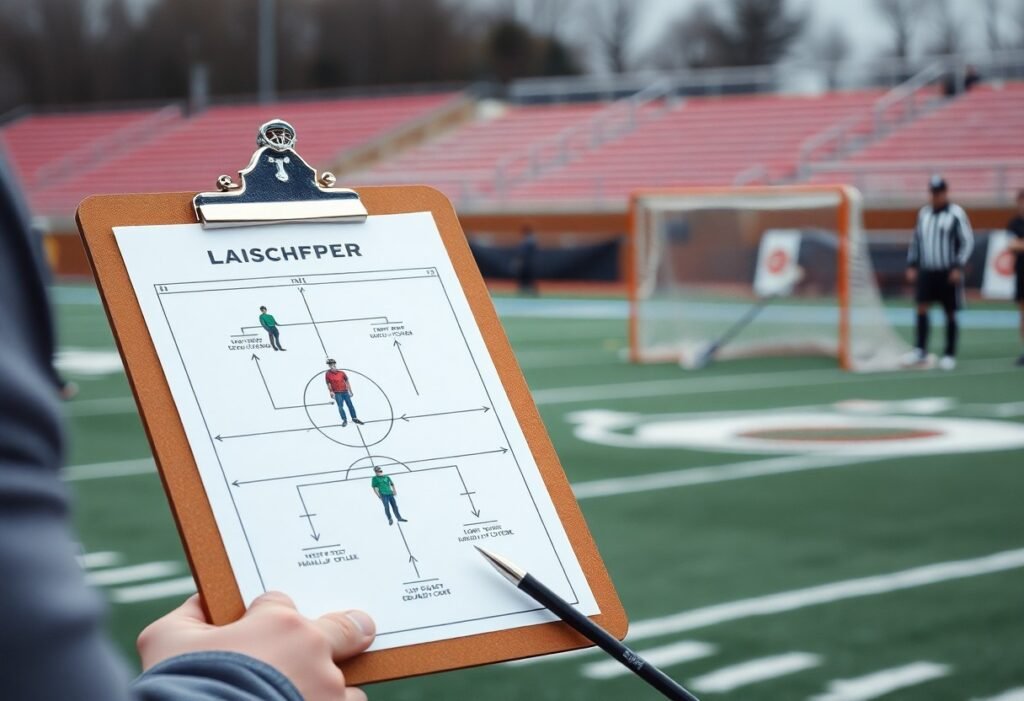
You should structure sessions into short, focused blocks: 20 minutes of wall-ball for stickwork, 15 minutes of 50-100 ground-ball reps, and 25 minutes of shooting or small-sided drills. You can rotate stations-figure-8s, draw-and-drive, and 3v2 fast-breaks-to mimic game speed. Track progress by counting reps and measuring shooting accuracy; aim for at least 150 quality touches per practice and a weekly 10% increase in drill difficulty.
Stick Skills and Ball Handling
You should start with wall-ball: do 50 reps per hand, then add 3 sets of 30-second high-speed cradles before progressing to figure-8s and behind-the-back feeds to sharpen dexterity. Add a 5-cone weave and partner quick-pass drills at 5-7 yards to improve reaction time. If you train this 3-4 times weekly you’ll reduce turnovers; practice 50 reps per hand daily and watch for shoulder overuse by alternating intensity.
Shooting and Passing Techniques
You should practice three shot types-set shots, on-the-run, and bounce shots-targeting the 6’x6′ goal’s four corners with 10 reps per zone to build precision. Emphasize hip rotation, front-foot drive, and a compact follow-through to generate power and accuracy; focus on hips and front foot to gain power. Also avoid poor follow-through, which raises shoulder and elbow strain risk.
You should drill specific passes: 100 short-pocket exchanges at 8-12 yards for accuracy, then 50 full-speed outlet passes at 20-25 yards to build vision and timing. Incorporate a 5-minute rapid-fire session (12-15 seconds per rep) to simulate pressure. You can use a light ball for touch and a heavier ball twice weekly for arm strength, but do not overuse weighted balls; monitor shoulder load and track shot velocity with radar to aim for a steady 3-5 mph gain over 6 weeks.
Strength Training for Lacrosse
You should structure strength work around power, unilateral stability, and injury prevention: aim for 2-3 dedicated sessions weekly plus maintenance lifts on skill days. Emphasize progressive overload over months, using 6-8 week blocks to increase load or velocity. Athletes often see measurable gains in sprint acceleration and shot speed within 6-12 weeks when combining heavy strength (70-90% 1RM) with explosive work, so balance intensity and recovery to avoid overtraining.
Key Muscle Groups for Performance
You generate most of your power from the posterior chain and core: the glutes and hamstrings drive sprinting and checks, while your quadriceps support acceleration and change of direction. Upper-body force transfer depends on thoracic rotation and shoulder integrity, so the rotator cuff and scapular stabilizers are both performance and injury-prone areas. Single-leg control through the hips reduces ACL and groin injury risk during cuts.
Recommended Strength Exercises
You should prioritize compound, sport-specific moves: back squats and trap bar deadlifts for maximal strength (3-5 sets of 3-6 reps), Olympic variations or jump squats for power (2-4 sets of 3-6 explosive reps at 30-60% 1RM), and single-leg RDLs, split squats, and Bulgarian squats for stability (3 sets of 6-10 reps). Add rows, pull-ups and face pulls for shoulder health. Use Olympic lifts and single-leg work as foundation pieces.
Progress logically: begin with 6-8 week strength blocks focusing on load, then transition 3-4 weeks to power and rate-of-force development. Keep 2-3 minutes rest for heavy sets and 60-90 seconds for accessory work. Use RPE 7-9 for top sets, and drop volume within 72 hours of competition-avoid maximal deadlifts the two to three days before games to limit low-back fatigue. Track lifts and velocity to guide percentage-based progression.
Injury Prevention Strategies
You should incorporate a multi-pronged plan: spend 15-30 minutes on neuromuscular work 2-3× weekly, run dynamic warm-ups before sessions, and schedule pre-season screenings to detect movement deficits; consult the league guide Returning to Sport: An Athlete’s Guide to Injury Prevention for return-to-play benchmarks and exercise progressions.
Common Lacrosse Injuries
You’ll commonly see ankle sprains, thigh contusions, ACL tears, shoulder instability and concussions in lacrosse; an ACL reconstruction typically sidelines you for 6-9 months, while concussion protocols often mandate a graded 7-14 day return-to-play progression-treat acute contusions with RICE and assess persistent instability with imaging.
Stretching and Recovery Techniques
You should perform an 8-12 minute dynamic warm-up before sessions (leg swings, lunges, carioca), follow with 10 minutes of post-practice static stretching for hips and hamstrings, add 5-10 minutes of foam rolling, and prioritize 7-9 hours sleep plus 20-30 g protein within 45 minutes to speed tissue repair.
Add targeted strength and eccentric work-do Nordic hamstring curls 2× per week (3 sets of 6-8) to cut hamstring strain risk, include single-leg squats and banded lateral walks for hip stability, and run a mobility circuit (3 rounds: 30s each of world’s greatest stretch, 90/90 hip, calf ankle flossing) after practice; if pain or swelling persists beyond 7-10 days, seek sports medicine evaluation and imaging.
Nutrition for Lacrosse Athletes
Fueling Your Body for Performance
Focus on macronutrient timing: target 1-4 g/kg carbs 1-4 hours before competition depending on prep time, and aim for 20-40 g protein within 30-60 minutes after practice to support repair. During games longer than an hour consume 30-60 g carbs per hour (gels, sports drinks, bananas). For example, a 75 kg player might eat a bagel + banana (~70-80 g carbs) 2 hours pregame and 25-30 g whey postsession to maximize glycogen and muscle synthesis.
Hydration and Recovery Nutrition
Hydration is performance: use 5-7 mL/kg 4 hours before activity, sip ~7-10 oz (200-300 mL) every 10-20 minutes during play, and avoid > 2% body-weight fluid loss since it reduces speed and decision-making. For sessions over 60 minutes choose a 6-8% carbohydrate sports drink with sodium (~300-700 mg/L) to replace electrolytes and sustain intensity. After practice prioritize quick carbs plus protein for glycogen replenishment and repair.
Track sweat rate with pre/post weigh-ins: if you lose 1.2 kg, drink ~1.8 L (1.2 × 1.5) within two hours and include sodium to improve retention. Pair rehydration with 1.0-1.2 g/kg carbs and ~0.25-0.3 g/kg protein in the first hour-so a 75 kg athlete targets ~75-90 g carbs and ~20-25 g protein (e.g., chocolate milk or a recovery shake). Inadequate rehydration and sodium replacement raises cramp risk and slows recovery.
Mental Fitness in Lacrosse
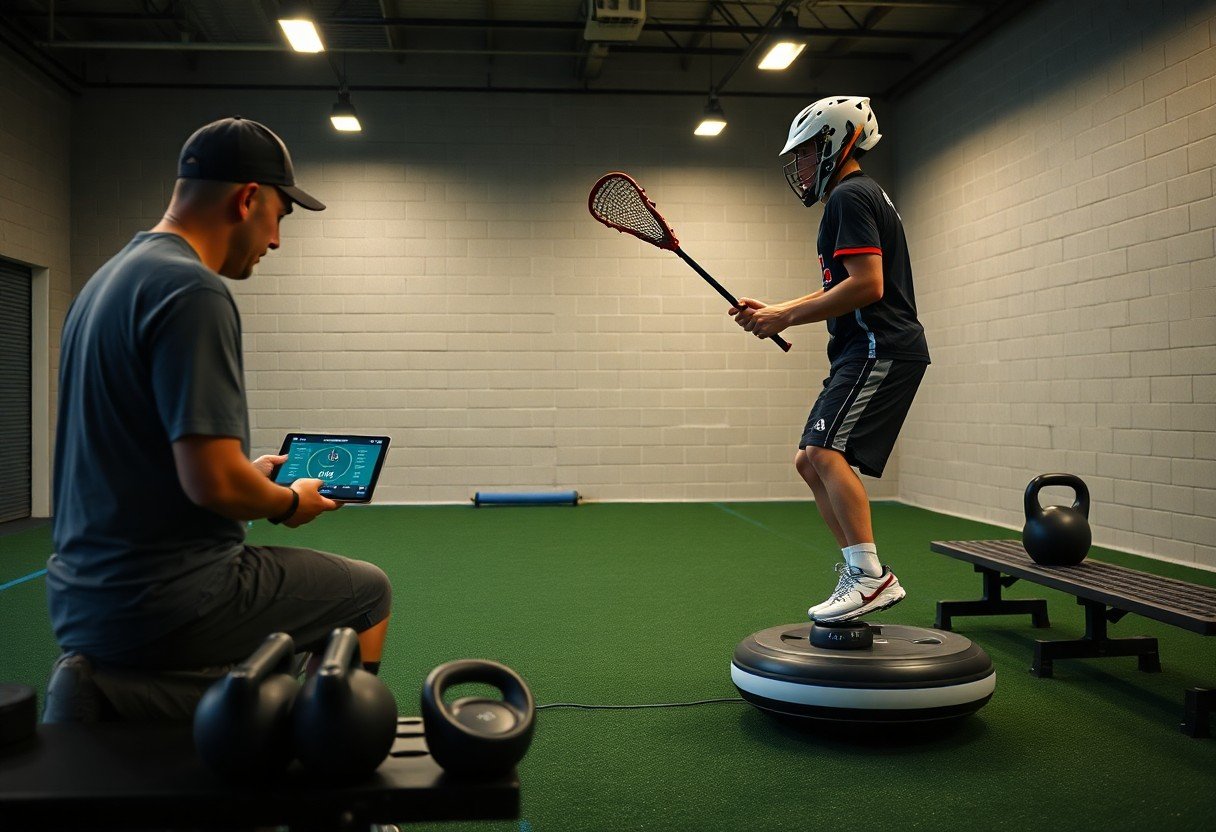
You can sharpen decision-making by training attention and stress tolerance through short, structured routines: 5-10 minutes of visualization, 4-4-4-4 box breathing pregame, and twice-weekly sessions with 10 high-pressure reps. Emphasize situational cues-shot clocks, ride-side checks-and use video feedback to shave tenths of seconds off reaction time. A repeatable pre-play routine stabilizes arousal and improves execution when games intensify.
Focus and Concentration Techniques
You should use breath control (box breathing 4-4-4-4), gaze stabilization drills, and micro-routines to lock attention. Try 3 weekly 5-minute concentration blocks: 90 seconds tracking a moving ball, 15 seconds reset, then simulate crowd noise to test focus. Pair that with a simple 3-step pre-play checklist-scan, settle, act-to reduce distracted plays and speed decisions under pressure. Consistent short drills produce measurable gains in attention span.
Building Resilience and Confidence
You build resilience by exposing yourself to controlled pressure: end-of-game scenarios, 2-minute man-down drills, and forced turnover replications until success rates rise. Track attempts and outcomes in a short log over a 6-8 week block to quantify progress. Objective feedback and repeated exposure shift your response from panic to problem-solving and increase poise during real contests.
To implement this, schedule 2 dedicated pressure sessions per week with 10-15 scenario reps each (30-90 seconds per rep): trailing with 60 seconds left, clearing under a double team, or defending a man-up set. After each rep, record one metric (turnovers, successful clears) and do a 1-2 minute video review within 48 hours, plus one corrective action to apply next rep. Use short CBT-style reframes after mistakes-note one lesson and one action-to reduce rumination; target a measurable improvement (for example, a 10-15% rise in successful executions over 6-8 weeks).
Conclusion
From above, you should integrate sport-specific skills with strength, power, agility and endurance work while prioritizing mobility, balance and proper technique to reduce injury risk. Structure progressive overload, recovery, targeted warm-ups, and neuromuscular training into your routine, monitor load and fatigue, and consult coaches or medical professionals to optimize performance and long-term health.
FAQ
Q: How should I structure a weekly lacrosse training plan to balance skill work, conditioning, and strength?
A: Build a plan with 4-6 sessions per week that separates skill, conditioning, and strength while allowing recovery: 2 skill sessions focused on stickwork, shooting, and decision‑making; 2 conditioning sessions (one anaerobic/interval, one aerobic or active recovery); 2 strength sessions emphasizing compound lifts and unilateral work. Use periodization: off‑season = base strength and aerobic volume; pre‑season = increase sport‑specific intensity and plyometrics; in‑season = maintain strength with reduced volume, prioritize recovery and practice. Progress loads gradually (5-10% weekly changes), and schedule at least one full rest day plus light recovery modalities after heavy efforts.
Q: What conditioning methods best transfer to lacrosse performance?
A: Lacrosse requires repeated high‑intensity efforts with brief recovery. Train both aerobic capacity and repeated sprint ability: include HIIT (e.g., 6×30s efforts with 90s rest), repeated sprint sets (10×15-30m sprints with 20-60s rest), shuttle runs for change of direction, and small‑sided games to replicate decision demands. Maintain one aerobic session per week for recovery and work capacity. Use work:rest ratios reflecting match demands (roughly 1:3 to 1:6). Monitor fatigue and adjust volume to avoid overtraining.
Q: Which strength and mobility exercises reduce the risk of common lacrosse injuries?
A: Emphasize posterior chain, hip stability, single‑leg strength, core control, and shoulder resilience. Key exercises: Romanian deadlifts/hip thrusts, split squats/single‑leg RDLs, Nordic hamstring curls, Bulgarian split squats, banded lateral walks, single‑leg balance drills, Pallof presses, anti‑rotation core work, and rotator cuff external rotation and prone Y/Ts. Include thoracic mobility drills and ankle dorsiflexion work. Prescription: 3-4×4-8 for maximal strength, 2-3×8-15 for hypertrophy/endurance, and 2-3×10-20 for rotator cuff and single‑leg stability work. Prioritize proper technique and progressive overload.
Q: What warm‑up and cool‑down routines minimize injury risk on game and practice days?
A: Warm up 10-15 minutes with dynamic, movement‑specific progressions: light aerobic activation, dynamic mobility (leg swings, hip CARs, thoracic rotations, ankle drills), movement prep (walking lunges with twist, A‑skips, carioca), acceleration build‑ups, and sport‑specific stick drills. Finish with brief high‑intensity reps that mirror game actions. Cool down with 5-10 minutes of low‑intensity aerobic work, targeted soft tissue work or foam rolling, and gentle static stretching for tight areas (hip flexors, hamstrings, pecs). Use consistent sleep, nutrition, and hydration strategies to support recovery.
Q: How should I manage load, soreness, and minor injuries during the season to stay available?
A: Monitor internal load (RPE, soreness) and external load (minutes, distance, sprints). When soreness or cumulative fatigue appears, reduce volume before intensity-shorten sessions or cut repetition sets while maintaining movement quality. Use active recovery (cycling, pool work), cryotherapy or contrast baths for acute inflammation, compression, and targeted soft tissue treatment. For minor strains, follow RICE/relative rest initially, then progress to mobility, strength, and sport‑specific retraining once pain allows. Seek professional evaluation if pain persists beyond a week, if strength or range of motion is compromised, or if symptoms worsen. Implement a graded return‑to‑play: pain‑free strength, full ROM, controlled sport drills, then full training load.