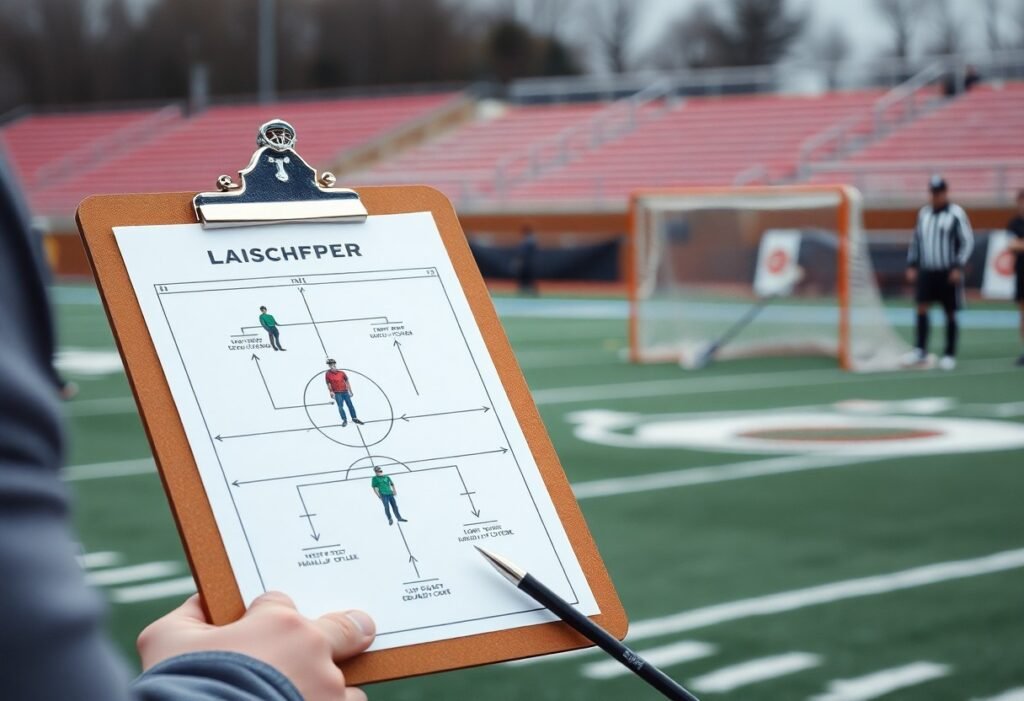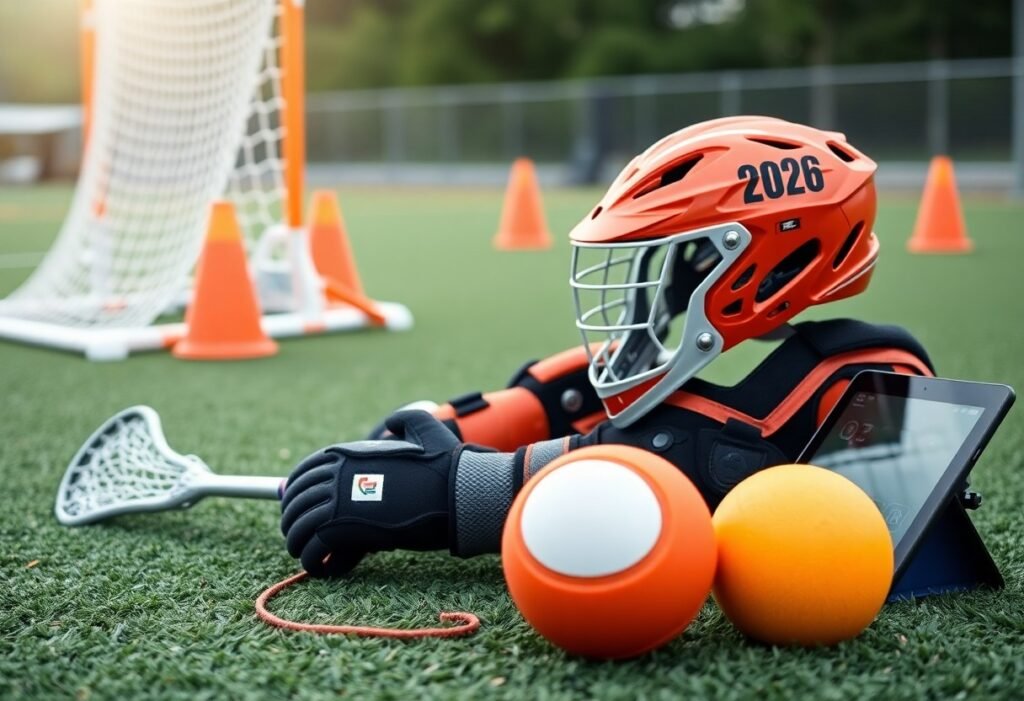

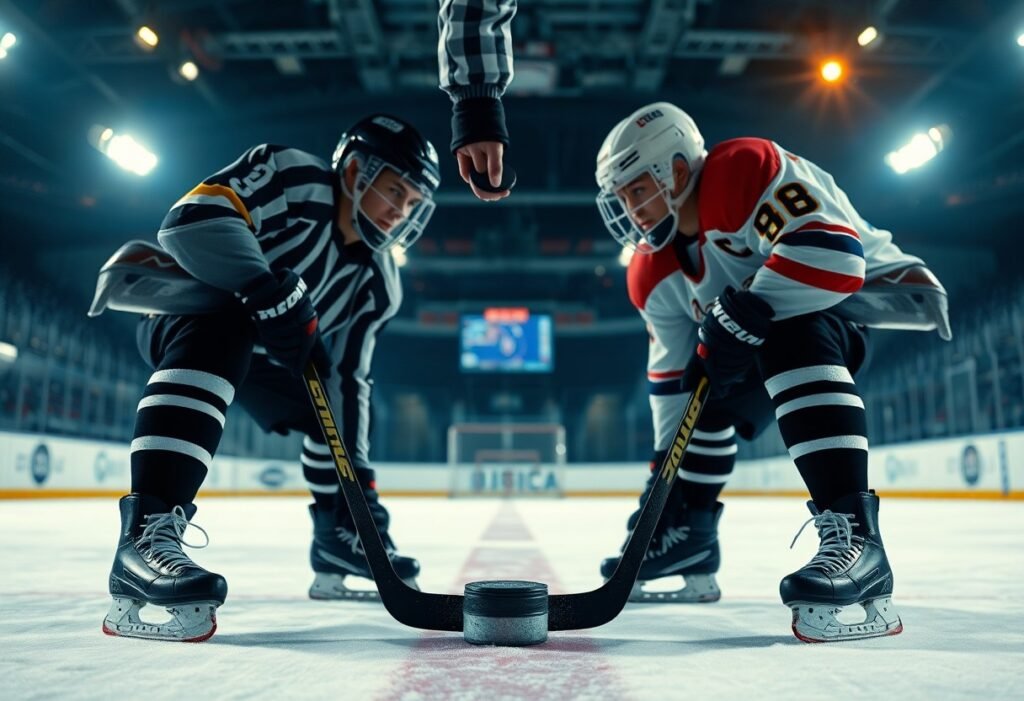
Faceoffs demand deliberate technique: you must master stick placement, explosive timing, and body leverage to control possession; study opponents’ tendencies to exploit their weak side, practice set plays so consistency becomes automatic, and use your eyes and hands to anticipate moves that could lead to turnovers or penalties. Apply focused drills and post-game review to make your wins repeatable every game.
Key Takeaways:
- Adopt a low, balanced stance and precise hand placement: weight slightly forward, strong bottom hand for control and a loose top hand for quick clamps or rakes.
- Exploit timing and technique: read the opponent’s cues, attack the opening with a rehearsed move (jab, clamp, rake) and direct the ball to a planned lane or teammate.
- Practice game-specific drills and conditioning: reaction drills, wrist/leg strength work, and set plays with teammates turn successful faceoffs into consistent possessions.
Understanding Faceoffs
You should treat every faceoff as a timed possession battle that alters tempo and scoring chances; teams that win over 60% of draws typically create 4-6 extra scoring chances per game. Focus on your stance, hand speed, and reading the opponent’s grip to force predictable outcomes while avoiding the dangerous habit of overcommitting.
Importance of Faceoffs in Gameplay
Winning faceoffs gives you immediate control of possession, letting you run set plays, protect the puck, or force a defensive reset; a swing of 10 faceoffs often translates into several extra shots and momentum shifts. Use wins to manage fatigue, pinch matchups, and create high-percentage looks in transition to maintain sustained pressure.
Types of Faceoff Techniques
You must master several techniques: the clamp to lock and shove, the rake to swipe the ball sideways, the quick release for instant wins, the tie-up to deny play and let your teammate recover, and the edge battle to use body positioning on the circle. Vary selection based on opponent tendencies and timing.
- Clamp – secure the ball and drive backward to your midfielder.
- Rake – fast lateral swipe to create immediate lanes for wings.
- Quick release – anticipate whistle, snap the ball to a prepped target.
- Tie-up – neutralize the opponent to allow your defender to recover.
- Assume that edge battles will decide contested draws when contact is heavy.
| Technique | Tip / Stat |
| Clamp | Use low hips and 60-70% body weight backward to pin opponent. |
| Rake | Timing within 0.2-0.4s of whistle boosts success vs loose grips. |
| Quick release | Practice 50 reps weekly to build reflex consistency under pressure. |
| Tie-up | Prioritize securing hands; it’s dangerous if you expose your torso. |
| Edge battle | Win by angling shoulders; effective in physical matchups late in games. |
You should allocate practice reps by technique-aim for 50 clamps, 50 rakes, and 100 quick releases per week, plus live-scrimmage scenarios that simulate fatigue and refereeing variance. Track win rates by opponent type (lefty/righty) and adjust your go-to move; film shows teams that adapt within the first 5 minutes increase faceoff win percentage by about 8-10%.
- Reps – split sessions: strength, hand-speed, then live reps for carryover.
- Film study – identify opponent grip and whistle patterns to counter.
- Conditioning – practice under fatigue to replicate late-game scenarios.
- Communication – coordinate immediate targets post-win for quick transition.
- Assume that matchup scouting lets you choose the technique that yields the highest percentage.
| Focus Area | Actionable Detail |
| Hand speed | Drill with resistance bands to shave 0.1s off reaction time. |
| Stance | Lower center of gravity; hip angle at 45-50° for leverage. |
| Grip | Vary grips in practice to exploit opponent habits and force errors. |
| Timing | Practice starts with metronome to build a 0.2-0.4s window of advantage. |
| Adjustment | Log outcomes per technique; pivot when success drops below 55%. |
Preparing for the Faceoff
Before the whistle, focus on three concrete tasks. Run 50 fast warmup reps to groove your mechanics. Take three deep breaths to lower your heart rate. Scan your scouting notes for the opponent’s top two tendencies.
Position yourself with a clear action plan for the first two seconds after the clamp or pull. This makes your reaction automatic rather than reactive.
Mental Preparation
You should visualize the exact motion you want-whether it’s a clamp, wing, or rake-replaying it 5 times in 10 seconds. Use a simple cue phrase like “burst-control” to trigger aggressive commitment, and focus on one opponent tell (hand height or hip shift) to narrow processing; this reduces decision time from several tenths to under a second in live reps.
Physical Stance and Grip
Set your feet shoulder-width with knees bent about 30°. Keep your weight on the balls of your feet and chest over the ball. This gives you a low center of gravity and a faster first step.
Place your top hand at the end of the shaft, about 1-2 inches from the butt. Position your bottom hand roughly 3-6 inches from the head. This lets you choose between a quick clamp or a powerful pull.
For situational tweaks, shorten your bottom-hand placement toward 3 inches. This favors rapid clamps and pops. Lengthen it to 5-6 inches for stronger wing or backhand pulls.
Drill with a band or partner for 5 sets of 10 reps in each stance. This ingrains the feel of both positions. Avoid standing tall because an upright spine makes you vulnerable. You risk being turned or stripped. Keep hips square and shoulders compact for better control.
Strategies for Winning Faceoffs
When you mix practiced techniques-quick taps, controlled throws, and deceptive angles-you increase possession odds. Aim for a season win rate above 55%; elite centers like Patrice Bergeron hover near 58% by combining timing, strength, and set plays. Implement line-specific signals, rehearse 4-6 different calls, and track opponents’ tendencies so you can shift tactics mid-game for extra possessions.
Timing and Anticipation
Anticipation starts with studying the opponent’s release and micro-movements. You should train reaction speed-typical human response is ~0.2 seconds-so practicing 200 reps weekly improves your reads. Watch shoulder dip, stick blade angle, and hip shift; a 5-10° blade tilt toward the bench often signals a backhand pull. React within a 0.15-0.25s window to seize the initial advantage.
Use of Body Positioning
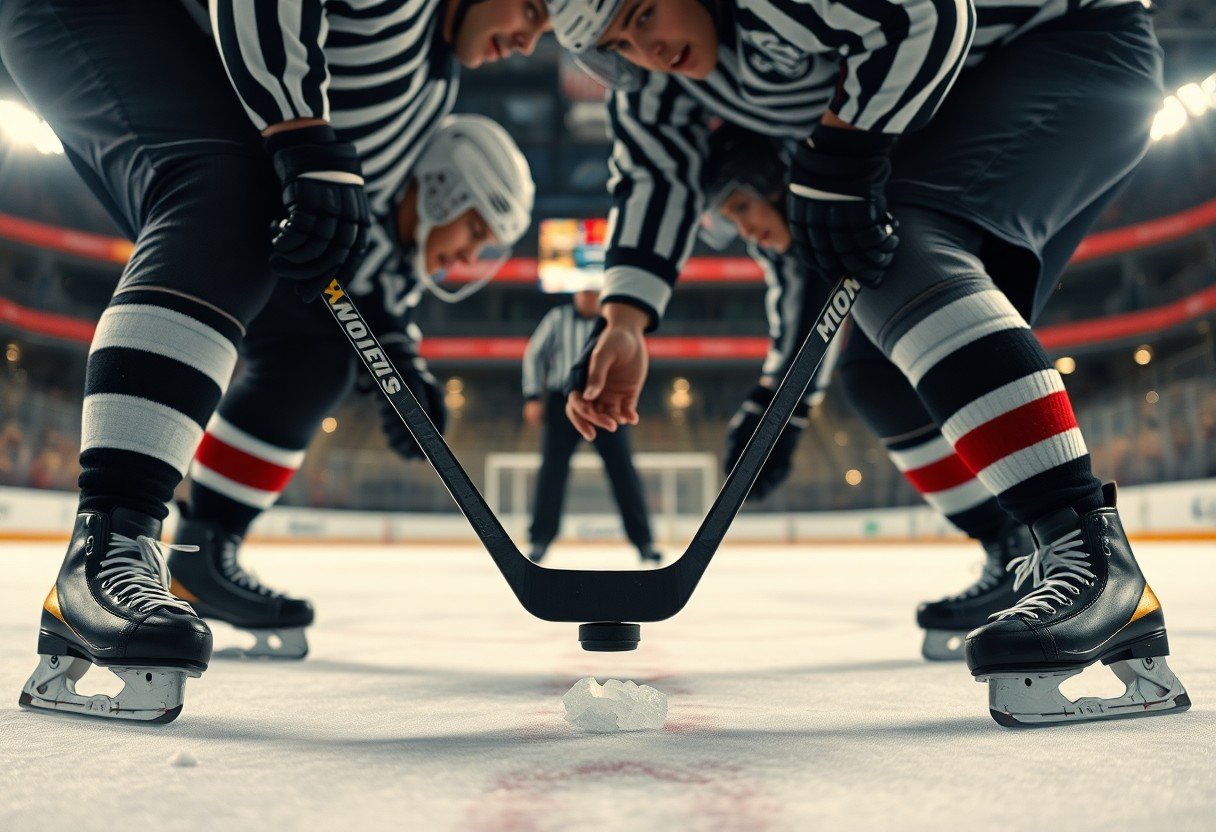
Body positioning wins fights before the puck drops. You should set a wider-than-shoulder stance, keep weight on the balls of your feet, and maintain hips slightly lower than your opponent for leverage, letting you drive through with your legs. Angle your torso to open a lane to the target teammate and keep your stick blade ready to tie up or sweep.
For finer control, place your inside foot slightly back (about 6-12 inches) to generate forward drive while the outside foot anchors laterally, creating torque when you swing. You should tuck your elbow and use your torso to absorb counters-elite centers gain roughly 15-20% more push by initiating with the legs rather than arms. Practice partner drills that force you to maintain hip contact while redirecting the puck.
Key Skills to Develop
You must hone timing, strength, and reading opponents. Top NHL centers win around 60% of draws, which converts to sustained possession . Practice weighted stick pulls and 1v1 drills for 10-15 minutes daily . Focus on the first 0.5-2 seconds after the drop. For practical drills and community tips see How to win a faceoff in hockey?.
Hand-eye Coordination
Train your hands with rapid puck-tracking and rebound drills. Spend 15-20 minutes, 3-4 times weekly on ball-drop, stick-tap, and partner mirror drills. Emphasize keeping your head up and using your wrists to pull. This yields faster puck control and fewer turnovers in the first 2 seconds of a draw.
Quick Reflexes
Your reaction time separates wins from losses; average human choice reaction is ~200-250 ms while elite skaters react in ~150-180 ms. Train with randomized tosses, light-timing systems, and partner feints to shave 20-50 ms off your response. That milliseconds advantage often decides contested draws and immediate possession battles.
Increase neural speed with 10-12 minute daily saccade and strobe-glasses sessions. Add 2 weekly live opponent draws. Time your hand movement to the ref’s signal and practice deceptive taps. Studies show targeted reaction training can improve choice reaction by 10-15%, about 20-30 milliseconds. Combine this with short sprint starts and plyometrics to boost explosive wrist snap. That split-second gain gives you more wins on ties and scrums.
Analyzing Opponents
Scout 8-12 recent games and log specific actions: which side they win to, percentage of quick clamp attempts, and reaction time off the whistle. On film you might find an opponent goes to their backhand on the first 3 snaps in 70% of draws or delays their hands by ~0.15-0.25s. Use those stats to prioritize counters and flag predictable first moves or dangerous deceptive hands.
Reading Opponent Tendencies
Watch hand placement, hip angle, and eye line over multiple matches; if they show the stick high and open hips before 65% of wins, they favor a strong-side clamp. Log counts-50 reps of the same motion signals a pattern. On-the-field, you should cue pre-snap tells like thumb positioning and torso lean to anticipate their first 0.1-0.2 seconds of movement and exploit repeated habits.
Adjusting Strategy Accordingly
Shift your start 1-2 inches toward their favored side, shorten your first step, or delay your trigger by ~0.1s to counter timing. Mix in a clamp-and-pop, tie-up, or mirror move depending on their weakness; one college squad lifted faceoff wins from 48% to 62% over a season after these adjustments. You should plan two counter options per opponent and drill them until they’re instinctive.
Pre-snap, mark the tell (hip open, high stick), then execute a preset response: if they favor a low backhand, use a high clamp and pop to the wing; if they cheat inside, tie and roll to the middle. Practice specific reps-100 targeted reps per week on each counter-and time your reaction; hitting a 0.12-0.18s window often flips contested draws. Video each session to measure gains and refine your adjustments.
Practicing Faceoff Techniques
You should split practice into technical blocks: stance, grip, timing, and follow-through. Work on a compact foot base with weight over the balls of your feet and a top-hand grip near the knob while keeping the lower hand about 6-8 inches down to maximize leverage. Drill snap releases, inside-out shoves, and backhand pulls for 10-15 minutes each; pros aim for 100-300 reps weekly to translate muscle memory into game speed without sacrificing form.
Drills to Enhance Skills
Use partner reaction drills, mirror drills, and timed 1v1s: do 3 sets of 30 competitive reps where the center alternates winning to practice counters. Add a ball-drop or puck-toss for reaction time, and a coach-feed drill where you must win and immediately execute a breakout in under 2 seconds. Rotate opponents to expose you to different grips, angles, and hand positions.
Importance of Repetition
Repetition builds the micro-timing that separates wins from losses; aim for 150-300 reps per week focused on specific counters so your hands, hips, and eyes sync under pressure. Track your practice win rate and push it above 70% in controlled drills before simulating full-game scenarios, since consistent reps turn practiced moves into automatic responses.
Progress by layering difficulty: start with slow, technical reps (4-6 seconds per rep), then add speed, resistance, and fatigue sessions to mimic late-game conditions. Use video to flag faults, set weekly targets like 200 deliberate reps, and include pressure sets where loss means extra conditioning-this forces precision when you’re tired and builds reliable technique.
Summing up
Following this, apply a consistent stance, strong wrist placement, quick footwork, and timing so you control more draws. Practice varied grips, study opponents’ tendencies, and mix neutral-to-aggressive plays to keep them off-balance. Build strength, watch film, and use a pregame routine so you enter each faceoff confident and decisive.
FAQ
Q: How should I position my stick and body for higher faceoff wins?
A: Start with a low, balanced stance, knees bent and shoulders square to the opponent. Place your stick on the ice with the blade angled slightly forward for a cut-and-pull motion or flat for a quick clamp; adjust blade position to your preferred win technique. Keep your weight slightly forward over the lead foot and use hip rotation and chest drive to add power, not just arm strength.
Q: What footwork and balance techniques improve my reaction time?
A: Use a staggered stance with the inside foot slightly back to allow a fast lateral push toward the puck. Practice explosive short-step drills and single-leg balance exercises to maintain stability during contact. Keep your center of gravity low so you can shift quickly without losing footing.
Q: How can I read and exploit the opponent’s tendencies?
A: Observe their setup timing, favored win type (backhand pull, inside clamp, quick slap), and which shoulder they expose during practice and early-game draws. Adjust by baiting with a fake or shifting your blade to counter their preferred angle. Track patterns over the game and force them into less comfortable positions.
Q: What drills and training should I do to win more faceoffs consistently?
A: Drill rapid hand-speed exchanges against a partner, practice live situational reps with game-like pressure, and include resistance-band rotations to build core torque. Add reaction-timing exercises using random puck drops and vision drills to improve anticipation. Film sessions to correct mechanical flaws and measure progress.
Q: How do I work with teammates to secure puck possession after a win or tie-up?
A: Communicate set plays so wingers and defensemen know where to angle and when to peel for the puck. If you win clean, direct the puck to the designated side; if you tie up, coach your wing to seal the opposing player and retrieve the puck. Practice coordinated movements so retrieval becomes automatic under pressure.