
Many families find cornhole a simple way to get kids outside, and you can adapt rules and equipment to suit ages and space; age-appropriate beanbags and lowered board angles keep play fun while avoiding tripping or choking hazards. You can teach teamwork, boost hand-eye coordination, and set clear supervision and sun-safety guidelines so your game stays safe and positive. Use soft targets, marked boundaries, and short sessions to maintain energy and focus.
Key Takeaways:
- Simple setup and safe play: use lightweight boards and soft beanbags, adjust throwing distance for age, and supervise young children.
- Builds motor skills and social interaction: enhances hand-eye coordination, counting, turn-taking, and teamwork.
- Highly adaptable and fun: scale board/beanbag sizes, add themed targets or scoring variations for parties and learning activities.
What is Cornhole?
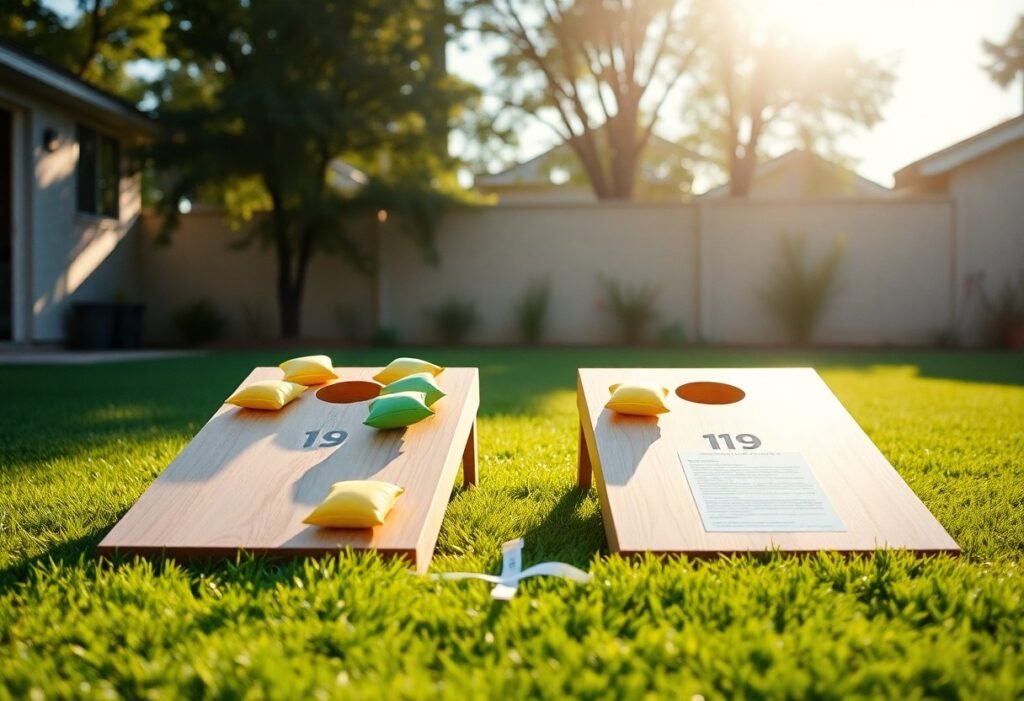
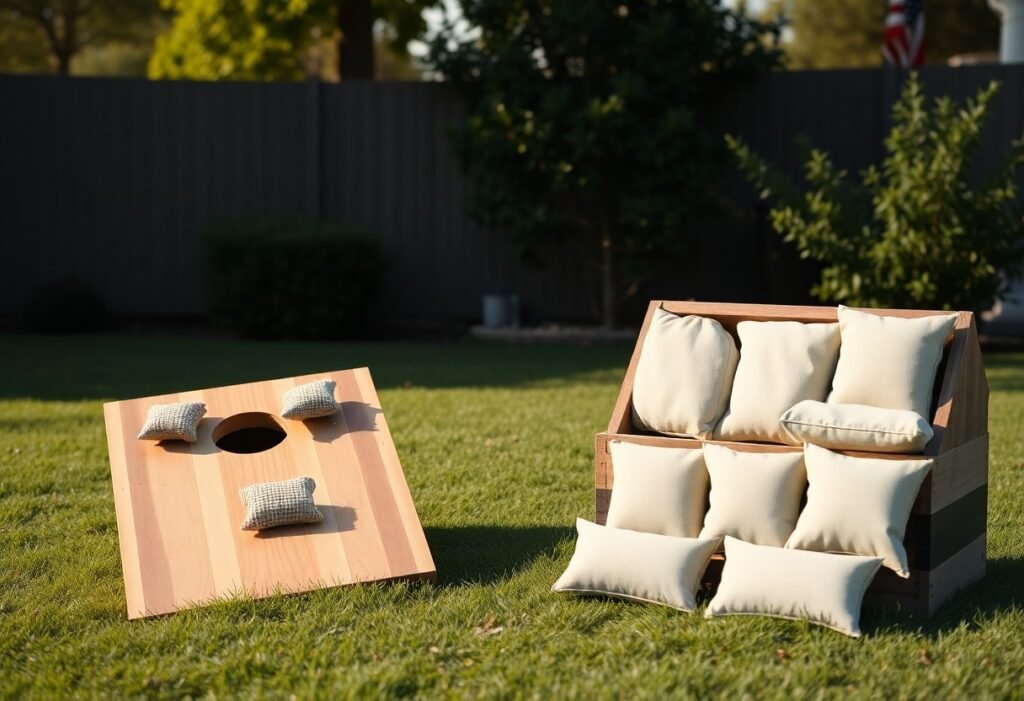
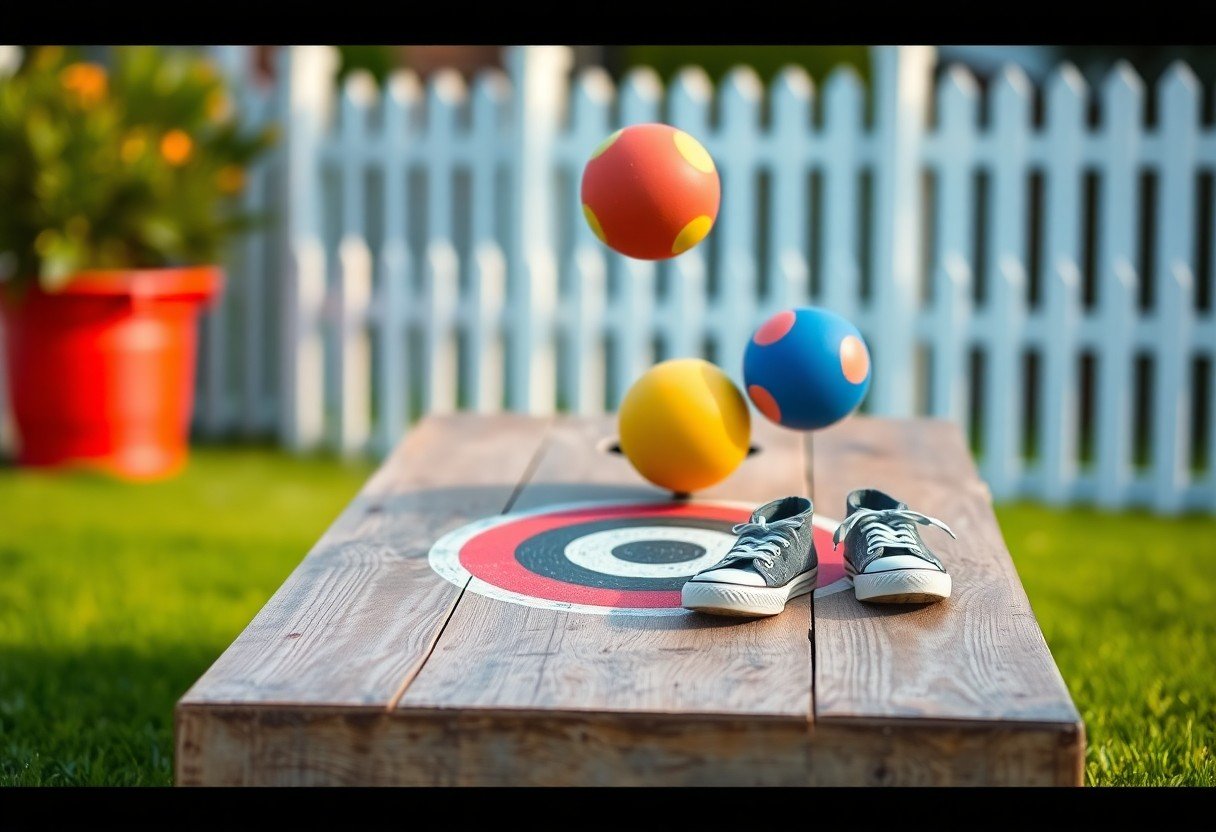
You pitch soft, square bags at a slanted wooden board with a 6″ hole; the official board is 48″ x 24″, though kids’ boards can be smaller. Players score by landing bags on the board or through the hole, which builds hand-eye coordination and outdoor social play. For younger children, use lightweight 6-8 oz bags and shorten the distance to keep the game safe and fun.
History of Cornhole
Folklore ties cornhole to 19th-century Midwestern backyard games, evolving from simple beanbag tosses into organized play. Over the last few decades it spread through tailgates and family reunions, with local tournaments turning amateur rules into standardized ones. You’ll see regional variations-some use corn-filled bags, others resin pellets-but the core has stayed the same: easy setup, broad appeal, and multigenerational play.
Rules and Gameplay
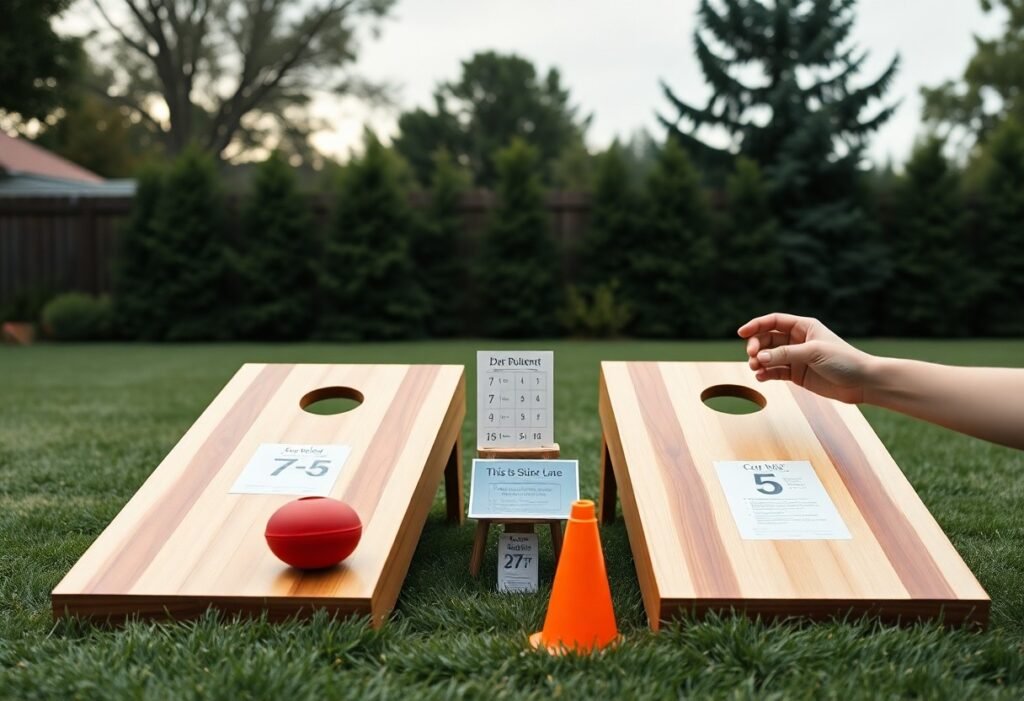
Teams take turns pitching four bags each toward the opposite board; a bag through the hole is 3 points, on the board is 1 point, and opposing scores cancel each inning. Standard adult pitch distance is 27 ft between board fronts, but you should reduce that to 10-15 ft for kids. Supervise closely and choose softer bags to prevent accidental injuries.
Games typically play to 21 points using cancellation scoring; if you prefer faster rounds, set a 15-point target or a time limit. Singles or 2v2 teams alternate tosses, and you must stay behind the foul line at the front edge of your board when releasing. Practicing an underhand arc and aiming for the board’s front third increases consistency and safety by avoiding aggressive low throws.
Benefits of Cornhole for Kids
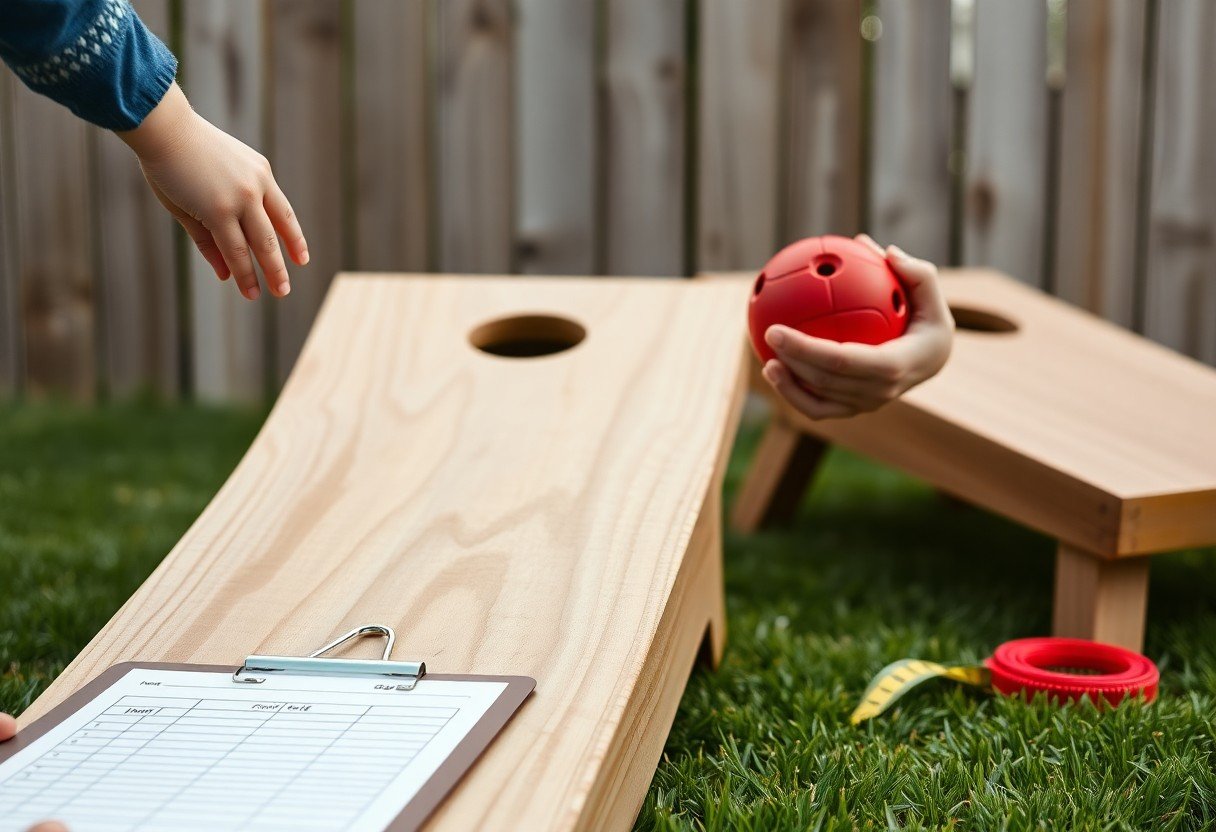
Playing cornhole builds coordination, concentration and simple math skills while keeping play low-risk and fun. You’ll see measurable gains after 15-30 minute sessions: improved hand-eye timing, steadier throws, and better balance. Use lightweight boards, soft beanbags, and supervise young children. For kid-focused rules and variations, consult Fun and Simple Ideas For Playing Cornhole With Kids Of ….
Physical Activity
Younger players get light aerobic benefit from walking between boards and bending to pick up bags, while throwing engages shoulder, wrist and core muscles. Aim for 15-30 minute play windows and shorten the standard 27 ft adult distance to about 12-20 ft for elementary ages. Emphasize adjusted distances and safe equipment so activity boosts fitness without undue strain.
Social Skills Development
You’ll find cornhole naturally teaches turn-taking, patience and basic scorekeeping-playing to 21 practices addition and decision-making. Organize 2v2 teams to promote communication, rotate partners to build confidence, and keep rules simple to limit frustration. Praise cooperative moves and track progress with small goals like completing three rounds calmly.
Use drills like “coach-and-toss” (one child gives feedback while the other makes 10 throws) or relay-style games that require planning and verbal cues. For ages 5-10, keep sessions near 20 minutes, mix cooperative with competitive formats, and actively encourage fair play while modeling conflict resolution when disputes occur.
Setting Up a Cornhole Game at Home
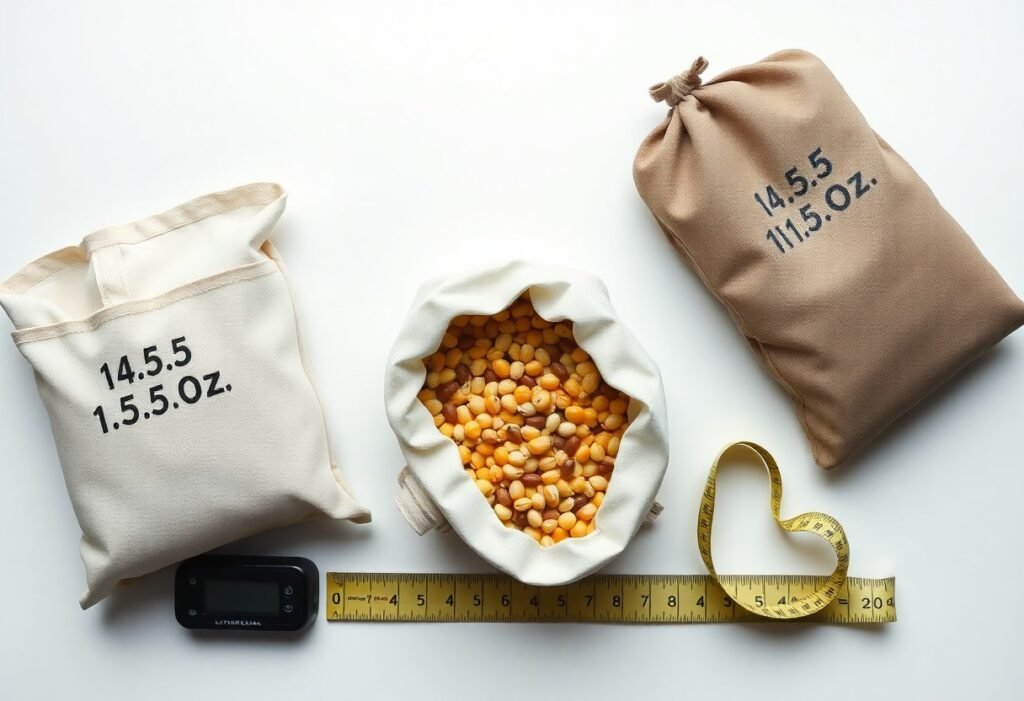
Place boards so the front edges are spaced to suit ages: the regulation 27 feet is fine for teens and adults, but for kids set 10-20 feet – try 10 ft for toddlers, 15 ft for ages 5-8, 20 ft for 9-12. Use the standard 48″x24″ board with a 6″ hole centered 9″ from the top and 6″x6″ bags weighing 14-16 oz, and keep a clear play corridor of at least 3 feet each side to avoid collisions and trips.
DIY Cornhole Boards
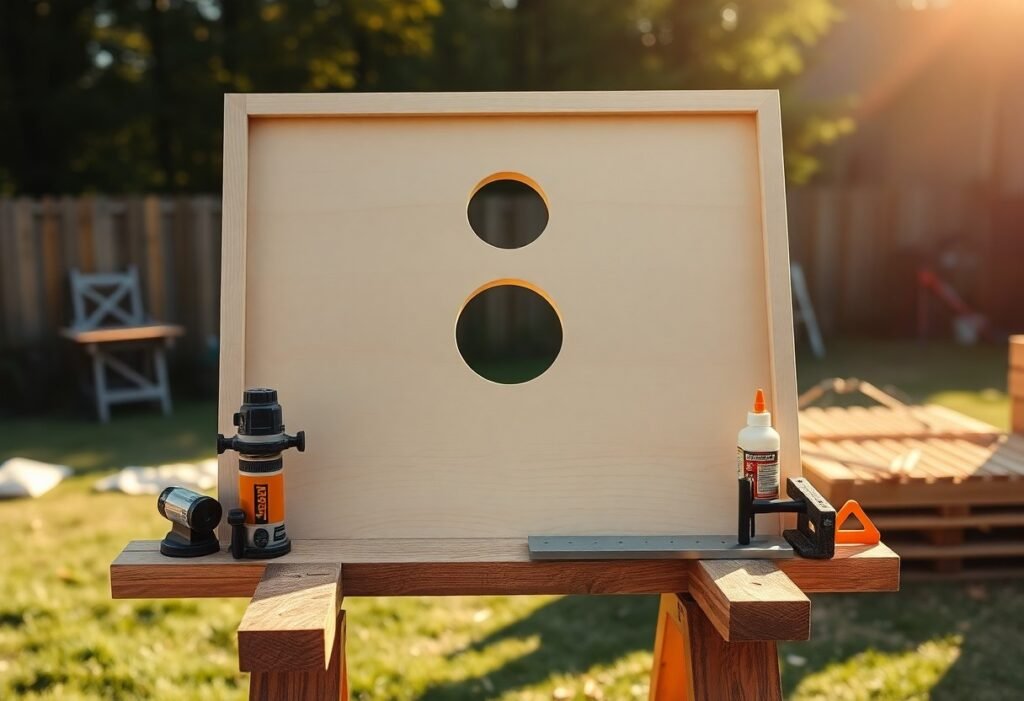
Build two boards from 3/4″ plywood (48″x24″) with a 6″ hole 9″ from the top, framed with 2x4s and foldable legs for storage. Sand edges, paint durable designs, and seal with exterior polyurethane so they withstand weather; a finished board typically weighs about 20-30 lb. Use clamps and a jigsaw, but operate power tools safely-always have an adult handle cutting and drilling.
Safe Playing Area
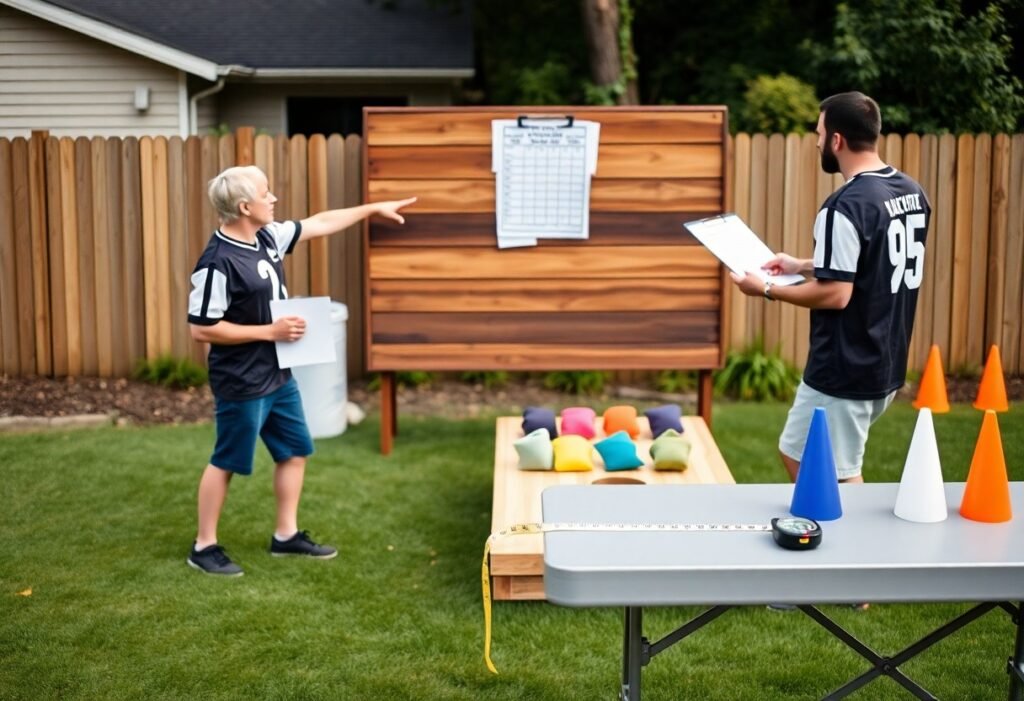
Choose a flat area free of obstructions, avoiding slopes and uneven ground that can cause trips; grass is ideal because falls are softer than on concrete. Keep the court away from busy roads, pools, and patios, and mark boundaries with cones or chalk so players know where to stand and where bags might land.
Measure and mark distances before play: allow at least 3 feet of side clearance and about 10 feet of space behind each throwing position for movement and retrieval. Provide shade and water on hot days, use portable lighting if you play after dusk, supervise younger children closely, and keep a basic first-aid kit nearby; secure boards on slippery surfaces to prevent tipping and avoid letting very small children handle full-weight bags.
Creative Cornhole Variations
Shake up play with variations that keep kids engaged: add glow-in-the-dark paint for evening games, mark concentric scoring rings on the board (3,2,1 points), or run relay-style team rounds where players retrieve bags after each toss. You can shorten distances to 8 to 12 feet for ages 5-8 and keep regulation 27 feet for teens. Supervise to avoid trip hazards and choose soft, lightweight bags so play stays fun and safe.
Themed Boards and Bags
Let kids personalize gear with sports team logos, animals, or holiday motifs using vinyl decals, washable paint, or iron-on transfers; offer 3-4 themed designs at parties to form teams. You should prefer sealed appliqués over loose decorations and select fabric bags under 16 ounces to prevent injury and extend durability. These visual themes boost motivation and help younger players identify their turn quickly.
Scoring Modifications
Modify scoring to match attention spans and skill: standard hole = 3 and on-board = 1, play-to-11 for quick rounds or play-to-21 for longer games. You can use cancellation scoring where opposing points cancel, or the rapid “bingo-bango-bongo” method that awards points for first-on-board, closest-to-hole, and first-in-the-hole. Set clear, pre-set rules so kids understand scoring and stay engaged.
You can simplify for younger children by playing first-to-11 with no cancellation, hole=3 and board=1 – family tests show novice 6-8 year-olds often finish in 8-12 minutes. For older kids introduce an exact-21 “bust” rule to teach strategy, or add a bonus: two consecutive hole shots = +2 points. Keep systems straightforward to avoid frustration and maintain momentum during play.
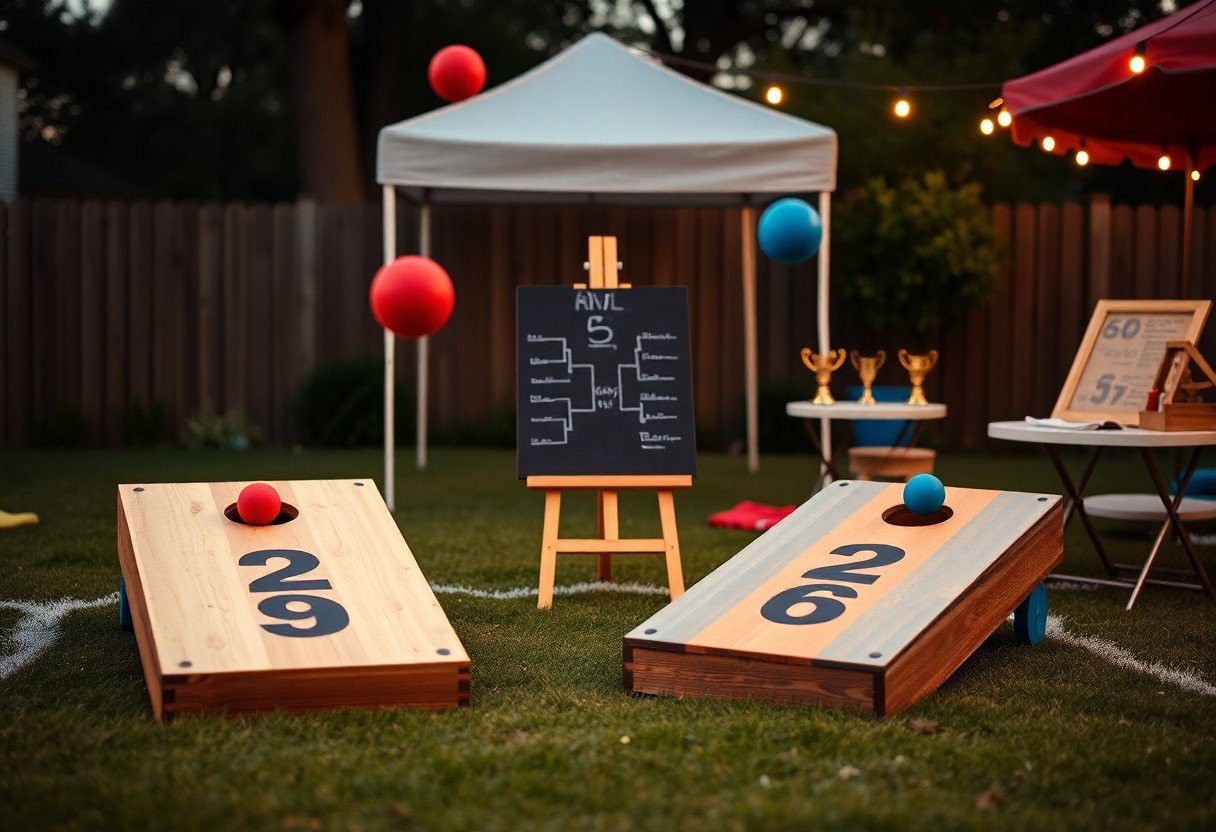
Organizing a Cornhole Tournament
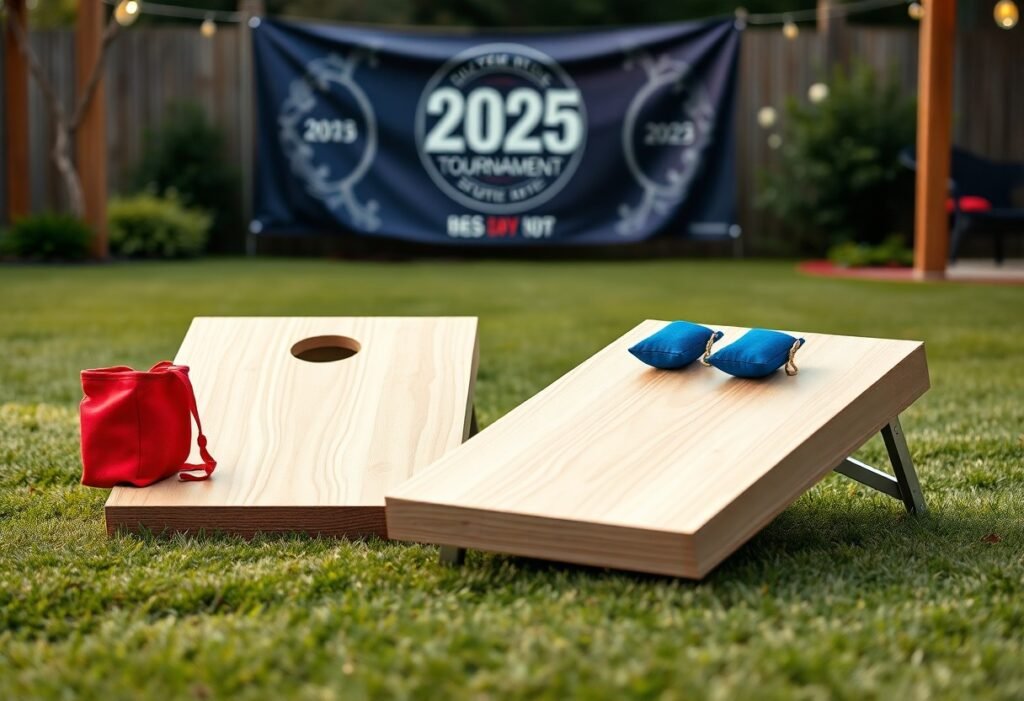
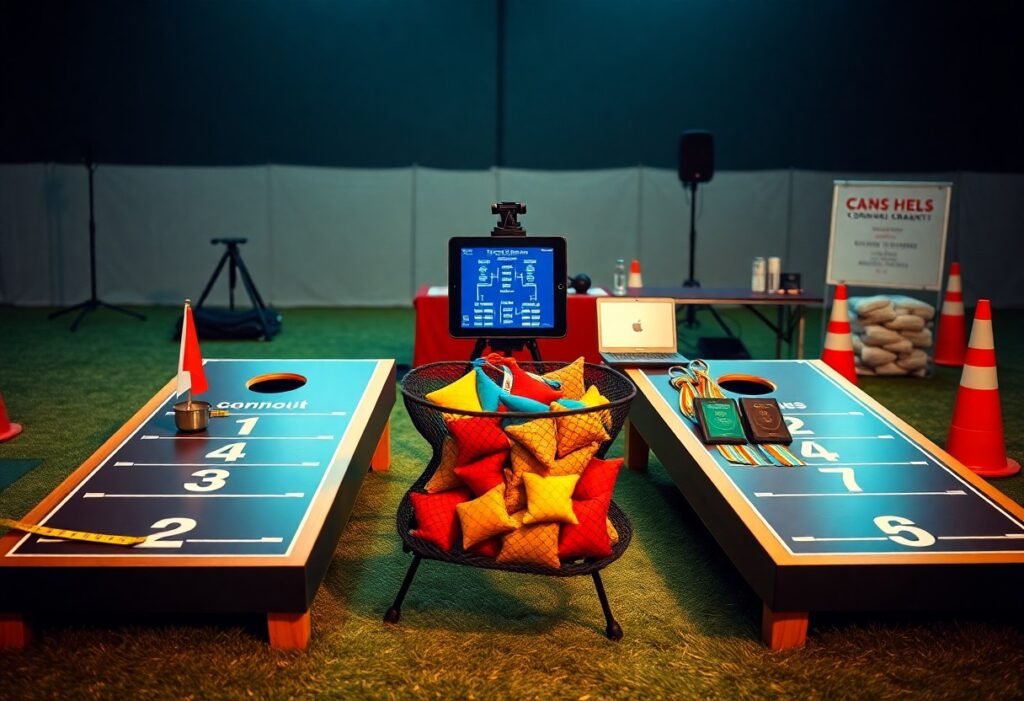
Aim for 8 to 16 teams to finish in 2-3 hours. Set matches to 11 points for quicker play. Allocate 10-15 minutes per match. Run 2-4 courts in parallel to avoid long waits. Use a simple bracket, like single or double elimination. Appoint a scorekeeper for each court. Enforce clear safety zones so bystanders stay out of throwing lanes.
Planning the Event
Schedule 20-30 minute time slots that include warm-ups. Post scores on a visible bracket using a free online generator or a whiteboard. Divide divisions by age to keep competition fair. Recruit 2-3 volunteers for registration and refereeing. Place courts at least six feet apart. Have spare bags and first-aid items on hand. Limit bag weight to 4-6 ounces for young throwers to reduce strain.
Prizes and Incentives
Offer tiered rewards to motivate everyone. Give champions trophies or custom beanbags. Award runners-up medals or gift cards. Give every child a participation ribbon. Consider experiential prizes like a pizza party. These often create stronger memories than cash.
Choose age-appropriate, safe prizes and budget about $5-$15 per participant; secure local sponsors to cover bigger awards and provide branded swag. DIY options-hand-painted certificates, custom stickers, or a photo board-work well, and be sure to avoid small choking hazards for younger kids by skipping tiny toys. Combine physical prizes with experiences (photos, pizza, group awards) to maximize excitement and community feel.
Other Backyard Fun Ideas
Branch out with a backyard rotation: set three stations-cornhole, a timed obstacle course, and mini-soccer-and rotate kids every 8-10 minutes to keep energy high and engagement steady. Use lightweight boards and soft beanbags for toddlers, move to regulation distances for teens, and add a simple scoreboard to teach scoring and turn-taking. Keep a shaded rest area and quick snacks to extend play. Recognizing how heat and attention span affect session length helps you plan safer, more enjoyable blocks of play.
- Obstacle course
- Mini-soccer
- Snack/rest station
- Scoreboard
Complementary Games
Rotate in quick, low-setup games that pair well with cornhole: ring toss for fine motor practice, sack races (15-20 m) for bursts of cardio, and giant Jenga for turn-based strategy; each can handle 4-10 players. Offer 5-10 minute mini-rounds to prevent boredom and use age-adjusted equipment-lighter rings, shorter lanes-to keep everyone challenged. Recognizing differing skill levels lets you tweak rules and keep competition friendly and inclusive.
- Ring toss
- Sack race
- Giant Jenga
- Short timed rounds
Outdoor Safety Tips
Prioritize a safe play area by clearing debris, leveling the surface, and anchoring boards to avoid tipping; require closed-toe shoes and remove tripping hazards like hoses or toys. Apply SPF 30+ sunscreen, offer water breaks every 15-20 minutes, and assign one supervising adult per 6-8 kids for direct oversight. Recognizing early signs of heat stress or injury means you pause play and provide first aid immediately.
- Surface check
- Anchored boards
- Sunscreen & hydration
- Supervision ratio
Plan activities around temperature and visibility: avoid intense play above 90°F (32°C), schedule higher-energy stations in cooler morning/evening windows, and rotate active games every 8-12 minutes to limit fatigue. Keep a first-aid kit with bandages, tweezers, antiseptic, and an antihistamine for allergic reactions, and teach kids the location of shade and water. Recognizing subtle cues-paleness, dizziness, or slowed response-lets you act before conditions worsen.
- Temperature limits
- First-aid kit
- Shade & water station
- Symptom awareness
Final Words
Drawing together your backyard cornhole plans gives you a versatile way to entertain kids, build hand-eye coordination, and foster friendly competition; adapt board size and rules to ages, prioritize safe play, and use themes or mini-challenges to keep your gatherings engaging and active.
FAQ
Q: What is cornhole and how can I set it up for young children?
A: For kids’ cornhole, shorten the throwing distance to 6-12 feet based on age. Use lower boards or lay them flat for toddlers. Choose soft, lightweight beanbags or foam alternatives. Mark clear throwing lines with tape or cones. Paint the hole edge a bright color for a visible target. Demonstrate an underhand toss to make play easier. Keep sessions short, around 10-20 minutes. Rotate players frequently to keep energy high.
Q: What ages can play and how should the rules be adapted for different age groups?
A: Preschoolers benefit from cooperative play where they aim for any board area. Let them stand close and use large, soft targets. Early elementary kids can use simplified scoring: 1 point for any bag on the board, 3 for a hole-in. Skip cancellations to avoid math complexity. Older kids can follow standard cornhole scoring with increased throwing distance. Adjust board height, bag weight, and rules to match motor skill levels.
Q: How can I keep cornhole safe for kids in the backyard?
A: Use soft, kid-friendly bags to avoid injuries, place boards on level, non-slippery ground, and clear the area of tripping hazards like toys or hoses. Supervise play to prevent roughhousing around the boards and limit the number of players at a throwing line. Provide sunscreen, shade, and water on hot days; encourage closed-toe shoes to protect toes near boards. Secure or anchor boards in windy conditions so they don’t shift or tip.
Q: What fun game variations and activities make cornhole more engaging for children?
A: Try themed targets with different score rewards. Hold relay races where teammates run, toss, and retrieve. Set cooperative challenges for a combined target score. Use timed rounds to add excitement. Practice accuracy with mini or moveable targets. Reward effort and improvement with stickers or simple prizes. For indoor play, use foam targets and soft bags. Try tossing into laundry baskets at short distances.
Q: How can I build or customize kid-friendly cornhole boards on a budget?
A: Use a 24″×48″ plywood sheet cut to standard size or smaller for little kids; round or sand all edges smooth and paint with non-toxic outdoor paint. Cut the hole slightly larger if using oversized soft bags. Add rubber pads underneath to prevent sliding and weatherproof with a clear sealant. Decorate with stencils, washable stickers, or themed vinyl (animals, superheroes, team colors) and let kids help with safe tasks like painting stripes. For a portable option, use corrugated plastic sheets or assemble folding frames to store easily.