
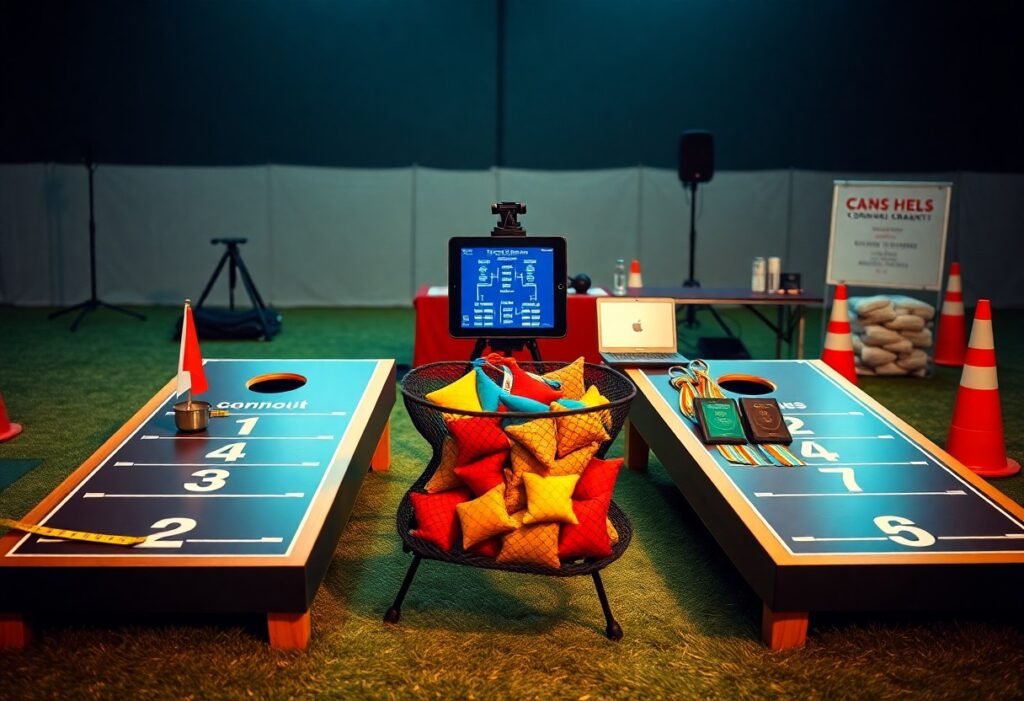
Hosting a successful cornhole tournament means you must plan logistics, safety, and scoring so your event runs smoothly; secure the playing area and mark hazards, set a clear bracket and schedule, and provide quality boards and scorekeepers. You assign helpers, enforce rules, and communicate formats and entry fees ahead of time. Offer great prizes and food and promote widely for turnout. Keep a backup plan for weather and emergencies to protect players and preserve fair play.
Key Takeaways:
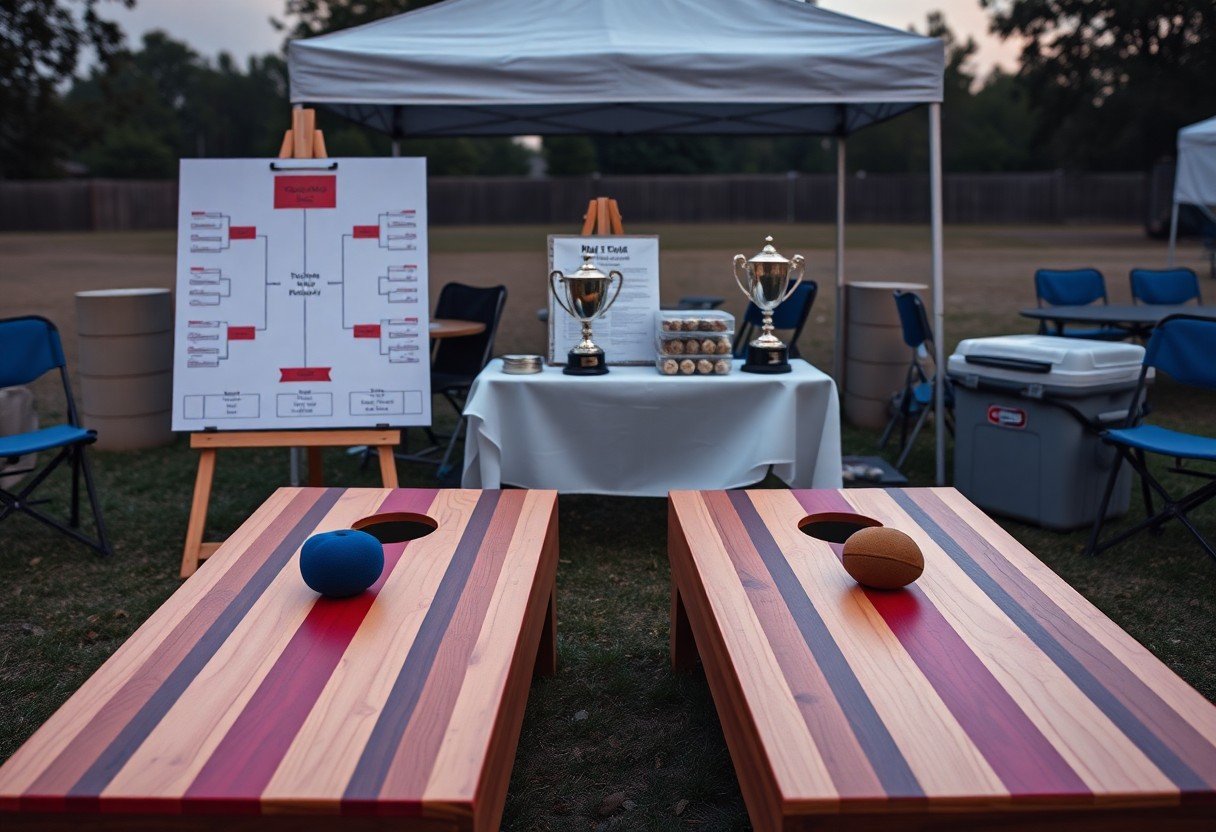
- Define format, rules, scoring, and schedule ahead of time and communicate them to all players.
- Set up regulation boards and bags, mark playing lanes, and create a visible bracket to keep matches running smoothly.
- Organize registration, volunteers or officials, prizes, and basic amenities (food, shade, first aid) for a positive participant experience.
Planning Your Tournament
You’ll lock down logistics that determine success: choose format and schedule, secure permits, arrange equipment and staffing, and build a contingency plan for weather or injuries. Aim for clear communication-post brackets and rules online and at the site-so players know start times and check-in procedures. For a one-day event plan for 3-5 hours for 8-16 teams and reserve extra time if you’re using double-elimination or expect delays.
Choosing the Right Date and Location
First, pick a weekend afternoon away from competing local events and school games. Then, confirm park rules, capacity, parking, and restroom access. When choosing a site, select a flat, grassy or paved area with room for at least 4 courts per 16 teams. Additionally, ensure the site has good sightlines and adequate shade or tents.
Next, apply for permits and liability coverage early. This is especially important for parks that require them. Finally, always check the forecasted temperatures in order to avoid extreme heat risks.
Setting Up Tournament Structure
Decide format based on team count: single-elimination works for 8-16 teams (15 matches for 16 teams), while double-elimination or pool play then bracket gives more playtime and fairness. Set match rules (21 points, cornhole cancellation, or 15-minute caps), seeding method, and prize breakdown. Plan timing assuming 20-25 minutes per match when calculating courts and schedule.
Use bracket software (Challonge, Toornament) and printed boards to minimize confusion; seed by past results or random draw and publish brackets before play starts. Provide a waitlist, assign match marshals, and schedule short breaks so teams don’t play more than six matches without rest. For time estimates, 4 courts can complete a 16-team double-elim in a full day; increase courts to cut total hours.
Registration and Promotion
Set a 2-4 week registration window and firmly cap teams to keep scheduling tight; you can charge $40-$100 per team or $20-$50 per player depending on prizes. Use Eventbrite or Google Forms for sign-ups, accept PayPal/Stripe, and collect waivers and emergency contacts. Offer early-bird discounts and group rates to fill slots quickly-at a recent 32-team event early-bird sold 60% of spots in 72 hours.
How to Register Participants
Create an online form collecting team name, player names, skill level, phone, email, emergency contact, t-shirt size, and a checkbox for a signed waiver, and make sure you require full payment to secure a spot. Send automated confirmations with match times and refund policy, keep a waitlist, and check teams in 30-60 minutes before play with wristbands or stamped scorecards to avoid no-shows. If you exceed 32 teams, use seeded pools to manage play.
Effective Promotional Strategies
Use local Facebook groups, community calendars, and a targeted Facebook/Instagram ad with a $50-$150 budget to reach a 5-10 mile radius; you should partner with bars or breweries for cross-promotion and on-site registration. Offer sponsor-funded prizes and use a unique hashtag plus weekly countdown posts. A brewery partnership boosted attendance 40% at one organizer’s back-to-back events, so prioritize venue partners you trust.
Start promotions 6-8 weeks out and ramp up at 4 weeks; you should publish a Facebook Event, send three emails (launch, two-week, 48-hour reminders), and post twice weekly on Instagram with short clips. Track CTR and cost-per-registration-aim for under $10 per sign-up-and evaluate ROI (e.g., $100 ad spend yielding 10-15 registrations). Use local influencers, flyers at community hubs, and avoid overpromising prizes to prevent disputes.
Equipment and Setup
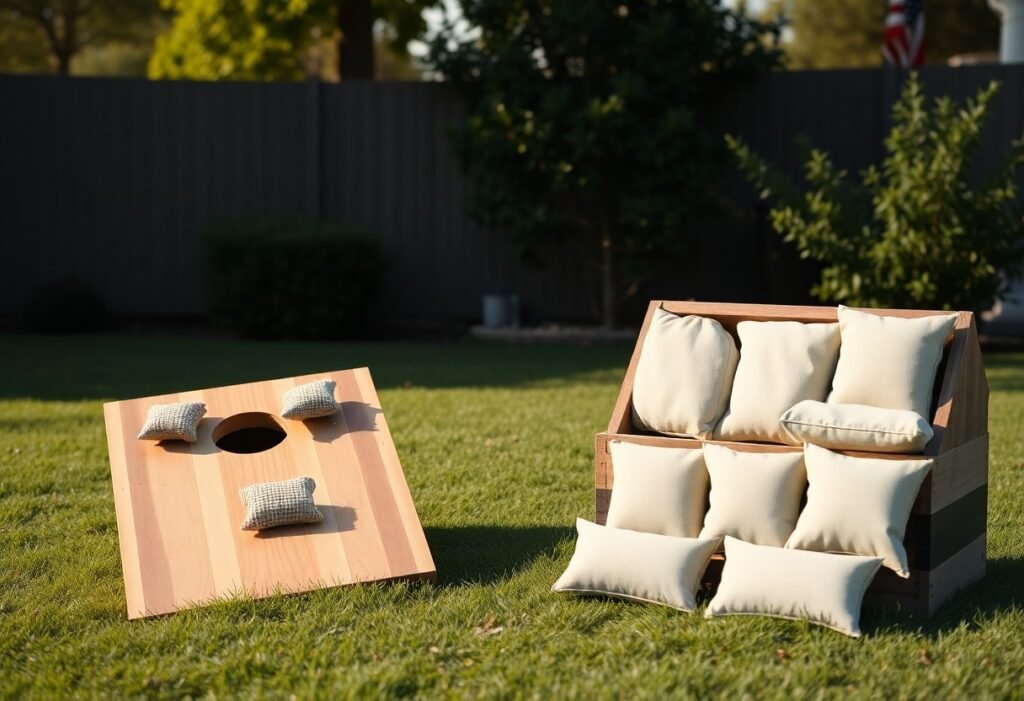
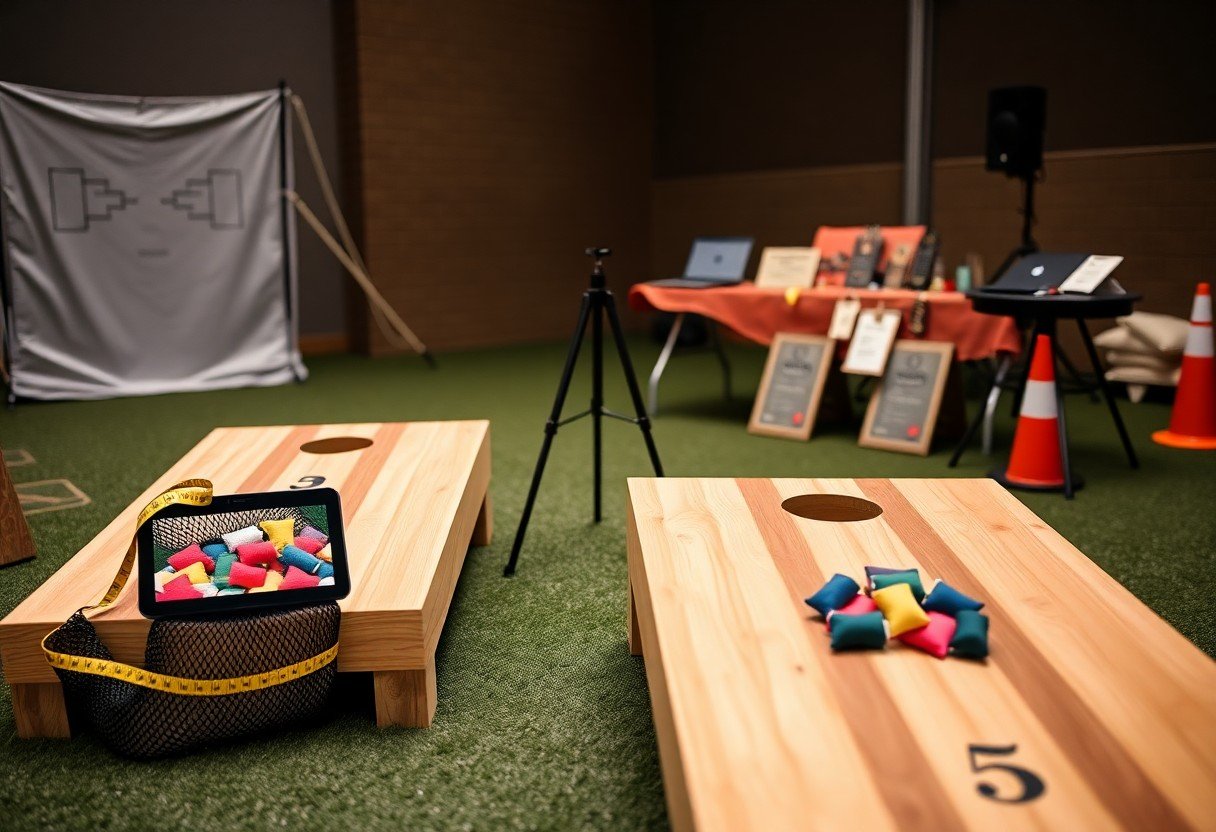
Keep a stack of regulation boards (48″ x 24″ with a 6″ hole, front height 3″, back height 12″) and extras on hand; you should have at least one spare board set and a repair kit per 8 teams. Stock bags that meet tournament specs and bring replacement scoreboards, tape measures, and lighting for evening play. Make board dimensions and bag weight non-negotiable for fair play and schedule reliability.
Selecting Cornhole Boards and Bags
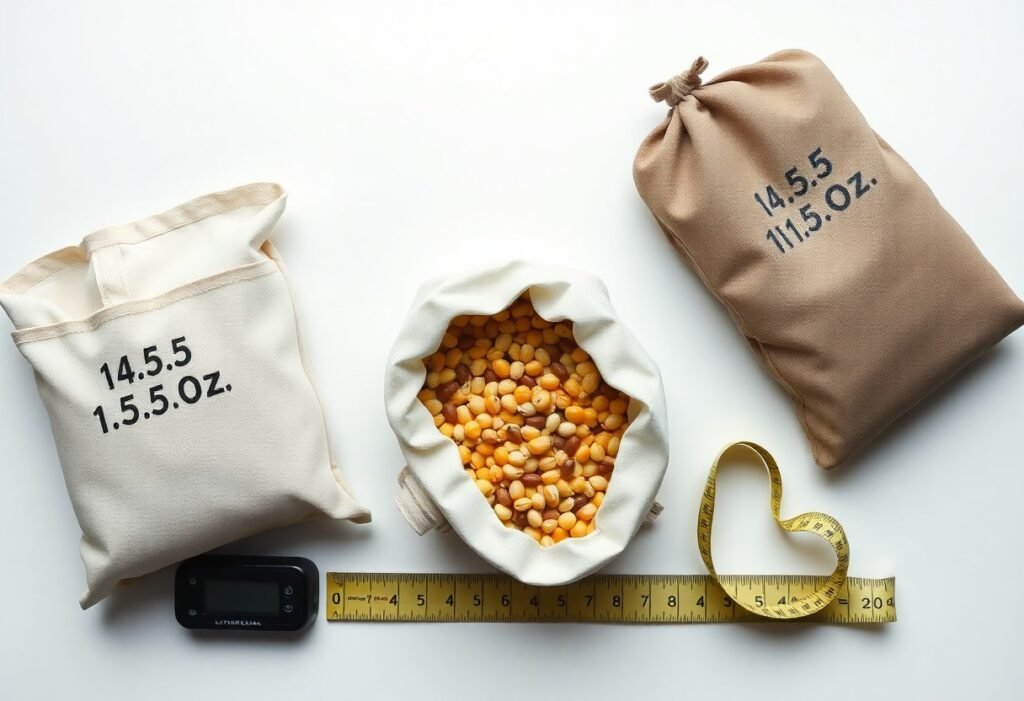
You’ll want tournament-grade plywood (¾” Baltic birch or maple top) for consistency and boards that score-flat across matches. Choose bags sized 6″ x 6″ and weighing 15-16 oz; prefer double-stitched seams and plastic/resin fill for durability and uniform flight. Keep a set of well-worn bags for practice and labeled spares to swap in if bags split or get waterlogged.
Setting Up the Playing Area
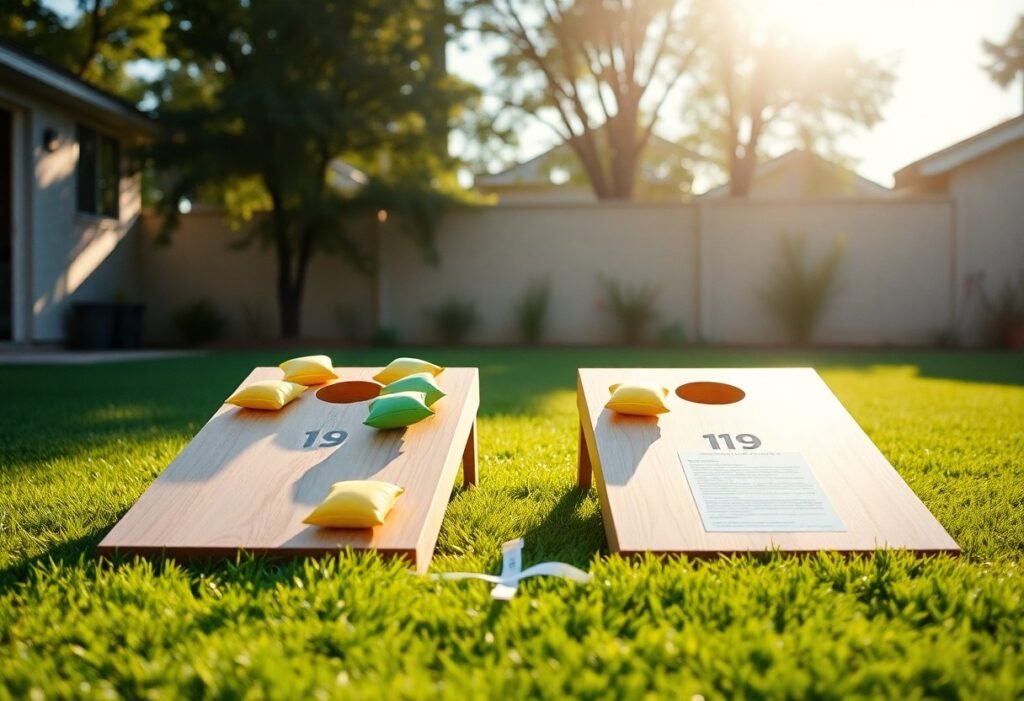
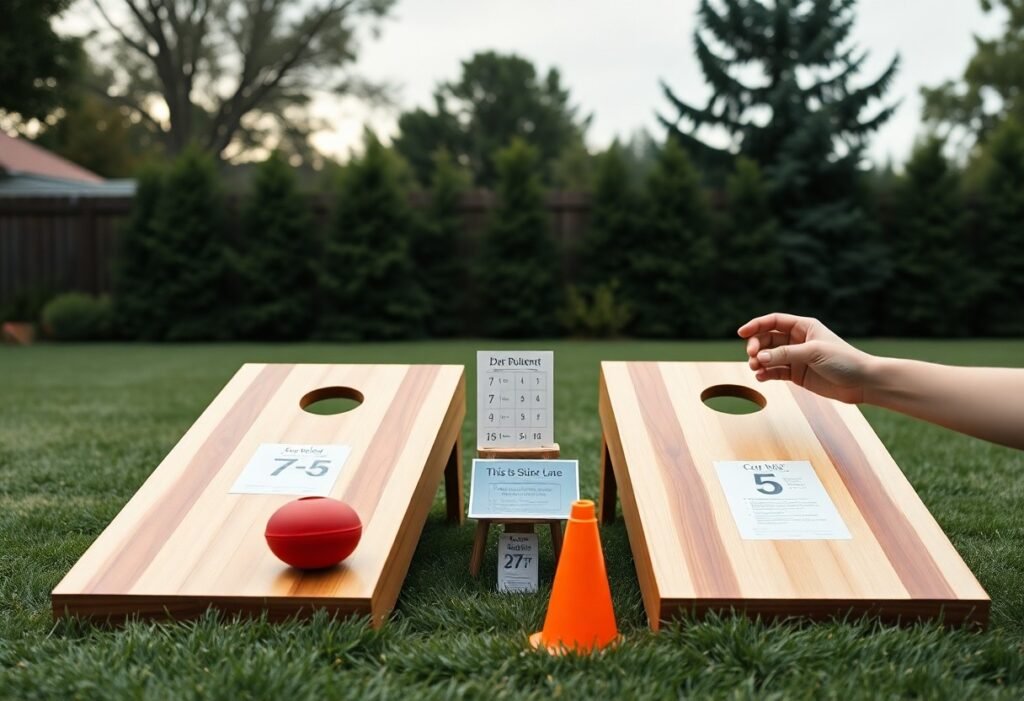
Place the front edges of opposing boards 27 feet apart for adults (use 21 feet for youth), and mark foul lines and boundaries with paint or cones. Ensure each court sits on flat, hard ground or a level mat, and leave at least 10 feet behind boards for spectators and staging to prevent traffic through play areas.
Arrange multiple courts with 3-4 feet between adjacent lanes and number them for scheduling; for example, four courts typically fit in a 60′ x 40′ park strip if you allow walkways. Anchor boards on grass with stakes or sandbags to stop tipping, check for holes, slopes, or nearby vehicle traffic, and provide clear lighting and power for score tables and tournament clocks.
Rules and Regulations
Set clear rules to prevent disputes and speed play: state scoring, tie-breakers, foul rulings, and protest procedures. Use posted rule sheets and announce any house variations at check-in; offer a quick rules briefing before round one. Make foul lines and pitching distances non-negotiable, enforce no-alcohol-in-play-area or age limits if applicable, and provide an official for challenges so you avoid slow arguments that wreck the schedule.
Official Cornhole Rules
Follow ACO/ACA standards: boards set nose-to-nose at 27 feet, each bag in the hole scores 3 points and on-board scores 1 point, using cancellation scoring with the first team to reach 21 points winning the match. Alternate pitching between teammates, enforce the front-of-board foul line, and count only bags resting on or in the board at round end to keep scoring objective.
Customizing Rules for Your Event
You can adapt format to skill and schedule: shorten distance to 24 feet for beginners, reduce target score to 15 for quick rounds, or impose a 20-minute match clock to keep the day on time. Include local tweaks-handicap starts, seeded brackets, or a mercy rule past a 15-point gap-so you balance fairness with pace and maximize player satisfaction.
Be explicit when you announce changes: list all variations in your registration page and on printed rule cards; give examples like “best-of-three to 15” for evening play or “double-elimination, seeded by skill” for competitive fields. If your venue limits time or has safety constraints (wet grass, stairs), state adjusted pitching distances and alcohol rules up front; this minimizes disputes and speeds tournament flow.
Tips for a Successful Tournament
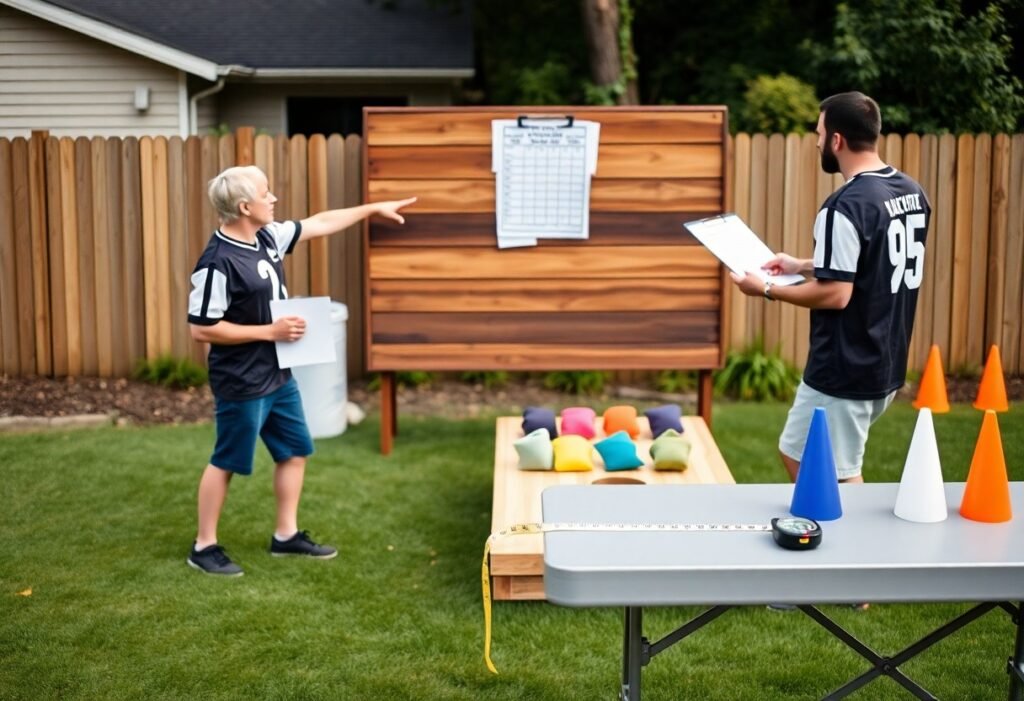
You can increase turnout and smooth operations by setting a firm schedule, assigning a dedicated scorekeeper, and preparing at least two spare boards and 12 extra bags. Use printed brackets and a whiteboard to track progress; in a 32-player event plan 6-8 hours and allow 12-15 minutes per match. Enforce a 5-minute warm-up rule and clear foul guidelines to reduce disputes. This keeps matches punctual, reduces arguments, and improves player experience.
- Registration: cap entries and take online payments to avoid last-minute cash handling.
- Equipment: have two spare boards, 12+ extra bags, and a tarp for wet grass.
- Scorekeeping: assign volunteers and use a visible bracket app like Challonge.
- Safety: mark throwing zones, keep a first-aid kit nearby, and enforce a clear sideline.
- Prizes: offer tiered payouts or sponsor vouchers to boost turnout.
Keeping Participants Engaged
You should run short side events-beanbag accuracy contests every 45-60 minutes with 10-15 minute rounds-and schedule quick mini-games for spectators to join. Display live brackets on a TV or phone, use an announcer to call upmatches, and post updates to social media; offering small prizes like drink tokens or a $25 gift card for side winners keeps energy high and reduces perceived downtime.
Managing Tournament Flow
You should choose bracket types to match entries: single-elimination for 8-16 teams, pool play feeding a knockout for 24-48. Budget 12-15 minutes per match and run multiple courts to halve total time; with four courts a 32-team bracket often finishes in 4-6 hours. Stagger start times, post a central schedule, and assign volunteers so you avoid bottlenecks.
Assign a timekeeper per court and enforce a strict 3-minute check-in window-after that, award a forfeit to keep the bracket moving. Number courts and rotate teams so average waits stay under 30 minutes; for multi-day events target 8-10 matches per day. Train volunteers on a concise rule sheet for quick dispute resolution, log scores immediately to both a whiteboard and a digital bracket, and export a printed backup of the bracket in case connectivity fails.
Factors to Consider for Success
To maximize turnout and flow for your cornhole tournament, lock a clear format, publish concise rules, and build scheduling buffers; cap teams and post a site map to ease arrival. Secure necessary permits, line up spare equipment, and budget for staff and first aid. Consult community resources like How to organize a cornhole tournament with 50 people … for real brackets and timelines. Thou verify emergency access, insurance, and communication plans.
- Format and bracket load (single/double elimination)
- Scheduling buffers and round lengths
- Equipment spares and kit checklists
- Permits, insurance, and local rules
- Staffing for scoring, registration, and first aid
- Communication channels for cancellations and updates
Weather and Outdoor Conditions
You should monitor forecasts 72 hours out and again the morning of: winds over 15 mph will alter play, heavy rain forces tarp-covered staging or postponement, and temperatures above 95°F require scheduled heat breaks and cooling stations. Provide shaded areas, extra water, and anchor boards securely to prevent tip hazards; have a contingency site or rollback policy posted for players.
Catering and Refreshments
Estimate food at about 0.8-1.2 meals per person and budget roughly $8-$15 per head for basic options; include water stations, vegetarian and allergy-friendly choices, and verify vendor permits and power needs ahead of time.
For more depth, decide between food trucks (1-2 trucks for 100-200 people) or a plated/catered service-pre-order roughly 75% of total attendees to avoid waste for mixed spectator/player crowds. Stagger service between rounds to limit queues, provide at least 2 bottles of water per person or centralized refill stations, assign one volunteer to manage trash/recycling, and secure an alcohol permit plus wristbands if you plan pours; typical onsite catering costs range from $800-$1,500 for 100 people depending on menu and staffing.
Conclusion
Hence you can run a smooth cornhole tournament by setting a clear format and rules, securing quality boards and bags, creating an efficient schedule, and promoting effectively to attract players. On the day, assign staff to score, enforce fair play, handle disputes decisively, and provide refreshments and prizes. Post-event, gather feedback and share results to build momentum for your next event.
FAQ
Q: How do I plan the tournament timeline and format?
A: Start by choosing a date, venue and target number of teams; book the venue 6-12 weeks in advance for popular dates. Decide format (single-elim, double-elim, round-robin, pool play) based on team count and time available, and set match length (best-of-3 games or first to 21 points using cancellation scoring). Create a schedule with check-in, warm-up, match windows and a clear bracket end time. Assign staff for registration, scorekeeping and field setup. Publish rules, schedule, and refund/cancellation policy at registration.
Q: What equipment and court setup do I need?
A: Provide regulation cornhole boards (9′ apart front edge to front edge, board size 48″×24″, hole centered 6″ from top) and at least two sets of bags per board. Plan a minimum of one court per 4-8 teams to keep wait times reasonable. Mark lanes, spectator areas and player seating; ensure flat, level surfaces and adequate lighting for evening play. Supply scoreboards, clipboards, timers, a PA system and a table for registration. Have extra bags, a spare board, tape measure and tool kit on hand.
Q: How should I run scoring, brackets and tie-breakers?
A: Use cancellation scoring (subtract opposing points per round; first team to 21 wins a game). Track per-frame scores and match winners on a central bracket board or digital bracket app. For seeding, use random draw, ranking from prior events or preliminary pool play results; publish seeding rules before play. For ties in pools, use head-to-head results, head-to-head point differential, then total points scored. Appoint scorekeepers and a rules referee to adjudicate disputes and enforce time limits for throws.
Q: What are best practices for registration, promotion and payments?
A: Offer online pre-registration with clear fields (team name, player names, contact info, skill division). Collect entry fees via payment processors and set a deadline with limited on-site spots. Require signed waivers (digital or paper) and note age or alcohol policies. Promote via social media, local clubs, community groups, flyers at sports bars and boards. Provide sponsor packages (logo placement, booth space) and list prize structure (cash, trophies, merchandise) up front to attract teams.
Q: What on-site logistics, safety and participant experience details matter?
A: Staff check-in, schedule boards, scorekeepers and a rules official to keep play moving. Provide water stations, shaded/rest areas and trash/recycling. Post emergency contacts and have a basic first-aid kit and a plan for severe weather or medical emergencies. Manage parking and ADA access, control alcohol responsibly if served, and set clear spectator boundaries to avoid interference. Communicate start times and bracket updates frequently so teams know where to be and when.