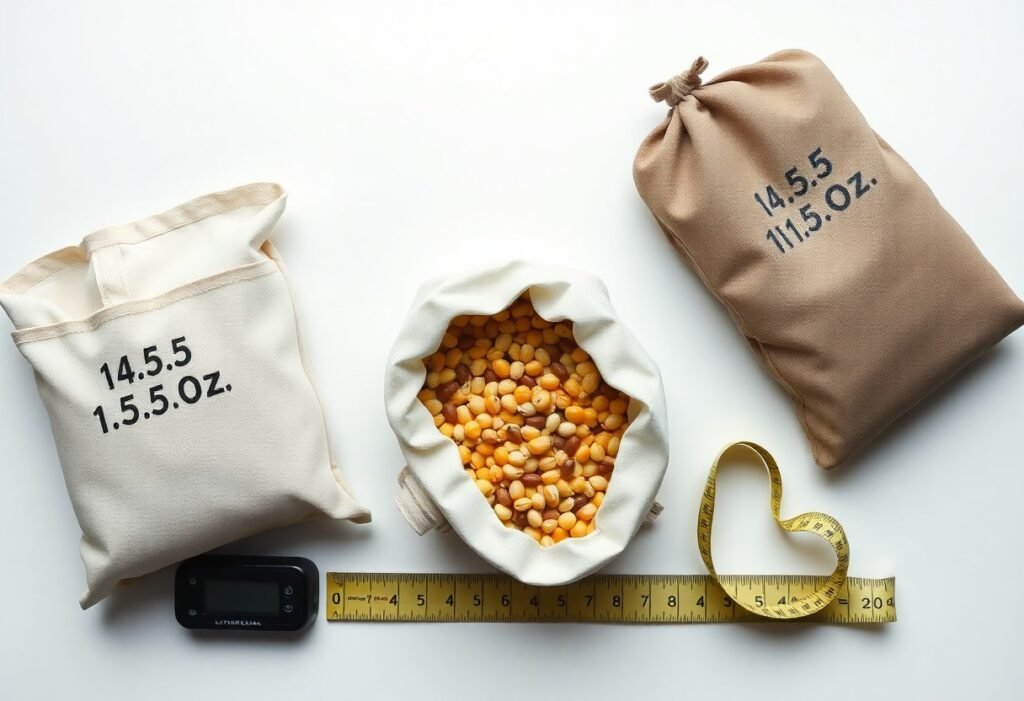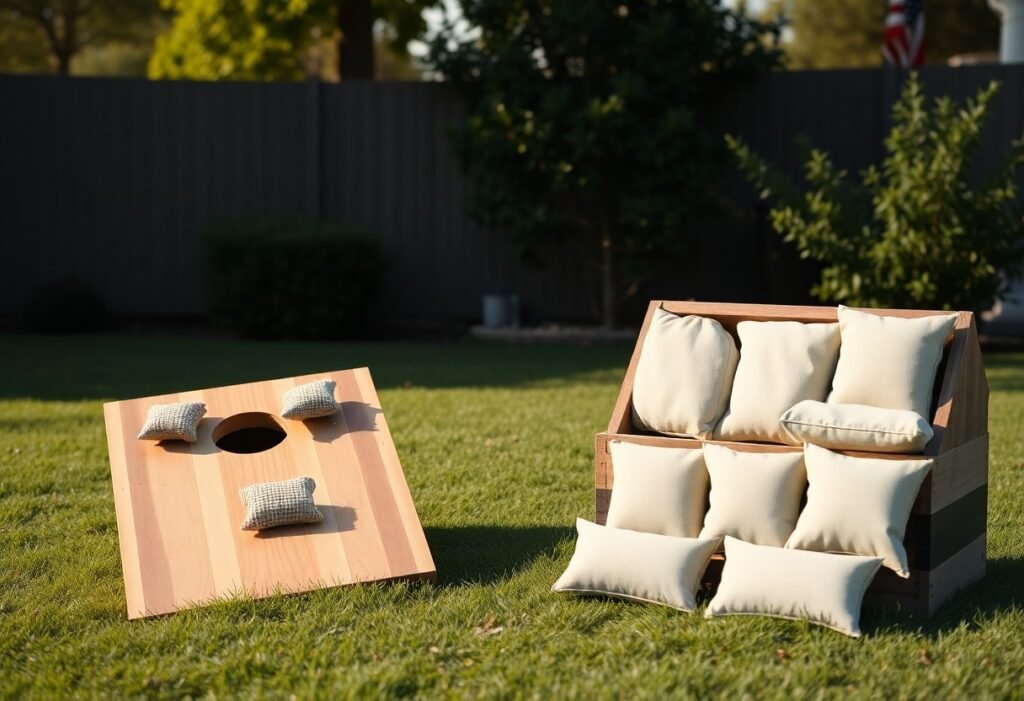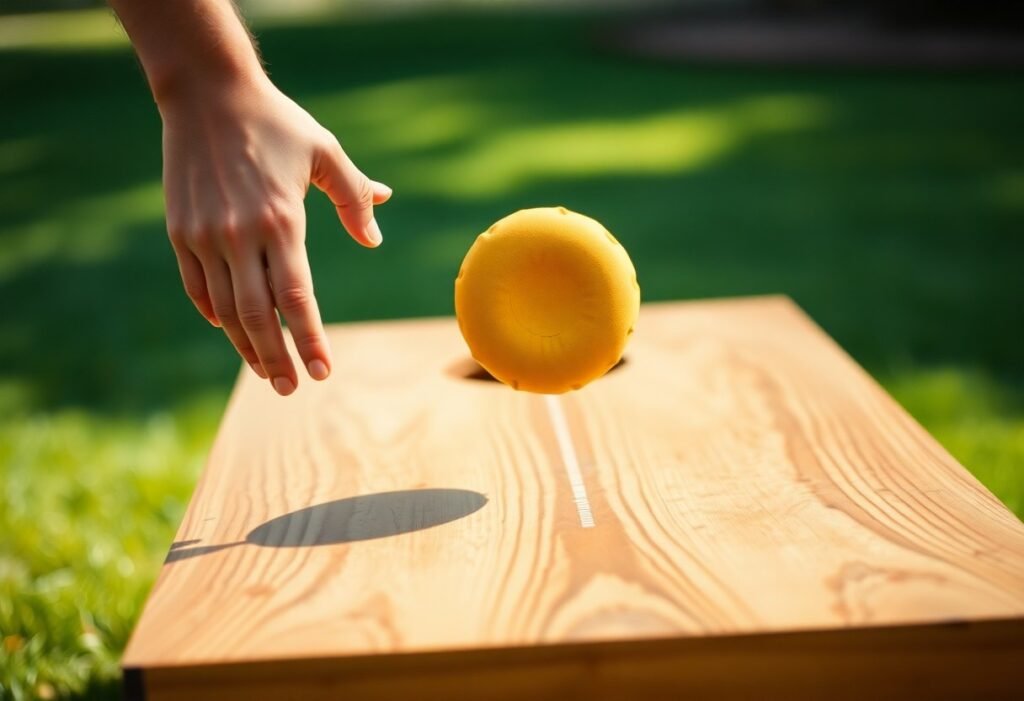

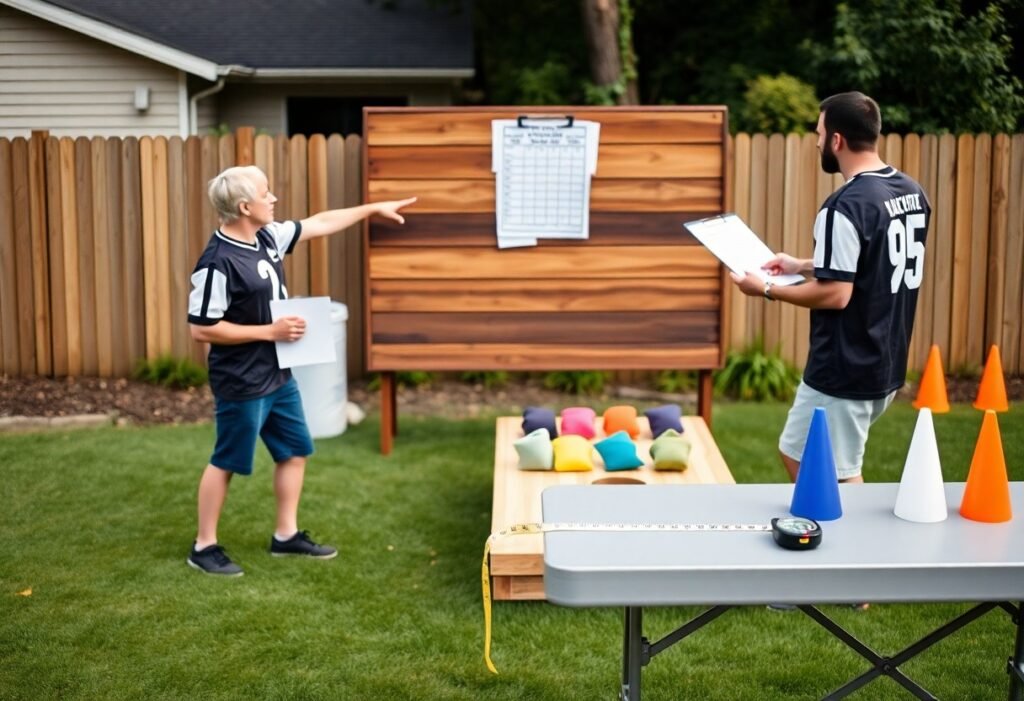
Most players win by mastering simple counting and strategy: you must track your score and your opponent’s, aim for consistent board hits, and use blockers to force misses. Control your pace and distance so you can execute repeatable throws, avoid risky tosses that lead to canceling points, and prioritize board placement over flashy shots to close games reliably.
Key Takeaways:
- Prioritize hole shots to earn 3 points and use blockers to create cancellations that limit your opponent’s scoring.
- Develop a repeatable stance, release, and arc so distance and trajectory become reliable under pressure.
- Play the score each round: count points, choose blocker or push shots based on the situation, and set up favorable last-round opportunities.
Understanding Cornhole Scoring
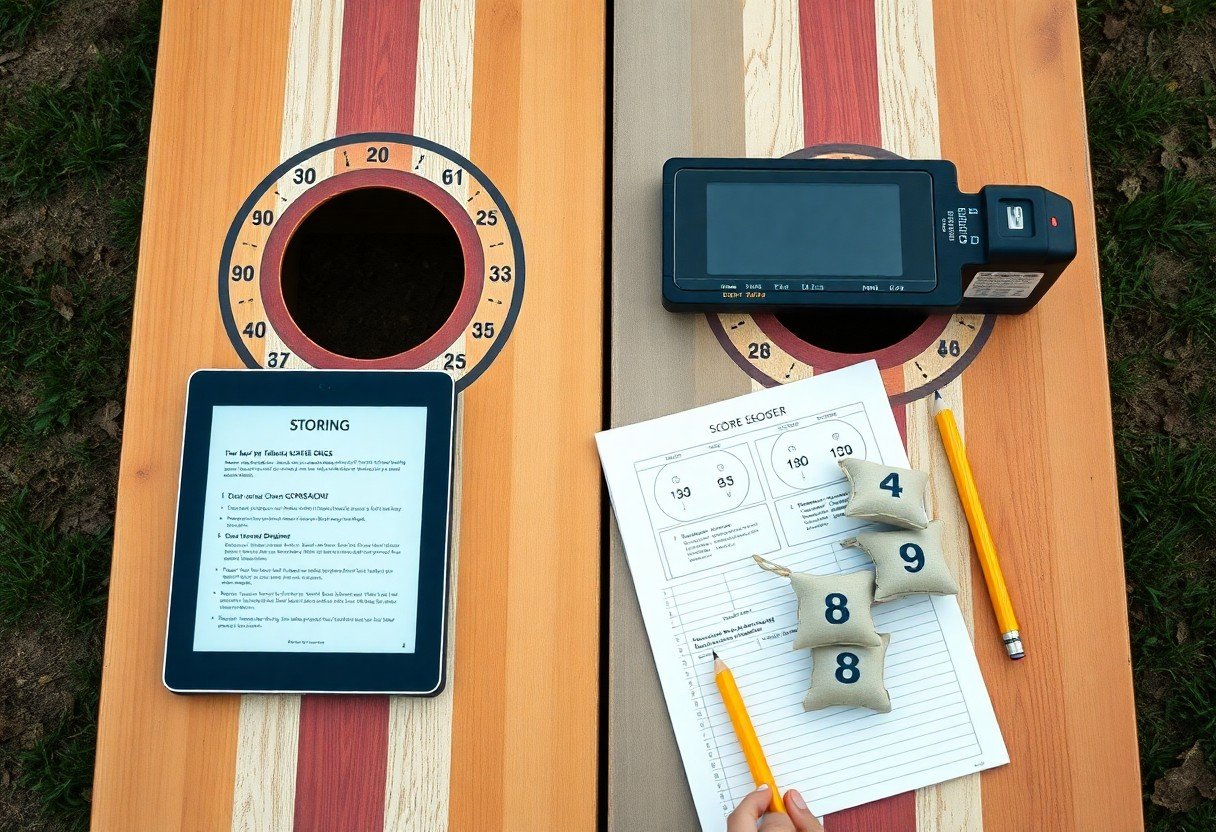
You need to internalize how points are awarded and offset: a bag in the hole equals 3 points, a bag on the board equals 1 point, and scores are compared using cancellation scoring each round. For example, if you score 7 and your opponent scores 5, your team nets 2 points. Most casual games play to 21 (some tournaments require an exact 21), so accurate round-to-round math wins matches.
Basics of the Scoring System
You tally per-frame totals then subtract the lower from the higher to get the net score awarded. Aerial shots that go through the hole still count as 3, but bags that hit the ground first are dead and do not score. Fouls-like stepping past the front edge-remove that throw from scoring. Track cumulative totals after each frame so you avoid late-game surprises.
Common Scoring Errors to Avoid
You often see players misapply cancellation scoring, count bags that bounced on the ground, or forget to remove fouled throws; each error can swing the game by 2-6 points per round. Always confirm both teams’ totals aloud before recording and double-check any bag that contacted dirt-those must be excluded. That discipline prevents simple math mistakes from deciding tight matches.
For example, if you threw two in the hole (6) and your opponent had one in the hole plus one on the board (4), you net 2 points; if both teams score 5, the frame nets zero. Another common pitfall: counting a bag that bounced on the ground onto the board-official rules call that dead, so it should not be added. Keep a running score sheet and announce totals each frame to catch these errors immediately.
How to Develop a Consistent Throw
To lock in repeatable results you should follow a simple routine: warm up with 20 slow arcs at the regulation 27 ft, then do sets of 25 focused throws aiming for a steady release and identical follow-through; many competitive players log 200-300 throws weekly to build muscle memory. Use the drills in 5 Tips to a Consistent High Level Player and track your on-board percentage each session.
Grip and Stance Tips
You should adopt a comfortable three-finger grip that minimizes wrist flick and set a shoulder-width stance (about 16-20 inches) with your lead foot slightly open to the board; keep weight balanced 60/40 on your front foot and practice 50 controlled throws per session to internalize the feel. This lowers lateral variance and helps your release align with your target.
- Grip: hold the bag with fingertips and moderate pressure to avoid toss drift.
- Stance: use a stable, repeatable base-feet placement consistent every throw.
- Aim: square shoulders to the board and pick a single visual target point.
- Release: practice a fixed release height and arm angle for consistency.
Follow-Through Techniques
You must extend your arm toward the board and keep your hand pointing at the target for about 1-2 seconds after release; pro players often hold follow-through to ensure the elbow and wrist paths stay identical across repetitions, and doing 100 held follow-through reps per week shows measurable steadiness gains in drills.
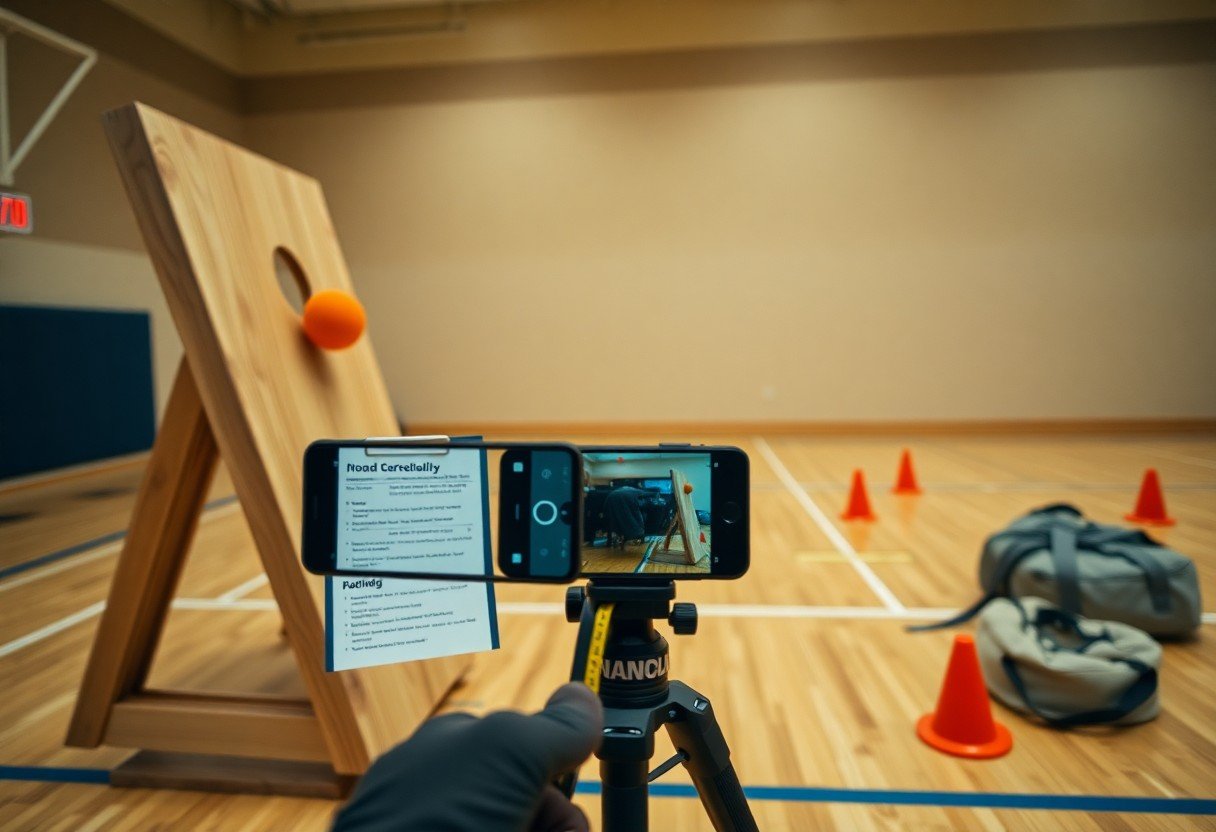
Film 30-second clips of your throws to compare angles-look for a straight wrist, a consistent elbow bend at release, and a follow-through line that matches your intended arc; small tweaks like a 5° wrist tilt or a 6-8 inch shorter stride can reduce side-to-side dispersion and boost your on-board rate during match play.
Factors that Influence Performance
Small changes in setup and mindset will swing outcomes more than raw power; you must tune multiple elements to keep winning. Key areas to track include:
- Environmental Conditions – wind, humidity, temperature and surface wear
- Mental Focus – routines, pressure handling and decision-making
- Technique – release angle, follow-through and foot placement
The best players adjust aim, release and pace as conditions shift.
Environmental Conditions
Wind gusts of 5-15 mph can push a 1.5 lb bag off-line by several inches, so you should lower your arc into a flatter 20-30° trajectory on breezy days; surface grit and humidity change board friction, making the surface and wind the most immediate variables to monitor and adjust for.
Mental Focus and Strategy
You should use a short pre-shot routine-3-5 seconds-to steady breathing and reduce clutch jitters, pick plays based on score math (e.g., go for a board when a safe 1 point preserves a lead), and alternate risk depending on opponent misses to protect consistency and exploit openings.
Use visualization to rehearse shots: picture the bag landing on the board then sliding in. When trailing by 6 with four bags left, prioritize two sacks or a sack plus a board to force pressure; adopt a blocking or chase strategy based on opponent tendencies, and timeouts or lane changes every 10-15 minutes can reset focus during long sessions.
Advanced Scoring Strategies
Push your edge by mixing scoring plays: alternate aggressive ringers with deliberate blockers to force cancellations and control the board. Track the last 10-20 throws to spot patterns, and prioritize blocking when your opponent hits >60% ringers in that sample. Use cancellation intentionally-sacrifice a board point to deny a +3 swing-and vary speed so you can exploit opponent tendencies like over-sliding or predictable angles.
- Rotate between ringer attempts and blockers based on opponent success rate.
- Use cancellation strategically when trailing by 3-5 points late in the game.
- Employ airmail when the board is cluttered to avoid deflection.
- Change release height and spin every 3-5 throws to disrupt rhythm.
- Shadow opponents’ successful lines for two throws, then adjust to counter.
Quick reference: Strategy vs. Situation
| Strategy | When to Use |
|---|---|
| Blocking | Opponent ringer rate >60% over last 10-20 throws |
| Cancellation | Trailing by 3-5 with two boards left |
| Airmail | Board clogged or opponent’s block sits at front edge |
| Slide/Backspin | Dry board, aim for 2-4 inches past hole for consistent slides |
Aim and Angle Adjustments
When you adjust, aim for small, measurable changes: shift your release angle by about 10-15 degrees inward to counteract outswing, or raise release height by 1-2 inches to reduce slide distance. Test one variable at a time-spin, height, or line-over five throws to see its effect, and lock the successful combo so you can repeat high-percentage shots under pressure.
Opponent Analysis and Adaptation
Scan your opponent’s last 10-20 throws to classify tendencies: high ringer rate, frequent blocks, or predictable angles. If they hit ringers >60% of the time, switch to blocking; if they over-slide, play shorter board depth. Use these counts to choose the single most impactful counter on the next throw.
For more depth, log details during the match-bag placement (hole, board front, board back), release type (slide, airmail), and success percentage. For example, if an opponent averages 70% ringers from the right side over 15 throws, prioritize a left-side blocker and force cancellations; conversely, when they only score 20-30% on airmails, contest the board with aggressive slide shots. Small, data-driven shifts across 3-5 rounds often flip close games.
Team Dynamics and Communication
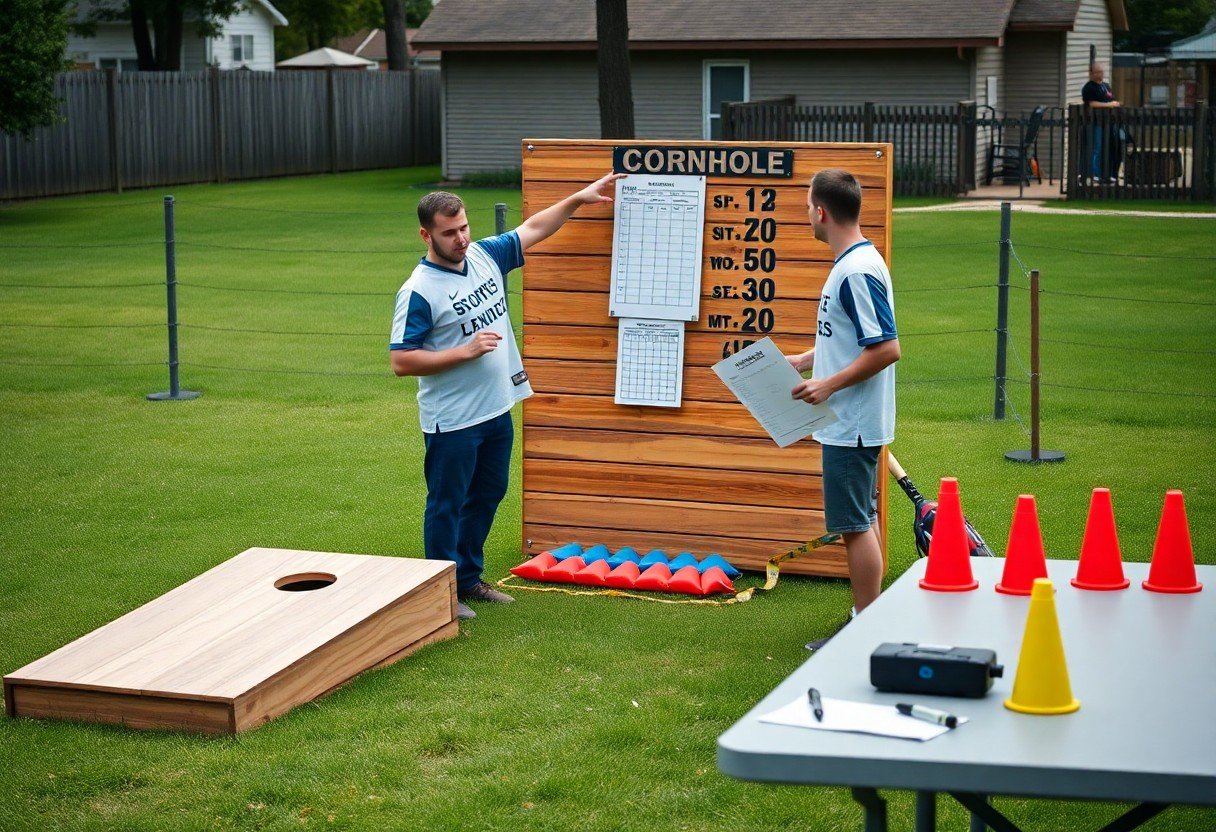
Fine-tuned teams reduce scoring errors and force opponent mistakes by agreeing on clear calls, timing, and responsibilities. You should announce the cumulative score after each frame, use short verbal cues for shot type (block, push, clean), and keep a consistent rhythm-aim for a 2-3 second pause between throws to reset focus. When one partner is on a hot streak, shift lanes and targets so you maximize scoring opportunities while limiting risky plays.
Partner Coordination Tips
Establish a compact vocabulary and predictable actions so you and your partner react instantly under pressure; use nonverbal nods for tempo and a two-word call for target selection. Practice 5-minute drills where one partner calls only and the other shoots to build trust. Communication should be direct, timing consistent, and signals unambiguous. Assume that you both agree on one fail-safe call and practice it until automatic.
- Communication – one-word calls
- Timing – 2-3 second cadence
- Signals – nods or palm gestures
- Targets – left/center/right shorthand
Role Assignments During Play
Assign clear roles: the setter opens frames focusing on placement and blocking, while the anchor closes with aggressive attempts at ringers or strategic push-throughs. You should swap roles based on short-term performance-if one partner lands 3 of 5 throws consistently, make them the closer for that game. Use the game-to-21 format to decide when to preserve a lead versus chase points.
In practice, track performance over the first 6 throws to set roles-count ringers and board hits, then assign the partner with the higher success rate to the high-pressure closing position. You can switch mid-game after a 3-throw slump; communicate the change with a single agreed word. Emphasize consistency, limit mid-frame experimentation, and prioritize minimizing opponent scoring runs.
Practice Routines for Improvement
Set a weekly plan that mixes volume and focused work: you should target 30 minutes daily and at least 100 throws per session, splitting 60/40 between form drills and match scenarios. Begin with 10 warm-up shots, finish with 10 accuracy attempts, and track makes so you can push your accuracy toward benchmarks like 70-75% board-to-hole conversion. Log date, throws, hole/board counts to spot trends and adjust practice intensity.
Drills for Accuracy
You practice specific patterns: 20 straight front-board shots, 30 long throws from 27 feet, and 50 attempts targeting left edge, right edge, and center. Alternate with blocker drills-place a bag on the board to force angled shots-and do a “50/50” series where every other throw is an aimed ringer. Track weekly success rates and aim to raise your ringer percentage by 10 percentage points within a month through consistent release and follow-through.
Game Simulation Practices
You run match-like sets: play five practice games to 21 under full scoring, alternate starting positions, and enforce a 20-second shot clock to build tempo. Simulate comeback scenarios by starting a game down 6-9 points so you rehearse decision sequences for tying or overtaking. Record each game’s score and your ringer percentages to analyze choices and clutch performance under pressure.
You can add realism by introducing distractions-music, crowd noise, or a stopwatch-and staging partner drills where your teammate deliberately cancels ringers to force strategic blocking. Film 10 key throws per session and review release angle, foot placement, and timing; players who correct form from video commonly improve accuracy by 15-20% within six weeks when they apply focused adjustments.
Conclusion
On the whole, you can win consistently at cornhole by mastering scoring strategy, prioritizing accurate airmail shots and controlled blocks, keeping score mentally and communicating with your partner, adapting your aim to wind and board conditions, and practicing routine drills to build muscle memory and pressure performance. With disciplined focus on these areas, your scoring decisions will reliably tilt games in your favor.
FAQ
Q: What are the cornhole scoring rules I must know to win consistently?
A: Cornhole uses cancellation scoring: after both teams throw all four bags, count each team’s points (3 for a bag in the hole, 1 for a bag on the board), then subtract the lower total from the higher to get the round score. Games usually play to 21 points, but many leagues require you to reach exactly 21 or allow wins only after a two-point lead-check local rules. Keep a running total, track which bags are live or blocked, and factor in whether you should pursue aggressive hole shots or safer board shots based on the current score and remaining throws.
Q: When should I aim for the hole versus aiming to land on the board?
A: Choose based on risk/reward and game context. Go for the hole when you need a high-value swing (e.g., trailing late) or when you have a consistent, high-accuracy throw. Aim for the board to block, pad your score, or when an opponent already has a hole shot on the board you can cancel; a single board bag can cancel an opponent’s 3-pointer or create a scoring cushion. If you’re leading and possession favors defense, prioritize board placement and blocking to limit big swings against you.
Q: What throwing technique and aiming tips create consistent scoring?
A: Use a repeatable stance, grip, and release: square or slightly open stance, comfortable fingertip grip, and a smooth forward push release with a moderate arc so bags land softly. Pick a fixed target point on the board (top edge, front cutout, or specific seam) rather than aiming at the hole every time. Practice a consistent follow-through and adjust only small variables (arc height, wrist flick) when correcting distance. Develop a go-to “safe” throw that reliably hits the board under pressure.
Q: How can I use defense and board positioning to reduce opponent scoring?
A: Use blocking bags to deny direct lines to the hole and force opponents into lower-percentage angles. If you land a bag short of the hole, leave it there to act as a blocker rather than pushing for risky hole shots. In doubles, coordinate with your partner: one player can lay up as a blocker while the other tries for the hole. When you have a chance, aim slightly to the side to push opponent’s bags off the board on follow-up throws and prioritize knocking off opponent hole bags when the risk is low.
Q: What practice drills and mental habits lead to consistent wins?
A: Drill with targeted reps: 50 board-only throws focusing on consistent landings, 50 hole-only throws to build confidence on aim and arc, and simulated games that practice cancellation scenarios. Warm up before matches with short-range accuracy and a few full-game practice throws. Maintain a simple scoring plan for each end, breathe between throws, and keep a calm routine to reduce tilt after bad shots. Track outcomes to identify weak distances or wind conditions and practice those repeatedly until performance stabilizes.