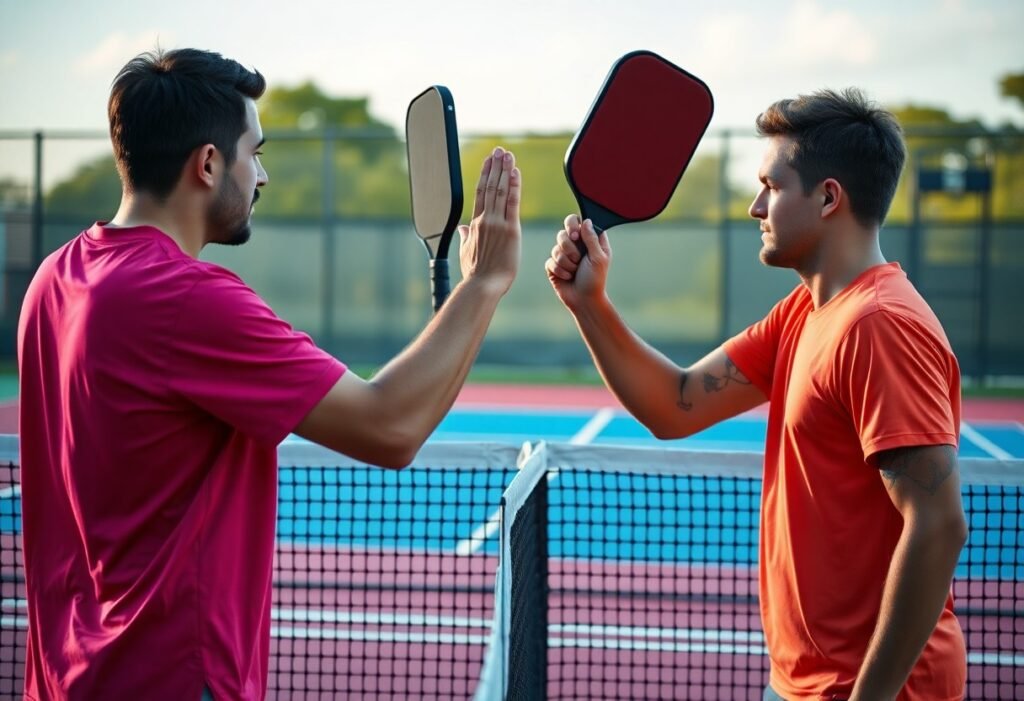

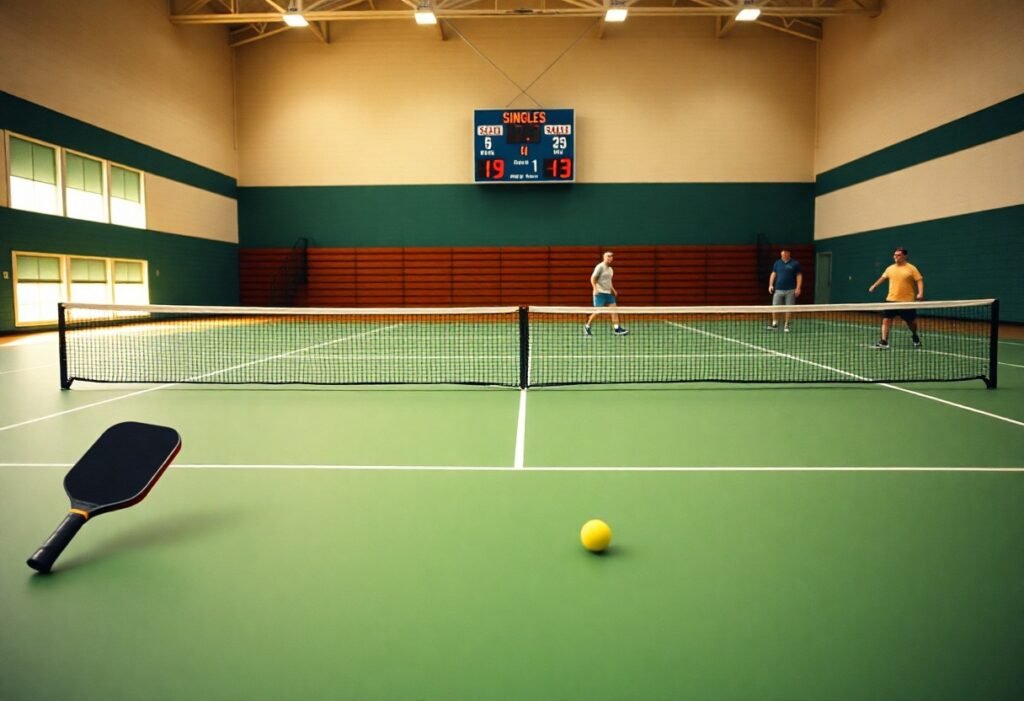
Most players find the scoring system in pickleball to be a unique blend of simplicity and strategy that enhances your gameplay experience. Understanding how scoring works in both singles and doubles formats is important for improving your performance on the court. This guide will walk you through the fundamental aspects of each system, ensuring that you are well-equipped to keep track of points and adapt your tactics accordingly. By mastering the rules, you can enjoy more competitive and organized matches.
Key Takeaways:
- Points are only scored by the serving team, and the game is played to 11 points, requiring a 2-point lead to win.
- In doubles, players must alternate serves, and the serve rotates between teams after each side out.
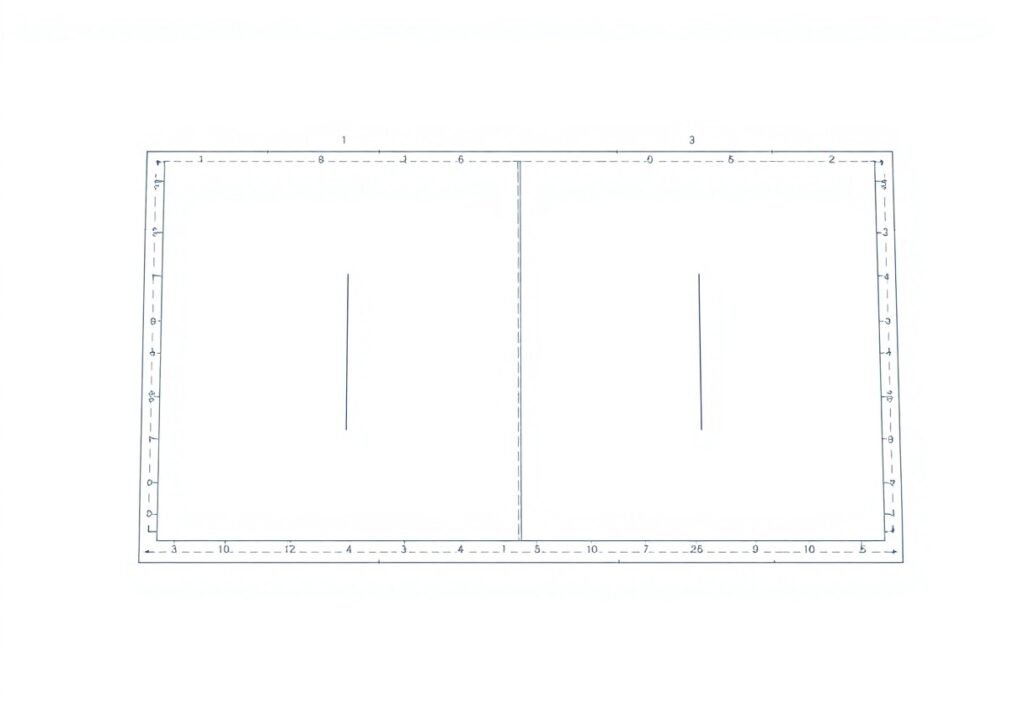
- The court is divided into service areas, affecting where the serve must land, with rules differing slightly between singles and doubles play.
Understanding the Basics of Pickleball Scoring
Overview of Pickleball Scoring
The scoring system in pickleball can seem complex, but it’s built around a few simple principles. In both singles and doubles, only the serving team can score points. A standard game is played to 11 points, with players needing to achieve a 2-point lead to claim victory. Games can also be played to 15 or 21 points in tournament formats, adding variations in scoring dynamics.
Importance of Scoring in Games
Understanding the scoring system is vital for your success in pickleball. Your ability to adapt your strategy according to the score can significantly influence the outcome of the match. For instance, if you’re trailing, you might adopt a more aggressive approach to claw back points.
Scoring dictates not just how many points you need to win, but also the tactics employed throughout the game. In tight matches, every point counts, and understanding what you need to do when you’re at 10-10, for example, can shift the momentum in your favor. Keeping track of the score helps you manage your energy and adapt your gameplay, whether you’re focusing on defense or seeking to dominate at the net. Ultimately, a solid grasp of scoring nuances allows you to play smarter and more effectively in both singles and doubles matches.
Pickleball Scoring System for Singles
Scoring Points in Singles
In singles pickleball, you score points only when you serve. The game uses a traditional rally scoring system, where the player who wins the rally gets a point. You can win by forcing your opponent to miss the ball, hitting it out of bounds, or winning the net exchanges. The game continues until one player reaches 11, 15, or 21 points, depending on the rules you agree upon, with a requirement to win by at least two points.
Service Rules for Singles
You must serve from behind the baseline and the paddle must make contact with the ball below your waist. The ball must clear the non-volley zone and land in the service area diagonally opposite. If you fail to meet any of these conditions, the serve is considered a fault and the opponent gains the point.
It’s important to note that when serving in singles, you only have one serve opportunity. Should you hit the ball into the net or out of bounds, it results in an immediate loss of serve. Additionally, if the serve is deemed to have landed in the non-volley zone or does not hit the correct service area, you’ll lose the point. Mastering these service rules can give you a significant advantage in your games.
Win Conditions in Singles Matches
To win a singles match, you typically need to reach a predetermined number of points first, usually 11 or 15. However, winning must be done by a margin of at least two points, so you may need to play beyond the set number if the score is tied. Competitive play may adopt different formats, so clarifying the win conditions with your opponent beforehand is wise.
In high-stakes or tournament settings, you might even encounter matches played to 21 points. The requirement of a two-point margin means that if the score reaches 20-20, you will continue playing until one player pulls ahead by two points. This can lead to intense, drawn-out rallies, testing both your stamina and strategy as the match unfolds.
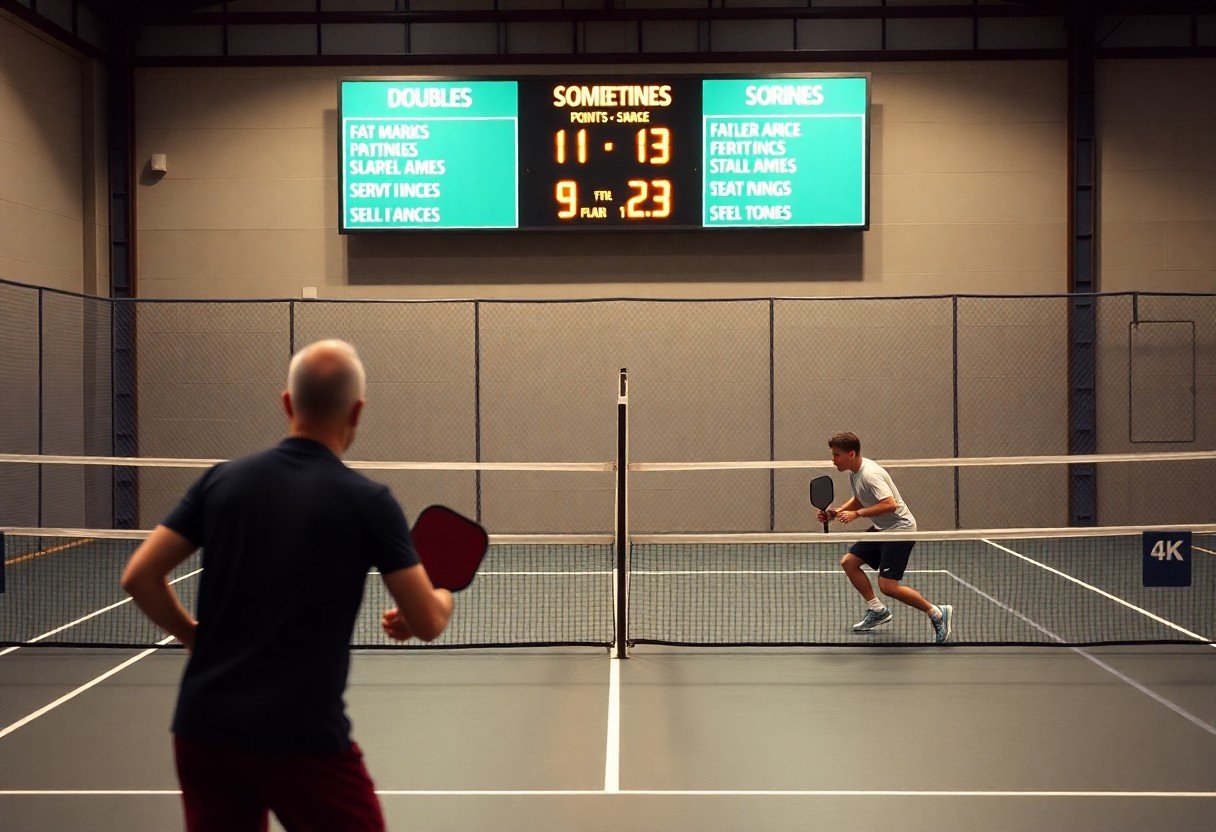
Pickleball Scoring System for Doubles
Scoring Points in Doubles
In doubles pickleball, both teams can score points on their opponents’ serves. You earn a point each time your team wins a rally, which can lead to dynamic and fast-paced gameplay. Each player takes turns serving, further adding to the strategic depth as you focus on winning the exchange while trying to limit your opponents’ opportunities.
Service Rotation in Doubles
The service rotation in doubles involves both team members taking turns to serve. Initially, one player from the serving team starts with the serve. After a point is scored, the serving player continues to serve until they lose the rally, after which the serve switches to their partner. This rotation system helps maintain a rhythm in gameplay.
During the service rotation, you’ll notice that the serving team switches sides after each point won. Each player will serve from the right side at the start and then alternate with the left side. It’s crucial to track whose turn it is to serve as this impacts game strategy and positioning on the court. Understanding this rotation allows for better teamwork and communication, making it easier to implement effective plays tailored to both your skills and your partner’s style.
Win Conditions in Doubles Matches
Winning a doubles match typically requires reaching 11, 15, or even 21 points, depending on the rules in play. You must win by a margin of at least two points. The game can go on longer if the score reaches a tie, necessitating this margin to declare a victor, keeping matches competitive and engaging.
In official tournaments, games generally play to 11 points, with the possibility of extending to 15 or 21 points in some formats. When the score ties, the game intensifies as you aim to secure a two-point lead. This goal encourages strategic plays and calculated risks, making each point feel significant as both teams strive to outmaneuver each other for the win.
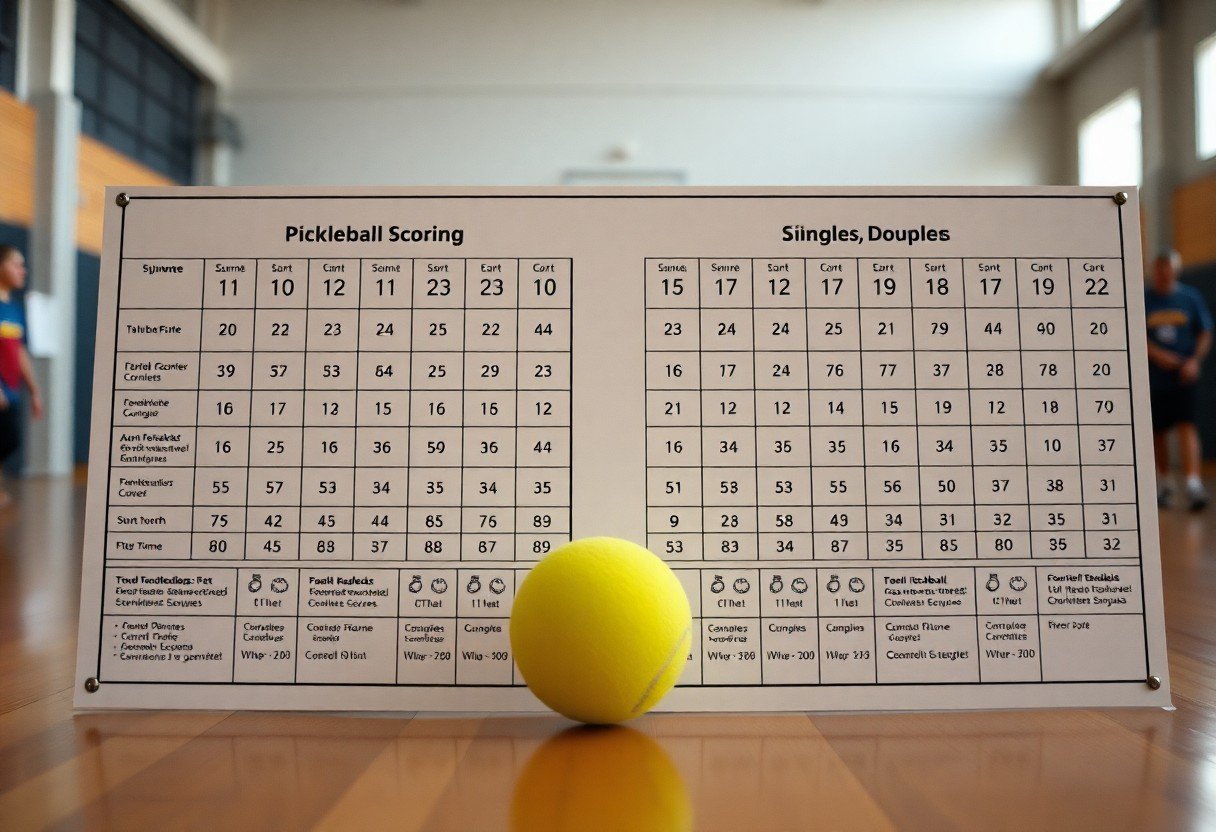
Detailed Breakdown of Scoring Scenarios
Evaluating a Point Structure
Understanding point structure in pickleball is important for effective gameplay. In singles, you score only when serving, while doubles allow both teams to score during their opponents’ serves. This makes strategic serving and return placement vital. For a deeper look into point structures, check out Pickleball Scoring – Here’s How It’s Done.
Understanding Deuce and Advantage Situations
In pickleball, a deuce occurs when the score reaches 10-10 or a similar tie. This situation requires you to win by a two-point margin. If you take the lead, you enter an advantage situation, where a single subsequent point can win the game or return to deuce. Your ability to handle this pressure can determine match outcomes.
When at deuce, scoring becomes intensely competitive. You must focus on serving well and anticipating your opponent’s responses. Winning the next point gives you the *advantage*, requiring you to maintain your focus to win the game. Conversely, losing that point returns you to deuce, adding pressure to your performance.
Handling Tiebreakers and Game Deciders
Tiebreakers in pickleball come into play during nail-biting matches, often when the score is tied, requiring you to adapt your strategy for success. The first team to reach a specified number of points, usually 11 or 15, must win by two to decide the match. Mastering tiebreaker strategies is important for closing games successfully.
In tiebreakers, you should prioritize serving strategically, mixing up your shots to keep your opponent guessing. Every point has heightened importance, making focus and precision pivotal. Often, players will resort to their strongest shots, understanding that consistent pressure can lead to errors from the opposing team, securing that critical victory.
Differences Between Professional and Recreational Scoring
Professional Match Scoring
In professional pickleball, matches are played using a defined structure, often featuring a best-of-three games format. Each game typically goes to 11 points, but a team must win by at least two points. Scoring for both singles and doubles is usually done using the referee system to ensure fairness and accuracy throughout the match.
Recreational Match Scoring
For recreational play, scoring may be more flexible, often adopting a less structured approach. Common formats might include games played to 15 or even 21 points, with the possibility of changing the winning margin requirement to make it more enjoyable. Specific rules can vary depending on the players involved.
More on Recreational Match Scoring
If you’re playing in a local league or just having fun with friends, the scoring can adapt to suit your needs. Players often agree on the number of points required to win in advance, allowing for variations like playing to one or two sets or even implementing time limits. These adjustments can keep the atmosphere light and emphasize fun over strict competition.
Adjustments for Beginners and Casual Play
When you’re new to pickleball, scoring adjustments can significantly enhance your learning experience. Beginners often benefit from playing to a shorter score, like 11 points, and may choose to play only one game to gain confidence.
More on Adjustments for Beginners and Casual Play
Implementing no-volley zones or allowing players to score despite faults can foster a supportive environment for newcomers. Modifying the standard rules promotes engagement and reduces frustration, ensuring that all participants enjoy their time on the court while developing their skills gradually.
Strategies for Mastering the Scoring System
Key Tips for Singles Players
To excel in singles pickleball, focus on understanding the scoring system thoroughly. Utilize your serves strategically to gain early points and keep your opponent on the defensive. Maintain offensive pressure by positioning yourself near the net to control the game pace. Always stay alert to your opponent’s serving turn, as proper timing can give you the upper hand. Thou must remain adaptable and aware of your gameplay to maximize your point potential.
Effective Strategies for Doubles Teams
In doubles, coordination and communication are vital for mastering the scoring system. Maintain a clear understanding of each player’s roles during the match and ensure you’re always ready to cover your side of the court. Utilize formations that leverage each player’s strengths, such as one player at the net and the other at the baseline. Develop signals to indicate when to switch positions or strategize on the fly. This cohesiveness will enhance your ability to capitalize on the scoring opportunities presented during the game.
Common Mistakes to Avoid and How to Correct Them
Avoid losing track of your serve rotation, as this can lead to unnecessary faults and lost points. Ensure that you maintain clear communication with your partner about the scoring sequence and current leads. Regularly check in with each other to confirm your positions and strategy adjustments. Thou should actively practice your serves and returns to minimize errors during important points.
Summing up
From above, you can see that understanding the pickleball scoring system is necessary for effective gameplay, whether in singles or doubles. You should pay attention to the unique rules for scoring based on serving rotations and the importance of earning points only while serving. Familiarizing yourself with these rules will enhance your game strategy and overall enjoyment. With practice, you’ll become more confident in managing the score, allowing you to focus on improving your skills and enjoying the game.
FAQ
Q: How does the scoring work in singles pickleball?
A: In singles pickleball, players score points only when they serve. The first player to reach 11 points wins, but they must lead by at least 2 points. If the score reaches 10-10, players continue to play until one player achieves a 2-point lead.
Q: What is the scoring system for doubles pickleball?
A: In doubles pickleball, the serving team scores points. The game is played to 11 points, but players must win by at least 2 points. Similar to singles, if the score is tied at 10, play continues until a team establishes a 2-point advantage.
Q: How are the serves rotated in doubles pickleball?
A: In doubles, each player on the serving team gets a chance to serve until they lose a rally. After the first server loses their serve, the second player on the same team serves. Once both players have served and lost, the serve rotates to the opposing team.
Q: What do you do when the score reaches 10-10?
A: When the score is tied at 10-10, play continues until one player or team gains a 2-point lead. This means the game may extend beyond 11 points, as players must secure a 2-point margin to win.
Q: Is there a difference in scoring for recreational versus competitive play?
A: The basic scoring rules remain the same for both recreational and competitive play. However, in competitive settings, additional formats like rally scoring or stricter adherence to rules may apply, and games may be played to 15 or 21 points based on tournament regulations.