
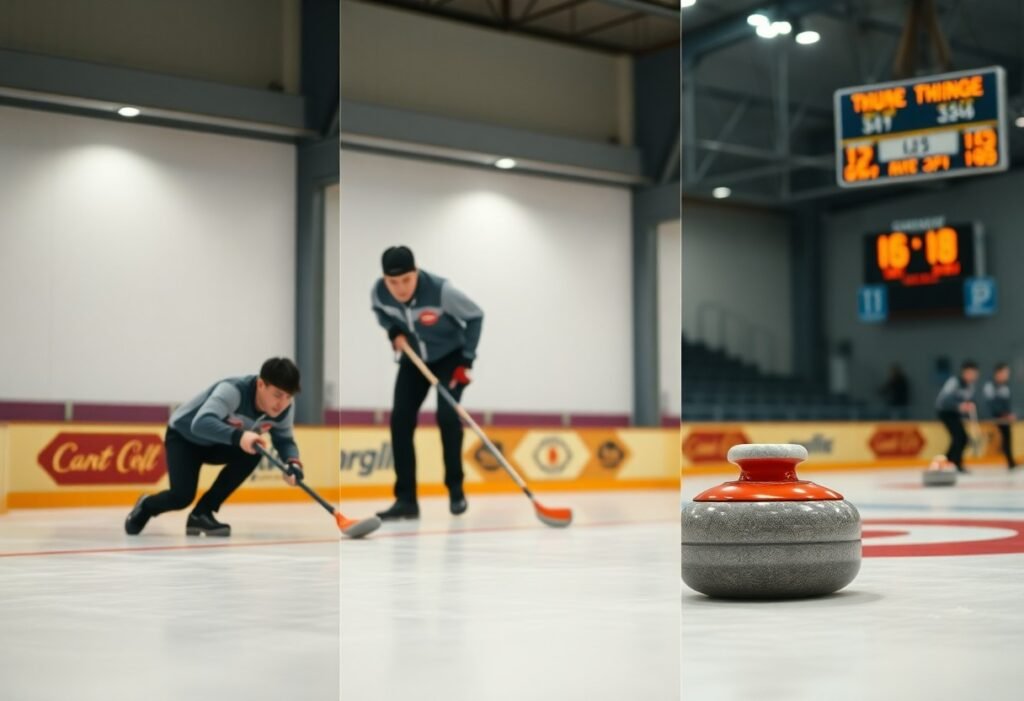
This guide teaches you the fundamentals of curling so you can learn stance, delivery, sweeping, and strategy with confidence; focus on proper balance and slide, be aware that the ice is very slippery-use grippers and watch your footing, and practice sweeping to control stone speed and curl; following technique and teamwork will make the sport strategically rewarding and great fun while minimizing risk.
Key Takeaways:
- Focus on a consistent delivery: stable stance, smooth slide, controlled release and rotation to place the stone where intended.
- Use sweeping to control distance and line: sweep hard and communicate timing to influence speed and curl.
- Coordinate strategy and communication: follow the skip’s calls, manage the hammer, and place guards or takeouts to maximize scoring opportunities.
Understanding the Basics
When you step onto the ice, note that teams are typically 4 players, each delivering 8 stones per end and games run 8 or 10 ends. Stones weigh 38-44 lb (17-20 kg), so delivery technique and sweeping power directly affect distance and curl. You must coordinate the skip’s calls, consistent releases, and sweeping to shape strategy-small execution differences often decide ends and matches.
Overview of Curling
You slide a granite stone toward the concentric rings called the house while teammates sweep to influence speed and curl; sweeping can add several feet of travel and alter the line. The hammer (last-stone advantage) is a major tactical asset, and ice is very slippery, making balance and timing imperative. Focus on repeatable deliveries and clear communication to convert opportunities into points.
Key Terminology
You should know the house (target rings), the button (center), the hog line and hack (delivery markers), plus the hammer (last-stone advantage). Shot types matter too: draw, takeout, guard, and peel are the core calls you’ll hear and execute during play.
For example, a stone must be released before the near hog line and must cross the far hog line to remain in play; failing this results in the stone being removed as hogged out. A draw aims to stop in the house to score, while a takeout removes opponents’ stones. Use guards to protect scoring stones and manage the hammer to build multi-point ends.
Equipment Needed
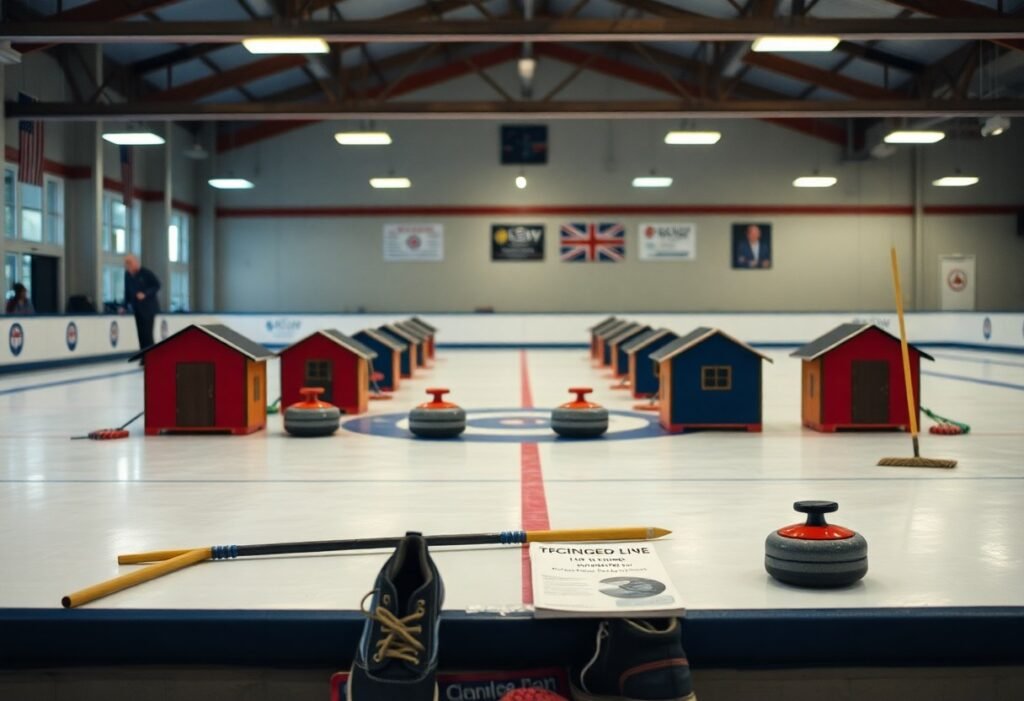
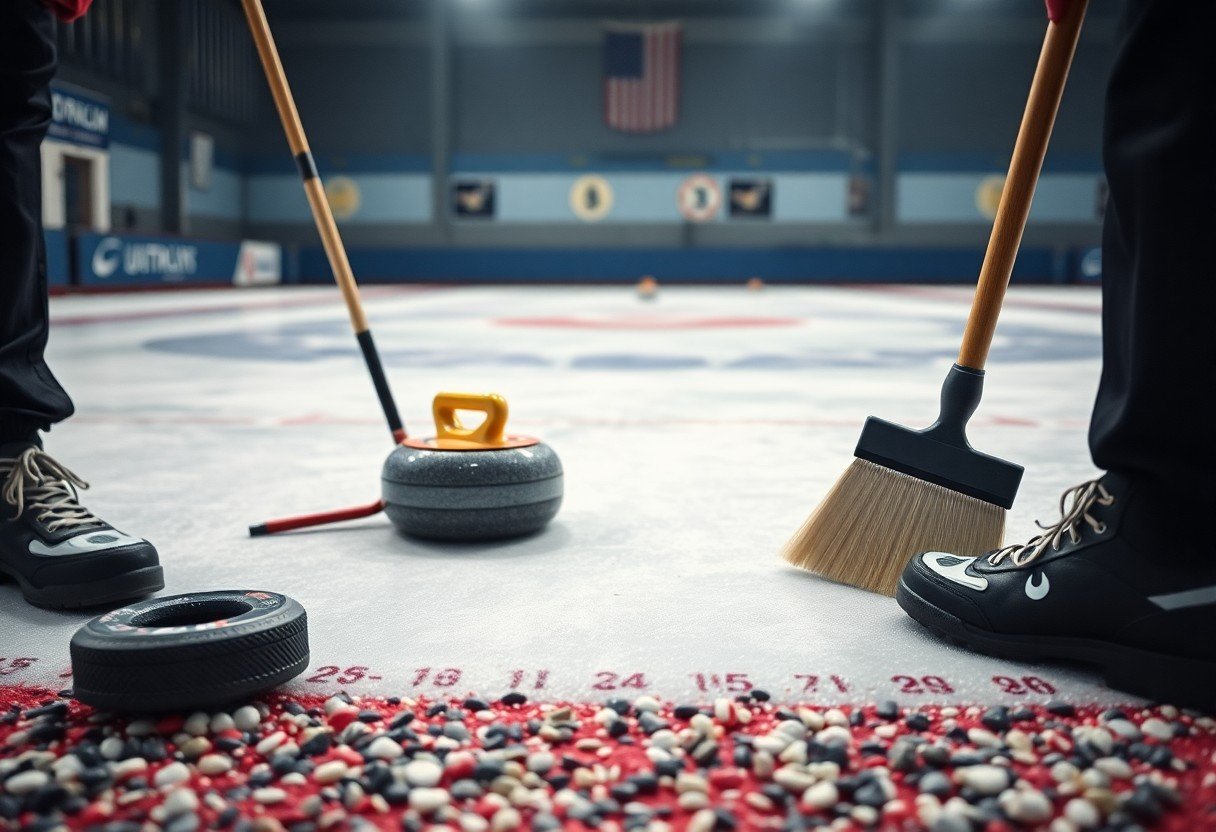
You’ll need specialized footwear (sliders and grippers), a broom, and stones; a standard sheet runs 146 feet (45.72 m) and the house is 12 feet (3.66 m) across. Stones weigh 38-44 lb (17-20 kg). Add a hack for delivery, gloves for grip, and a helmet if you’re new; slippery ice makes proper shoes important.
Broom
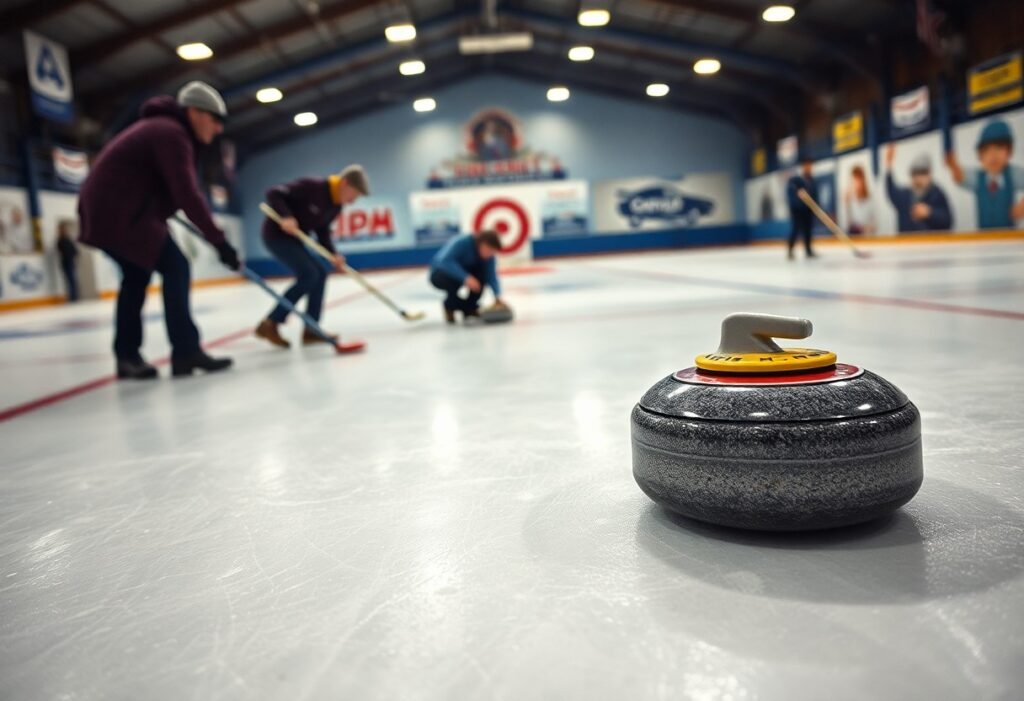
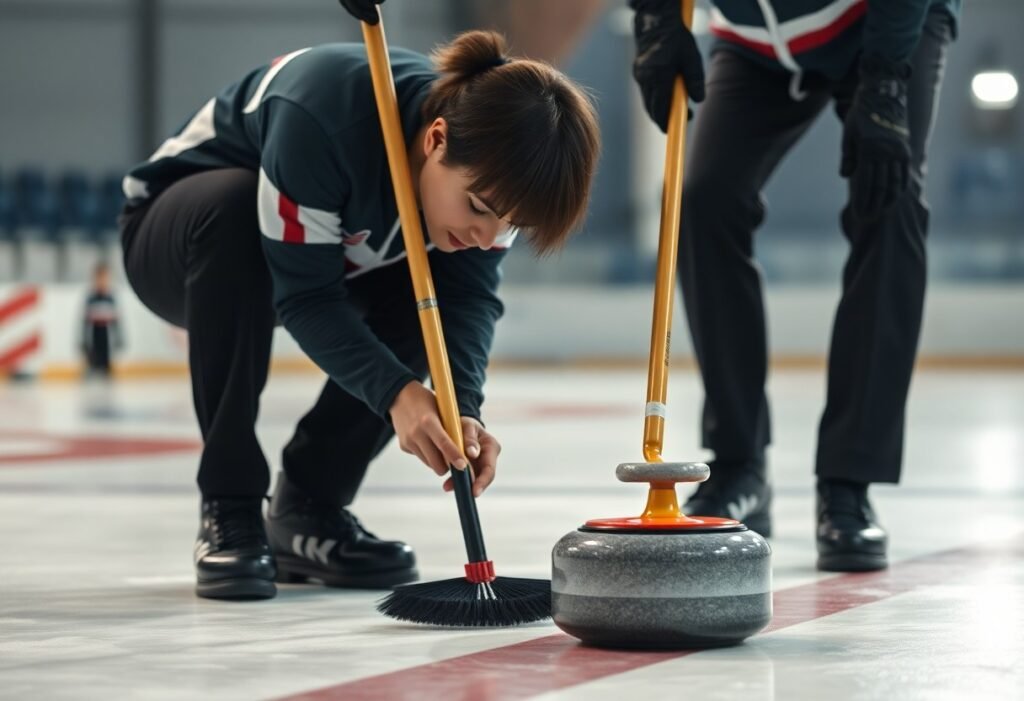
Modern brooms use carbon-fiber handles and replaceable brush heads (horsehair or synthetic). When you sweep you heat the ice and lower friction; sweeping can extend a stone’s travel by up to 2 meters (6 ft) and reduce curl, so precise technique matters. Use whole-body posture, avoid overreaching to prevent shoulder strain, and keep broomheads well-maintained.
Curling Stones
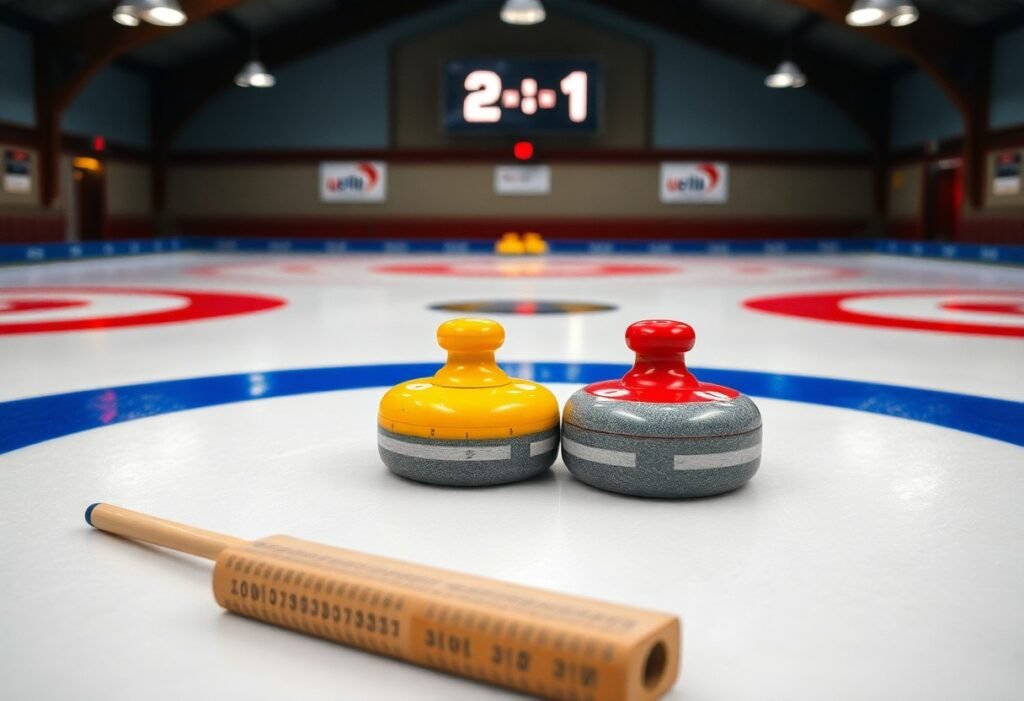
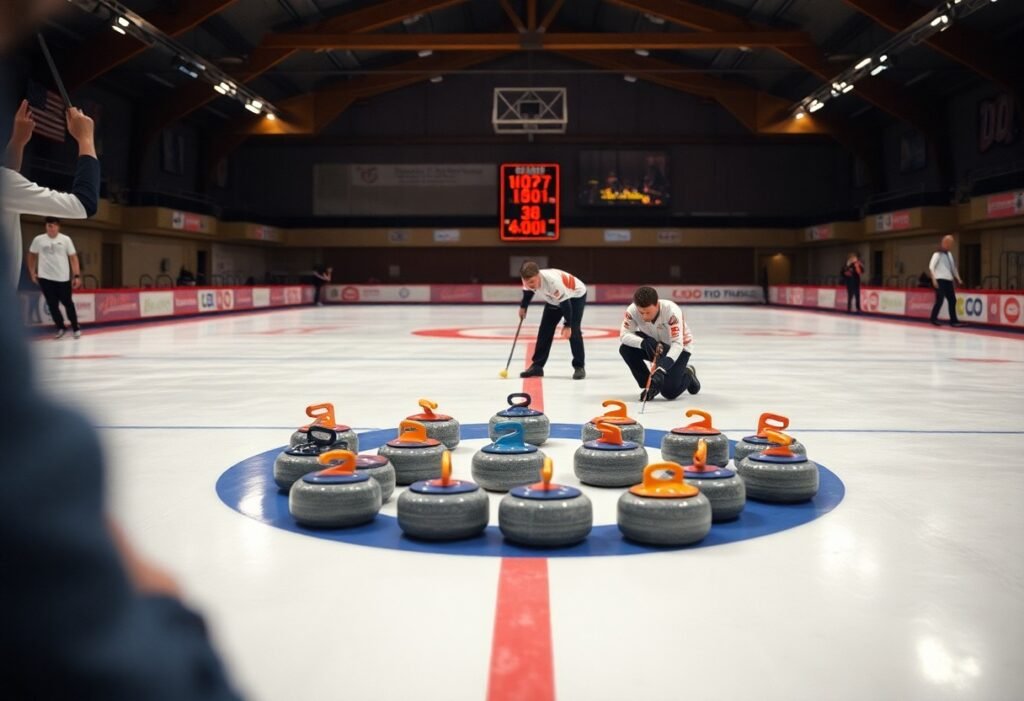
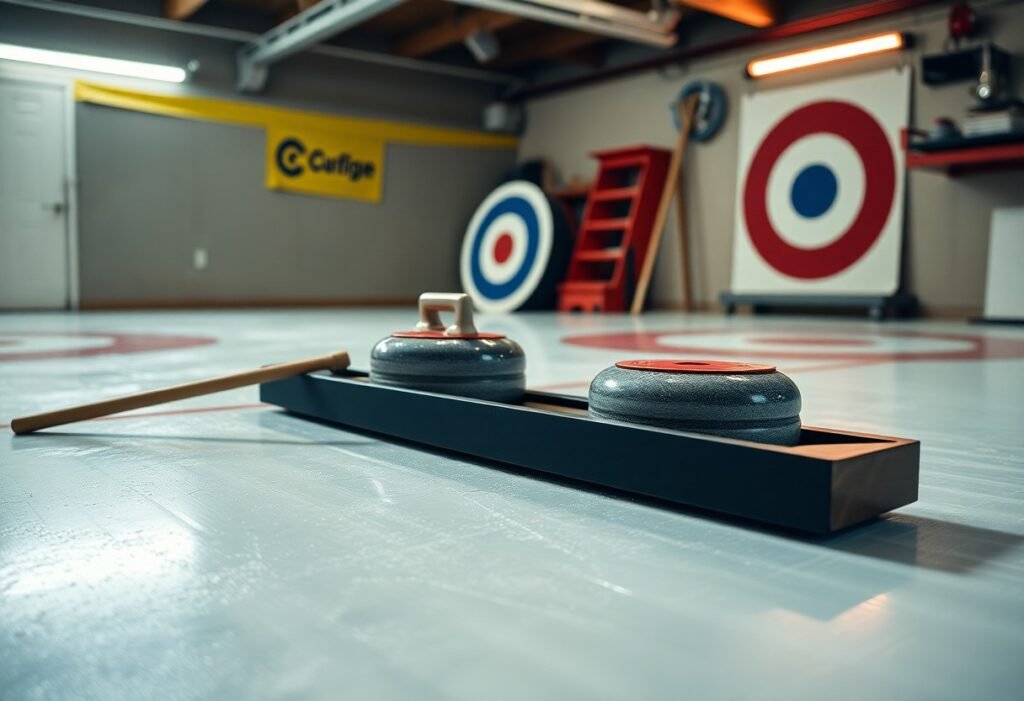
Official stones are carved from Ailsa Craig granite and measure about 11 inches (28 cm) across the running band. You will handle stones weighing 38-44 lb (17-20 kg); handles are color-coded for teams and can be removed for maintenance. Delivery feel and rotation depend on the stone’s condition.
Stone running bands wear over time, so clubs stone-test and match sets for consistent curl; if you help with upkeep, expect a lifespan of 30+ years with regular resurfacing. Replacement costs run around $1,000-$2,000 per stone, making careful handling and proper storage important for long-term play quality.
The Curling Sheet
Layout and Dimensions
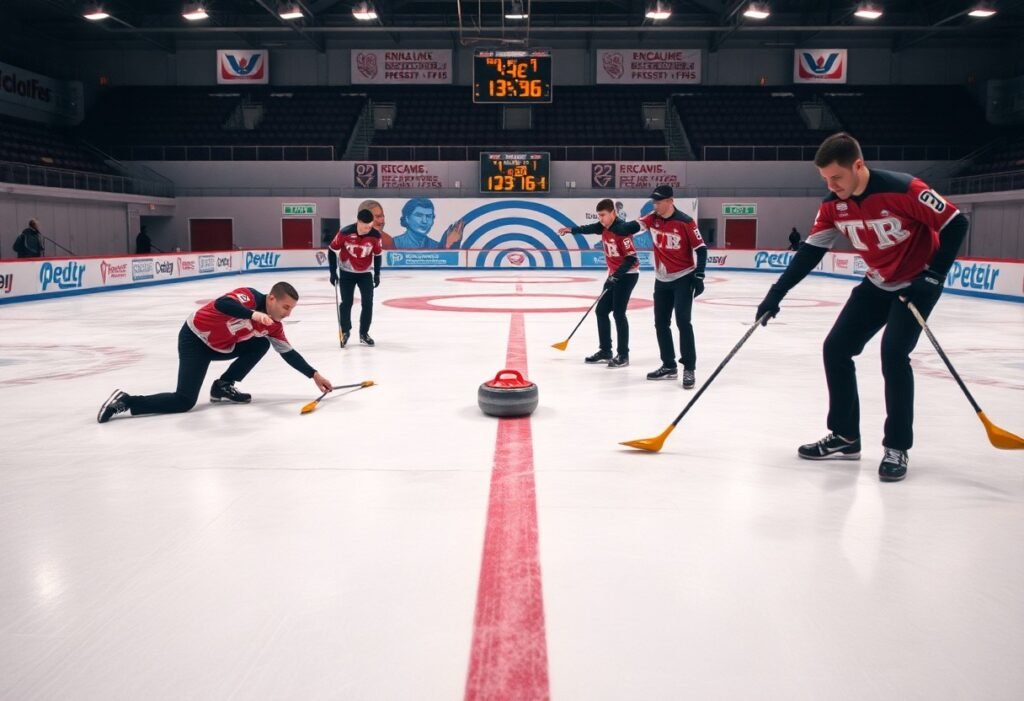
You play on a sheet roughly 150 feet long and about 16.5 feet wide, with each house a 12-foot diameter target at the ends. The backboards sit ~45.7 meters apart, and the hog lines, tee lines and back lines divide throwing and scoring zones; the hog line is typically about 21 feet from the tee line, marking where stones must be released and where they must cross to stay in play.
Importance of the Playing Surface
Ice quality dictates how your stones travel: a pebbled surface and tight temperature control give predictable curl and speed, while flat or chipped ice causes unpredictable picks or rolls. You rely on consistent speed for judging weight and sweeping; at high levels icemakers shave and re-pebble between ends to keep conditions stable and safe, since the surface can be very slippery.
Pebbling-sprinkling tiny droplets that freeze into bumps-creates the micro-structure stones ride on, and sweeping temporarily melts that pebble to reduce friction, so your sweeping directly alters distance and curl. Ice technicians adjust pebble size and scrape patterns for different events; for example, championship ice is often scraped more frequently and pebble size is finer to produce consistent, predictable curl for precise shot-making.
Gameplay Fundamentals
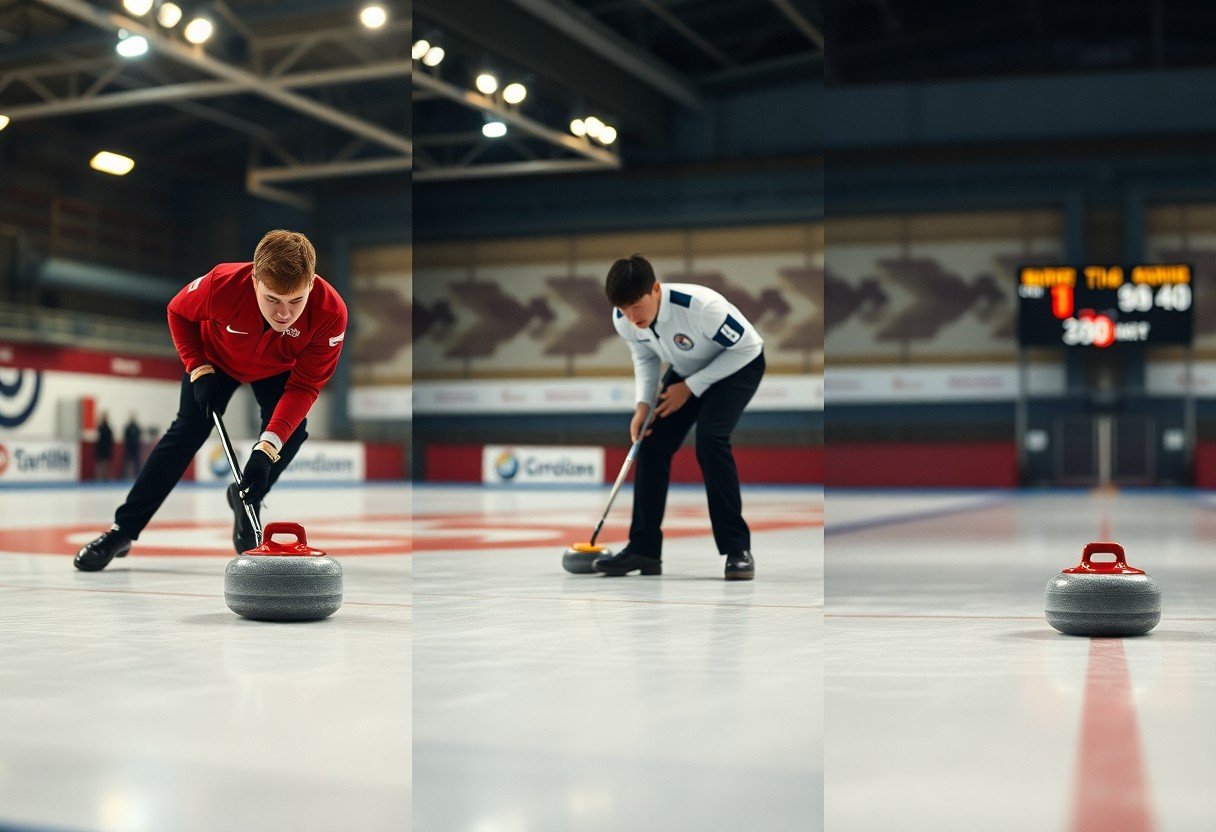
When you shift from basics to live play, focus on shot timing, guard placement and controlling the house; teams of 4 throw 8 stones each per end and matches are typically 8 or 10 ends. Teams deploy guards, draws and takeouts to build ends, and you should study advanced tactics in Curling 101: Strategy and techniques. Value the hammer advantage, obey the hog-line release, and guard against slips during sweeping and delivery.
The Rules of Curling
When you deliver from the hack you must release the stone before it reaches the hog line; any release past that line removes the stone as a foul. Players throw in order-lead, second, vice, skip-and each player delivers two stones per team rotation. Sweeping is allowed to influence distance and curl, but interfering with moving stones or crossing delivery lines invites penalties; respect the release-before-hog-line and the throwing order.
Scoring System
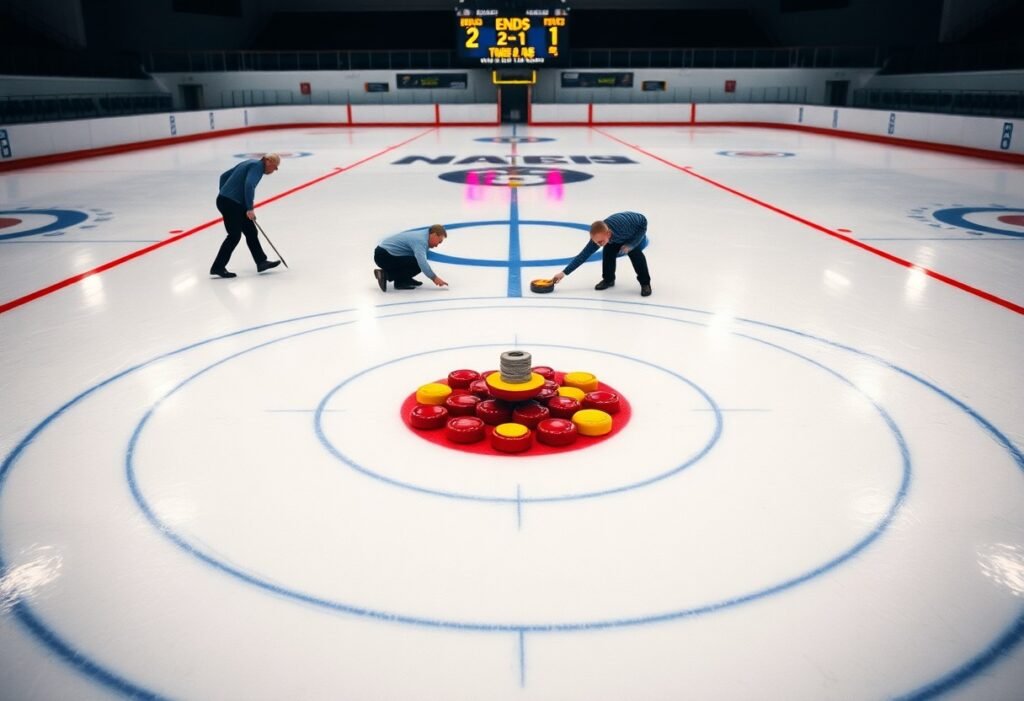
In each end you score one point for every stone closer to the button than the opponent’s nearest stone; only one team scores per end. If you have three stones closer than any opponent’s, you score three. A theoretical maximum of eight points exists if all eight of your stones count-an eight-ender-but it’s exceptionally rare and celebrated when it happens.
If neither team has stones in the house the end is blank and the hammer carries over, so you might intentionally blank an end to retain last-stone advantage. Officials use a measuring device when stones are within millimetres of each other, making precise placement critical. A steal happens when you score without the hammer, and a well-timed steal can swing a tight match.
Techniques and Strategies
You focus on three pillars: precise weight, accurate line, and coordinated sweeping; teams that average hog-to-hog times of 3.6-4.0 seconds for draws and 3.2-3.6 seconds for hits consistently score higher. You should vary guards, draws, and takeouts based on score and ice; a common tactic is starting ends with a guard to force opponent mistakes. The
How to Deliver a Stone
You set up with feet square to the hack, grip the handle lightly and drive through the slide with your leading leg while keeping your body stable and low; many players use a 1/8-1/4 turn at release for standard curl. You must control rotation and release to avoid a pick or over-rotate, and avoid the slip risk by drying the slider. The
- weight
- rotation
- release
- line
Sweeping Tips and Techniques
You sweep to reduce friction and extend a stone’s travel and straighten its path, using short, fast strokes and body lean to maximize broom pressure; elite sweepers maintain 2-3 in of broom contact and cadence near 180-220 strokes per minute in critical moments. You must communicate constantly about line and weight to avoid over-sweeping and ice wear. The
- pressure
- cadence
- communication
You add power in bursts for late-ice adjustments, angle your broom slightly to influence curl, and watch pebble condition-drier pebble increases sweep effectiveness by 10-20% in some rinks; use tighter breath control to conserve energy during long ends. You should switch sweepers strategically for stamina and maintain the broom head at a 20-30° angle when altering curl. The
- power
- angle
- pebble
Factors Influencing Gameplay
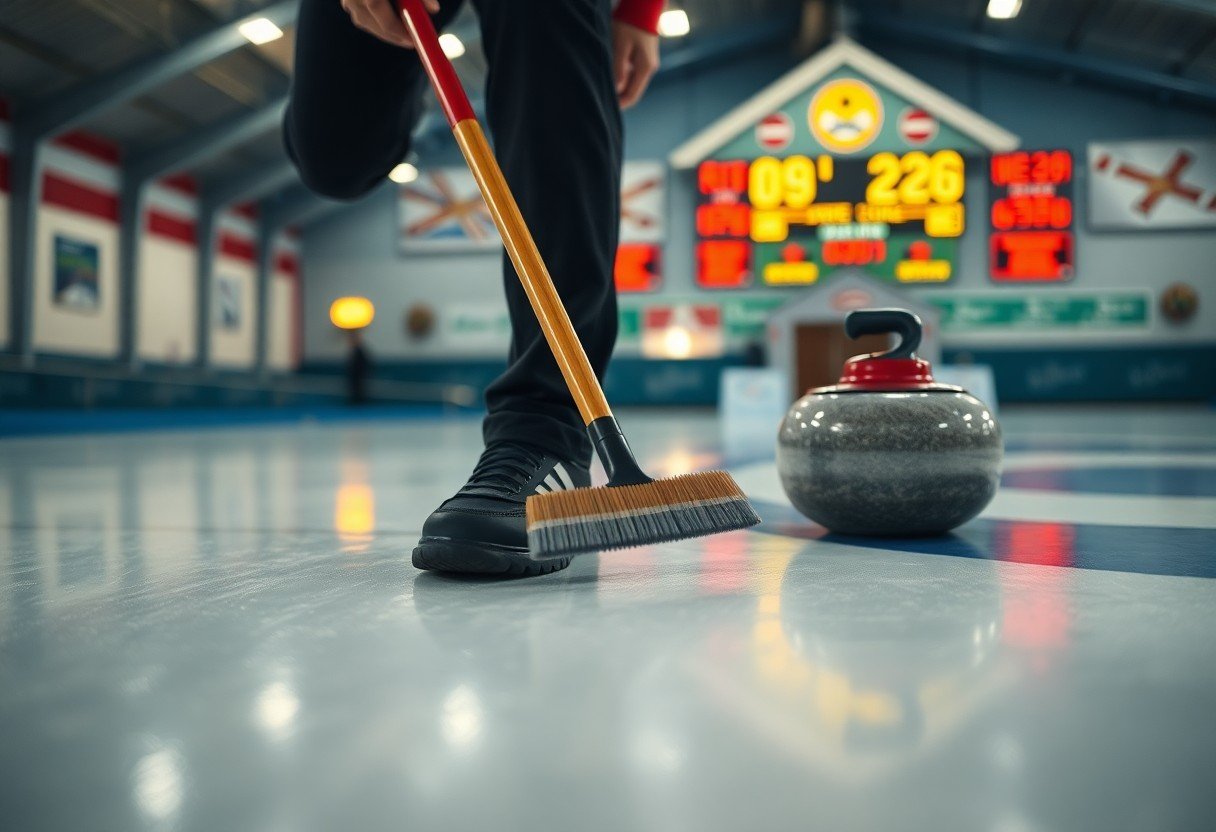
Several variables shift how your ends unfold: ice conditions, stone rotation, and team dynamics all alter curl, speed, and scoring. On a standard 146-foot sheet, pebble wear and a 0.2-0.5s change in hog-to-hog time can force different shot calls; for example, an extra 0.3s often turns a planned draw into a hit. Watch for fast patches and aggressive rotation that increase risk of overcurl. After you read these signals, you adjust shot selection, sweeping intensity, and placement to control the house.
- Ice Conditions – pebble, temperature, speed
- Team Dynamics – communication, roles, timing
- Stone Rotation – clockwise vs counterclockwise and RPM
- Sweeping Intensity – strokes per second, duration
- Weight Control – hog-to-hog timing and delivery speed
Ice Conditions
You test the sheet immediately: measure hog-to-hog times during warmups and note if a 0.2s shift appears between practice stones and first end; that indicates temperature or pebble change. Pebble flattened after 6-8 games creates unpredictable curl, so call for extra sweeping or alter rotational speed; professional venues target 9-11 seconds hog-to-hog for draw weight, while faster club ice can be under 8.5s, demanding different line choices.
Team Dynamics
You assign and rehearse clear responsibilities: the skip directs strategy, the third manages setup and communication with sweepers, and leads set pace and guard work. Use a concise call system and consistent sweep-release signals so everyone reacts within a half-second window; teams that synchronize this way reduce missed opportunities and avoid dangerous late-end misreads.
You practice specific drills to tighten interplay: run simulated ends where the second times hog-to-hog and the sweepers perform 3-4 defined sweep bursts per shot, aiming to keep times within ±0.2s of baseline. Adopt a two-word sweep code for intensity and a single-hand signal for release; these habits speed decisions under pressure and improve your ability to recover from momentum swings.
To wrap up
As a reminder, you solidify skills by practicing proper stance, stone release, weight control, and effective sweeping while communicating with your team; focus on consistent delivery, reading the ice, and tactical shot selection to convert shots into scoring opportunities; drill fundamentals, watch experienced players, and review each end to refine technique so your confidence and decision-making on the ice steadily improve.
FAQ
Q: What is the objective of curling and the basic rules I need to know?
A: The objective is to score points by getting your team’s stones closer to the center of the house (the button) than the opponent’s stones after all stones in an end are played. Basic rules and flow: 1) Teams of four alternate delivering eight stones each per end; 2) Play usually lasts 8-10 ends; 3) The team with the hammer (last stone) has an advantage on offense; 4) Stones must be released before the hog line and must cross the far hog line to remain in play; 5) Only one team scores per end, earning one point for each stone closer to the button than the opponent’s nearest stone; 6) Sweeping by teammates can influence distance and curl; 7) Sportsmanship and adherence to the rules about sweeping, touching stones, and hog-line violations are enforced by officials.
Q: How do I deliver a stone step-by-step (from grip to release)?
A: Step-by-step stone delivery begins with a comfortable grip—right-handers use their right hand, left-handers their left. Place your sliding foot forward in the hack and align your body toward the skip’s broom as your target. Settle into a stable tuck position with knee bent, using your broom or foot for balance. Push off the hack with a controlled, even drive while keeping your eyes fixed on the target. Maintain a low, smooth slide with your delivery arm extended and the stone level on the ice. Release the stone as your slider foot passes the hack line, imparting rotation by turning the handle slightly at release. Follow through toward the target, keeping your body aligned and weight controlled. Immediately communicate the stone’s weight and line to your teammates and observe its path to guide sweepers.
Q: How should sweepers sweep step-by-step to control weight and curl effectively?
Step-by-step sweeping begins by positioning yourself immediately in front of the moving stone, ahead of the tee-line for longer shots. Kneel briefly on one leg when first engaging the ice, then move into a low, strong stance with your broom angled slightly forward. Use fast, vigorous strokes while leaning into the broom to increase pressure and friction. Coordinate stroke rate and pressure with your sweep partner for consistent effect. Listen to the skip and thrower for calls to “sweep,” “easy,” or “stop.” Increase sweeping to add distance or reduce to let the stone curl more. Sweep aggressively through the stone’s path when instructed, keeping your eyes on the stone and communicating whether it’s tracking to the target. Stop sweeping on the skip’s call or when the stone reaches the desired location, avoiding contact with any stones already in the house.
Q: What is the step-by-step flow of an end, including shot order and scoring?
A: Step-by-step end flow and scoring: 1) Determine hammer (last-stone advantage) by pre-game draw or prior end result; 2) Teams alternate stones: lead, second, third (vice), then skip – repeat until eight stones each are played; 3) The skip calls shots, holds the broom as target, and judges line and weight; 4) After each stone, teams may sweep and set up guards or position stones strategically for subsequent shots; 5) At end completion, measure if needed to decide which stone is closest to the button; 6) Only the team with the closest stone scores, receiving one point per stone closer than the opponent’s nearest stone; 7) Score is recorded and the hammer is awarded to the team without a point in the previous end unless rules or pre-game arrangements differ; 8) Teams reset and prepare for the next end until the match concludes.
Q: What step-by-step strategy tips and common errors should new players focus on to improve quickly?
A: Step-by-step strategy and common mistakes to avoid: 1) Learn shot selection: practice guards, draws, and takeouts so you can execute the skip’s calls; 2) Practice weight control by throwing many controlled draws and hits to build consistency; 3) Communicate clearly – the skip, thrower, and sweepers should use consistent terms for line and weight; 4) Positioning: sweepers should learn efficient body mechanics to sustain effective sweeping without tiring; 5) Tactical thinking: early ends often use guards and draws, later ends shift to takeouts and angle shots depending on scoring needs; 6) Avoid common errors such as releasing with incorrect rotation, over- or under-throwing weight, poor balance during delivery, and inconsistent sweep pressure; 7) Review each shot as a team to identify small technical fixes and develop routines for pre-shot alignment and mental focus.