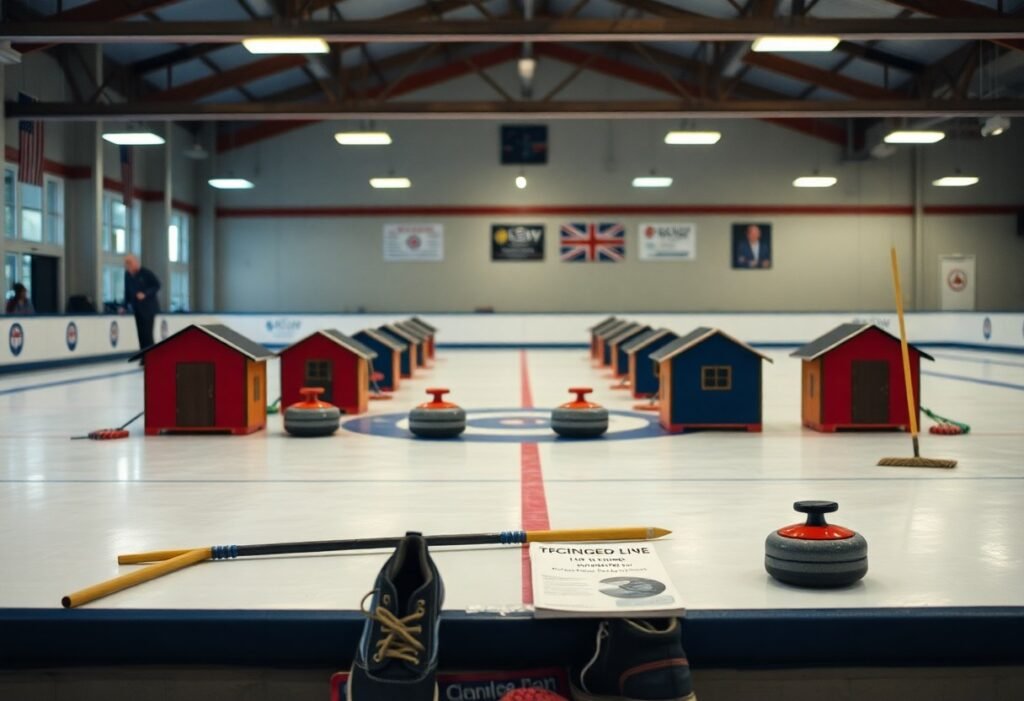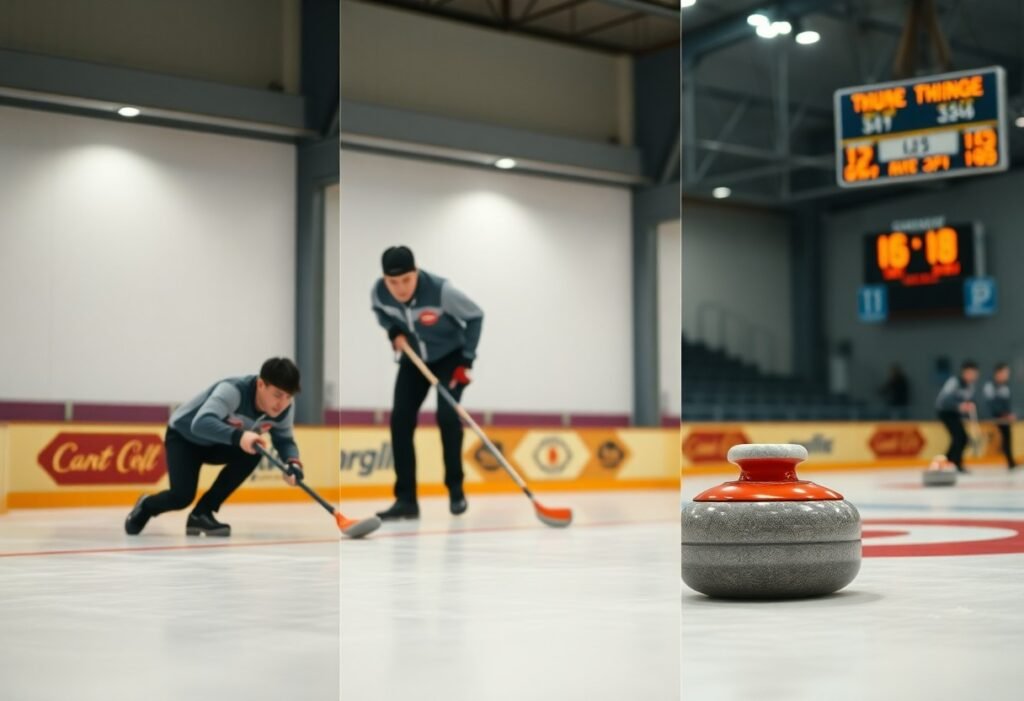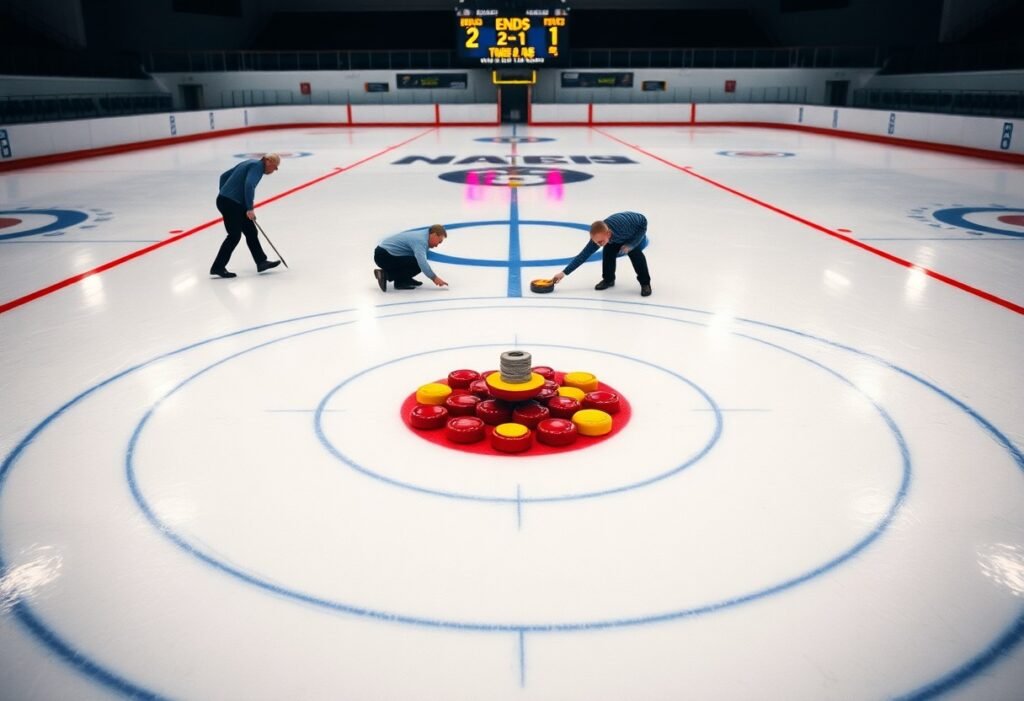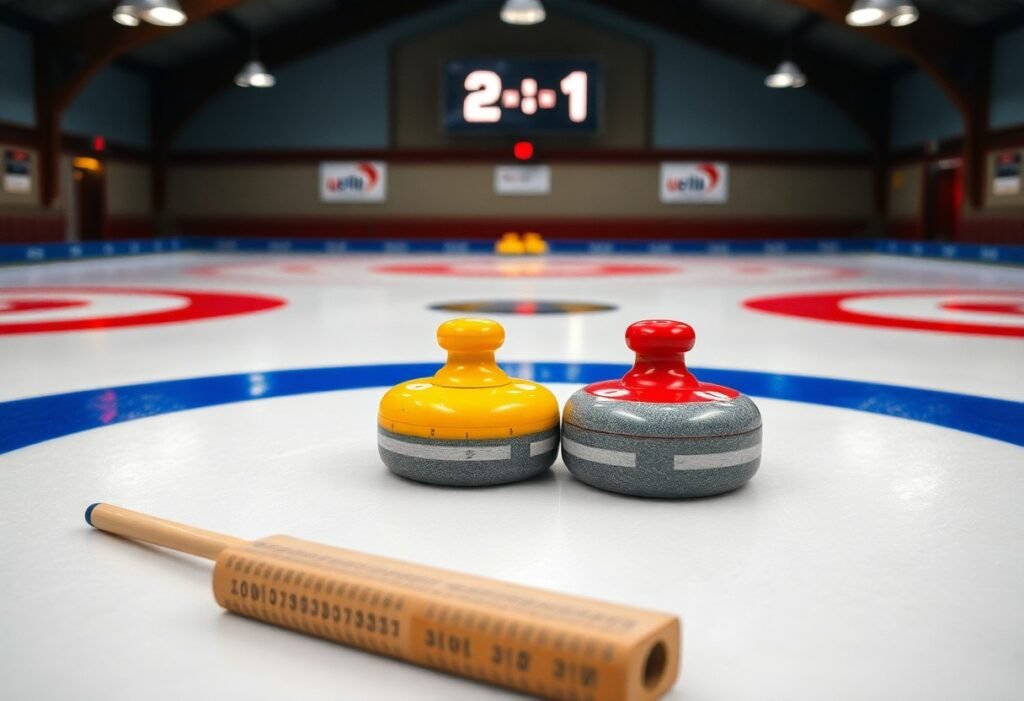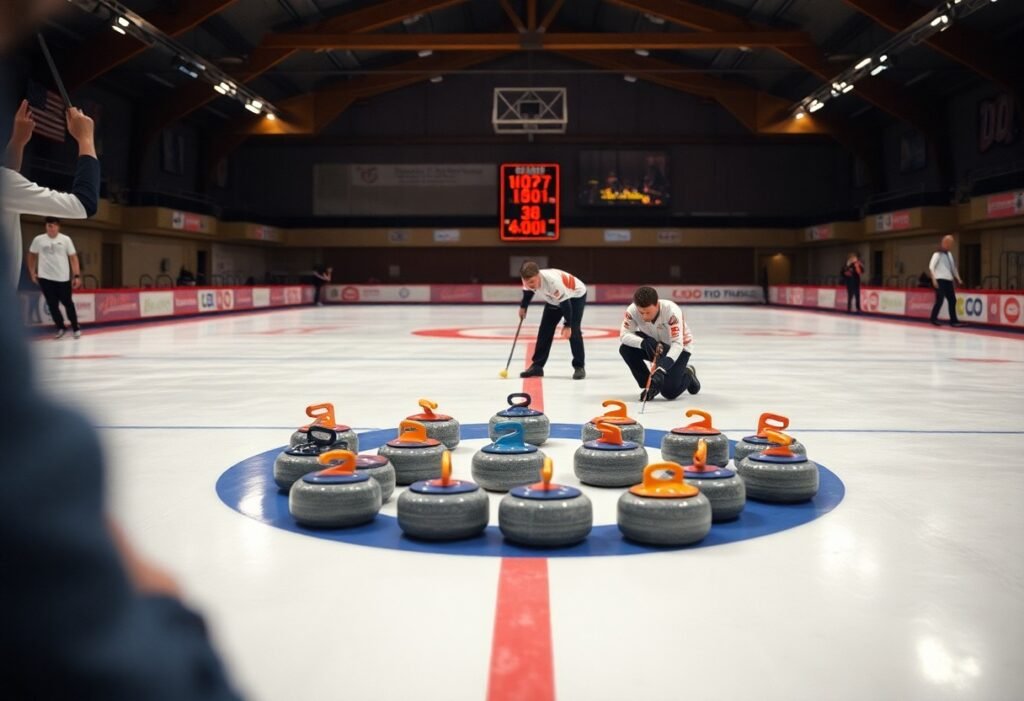

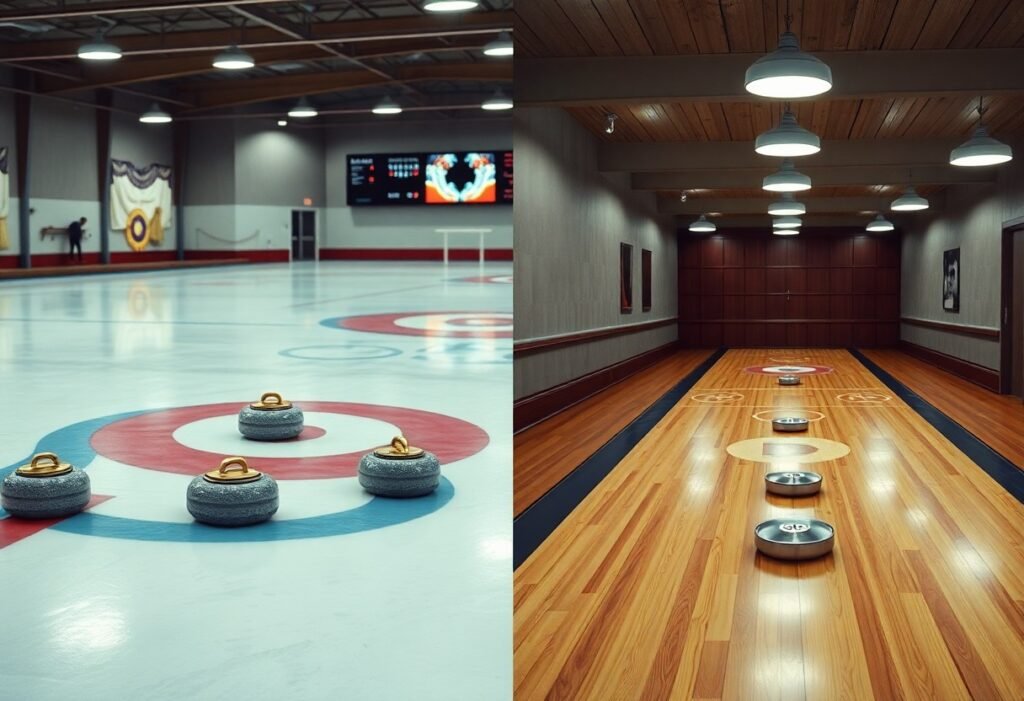
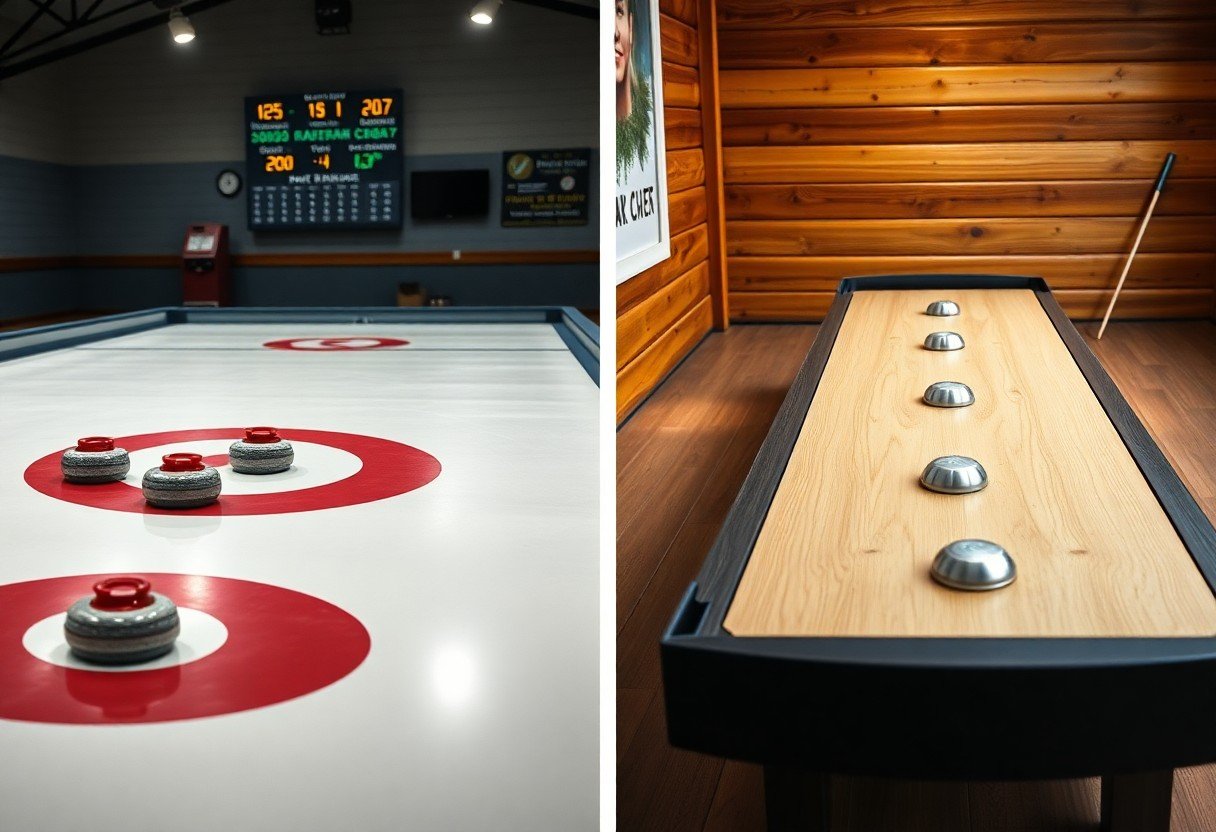
You can quickly spot differences in surface, equipment, pace and risk: curling uses ice, heavy stones and sweeping that demand balance and team coordination, while shuffleboard uses cues and pucks on polished wood or synthetic courts emphasizing precision and accessibility. Sliding on ice vs gliding on wood is a primary contrast; slippery ice and heavy stones are the main dangers in curling; strategic depth in curling and wider accessibility of shuffleboard are positive strengths and may suit your preferences.
Key Takeaways:
- Curling is played on ice with heavy stones and brooms; shuffleboard uses a smooth court or table with sliding pucks and cues.
- Curling emphasizes precise shot placement, sweeping to alter a stone’s path, and coordinated team strategy; shuffleboard centers on controlled slides into scoring zones.
- Curling is typically a four-person team sport with more physical sweeping and slow strategic play; shuffleboard is often solo or pairs, less physical and focused on consistent weight and placement.
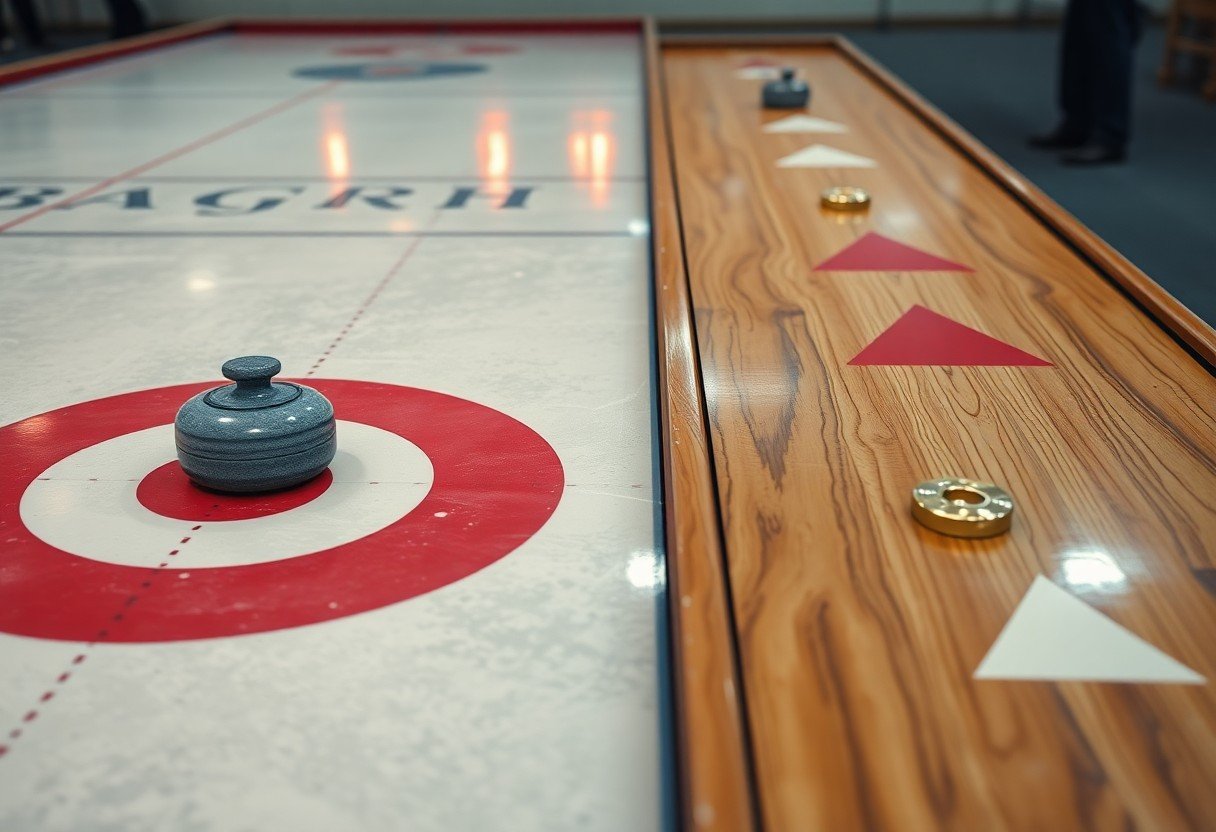
Overview of Curling
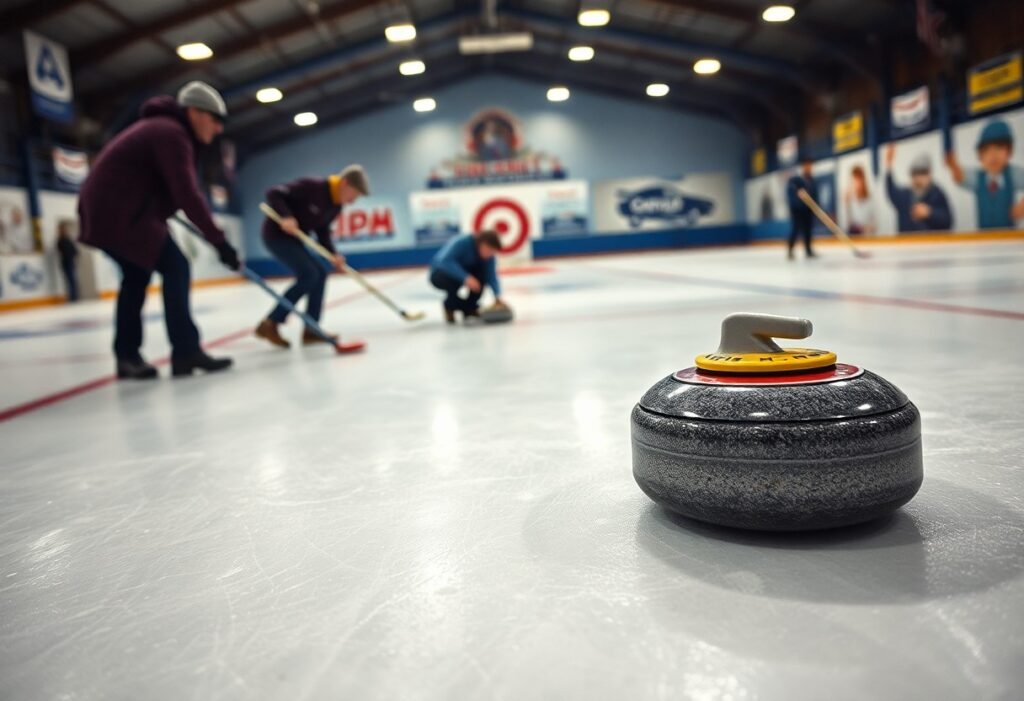
On the ice you slide polished granite stones weighing 38-44 lb (17.2-20.0 kg) down a roughly 45 m sheet toward a 12‑foot house, while teammates sweep to control speed and curl. Teams of four deliver eight stones per end, typically across 10 ends in top-level play, so strategy balances precise draws, takeouts, and guard placement. Pay attention to the slippery ice-falls are a real hazard-and to sweeping, which often determines whether a stone scores or is removed.
History of Curling
Originally played on frozen Scottish lochs in the 16th century, curling organized into clubs by the 19th century, with the Royal Caledonian Curling Club formalizing rules in 1838. You can trace its competitive growth through the British Isles to Canada, where it became a national sport; the discipline returned to the Olympic program in the modern era, gaining global exposure at the 1998 Nagano Games and evolving with rule changes since.
Rules and Gameplay
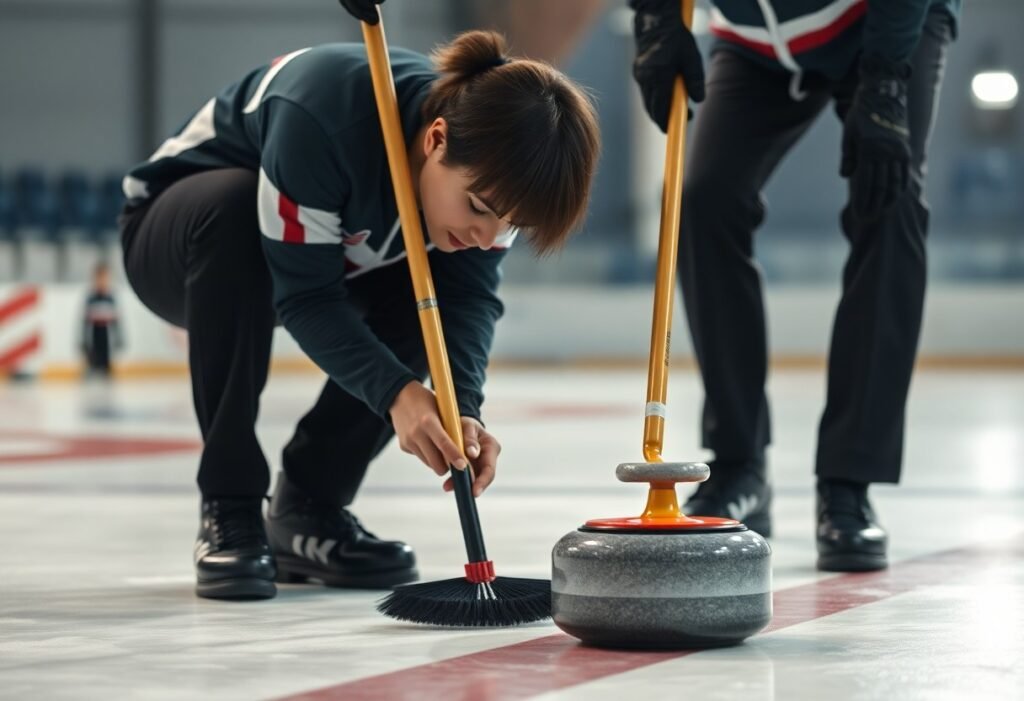
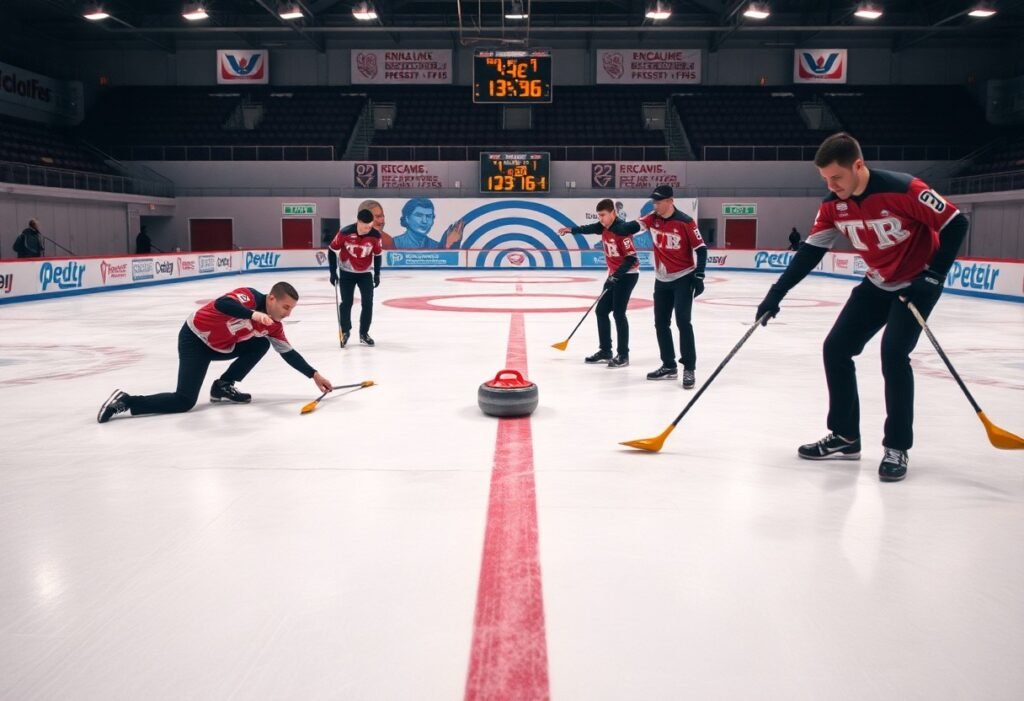
Teams of four alternate shots, each player delivering two of their team’s eight stones per end, aiming to place stones closer to the button than the opponent within the 12‑foot house; scoring counts one point per stone closer than the nearest rival. You must release before the hog line or incur a hog‑line violation, and sweeping by teammates significantly alters trajectory and distance, making communication and timing vital.
When you dive deeper, player roles shape tactics: the lead sets guards and draws, the second mixes takeouts and setup shots, the third (vice‑skip) advises strategy and throws pivotal stones, and the skip calls shots and throws last. The hammer-last stone advantage-dictates offensive versus defensive play; teams use blanks to retain the hammer or employ guards and forced takeouts to score multiple points. Recent rule evolutions, like the widespread adoption of the five‑rock free guard zone, have increased offensive opportunities, changing how you manage early‑end setups and risk‑reward shot selection.
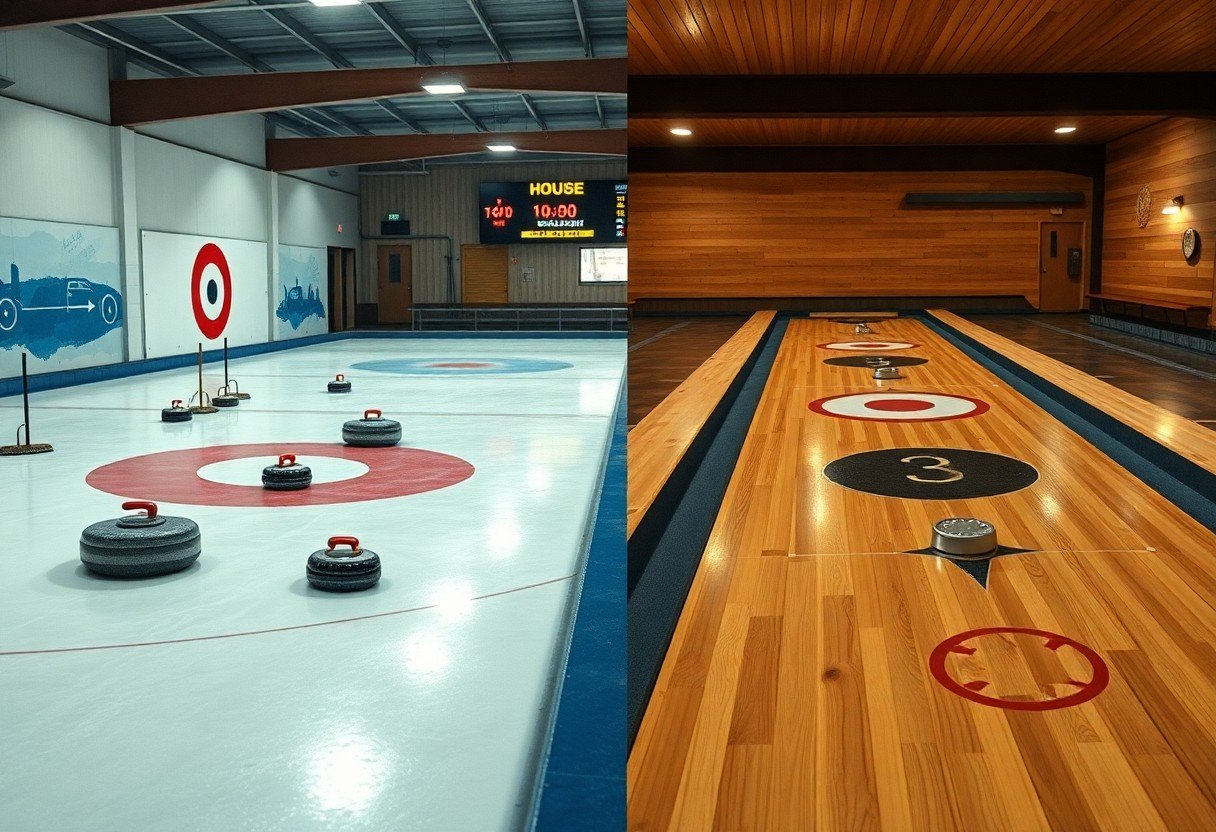
Overview of Shuffleboard
On courts and tables, shuffleboard splits into two distinct experiences: deck shuffleboard played on a long outdoor court and table shuffleboard found in bars and rec rooms. You’ll often see a 52-foot deck with triangular scoring at each end, while tables typically run from 9 to 22 feet. Play ranges from casual social rounds to organized tournaments with timed brackets and ranked players.
History of Shuffleboard
You can trace shuffleboard back to 15th-century England, where tabletop cue games evolved into the sport. Sailors popularized deck shuffleboard in the 16th and 17th centuries aboard ships. By the 20th century, tavern tables and seaside courts spread the game worldwide, and organized competition grew with regional tournaments and national leagues that formalized rules and standardized equipment.
Rules and Gameplay
Turns alternate as players slide discs or pucks toward scoring zones, with each player typically using four pieces per end. Points are awarded only for pucks that remain on the court or table and sit closer to the scoring zone than any opponent’s piece; common match lengths are to 15 or 21 points. Strategy centers on precision shots and bumping opponents’ pieces out of scoring.
For deck play you use a cue from behind the baseline to propel disks into a triangular target with zones worth 10, 8, and 7 points and sometimes a 10‑off penalty area that deducts points. On tables you must keep pucks on the surface-anything falling off scores 0. Tournament rules often require a full puck inside a zone to claim its points, and you can legally knock opponents’ pieces away to change scoring math.
Key Differences Between Curling and Shuffleboard
Equipment Used
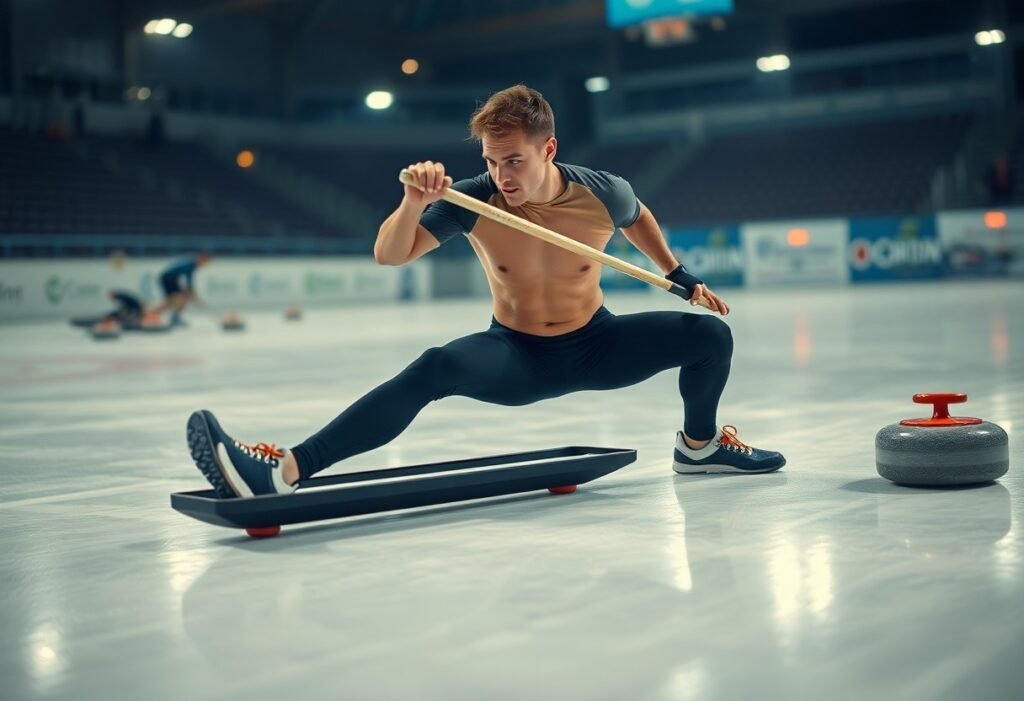
You deal with very different gear: in curling you slide a granite stone weighing 38-44 lb (17.2-20.0 kg) and use brooms, sliders and grippers for traction, so mishandling can be dangerous. In shuffleboard you push lighter pucks or “weights” with cues on a polished table or court, usually using four to eight discs per player; that gear is portable and less hazardous but demands precise touch.
Playing Surface
The surfaces dictate technique: curling uses a prepared sheet with a pebbled ice surface you can alter by sweeping to change friction, while shuffleboard runs on smooth polished wood or painted outdoor courts where you rely on slide and wax beads to control speed. You must adjust your footwork and delivery to each surface’s grip and slide characteristics.
Maintenance diverges sharply: a curling sheet is roughly 45 m long with a 12‑foot house, kept at about -3 to -5 °C, requiring scraping and pebbling before play to ensure consistent curl. Shuffleboard tables need levelness, a finely polished surface and a controlled amount of silicone wax or beads so your discs glide predictably across the length.
Scoring System
Curling scores by counting how many of your stones are closer to the button than the opponent’s best stone at the end of an end, with matches typically lasting 8 or 10 ends. Shuffleboard is zone-based: pucks earn points based on which scoring area they stop in, so you score per puck rather than per end, and you can accumulate multiple points each turn.
In practice, curling rewards accuracy and hammer strategy-you might score 0-8 points in an extreme end, though 1-3 is common; if two of your stones are closest you score two. In shuffleboard you total the values of your discs in scoring zones each round, so consistent placement or a single high-value “hang” can swing the match quickly.
Similarities Between Curling and Shuffleboard
Both games reward precise, paced shots and strategic placement; you aim to out-position opponents rather than overpower them. On ice and court you develop similar spatial judgment, pacing and scoring tactics, and both use equipment to fine-tune motion-see Rocks? Brooms? Here’s a simple guide to ice shuffleboard …. Players share emphasis on accuracy, tactical thinking, and team coordination, with surface and tool differences driving distinct techniques.
Social Aspects
You’ll find both played in social leagues and casual club nights; curling teams of four emphasize communication and teamwork, while shuffleboard often sees pairs or singles in pubs and community centers. Spectators and teammates vocally influence strategy, and the generally low-impact nature makes both accessible across ages-many clubs run mixed leagues and beginner nights to welcome new players.
Skill Development
Both sports sharpen your hand-eye coordination, shot weight control and tactical decision-making; in curling you practice repeated draw and takeout scenarios across 8-10 ends (Olympic/world play uses 10), while shuffleboard trains delicate release and cue control over 9-22 ft tables. Mastery hinges on consistent repetition, targeted drills and timely feedback from teammates or coaches.
To progress you should structure practice into focused blocks: spend 20-30 minutes on draw-weight, 20 minutes on takeouts and separate time on sweeping or cue technique. Many club coaches recommend doing roughly 50-200 repetitions per specific drill each week to build muscle memory; elite curlers often add short ice-reading sessions before matches. For shuffleboard, use marked targets on the table to measure landing consistency. Maintain proper balance to reduce the risk of slipping on ice and track shot percentages to see measurable improvement.
Popularity and Cultural Impact
Regions and Communities
You see curling woven into community life in Canada, Scotland and the Nordic nations, with club leagues, junior programs and university teams; Canada reports over 1.5 million participants. In the U.S., Minnesota and Wisconsin sustain competitive circuits. Shuffleboard thrives differently: it’s a staple in Florida, on cruise ships and in bar leagues, where casual play and social clubs keep the game alive.
Major Events and Championships
You can follow curling at the highest level in the Olympics (official since 1998), annual World Men’s and Women’s Championships, the Tim Hortons Brier and Scotties Tournament of Hearts, plus the Grand Slam series with purses often exceeding $100,000. Shuffleboard holds U.S. national championships and regional invitational tournaments run by organized associations, but it lacks an Olympic stage, keeping its spotlight mainly local and recreational.
You’ll notice the World Curling Federation runs annual World Championships and Olympic qualification, while the Grand Slam of Curling – including the Players‘ Championship and Champions Cup – draws elite fields. National events like the Brier and Scotties rotate host cities, delivering strong arena attendance and broadcast coverage in Canada. Shuffleboard’s top competitions remain U.S. national championships and regional circuits, which sustain competitive interest but attract far smaller media audiences.
Choosing Between Curling and Shuffleboard
When choosing, match your time, fitness and social goals: curling uses 38-44 lb stones, teams of four, and matches of 8-10 ends that often take ~2 hours, so you get a full cardio-and-skill session; shuffleboard tables (typically 9-22 ft) or deck courts let you play casually in 10-30 minute rounds and fit into bars, cruise ships or parks. You should weigh the physical demand and local availability before committing.
Personal Preferences
If you love coordinated strategy, communication and a physical workout you’ll enjoy curling’s teamwork and sweeping; teams of four and tactical shot-calling create deep replay value. Alternatively, if you prefer quick learning, light exertion and solo or pairs play, shuffleboard rewards steady aim and finesse and gets you into social leagues faster. Choose based on whether you want a competitive, athletic outlet or a low-impact, social pastime.
Accessibility and Local Options
Depending on where you live, access swings the decision: Canada and Scotland host hundreds to over a thousand clubs where you can join a rink, while shuffleboard shows up in community centers, bars and on cruise ships, making it far easier to find casual play in many cities. You should map local clubs, tables and leagues before deciding.
Many curling clubs run beginner sessions, rent shoes and provide brooms, and offer adaptive curling for seniors or people with mobility limits, so starter gear and programs are often available; meanwhile shuffleboard tables are portable, common in pubs, and supported by weekly house leagues, meaning you can usually drop into play without long lead times or club memberships.
To wrap up
Following this comparison, you can see curling and shuffleboard differ in surface, equipment, and strategy: curling demands sweeping, weight control, and team coordination on ice, while shuffleboard emphasizes finesse, cue technique, and table positioning on a smooth court. Your choice depends on whether you prefer physical teamwork and tactical shot-making or a quieter, precision-based tabletop game.
FAQ
Q: What are the main differences in playing surfaces and equipment between curling and shuffleboard?
A: Curling is played on a prepared sheet of ice with painted target rings called the house, using 38-44 lb granite stones and brushes (brooms) to sweep the ice and influence stone speed and direction; players use a hack to launch stones. Shuffleboard exists in two common forms: deck (floor) shuffleboard played on a long painted court and table shuffleboard played on a smooth, waxed wooden table. Equipment for shuffleboard includes weighted pucks (discs or biscuits) and either cues or hands to push them; the surface is smooth and relies on low friction rather than ice. Maintenance needs differ: curling ice requires temperature and pebble control, while shuffleboard surfaces are waxed or coated and periodically sanded or re-waxed.
Q: How do objectives and scoring systems differ between the two sports?
A: In curling the objective is to deliver stones so they finish as close to the center of the house (the button) as possible; after each end, the team with the stone closest to the button scores one point for every stone closer than the opponent’s nearest stone. Games are played over a set number of ends and include tactical use of the hammer (last-stone advantage). In shuffleboard the aim is to place pucks into scoring zones on the court or table without falling off the end; points are awarded according to which zone a puck rests in, and opponents can knock pucks out of scoring zones. Table shuffleboard often uses fixed rounds or points-to-win; deck shuffleboard uses sequences of shots with players alternating turns from opposite ends.
Q: What specific skills and techniques are unique to each sport?
A: Curling demands precise weight control (stone speed), line (aim), strategic shot selection (draws, takeouts, guards) and effective sweeping to extend travel and alter curl; teamwork, communication, and ice-reading are vital. Shuffleboard focuses on consistent push technique, speed control, and finesse to land pucks in scoring areas or to bank/knock opponents’ pucks out; table shuffleboard emphasizes controlled follow-through and scoring placement while deck shuffleboard may require longer-range accuracy and strategic blocking. Both sports require hand-eye coordination, but curling adds dynamic balance and locomotion on ice while shuffleboard emphasizes fine motor control and puck placement.
Q: How are teams and match formats organized in curling versus shuffleboard?
A: Competitive curling is typically played by teams of four (lead, second, third/vice, and skip) with defined roles and shot order; matches run a set number of ends and often include timing clocks. Mixed and mixed doubles (two-player) formats exist too. Shuffleboard can be played singles or doubles; table shuffleboard commonly uses alternating turns delivering multiple pucks per frame, while deck shuffleboard often features players or teams alternating shots from opposite ends and scoring after each round. Tournament formats for both sports vary from round-robin pools to knockout brackets, but curling’s team roles and end structure create more complex in-game strategy.
Q: What are the differences in physical demand, accessibility, and typical venues for each sport?
A: Curling requires moderate cardiovascular fitness, strong core and upper-body effort for sweeping, and balance for delivering stones-it is usually staged in dedicated ice rinks and is seasonal in many places. It has a higher equipment and facility cost and steeper learning curve for safe ice movement. Shuffleboard is lower-impact; table shuffleboard is highly accessible in bars, rec centers, and cruise ships, while deck shuffleboard is common at clubs, outdoor courts, and some retirement communities. Shuffleboard is easier to adapt for casual play and players of varied ages and fitness, with lower equipment and venue costs compared with curling.