
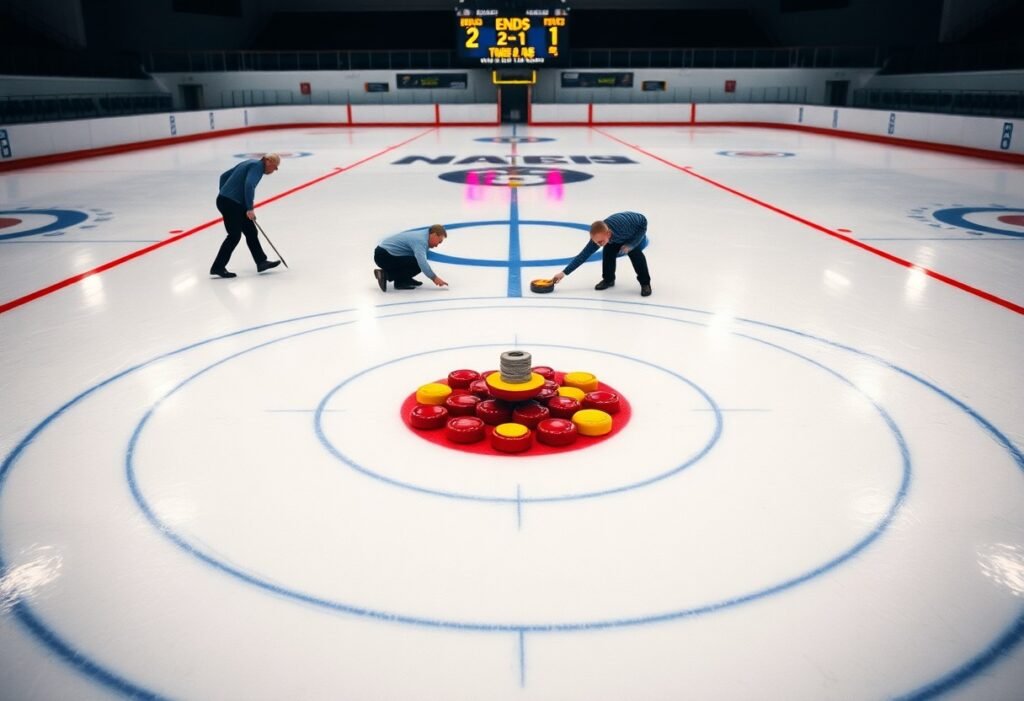
Rules govern delivery, sweeping, scoring and strategy so you can read the ice and influence each shot; sweeping changes a stone’s speed and path, the last-stone advantage (the hammer) often decides ends, and stones weighing 38-44 pounds require care during delivery and retrieval. You score only for stones closer to the button than any opponent’s, play is divided into ends, and your team’s communication and precise weight control win points.
Key Takeaways:
- Objective and structure: score more points than the opponent by placing stones closer to the button across a set number of ends; teams alternate deliveries and each team throws eight stones per end (four-player teams throw two each).
- Scoring: after all stones are played, only the team with the stone nearest the button scores, earning one point for each of its stones closer to the button than the opponent’s nearest stone.
- Gameplay mechanics and strategy: the hammer (last-stone advantage) is important; sweeping alters speed and curl; common tactics include guards, draws, takeouts, and blanking an end to retain the hammer.
Overview of Curling
You and your three teammates alternate throws so each side delivers eight stones per end, with top-level matches played over 10 ends (club games often use 8). Strategy hinges on hammer possession-the team with the last stone-and on precise weight and line control; you score by finishing stones closer to the button than your opponent. Tactical choices, from guard placement to takeouts, let you convert single-shot setups into multi-point ends.
The Playing Field
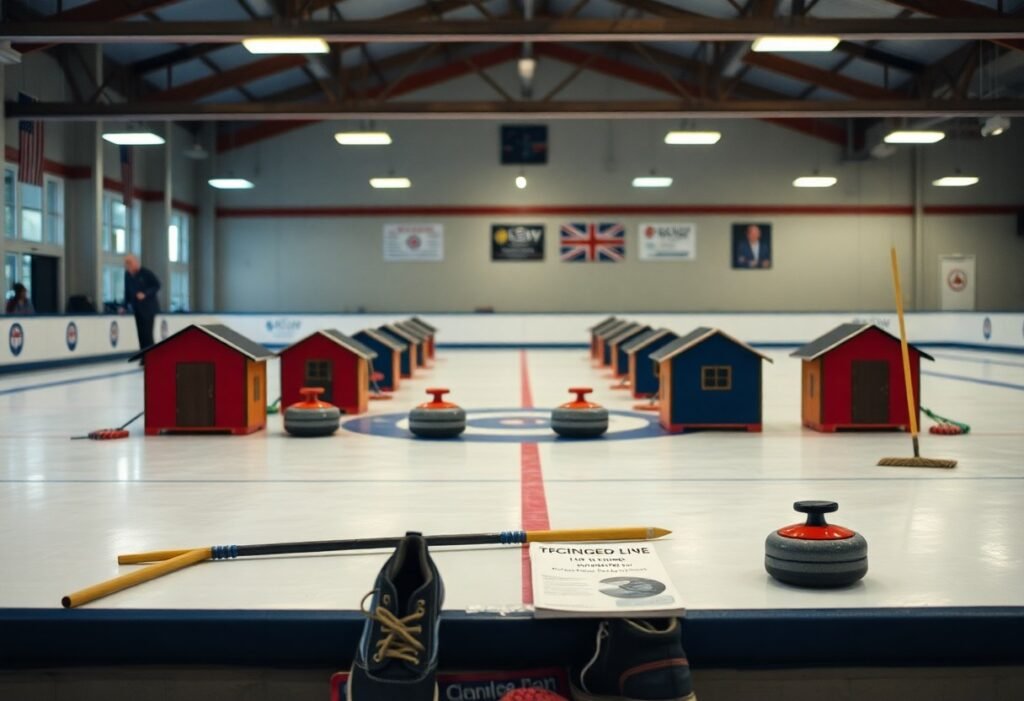
The sheet runs roughly 146-150 feet long and about 14-16 feet wide, laid out with a center line, tee line, hog lines and the house-a 12-foot diameter scoring circle. You must release the stone before it reaches your near hog line, and any delivered rock that fails to reach the far hog line is removed from play, so positioning around the button and hog lines drives much of the shot selection.
Equipment Used
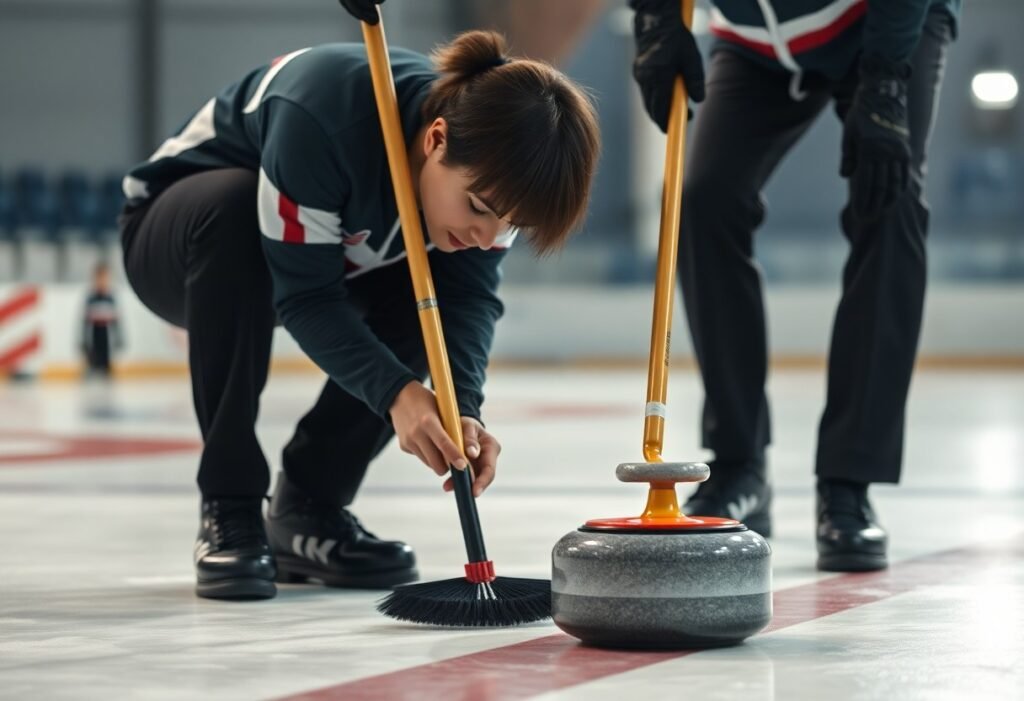
Stones weigh between 38-44 pounds and are roughly 11 inches across, making careful handling necessary; you also rely on brooms, a slider and gripper for shoes, the hack for delivery, and measuring tools for tight calls. Brush heads, shoe aids and stone handles are regulated for competition, so your gear choice affects ice interaction and delivery consistency.
Championship-quality stones are often cut from Ailsa Craig granite for durability and consistent running bands; manufacturers machine a narrow contact band to control roll. Sweeping heads evolved from straw brooms to synthetic pads that alter ice friction, so you and your sweepers practice timing and pressure, while modern electronic measures increasingly replace tapes for end-by-end scoring precision.
Basic Rules of Curling
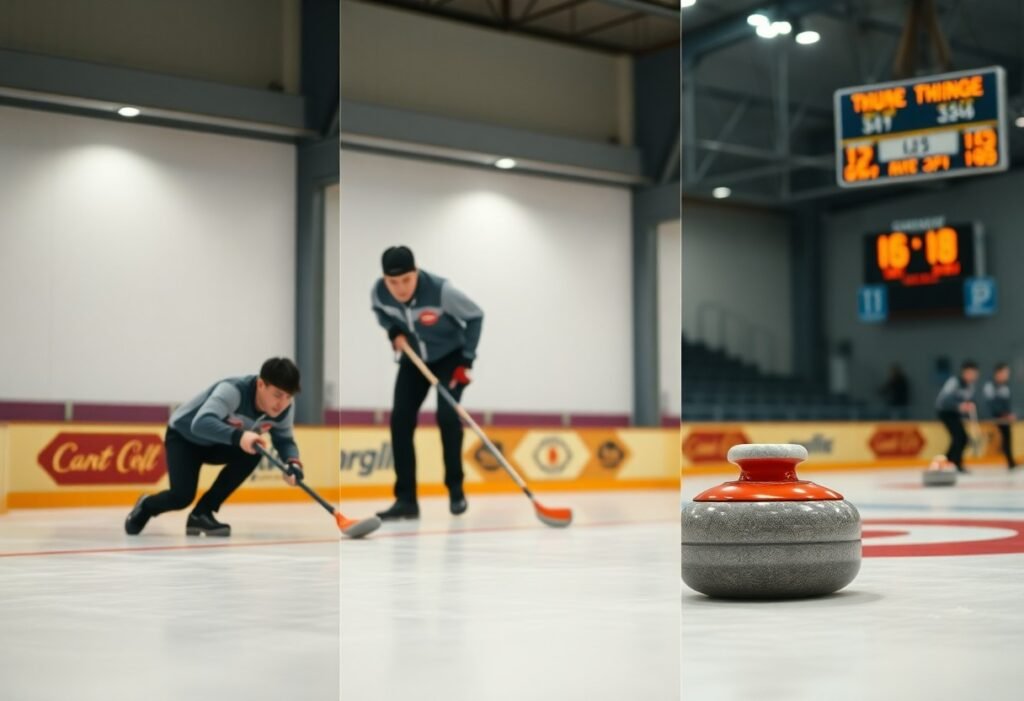
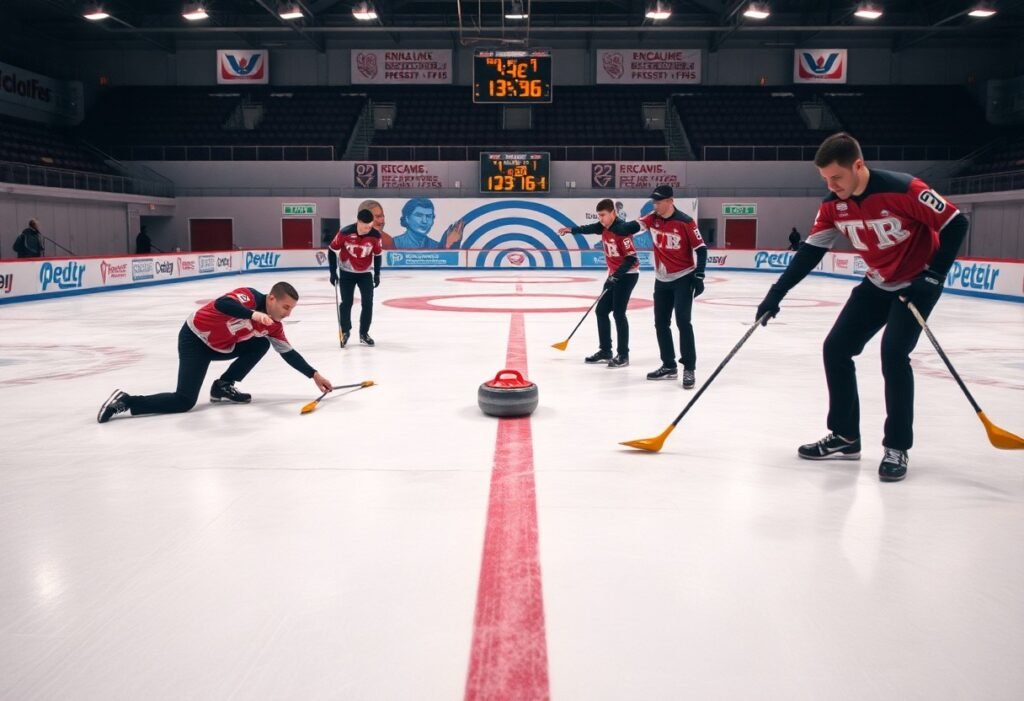
During an end, you and three teammates each deliver eight stones alternately against the opponent; play ends when all 16 stones are played. Two sweepers may follow each shot to influence speed and curl-effective sweeping can extend travel by several meters and reduce curl. A delivered stone must be released before the near hog line and must cross the far hog line to remain in play; violations lead to the stone being removed.
Player Positions
You will see four roles: the lead throws stones 1-2 and sets guards or draws, the second throws 3-4 and often plays takeouts while sweeping aggressively, the third/vice-skip throws 5-6, discusses strategy and holds the broom for the skip, and the skip manages strategy and throws the last two stones, often deciding the end with the “hammer.”
Game Format
Most high-level team games are played over 10 ends, while many club and junior matches use 8 ends. Mixed doubles uses two players per team over 8 ends with five stones each and two pre-positioned stones to start every end. Ties after regulation are resolved by an extra end; play continues until one team scores.
Additionally, the hammer (last-stone advantage) shifts to the team that did not score the previous end, which shapes strategy: you may blank an end to retain the hammer. Mixed doubles specifics-pre-placed center guard and on-tee stone-force more aggressive tactics and quicker scoring decisions, making end-to-end swing common in 8-end formats.
Scoring in Curling
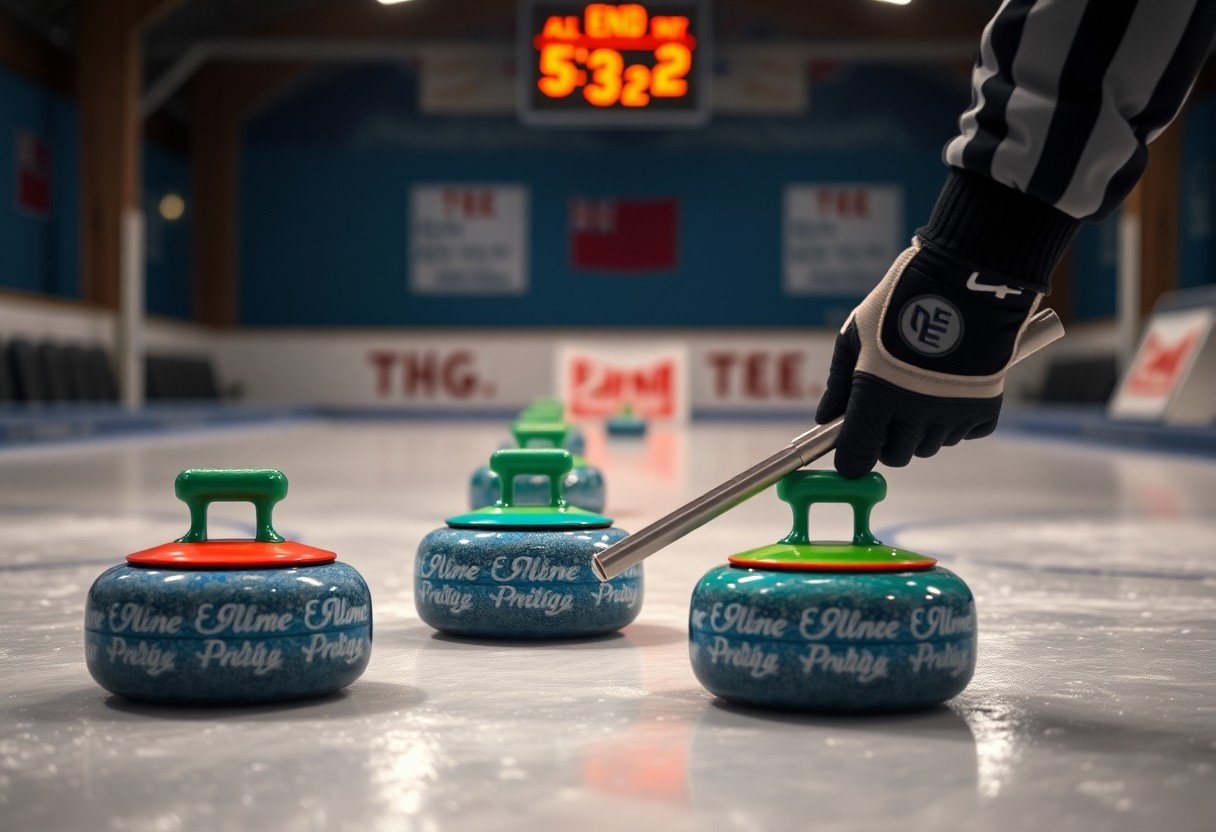
After each end the team with the stone closest to the button scores; you count only stones closer than the opponent’s nearest. Games are usually 8 or 10 ends, and each team throws 8 stones per end, so a single-end max is 8 points. See How to Score in Curling: A Beginner’s Guide for a step-by-step.
How Points Are Awarded
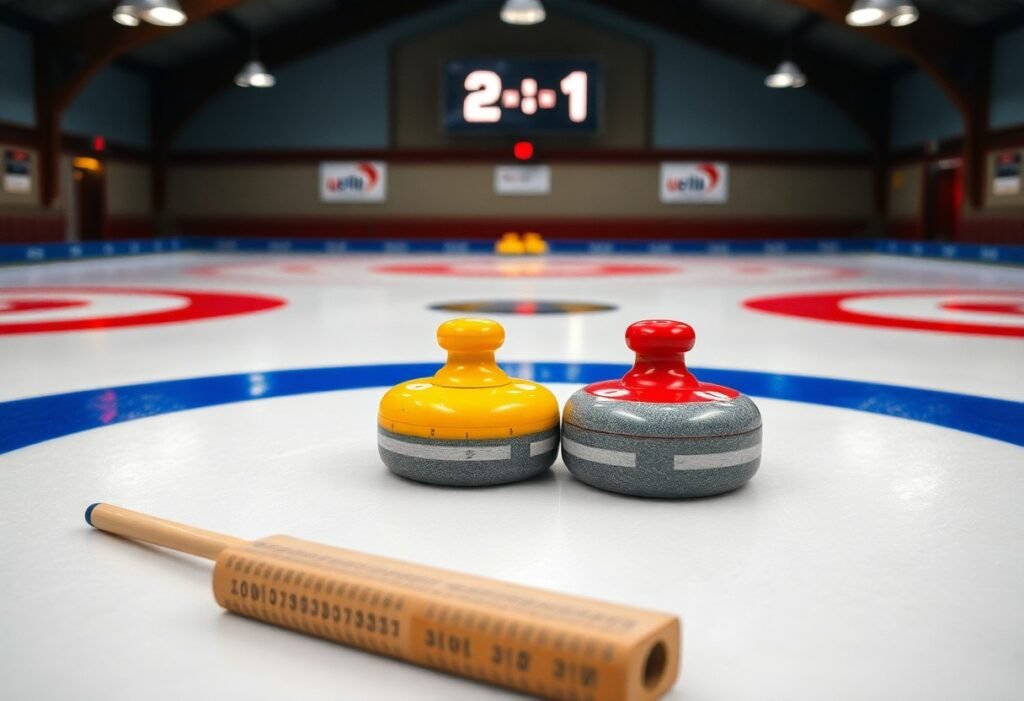
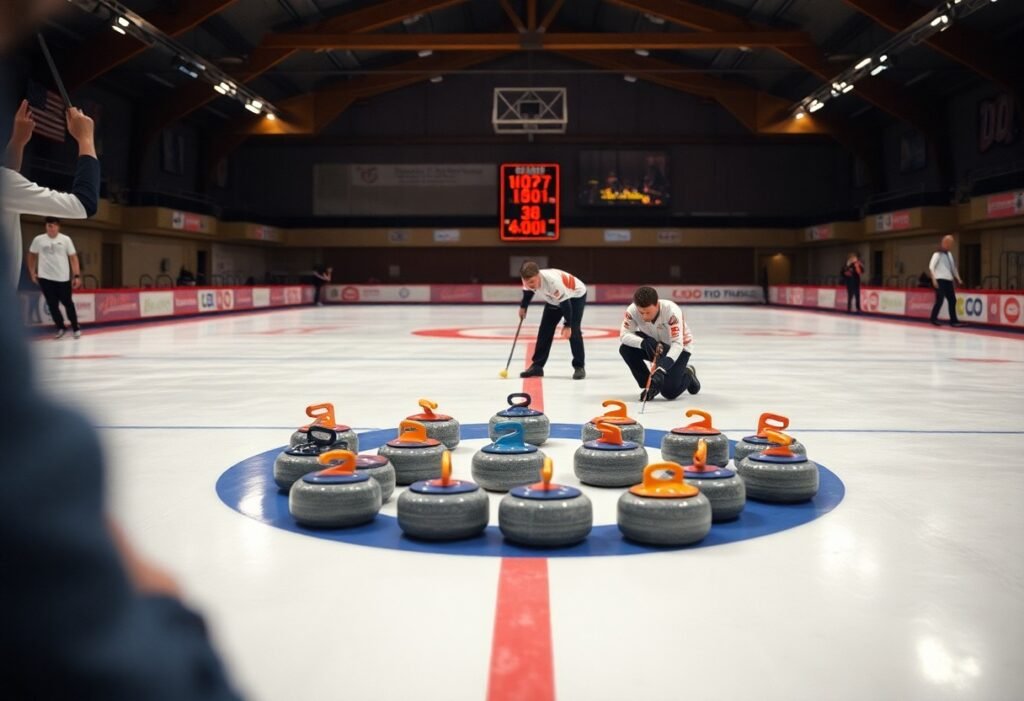
After all 16 stones are delivered you determine scoring by which stones lie in the house. Only stones touching the house can count; the team with the stone closest to the button scores and counts every one of its stones that is closer than the opponent’s nearest. Officials will measure with tape or an electronic device when proximity is uncertain, and a tied stone yields no point for that stone.
Scoring Strategies
With the hammer you typically aim for a deuce (2 points) or better; without it you try to force a single or to steal. You can blank an end to retain the hammer, deploy guards and draws to build a multi-stone count, or play takeouts to minimize opponent scoring. You should adjust tactics based on the scoreline and the number of ends remaining.
For example, if you hold hammer in the eighth of a 10-end game, establishing a corner guard and drawing to the four-foot can set up a three when opponent misses are promoted; conversely, a missed final draw can reduce a potential three to a single. Managing risk-trading singles, forcing blanks, or pushing for big ends-separates average teams from elite squads.

Common Fouls and Violations
Frequent infractions include failing to release before the near hog line. Touching a stationary stone, called a burned stone, is another common violation. Illegally removing an opponent’s guard under the free-guard rule also draws penalties. Delivering the wrong stone or from an incorrect position is a procedural error.
You’ll also see sweeping-related breaches and delivery foot-faults. In elite play, the five-rock free-guard rule now prevents guard removal until after the first five stones. This increases the penalty impact of early violations.
Rule Infractions
When you cross or release past the hog line, that delivery is voided and the stone usually removed. If you touch a moving stone, officials judge the result; touching a stationary stone in the house-called a burn-gives the non-offending skip several options. Illegally removing guards before the allowed number of opening stones (four under older rules, five in many modern events) is another common infraction that alters shot outcomes.
Consequences of Violations
Penalties vary based on the infraction. A hog-line breach typically results in stone removal. For a burned stationary stone, the opposing skip may choose to leave it, remove it, or reposition it fairly.
Illegally knocked-out guards are usually restored to their original position. The offending stone is then removed. This enforces fair play and preserves the strategic guards that define ends.
Officials can escalate responses for deliberate or repeated fouls. You may face warnings or loss of delivered stones. Replacement of positions is another possible penalty. In extreme cases, forfeiture of an end or match may occur.
At championship level, umpires use video review and measurement to confirm calls. Enforcement of the five-rock rule since 2018 has made early-guard violations more costly. These infractions now carry greater strategic and scoreboard consequences.
Curling Etiquette
Keep play moving and respectful. Stay silent during delivery. Keep equipment off the ice. Clear the sheet promptly after an end.
Avoid walking behind the hack or through the shooting lane. On a standard 146-foot sheet, that path is used every shot.
Offer a handshake or fist bump at the end. If a dispute arises, discuss it calmly with the opposing skip and officials.
Sportsmanship and Respect
Greet opponents and officials with courtesy. Accept bad breaks without berating teammates. Congratulate good shots from both teams.
Teams commonly concede early. They may do so when down six after seven ends in a 10-end game. This spares further mismatch and shows respect for opponents’ time.
Maintain low noise during delivery. Avoid excessive celebration that distracts play. Help an injured player immediately. Notify the ice attendant or tournament medic right away.
On-Ice Behavior
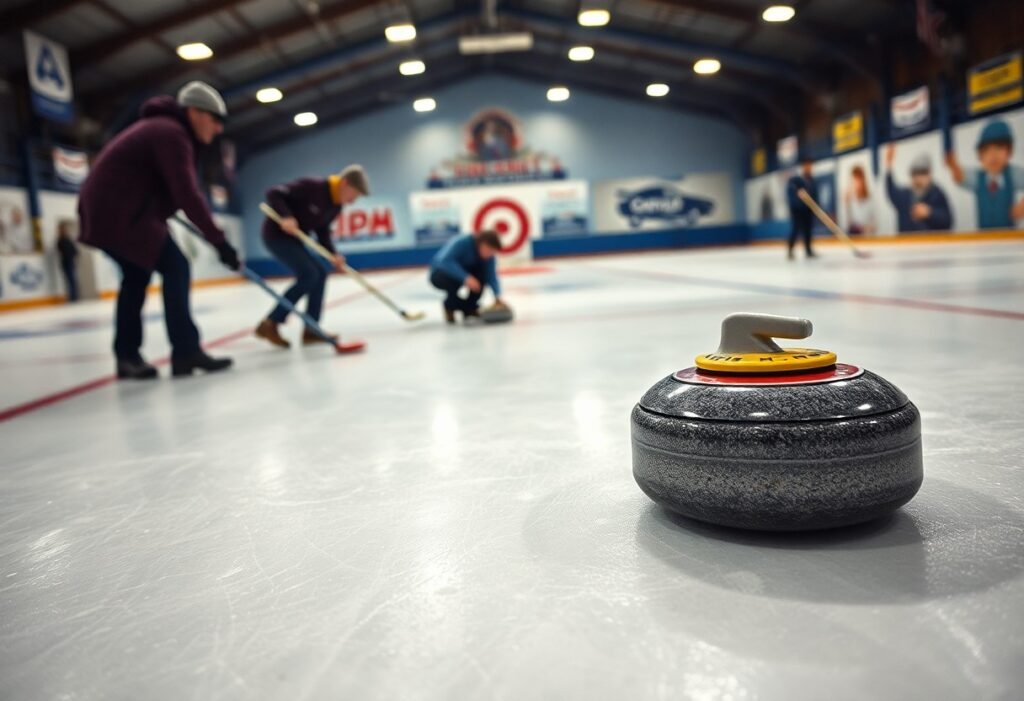
You prioritize safety: curling stones weigh 38-44 lb and the surface is very slick, so wear proper grippers and sliders and never run across the sheet. Stand clear of the shooting lane and out of sightlines for the skip; if your broom or bag falls on the ice, retrieve it quickly between ends. Calling a clear “mine” or “yours” during sweeping prevents collisions and confusion.
You position yourself to minimize interference-stand behind the tee line or at the edge of the house rather than in the direct line between hack and target, and keep a low profile when not sweeping. Keep phones silent and off the ice, and don’t step onto the pebbled surface with dirty soles. If you accidentally touch a stationary stone, call it immediately and resolve placement with the opposing skip to preserve fair play.
Curling Competitions and Leagues
Types of Tournaments
You encounter a wide range of formats: local bonspiels with round-robin pools, national championship playdowns that crown teams for world events, the professional Grand Slam circuit, mixed-doubles events, and age-based junior and senior championships. Many use round-robin plus playoffs, while some adopt straight knockouts or page playoff systems. Assume that you pick events based on format, ranking points, and purse size.
- Bonspiel – multi-team club or regional events
- National Championships – selects teams for worlds
- Grand Slam – elite tour events with high purses
- World Championships – annual international titles
- Olympic Events – quadrennial, highest prestige
| Bonspiel | Local to provincial, often round-robin; entry-based |
| National Championships | Winner usually earns berth to World Championships |
| Grand Slam | Invitationals for top-ranked teams; substantial prize money |
| World Championships | Annual, organized by World Curling Federation; ranking points |
| Olympic Events | Held every four years; national trials determine entrants |
Overview of Major Championships
You’ll find the World Men’s Championship began in 1959 and the women’s in 1979, while Olympic curling returned as a medal sport in 1998 Nagano. Mixed doubles Worlds started in 2008, and the Grand Slam series features the sport’s top professional teams with significant media exposure and tour-level ranking points.
Qualification paths vary by event. Countries typically send national champions or trial winners to worlds and the Olympics. Grand Slam fields are drawn from the top teams on the Order of Merit. Event stakes also vary significantly. Some Grand Slams offer purses often exceeding CAD 100,000. You’ll face intense, high-pressure conditions in these events. Ice reading and strategy ultimately determine outcomes at this level.
Final Words
Now you understand the basics of play, scoring, and strategy in curling. You know how ends and the hammer affect decisions. Scoring is determined by stones closest to the button. Shot selection, weight, and sweeping shape outcomes. With this foundation, your ability to follow matches improves. You can better assess tactics and appreciate the precision that defines success on the ice.
FAQ
Q: What is the basic objective of curling and how is a game structured?
A: The objective is to score more points than the opponent by delivering granite stones down a sheet of ice toward a circular target called the house. Each team has four players and eight stones per player set (eight stones per team per end). A standard game is 8 or 10 ends; teams alternate throwing stones within each end. Play in an end continues until all 16 stones are delivered, then scoring is determined and the next end begins.
Q: How is scoring calculated at the conclusion of an end?
A: Only stones resting in the house (the concentric circles centered on the button) can score. The team with the stone closest to the button scores one point for each of its stones that is closer to the button than the opponent’s closest stone. Stones outside the house do not count. If no stones are in the house, the end is blank and no score is awarded.
Q: What is the “hammer” and how does it affect strategy?
A: The hammer is the advantage of throwing the last stone in an end. The team with the hammer has the final opportunity to score or to remove opponent stones. Teams often play defensively without the hammer to force a blank end (to retain hammer) or aggressively with the hammer to score multiple points. The hammer changes shot selection, risk tolerance, and choice between drawing into the house and playing takeouts.
Q: What are the main delivery and in-play rules players must follow?
A: Deliverer must release the stone before it crosses the near hog line and the stone must cross the far hog line to remain in play. The player’s sliding foot must be behind the hack at delivery. If a delivered stone fails to meet hog-line requirements or is released illegally, it is removed from play. Players may not touch moving stones or sweepers’ brooms in front of the stone to alter its course. Violations can result in stones being removed or ends replayed under specific rule provisions.
Q: How does sweeping work and what are key special rules (free guard zone, extra ends, timing)?
A: Sweeping warms and polishes the ice. This reduces friction so a stone travels farther and straighter. Sweepers influence distance and curl by sweeping in front of the moving stone.
The free guard zone rule prevents early removal of certain opponent stones. Stones between the hog line and house, but not touching it, cannot be removed by the opponent. This applies until the first five stones of the end have been played. Rules vary slightly by competition format.
If scores are tied after regulation ends, an extra end is played. If still tied, tie-break procedures are used. These may include additional ends or measurement-based shootouts depending on the competition.
Competitive matches also use shot clocks. These limit thinking time and enforce pace of play.