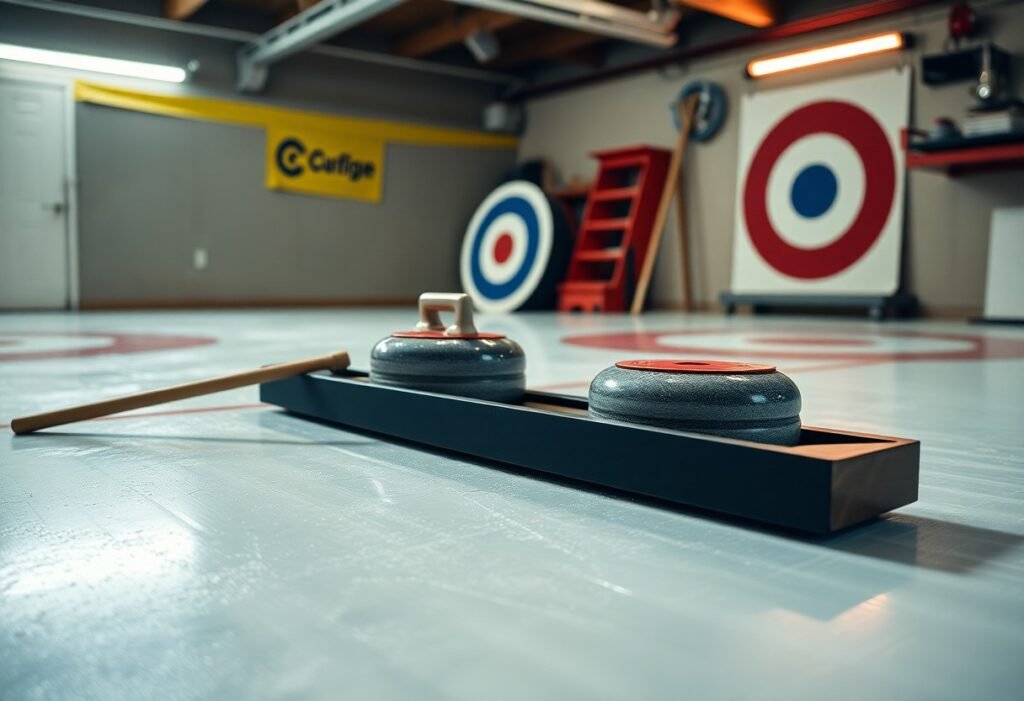

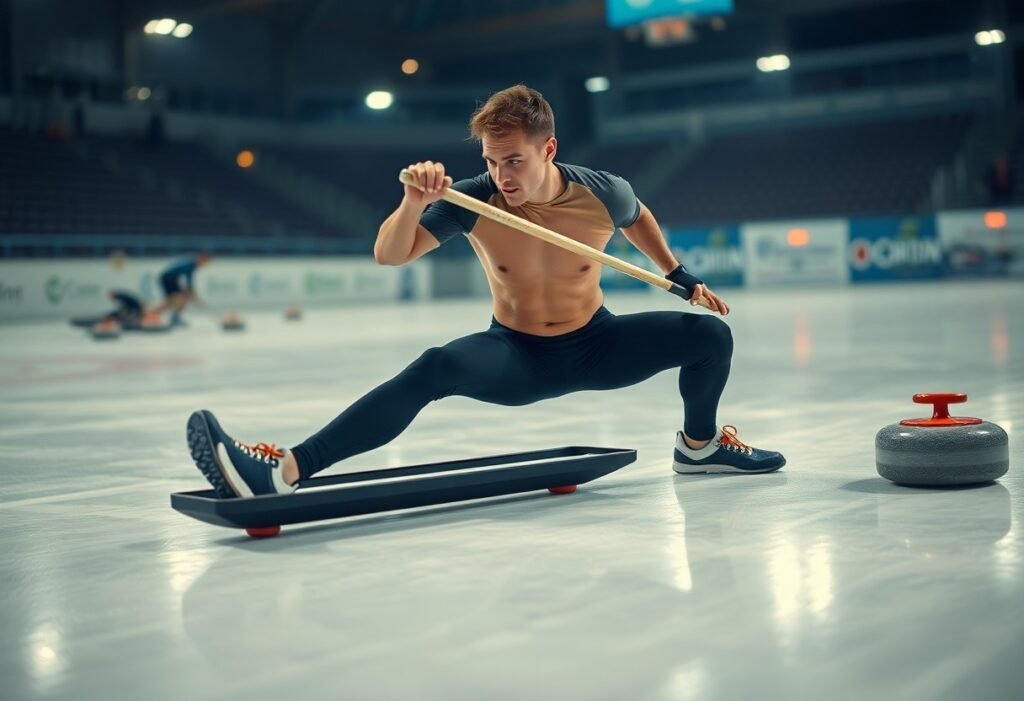
Over your season, developing balance and core strength lets you control slides, delivery, and sweeping; a weak core raises the risk of falls or missed shots, while focused training delivers improved stability and shot accuracy that translate to consistency on the ice. You should train dynamic balance, anti-rotation core exercises, and hip stability to protect your body and maximize performance.
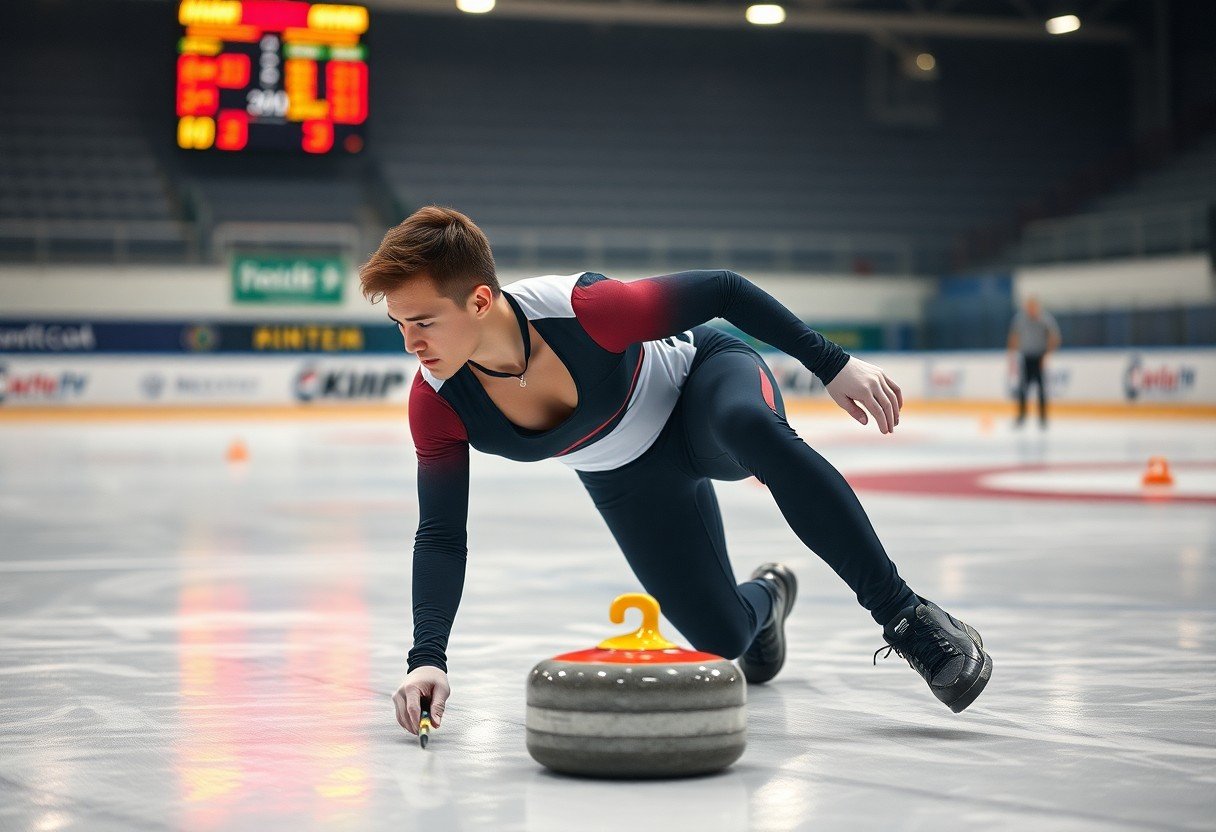
Key Takeaways:
- A strong core enhances slide stability and delivery consistency, reducing sway and improving accuracy.
- Single-leg and dynamic balance drills translate to better sweep endurance and quicker weight shifts during play.
- Integrate planks, Russian twists, and proprioceptive exercises 2-3 times weekly to build power and joint control without overtraining.
The Importance of Balance in Curling
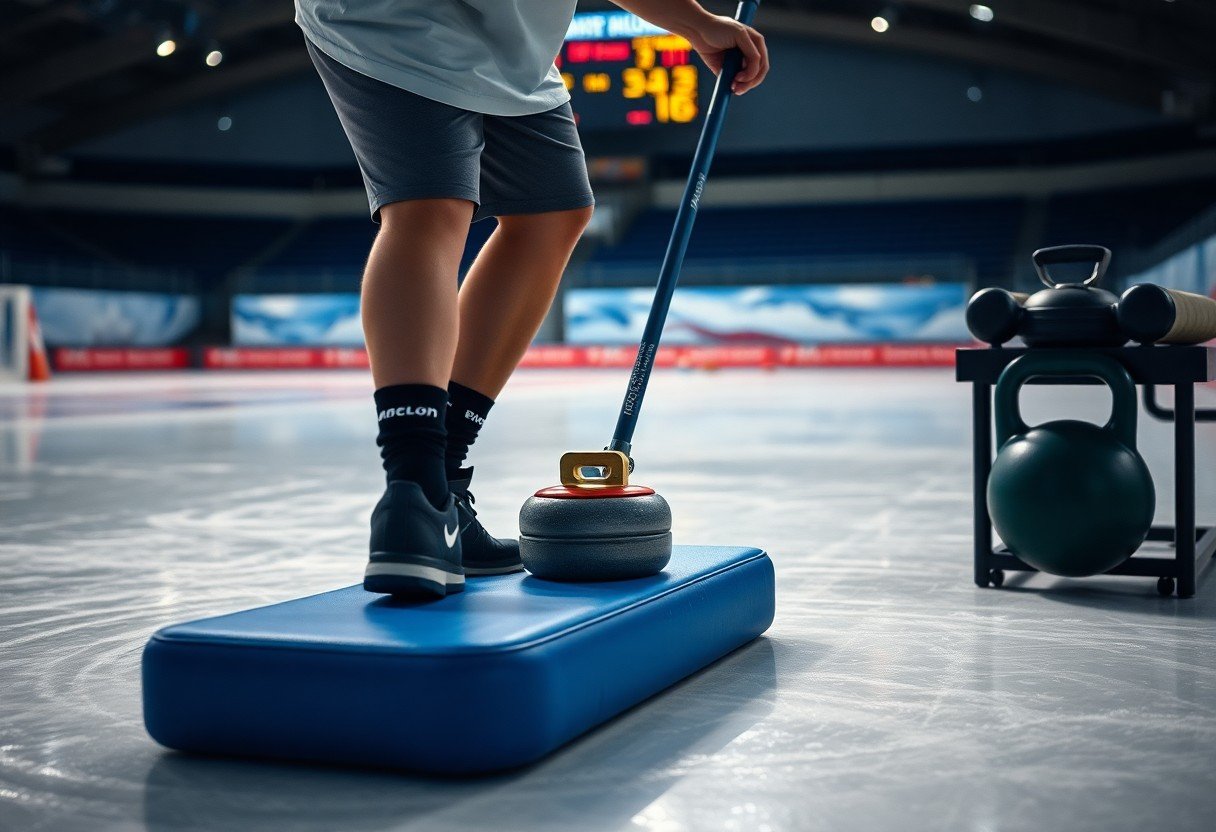
Maintaining a stable center of gravity during delivery and sweeping directly affects your shot consistency and safety; instability increases the risk of falls and ankle sprains and degrades release accuracy. Target being able to hold a single‑leg stance for 45-60 seconds and train balance 2-3 times per week so your body adapts to the sliding position and variable ice conditions.
Understanding Balance in Sports
Balance comes from the interaction between your center of mass, base of support and proprioceptive feedback; in curling you typically shift roughly two‑thirds of your weight onto the sliding foot during delivery, demanding dynamic control from ankle, hip and core. Training should therefore address static stability, reactive balance and multisensory integration-vestibular, visual and somatosensory-to transfer to on‑ice performance.
Balance Training Techniques
Use progressive drills: begin with single‑leg static holds (30-60s ×3), advance to single‑leg RDLs and step‑downs (8-12 reps), then add unstable surfaces (wobble board, Bosu) and perturbations. Include sport‑specific practice like sliding on a slider with no broom for 10-20 reps. Aim for 2-3 sessions weekly with controlled progression to reduce injury risk.
For more depth, structure sessions with measurable progression: Week 1-2 focus on static holds and ankle mobility, Week 3-6 add dynamic strength (single‑leg RDLs, lateral hops 3×8-12) and proprioceptive drills on a wobble board for 45s sets. Then integrate on‑ice transfer drills-controlled slides, simulated deliveries, and resisted sweeping-for 15-20 minutes. Expect meaningful gains in stability and delivery consistency within 6-8 weeks if you maintain volume and load; monitor fatigue to avoid elevated ankle or knee injury risk.
Core Strength and Its Role in Curling
When you tighten your midline during delivery and sweeping, your core creates the stable platform that transfers leg drive into a smooth, accurate release and resists unwanted rotation during high-force sweeping sprints. Strong core control improves your slide consistency and helps you maintain alignment under fatigue. For applied drills and athlete examples, see Curling: Precision on Ice with Strength and Grace. Maintain a neutral spine to protect your lower back.
Anatomy of Core Muscles
Your core includes the rectus abdominis, external and internal obliques, transverse abdominis and the posterior chain (erector spinae and glutes). The transverse abdominis acts like a corset for intra‑abdominal pressure while obliques control rotation and deceleration; the posterior chain resists extension. You must train timing as well as strength-delayed transverse activation increases lumbar load. Weak coordination raises lower‑back strain during long slides and forceful sweeping.
Core Exercises for Curling
Prioritize anti‑extension and anti‑rotation work: front and side planks (30-60s), Pallof presses (3×8-12 each side), single‑leg Romanian deadlifts (3×6-8 per leg) and bird‑dogs (3×10 per side). You should progress load before reps and integrate balance by performing some drills on a BOSU or slider to mimic unstable ice. Train core 2-3 times weekly for measurable transfer to delivery and sweeping.
Structure your sessions as circuit or straight sets: warm up with 5 minutes of dynamic hip mobility, then perform 3 rounds of a 45s front plank, 12 Pallof presses per side with a band, 8 single‑leg RDLs per leg with a light dumbbell and 12 Russian twists with a medicine ball, resting 60-90s between rounds. Progress by increasing your hold times by 10-15s, adding 5-10% load, or introducing unstable surfaces after you master form. Always cue a long neutral spine and diaphragm‑driven bracing; avoid breath‑holding and excessive lumbar flexion which can increase injury risk. Consistency-2-3 dedicated core sessions per week-and sport‑specific carryover drills yield the fastest gains in slide stability and release accuracy.
Off-Ice Training for Enhanced Performance
Off-ice sessions done 2-4 times weekly, 20-40 minutes each, amplify on-ice balance and power; you should prioritize unilateral control, hip and posterior-chain strength, and reactive footwork. Include progressive overload-add weight or instability every 2-3 weeks-and track metrics like single-leg hold time and sled push distance. Improved hip drive and single-leg stability directly translate to cleaner deliveries, while overloading too fast risks injury, so progress deliberately.
Stability and Agility Drills
Practice single-leg holds on a foam pad for 30-60s, lateral cone shuffles (3x20m), and ladder drills to sharpen foot speed and coordination; integrate wobble-board perturbations and eyes-closed repeats to challenge proprioception. Aim for 3 sets per drill and add a dynamic finish like a 5-10m reactive sprint mimicking sweep repositioning. Single-leg control for 30-60 seconds is a key benchmark; avoid abrupt increases in plyometrics to reduce ankle and knee strain.
Strengthening Routines
Focus on compound, unilateral lifts: goblet squats 3×8-12, Romanian deadlifts 3×8, Bulgarian split squats 3×6-8 per leg, and hip thrusts 3×8-12 to target glutes and hamstrings; pair with core anti-rotation work (Pallof presses 3×10 each side) and planks 3×30-60s. Train strength 2-3×/week and include a sled push for conditioning. Building the posterior chain and anti-rotation core boosts slide stability; limit lumbar hyperextension under load to protect your spine.
Sample microcycle: Day 1-strength focus (goblet squat 3×8, RDL 3×8, Pallof press 3×10), Day 3-power/conditioning (kettlebell swings 3×15, sled pushes 6×20m, med-ball rotational throws 3×8/side), Day 5-unilateral stability (Bulgarian split 3×6, single-leg RDL 3×6, side plank 3×30s). Progress by adding 2.5-5% load or 1-5s hold time weekly, and allow 48-72 hours recovery between heavy sessions to prevent overload. Consistent, measured progression yields the best transfer to on-ice performance.
On-Ice Strategies for Maintaining Balance
Keep your center of gravity low by bending knees to roughly 30-45° and aligning hips over the sliding foot so about 60-70% of your weight is forward during delivery. Use the broom as a stable third point of contact and track with your eyes on a fixed target to limit torso rotation. Practice holding your finish for 3-5 seconds to build stability; overreaching or dropping your shoulder increases the risk of a fall and loss of line.
Footwork Techniques
Drive off the hack with a smooth, controlled push using the inside of your foot and aim for a 30-45° slide angle to prevent lateral wobble. Train single-leg balance for 30-60 seconds, then progress to dynamic drills like 3 sets of 8 slide-steps on-ice, focusing on toe-to-heel alignment of the slider. Keep your stride consistent and avoid jerky pushes-abrupt force creates rotational torque that disrupts delivery precision.
Practicing Positioning
Set up with your hips square to the target and keep your chest slightly over the front knee, maintaining a neutral pelvis to prevent excessive lordosis. Hold practice deliveries for 5-10 seconds while a partner notes hip or shoulder drift; do 3 sets of 8 per side. Emphasize a tucked trailing knee and stable ankle, since unstable ankles generate most balance failures during sweeping and sliding.
Use video analysis at 60 fps to catch micro-rotations and compare frames against a model delivery; perform mirror drills off-ice to engrain posture. Add a balance board for 2-3 minutes daily and resistance-band Pallof presses (3 sets of 10) to strengthen anti-rotation core muscles. On-ice, run a clock-drill: hold the delivery position at the 12, 3, 6, and 9 o’clock angles for 5 seconds each, 4 rounds, to build positional endurance and proprioception.

Nutrition and Fitness for Curlers
Manage your daily macro split to support stability, power and recovery: aim for 1.4-1.8 g/kg protein to preserve lean mass and 3-6 g/kg carbohydrates depending on training load, with fats making up the remainder. Schedule protein every 3-4 hours and include 20-30 g post-session. For weight control target a small calorie deficit of 250-500 kcal/week or surplus only during strength blocks to avoid losing balance-related muscle mass.
Fueling the Body for Performance
Prioritize a pre-match meal 3-4 hours before play supplying ~3-4 g/kg carbs and 20-30 g protein-examples: bagel with peanut butter and Greek yogurt. Then take a quick carb snack 30-60 minutes prior (20-40 g carbs) like a banana or sports gel. During long matches consume 30-60 g carbs per hour via drinks or chews to maintain sweeping output and delivery accuracy; avoid high-fat/high-fiber meals that slow digestion.
Hydration and Recovery
Start matches well hydrated: drink ~500-600 ml 2-3 hours before and ~200-300 ml 10-20 minutes before. Sip regularly during play-roughly 150-250 ml every 15-20 minutes-and choose a beverage with electrolytes when sweating is heavy. Monitor weight changes; losing >1% body mass indicates notable fluid deficit, and excessive plain water without sodium risks hyponatremia.
After matches rehydrate with ~1.25-1.5 L of fluid per kg of body mass lost to restore balance, and refuel with ~1.0-1.2 g/kg carbohydrates plus 0.3-0.4 g/kg protein within 30-60 minutes (about 20-40 g protein for most athletes). Include sodium (sports drink or salted snack) to enhance retention, use cold compression or active recovery for 10-15 minutes to reduce inflammation, and track sleep and soreness to adjust intake next session.
Common Injuries and Preventive Measures
Repetitive delivery and heavy sweeping often load the lower back, knees, shoulders and wrists, producing tendinopathy, low‑grade muscle strains, or acute sprains if you fall. Prioritize a 10‑minute dynamic warm‑up, targeted off‑ice strength, and regular technique checks to reduce risk. Monitor volume and increase load by no more than 10% per week; acute signs like swelling or numbness require prompt assessment.
Identifying Curling Injuries
You’ll commonly see anterior knee pain with lunges, a dull lower‑back ache after repeated slides, or sharp shoulder pain during intense sweeping. Use functional screens-single‑leg squat asymmetry, hip abductor weakness, trunk‑rotation limits-to pinpoint deficits. If you notice persistent swelling, numbness, locking, or loss of strength, seek professional evaluation rather than self‑treating.
Strategies for Injury Prevention
Build a 2-3×/week strength plan focused on the glute max, hip abductors and posterior chain, add core stability (Pallof press, dead bug) 3×/week, and perform balance drills (single‑leg RDLs, wobble‑board) 3×/week. Include a 10‑minute dynamic warm‑up before ice, get technique coaching, and progress loads conservatively; emphasizing glute and posterior‑chain strength reduces knee and back strain.
Example session: 3×8-12 Bulgarian split squats, 3×10 hip thrusts, 2×10 single‑leg Romanian deadlifts, 3×30s Pallof presses, plus 2×20s wobble‑board holds. Use eccentric quad work for tendinopathy and advance resistance when you can maintain form for all reps. Schedule on‑ice practice twice weekly and allow 48-72 hours between heavy strength sessions to optimize recovery and lower injury risk.
Conclusion
Taking this into account, you should prioritize balance and core strength to improve delivery stability, sweeping power, and shot consistency; targeted exercises like single-leg work, planks, and rotational training enhance proprioception and trunk control, while progressive on-ice drills reinforce technique and reduce injury risk. By making these elements a regular part of your program and tracking progress, you will increase efficiency, confidence, and long-term performance on the ice.
FAQ
Q: What balance and core abilities have the biggest impact on curling performance?
A: Balance and core strength affect delivery stability, shot accuracy, sweeping power, and injury resilience. Key abilities are single-leg stability for the sliding foot, anti-rotation control to resist unwanted torso twist during delivery and sweeping, and dynamic balance to manage weight shifts under movement and broom forces. Mobility in hips and ankles combined with timed core bracing supports a smooth, repeatable slide and controlled release.
Q: Which off-ice exercises most effectively build curling-specific balance and core strength?
A: High-transfer exercises include single-leg Romanian deadlifts and single-leg squats for unilateral strength and proprioception; split-stance Bulgarian split squats to load the lunge position used in delivery; side planks and Pallof presses for anti-rotation stability; dead bugs and bird-dogs for coordinated core control with neutral spine; and single-leg balance holds on firm and unstable surfaces, progressing to perturbations and upper-body movement. Add hip abductor/adductor work (lateral band walks) and ankle mobility/stability drills. Prescribe 2-3 sessions per week, 2-4 sets of 6-15 reps for strength moves and 20-60s holds for stability exercises, progressing difficulty before increasing load.
Q: How should a curler structure weekly training to improve balance and core without compromising on-ice practice?
A: Aim for 2-3 short off-ice sessions (30-45 minutes) focused on balance/core plus 1 session of strength emphasis per week if available. A session structure: 1) dynamic warm-up and ankle/hip mobility (5-8 min), 2) primary unilateral strength exercises (15-20 min), 3) core stability and anti-rotation work (10-12 min), 4) sport-specific balance drills or plyometric/coordination work (5-10 min). Schedule heavier strength days 48-72 hours apart and avoid maximal leg sessions the day before intense on-ice practices or games. Cycle intensity across weeks: 3-4 weeks building load/complexity, then 1 lighter week for recovery and skill consolidation.
Q: What on-ice drills help transfer off-ice balance and core gains to actual delivery and sweeping?
A: Use stationary holds in the delivery position (sliding foot forward, knee angle and torso position) for timed isometrics, progressing from supported to unsupported holds and adding light torso rotation. Perform slow controlled delivery repetitions emphasizing a neutral pelvis and steady head position, and then add perturbations such as receiving light pushes or catching a medicine ball toss to train reactive stability. For sweeping, practice alternating stance balance while applying force with the upper body and maintain a stable core during repetitive high-force efforts. Combine short balance-focused drills into warm-ups to reinforce neuromuscular patterns before matches.
Q: What common errors should curlers avoid, and how can injuries be prevented while training balance and core?
A: Avoid overemphasizing forward/backward stability at the expense of rotational control and neglecting ankle/hip mobility. Don’t let the lower back over-arch during core work; cue a neutral pelvis and diaphragmatic breathing to engage the deep core (transversus abdominis) before movement. Prevent knee valgus by strengthening hip abductors and practicing single-leg control. Progress balance difficulty gradually-unstable surfaces should be used only after baseline strength and control are established. If pain persists, especially in the groin, lower back, or knees, consult a physiotherapist to assess technique and prescribe targeted rehab.