

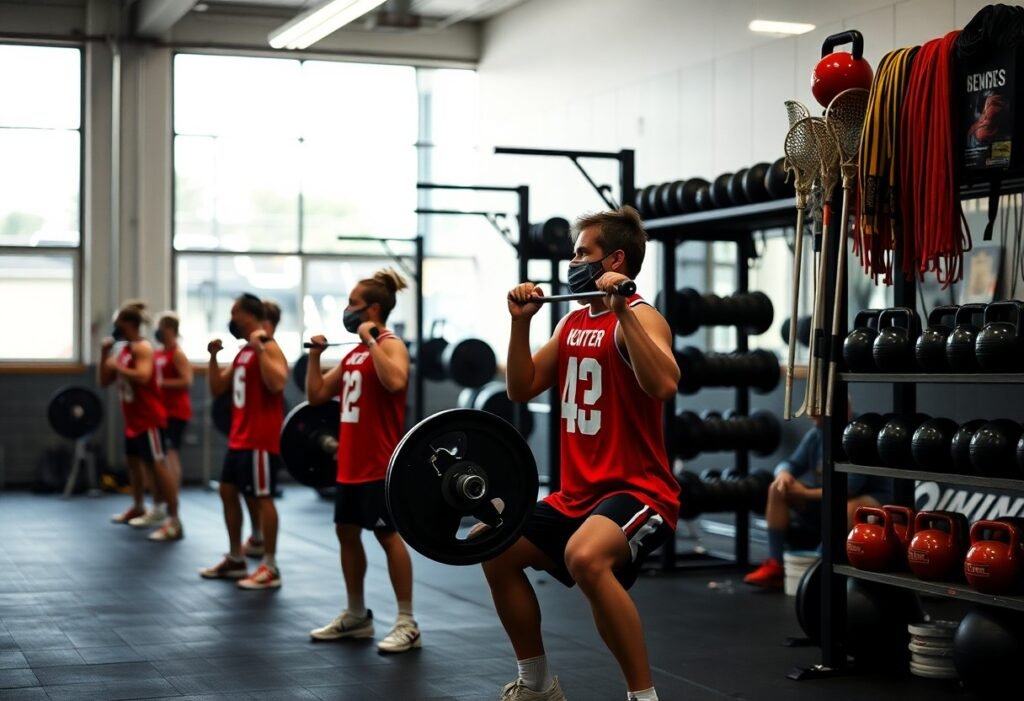
You should focus on sport-specific power, hip and core stability, and unilateral strength to improve sprinting, shooting, and check resistance; consistent explosive training amplifies performance, while poor technique or overload risks serious injury, so prioritize progressive loading and mobility. Incorporate compound lifts, plyometrics, and conditioning into a periodized plan and track recovery to keep your legs, shoulders, and reaction time sharp-deliberate work builds resilience and gives you a competitive edge: measurable gains.
Key Takeaways:
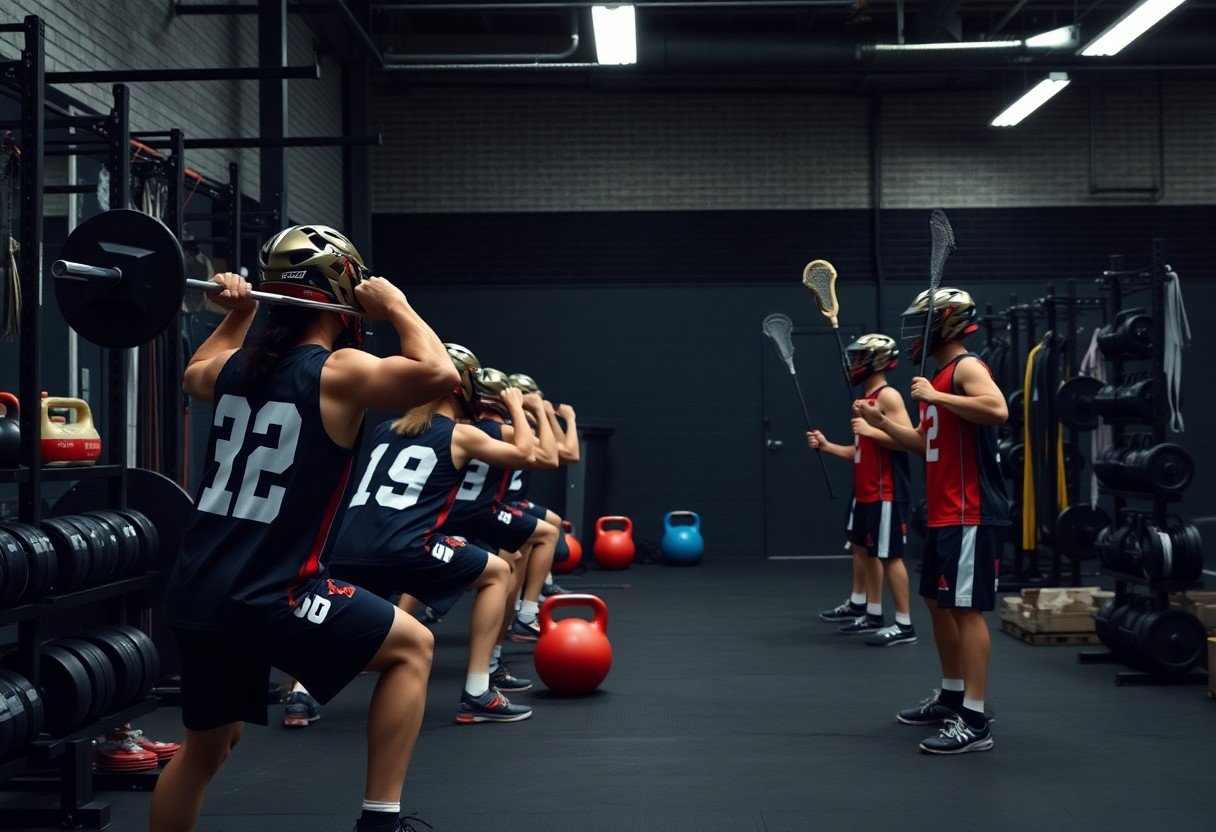
- Prioritize power and explosiveness with compound lifts (squats, deadlifts, cleans), plyometrics, and sprint work to improve acceleration, shooting power, and physical play.
- Develop rotational core strength and unilateral stability (medicine ball throws, single-leg RDLs, lunges, carries) to enhance shooting accuracy, balance, and change-of-direction ability.
- Follow progressive overload and periodization while emphasizing posterior-chain strength, mobility, and recovery to reduce injury risk and ensure on-field transfer.
Importance of Strength Training in Lacrosse
Strength training directly translates to on-field advantages: you generate more force in checks, accelerate faster out of cuts, and sustain power through four quarters. Programs run 2-4× weekly with targeted phases – 1-6 reps for maximal power, 6-12 for hypertrophy – to build both explosiveness and durability. Emphasize multi-joint lifts and unilateral work so your contact play and repeated sprints remain sharp under fatigue, lowering performance decline late in games.
Enhancing Performance
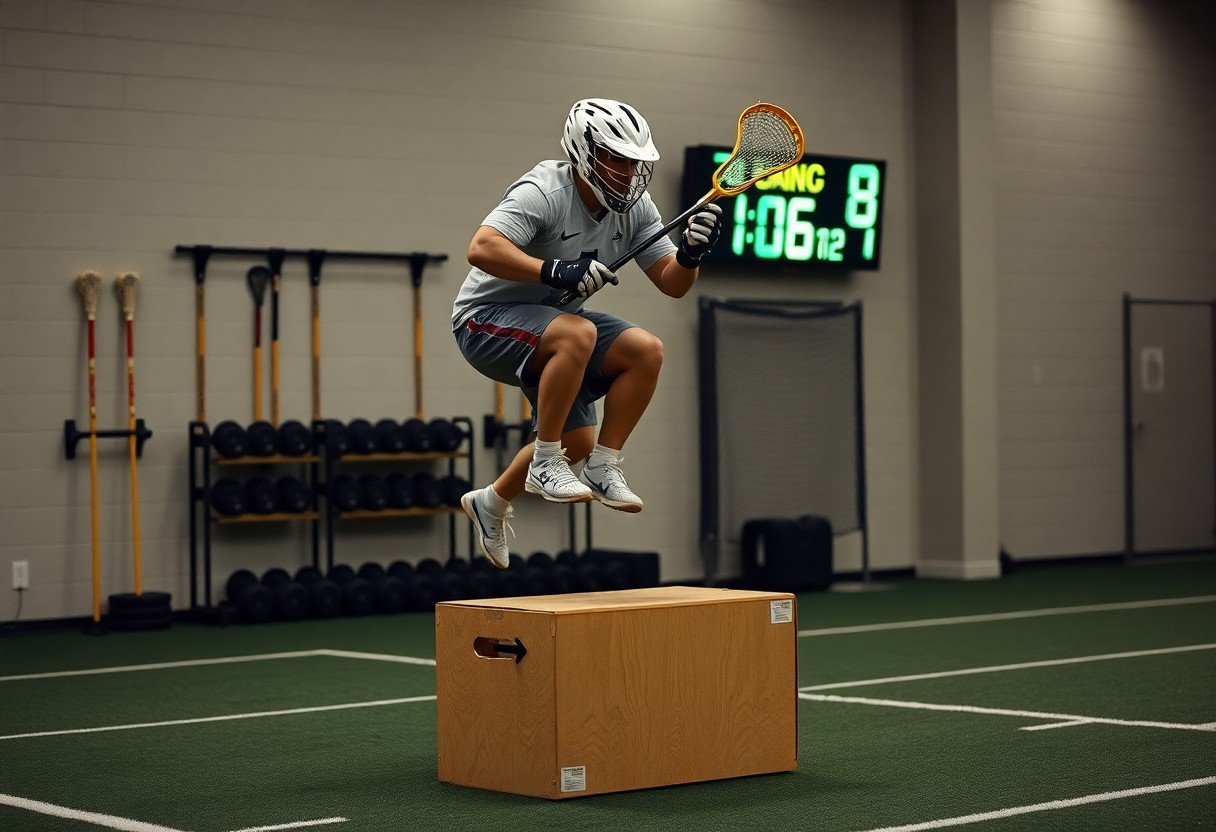
When you prioritize power development, shot velocity and first-step speed improve measurably; a 6-12 week power block often yields a 2-6% faster sprint and 4-8% higher vertical in field athletes. Include trap-bar deadlifts, power cleans, single-leg RDLs, sled pushes, and plyometrics at 1-6 reps for force, 3-5 sets, and 48-72 hours recovery to maximize rate of force development for quicker cuts and harder shots.
Reducing Injury Risk
Strength work lowers your risk of common, severe injuries: neuromuscular training programs can cut non-contact ACL tears by about 50%, and eccentric hamstring routines like the Nordic reduce hamstring strains roughly 50% as well. Prioritize posterior chain strength, controlled deceleration drills, and progressive unilateral loading so your tissues tolerate high-speed collisions and repeated sprinting without breaking down.
Implement specific protocols: Nordic hamstring eccentrics 2×/week (3-4 sets of 4-8 slow reps progressing volume), single-leg RDLs and split-squat strength 2-3×/week, and landing mechanics drills after plyometrics. Monitor work with an acute:chronic workload ratio under 1.5, integrate balance/proprioception sessions, and escalate intensity over 6-8 weeks to see sustained reductions in hamstring and knee injuries while preserving match-ready power.
Key Muscle Groups for Lacrosse Players
You rely on the posterior chain (glutes, hamstrings), quads and adductors for sprinting and cutting, while your core and hip rotators transfer force into shots and checks. Upper-body elements – rotator cuff, lats, pecs and forearms – control stick speed and ball retention. Prioritize strength and resilience in these areas to boost performance and lower injury risk.
Upper Body Strength
You should build pressing and pulling power with bench or incline presses, heavy rows, pull-ups and loaded carries. Aim for 3-5 sets of 3-6 reps to develop maximal strength and 3×8-12 for endurance-oriented work; add rotator cuff and scapular stabilization drills 2-3 times weekly to protect the shoulder during checks and shooting.
Lower Body Power
You develop explosive hip extension with trap-bar deadlifts, hang cleans, jump squats and single-leg hops. Use 3-6 sets of 2-5 explosive reps with 2-3 minutes rest for power development, and include heavier 3-6 rep strength sessions to raise your force ceiling; emphasize glute-driven hip extension for faster sprints and stronger shots.
Combine heavy strength twice weekly with plyometrics 1-2 times per week; program unilateral work like Bulgarian split squats or single-leg RDLs at 3×6 per leg. Include eccentric hamstring work (Nordics) 2x/week to reduce hamstring strain and ACL risk, and test vertical or broad jump every 4-6 weeks to track power improvements.
Essential Strength Training Exercises
You should combine heavy compound lifts and targeted drills to build force and transfer directly to play. Schedule 2-3 strength sessions per week (45-60 minutes), prioritize exercises that develop horizontal and rotational power, and track progressive overload while preserving in-season energy for your games.
Compound Movements
You should prioritize compound lifts like back squats, Romanian deadlifts, power cleans, and barbell rows to strengthen your posterior chain and core. Use 3-5 sets of 3-6 reps for maximal strength and 2-4 sets of 1-5 for power, with 2-3 minutes rest; if you lose a neutral spine under load, reduce weight immediately to avoid spinal injury.
Sport-Specific Drills
You should integrate sled pushes, band-resisted sprints, lateral bounds, and rotational medicine-ball throws to mirror lacrosse demands. Perform sleds for 10-20 m, bands for 15-25 m, and medicine-ball throws with a 3-5 kg ball for 6-8 reps × 2-3 sets, 2-3 times weekly to sharpen acceleration, deceleration, and shot mechanics under fatigue.
For a sample session you can do a 10-minute dynamic warm-up, 3 × 6 rotational throws (3-5 kg), 4 × 15 m band sprints, 3 × lateral bounds (6 per side), and 4 sled pushes (15 m) with 2-3 minutes rest; monitor fatigue closely and cap weekly volume increases at ~10% to reduce injury risk.
Designing a Strength Training Program
Structure your weeks around 3-4 sessions per week; you should blend maximal strength (3-6 reps at 75-90% 1RM), power development (1-3 explosive reps at 30-60% 1RM), and unilateral stability work. Alternate upper/lower or push/pull/legs, and include 10-15 minutes of mobility and sprint reps. For example, two heavy strength days, one power day, and one conditioning/mobility day works well-monitor volume to avoid overtraining.
Frequency and Duration
Adjust frequency by season: off-season you should aim for 4-5 sessions/week to build capacity, pre-season for 3-4, and in-season drop to 2-3 short maintenance sessions. Session length varies: target 45-75 minutes off-season and 20-40 minutes in-season focused on potency and recovery. For instance, a collegiate midfielder might run two 60-75 minute strength days plus two 30-minute power/conditioning sessions during the off-season.
Progress Tracking
Track objective measures every 6-8 weeks: you can test 1RM or 3RM for squat and deadlift, record vertical jump (cm/in), and time 10-30 m sprints; log GPS load and session RPE. Capture sets, reps, load, and perceived recovery so you can link gym gains to on-field performance like faster clears or higher checks.
Use a simple digital log or spreadsheet and set targets you can measure: aim for a 5-10% lift increase over 8-12 weeks or a 3-5% jump height gain. Auto-regulate by reducing load when you report RPE >8 for two sessions in a row, and schedule a deload week every 4-6 weeks in high-volume phases. If your squat 1RM moves from 225 to 245 lbs in 12 weeks, treat that as meaningful progress; if metrics stall, prioritize recovery and technique.
Nutrition and Recovery
Managing macronutrients, hydration and sleep lets you convert training into on-field speed and power; aim for 1.6-2.0 g/kg protein daily, carbs around 5-7 g/kg during heavy phases, and 7-9 hours sleep nightly. Pair your plan with targeted sessions-see Workouts for Lacrosse Players: A Complete Guide-and schedule recovery days to protect gains and reduce injury risk.
Fueling for Performance
Before training, you should consume 1-4 g/kg carbs 2-4 hours out and take 20-40 g protein within two hours after to maximize repair. Drink 500-700 mL 2-3 hours pre-session and sip during play; in tournaments target 30-60 g/hour of carbs from drinks or gels to maintain sprint power.
Importance of Rest
You need planned rest: schedule at least 1-2 full rest days weekly and allow 24-72 hours between maximal lower-body sessions. Active recovery-20-30 minutes easy bike or swim-keeps blood flow without taxing neuromuscular systems, lowering injury risk and preserving sprint and shot velocity.
Quality sleep drives adaptation: slow-wave sleep supports muscle repair and REM consolidates tactical memory; if you get under 7 hours, your reaction time, decision-making and hormonal recovery (testosterone, growth hormone) decline, so prioritize consistent bedtimes and short naps (20-30 minutes) after heavy workouts.
Common Mistakes to Avoid
You often compound small errors-overemphasizing heavy bilateral lifts while skipping unilateral work, relying on machines instead of free-weight compound movements, and ignoring recovery. For example, doing only bilateral squats and leg presses can leave a >10% left-right strength gap, which correlates with higher injury rates; instead, balance your program with 2-3 unilateral exercises per week and keep compound lifts at roughly 60-70% of your total session volume to maximize transfer to play.
Overtraining
Symptoms escalate from persistent fatigue to performance drops: an elevated resting heart rate by +5-10 bpm, slower 10-20m sprint times, sleep disturbances, and higher illness frequency. If you hit these signs after >6 consecutive high-intensity sessions, implement a deload (reduce volume 30-50% for 7 days), prioritize 8-9 hours sleep, and target ~1.6-2.0 g/kg protein to support recovery and immune function.
Neglecting Flexibility
Skipping mobility work limits your hip extension and thoracic rotation, reducing shot power and accelerating hamstring or groin strains; tight hip flexors shorten stride length and blunt acceleration. Spend a focused 8-12 minute dynamic warm-up before practice and add 10-15 minutes of targeted mobility after sessions to maintain joint play and force transfer-this lowers your strain risk and sustains power output.
Prioritize specific drills: perform hip-flexor lunges with 3×30s holds per side, thoracic rotations 2×10 each way, and glute-bridge progressions 3×12. Incorporate adductor slides or Cossack squats 2×8 for lateral control and foam-roll 5-10 minutes nightly. If you do mobility work 4-5 times weekly and a dynamic warm-up before every practice, your movement quality and on-field durability will measurably improve.
Final Words
Taking this into account, tailor your strength training to lacrosse-specific demands by prioritizing multi-joint power, rotational core stability, and unilateral leg strength; progress load and speed systematically, maintain mobility and recovery, and align cycles with preseason, in-season, and postseason goals so you build force, reduce injury risk, and perform consistently when it matters most.
FAQ
Q: Why is strength training important for lacrosse players?
A: Strength training improves force production, acceleration, deceleration and change-of-direction speed-qualities that directly enhance sprinting, shooting power, checks and ground-ball battles. It builds muscular resilience to contact, improves joint stability for cutting and landing, and increases work capacity so players sustain high-intensity efforts through a game. Well-designed strength work also corrects movement imbalances that otherwise increase injury risk.
Q: Which exercises should lacrosse players prioritize in the weight room?
A: Emphasize multi-joint, sport-transfer lifts and unilateral and rotational movements: squats (back/front), hip hinge variations (deadlift, RDL, trap-bar), hip thrusts, lunges/split squats, single-leg RDLs, horizontal and vertical pulls (rows, chin-ups), pressing (bench, push press), rotational medicine-ball throws, sled pushes/pulls and plyometrics (box jumps, lateral bounds). Add anti-rotation core work (Pallof press), band shoulder activation, and mobility drills to support throwing and checking mechanics.
Q: How should a season-long strength program be structured?
A: Use phased periodization: Off-season (8-16 weeks) focuses on hypertrophy and building maximal strength with 3-4 sessions/week; Pre-season (4-8 weeks) shifts to higher-velocity and power work while preserving strength with 2-3 sessions/week and integrating more field-specific speed and agility; In-season maintains strength and power with 1-2 shorter sessions/week, lower volume and careful load management around games; Post-season includes active recovery and corrective work. Cycle intensity and volume so power and freshness peak for important competitions.
Q: What does a practical weekly workout plan look like for lacrosse players?
A: Example off-season 3-day split: Day 1 – Lower strength: Squat 4×4-6, Romanian deadlift 3×6-8, split squat 3×6-8, sled push 4x20m, core anti-extension 3×10-12. Day 2 – Upper strength: Bench or push press 4×4-6, bent-over row 4×6-8, chin-ups 3×6-8, single-arm cable/DB press 3×8-10, band shoulder work. Day 3 – Power & conditioning: Power cleans or trap-bar jumps 4×3-5, single-leg RDL 3×6, lateral bounds 3×6, med-ball rotational throws 4×5, sprint intervals 6-8 x 20-60m. Strength sets 3-5 reps for max strength, hypertrophy 8-12, power 1-6 explosive reps; accessory 2-3 sets of 8-15.
Q: How can players reduce injury risk and optimize recovery while strength training?
A: Implement dynamic warm-ups, movement prep and progressive loading to preserve tissue tolerance. Include unilateral work, eccentric control exercises and mobility for hips, thoracic spine and shoulders. Monitor load with RPE or session RPE, deload every 3-6 weeks or after heavy competition blocks, and prioritize sleep, hydration and protein intake (~1.6-2.2 g/kg/day). Use soft-tissue techniques and timely ice/contrast when needed, and scale sessions around game schedules to avoid excessive fatigue before matches.