
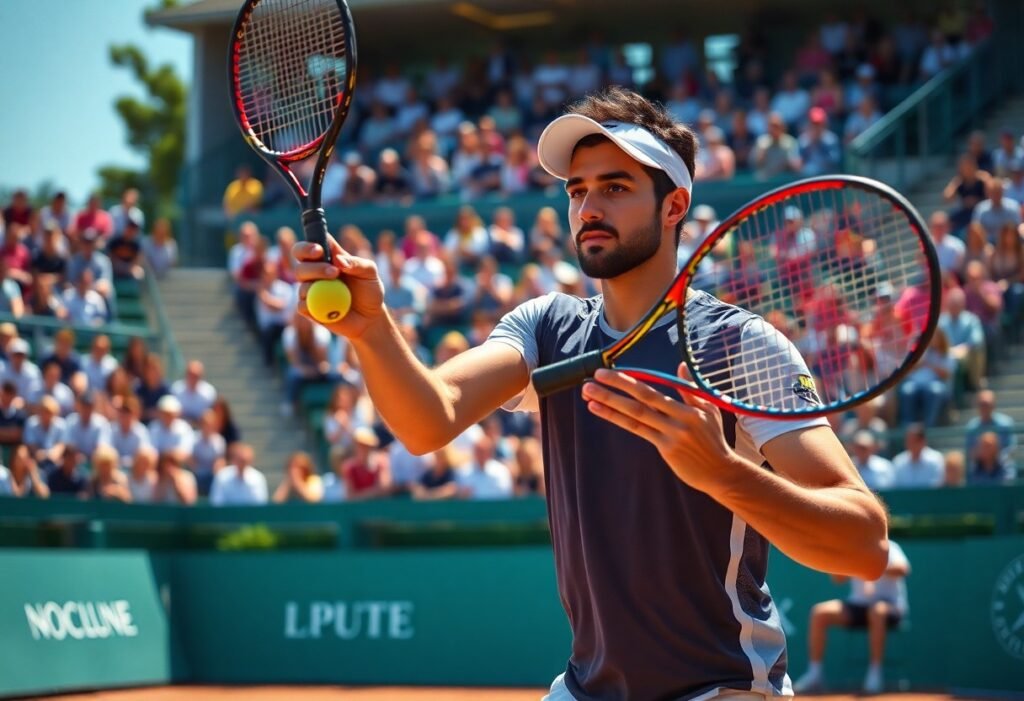
Mindset is everything in padel, and developing a strong mental game can be the difference between victory and defeat. When you stay calm under pressure, you enhance your ability to make strategic decisions during matches. Embrace focused breathing techniques to control anxiety and maintain concentration, allowing you to execute plays more effectively. By cultivating a positive attitude, you’ll empower yourself to overcome challenges and seize opportunities on the court. Recognizing the importance of mental resilience can significantly impact your performance and help you consistently win points.
Key Takeaways:
- Mastering emotional control enhances focus during gameplay.
- Positive self-talk strengthens confidence and resilience on the court.
- Visualization techniques can improve performance by preparing mentally for matches.
Understanding the Mental Game
The Importance of Mental Toughness
Mental toughness is imperative in padel, as it enables you to remain focused and resilient during matches. A strong mental state helps you to recover from mistakes and setbacks quickly, allowing you to maintain performance under pressure. By developing mental toughness, you enhance your ability to execute strategies and remain poised, directly impacting your success on the court.
Key Psychological Factors in Padel
Several psychological factors play significant roles in your performance. These include confidence, focus, and the ability to manage pressure. Each factor contributes to how well you perform during high-stakes points. Any distraction or lack of composure can lead to subpar results.
- confidence in executing your shots is imperative
- focus helps you maintain awareness of the game’s flow
- ability to manage pressure shapes your response during critical moments
Understanding these factors can significantly enhance your gameplay. Enhancing your confidence through practice builds belief in your skill set. Developing focus allows you to block external distractions, letting you concentrate solely on the game. Your ability to manage pressure is vital, especially in tournament settings where stakes are high. Any improvement in these areas can lead to consistent performance and greater success.
- confidence reduces anxiety
- focus encourages strategic thinking
- ability to manage pressure results in better decision-making
Common Mental Challenges Faced by Players
Many players encounter mental challenges that can diminish their performance. Issues such as self-doubt, anxiety, and fear of failure often arise and can compromise your game. Recognizing these challenges is the first step in overcoming them.
Common mental challenges often stem from the pressure of competition. Self-doubt can creep in after a few lost points, impacting your confidence and shot selection. Regular players face anxiety during matches, which can hinder performance skills and execution. Finally, the debilitating fear of failure can paralyze decision-making and lead to overly cautious play. Developing strategies to combat these challenges is critical to enhancing your overall game performance.
Techniques for Maintaining Calm
Breathing Exercises for Focus
Implementing breathing exercises can significantly improve your focus during intense matches. Inhale slowly for a count of four, hold for four, and exhale for another four. This technique not only lowers your heart rate but also creates a moment of clarity that can enhance your performance and decision-making on the court.
Visualization Strategies
Utilizing visualization strategies allows you to mentally rehearse successful outcomes. Picture yourself executing the perfect shot or winning a crucial point. This mental imagery can create a sense of confidence and reduce anxiety, enabling you to play with greater assurance.
To deepen your visualization practice, spend time before matches vividly imagining specific scenarios. See yourself in challenging situations, pressing through difficulty with focus and calm. By repeatedly visualizing these moments, you condition your mind to respond positively when faced with similar real-life circumstances, thereby boosting your overall performance.
Mindfulness Practices
Engaging in mindfulness practices helps center your thoughts and feelings, allowing you to focus on the present moment during gameplay. Techniques such as scanning your body for tension or consciously observing your surroundings can reduce stress and enhance your concentration.
Incorporating mindfulness into your training routine fosters self-awareness. Spend a few minutes each day practicing mindfulness meditation—paying attention to your breath or simply observing your thoughts without judgment. This habit cultivates a calm mindset, which translates to improved performance when you need it most on the court.
Pre-Match Routines
Establishing pre-match routines sets the tone for a focused mindset. Engage in activities that calm your nerves, such as light stretching, listening to your favorite music, or reviewing your match strategy. Consistency in your routine fosters a sense of control.
Your pre-match routine should be personalized and repeatable, integrating activities that resonate with you. Whether it includes deep breathing, visualization, or specific warm-up exercises, this routine serves as a mental cue that prepares you for the competition. Over time, the familiarity of these actions can help reduce stress and instill a winning mentality before each match.
Managing Pressure During Matches
Coping with Expectations
Handling expectations, whether your own or those of others, can be challenging. You might feel pressure to perform well or to meet predefined goals, which can lead to increased anxiety. Acknowledging these expectations and understanding they are normal can help you stay grounded. Focus on your personal standards and progress, rather than external judgments, to alleviate some of this pressure.
The Role of Positive Self-Talk
Your internal dialogue greatly influences your performance. Engaging in positive self-talk can counteract negative thoughts and enhance your confidence during crucial moments in the match. By reinforcing your strengths and capabilities, you create a mental environment that promotes resilience and focus.
Utilizing positive self-talk involves consciously replacing negative statements with empowering affirmations. For instance, instead of saying, “I can’t do this,” switch to, “I am well-prepared and can handle this challenge.” Frequent repetition of these affirmations, especially before points or during breaks, can create a habitual mindset that enhances performance under pressure, leading to better outcomes.
Strategies for Dealing with Distractions
Distractions are inevitable during matches, but having a strategy to manage them is necessary. Techniques such as visualizing success, focusing on breathing, and establishing pre-serve routines can help you redirect your attention. Keeping your mind anchored to the present moment allows you to bypass distractions and maintain concentration on the game.
To effectively deal with distractions, start by identifying what typically pulls your focus away during a match, whether it’s crowd noise or your opponent’s behavior. Develop a consistent routine that engages your senses, like visualizing a successful point or focusing on an element of your surroundings that grounds you. By practicing these strategies regularly, you’ll enhance your ability to stay present and in control, improving both your mental game and overall performance.
Developing a Winning Mindset
Setting Goals and Objectives
Establishing clear, attainable goals is necessary for your success in padel. Start by identifying specific, measurable objectives, such as improving your serve or enhancing your communication with your partner. Break these targets into achievable milestones that allow you to track your progress and stay motivated throughout your training and match play.
Learning from Mistakes
Viewing mistakes as opportunities for growth is key to your mindset. Instead of dwelling on errors during a match, analyze what went wrong and how you can improve. Acknowledging your shortcomings helps to foster resilience and an environment where growth and improvement can thrive.
After each game or practice session, take a moment to reflect on your performance. Ask yourself what specific decisions led to errors and how you can approach similar situations differently in the future. This introspective process not only enables you to correct faulty techniques but also reinforces your ability to handle challenges, boosting your overall performance.
Building Confidence through Experience
The more you play, the more confidence you will develop in your skills. Engaging in regular practice matches and competing in tournaments exposes you to different playing styles, enhancing your adaptability. With each successful point you win, your self-belief will naturally increase, embedding a winning mentality.
Utilize competitive situations as stepping stones rather than hurdles. For instance, consider tracking your progress in terms of wins, losses, and personal improvements during matches. Each victory boosts your confidence, while each loss provides valuable lessons. Over time, these experiences accumulate, shaping a strong psychological foundation that increases your competitive edge on the court.
The Role of Coaching in Mental Preparation
Finding the Right Coach
Selecting a coach who understands the mental aspects of padel can dramatically impact your performance. Look for someone who emphasizes mental resilience and employs techniques that align with your needs. Seek coaches with experience in competitive play, as they can offer insights into managing pressure and maintaining focus during high-stakes situations.
How Coaches Can Enhance Mental Skills
Your coach can be an invaluable asset in developing mental strength. They can introduce strategies like visualization, breathing techniques, and mindfulness practices that promote calmness and clarity under pressure. Effective coaches tailor their approach, ensuring that mental training complements your tactical and physical development.
Coaches often utilize drills that replicate match scenarios, allowing you to practice mental techniques in real-time. This practice helps you to instill confidence and develop the ability to stay composed during challenging moments. By using a combination of technical feedback and mental conditioning, they create a holistic training environment that fosters sustained performance improvement.
Utilizing Feedback for Improvement
Constructive feedback is key to sharpening your mental game. Coaches can provide insights into your mental toughness during matches, pinpointing specific areas for development such as response to adversity and decision-making under pressure. Leveraging feedback properly can significantly advance both your skillset and mental resilience.
Regularly discussing performance with your coach allows you to identify patterns in your mental approach. By dissecting match experiences, you gain awareness of triggers that affect your mindset. This reflective practice encourages adjustments and fosters a more adaptable mental framework, empowering you to face future challenges with renewed strength.
The Impact of Team Dynamics
Communication between Partners
Effective communication between you and your partner is important for a successful padel match. Clear, precise dialogue helps in making split-second decisions and ensuring both players are aligned in strategy. This includes discussing tactics before the match and providing instant feedback during play. Regular communication fosters a sense of unity, which can enhance performance during high-pressure situations. For more insights, check out Mastering your mental game is the first step to winning at padel.
Building Trust and Rapport
Building trust with your partner is fundamental for fostering a strong team dynamic. When you can rely on each other, it significantly reduces anxiety during matches. Trust develops through consistent play, shared experiences, and open discussions about your performance. Knowing that your partner has your back allows you to play more freely and confidently.
This trust can be nurtured through regular practice sessions where both of you can evaluate strengths and weaknesses openly. Establishing rapport involves supporting each other beyond skill set—celebrating wins, discussing what can improve, and maintaining a positive atmosphere during games. These aspects lead to seamless teamwork on the court, translating to better performance overall.
Supporting Each Other Under Pressure
During critical moments in a match, how you support each other can define the outcome. You should remain encouraging, understanding that mistakes will happen. Instead of focusing on errors, you focus on what comes next and how to adjust. Positive reinforcement, such as compliments after points or strategic discussions during breaks, keeps morale high.
This support can be a game-changer when the pressure mounts. Studies show that teams with high emotional intelligence tend to perform better, especially in tense situations. By reacting positively to setbacks, you not only uplift your partner but also create an environment where success is more likely. Tailoring your reactions to support each other can turn moments of stress into opportunities for growth and ultimately drive your game forward.
To wrap up
From above, you can see that mastering the mental game of padel is as important as developing your physical skills. Staying calm allows you to focus on your strategy and make better decisions during matches. By implementing techniques such as controlled breathing, positive self-talk, and visualization, you enhance your ability to handle pressure and stay in the moment. This mental clarity not only boosts your performance but also helps you win more points and matches. Prioritize your mental game to gain a competitive edge and elevate your overall padel experience.
FAQ
Q: What is the mental game in Padel?
A: The mental game in Padel involves the psychological strategies and techniques players use to maintain focus, manage stress, and enhance performance during matches.
Q: How can I stay calm during a Padel match?
A: Staying calm during a match can be achieved by practicing deep breathing techniques, maintaining a positive inner dialogue, and visualizing successful points before they happen.
Q: Why is staying focused important in Padel?
A: Staying focused allows players to make better decisions on the court, react quickly to opponents, and maintain high performance throughout the match.
Q: What techniques can help improve my mental toughness in Padel?
A: Techniques such as goal setting, routine establishment, and mindfulness exercises can significantly enhance mental toughness, allowing for better handling of pressure situations.
Q: How does visualization impact performance in Padel?
A: Visualization impacts performance by allowing players to mentally rehearse successful plays, increase confidence, and prepare for different match scenarios, ultimately leading to better execution on the court.