
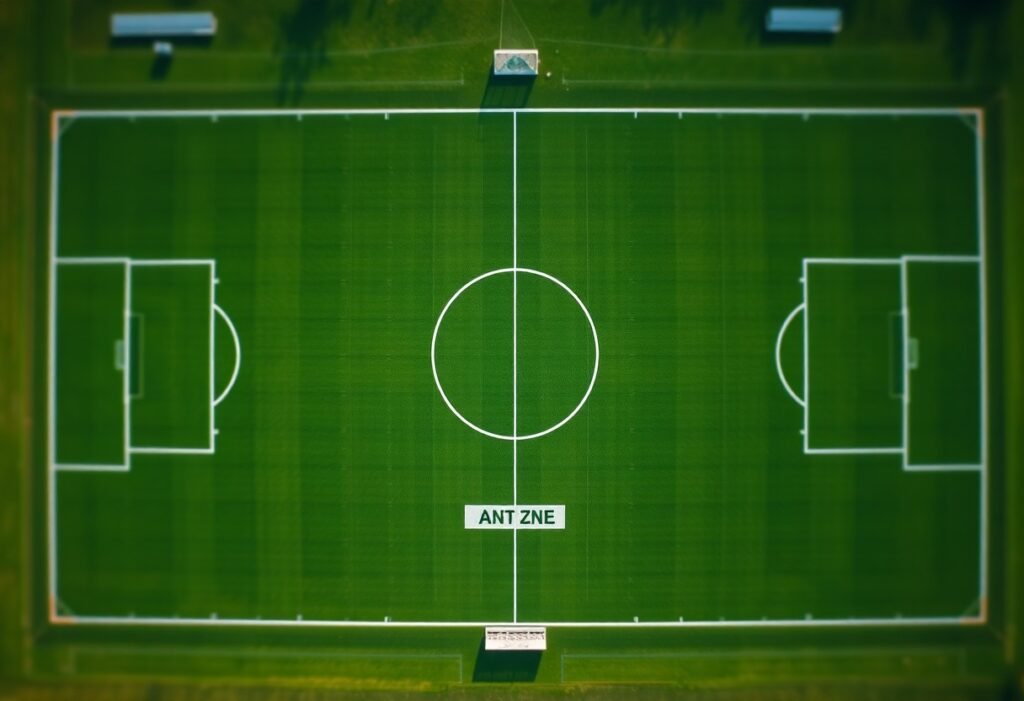
It’s imperative you understand the lacrosse field layout to read play and stay safe: the midfield center circle, the restraining line that limits off-ball players, the goal crease – a dangerous zone where shots and collisions occur – and the sideline substitution box that fuels fast, strategic changes. Know the marked zones, goal placement and distances so your positioning and safety improve.
Key Takeaways:
- Field is split by the centerline into two halves with goals centered on the end lines; attack and defense zones run from midfield to each goal, and substitution/wing areas sit along the sidelines for faceoffs and changes.
- Markings – center circle, midfield line, restraining lines and the goal crease – define faceoffs, offside/positioning rules and where restarts occur.
- The goal is positioned on the goal line inside a protected crease where only the goalie has full use; attackers cannot legally occupy the crease during play.
Field Dimensions
Overall Size
You’ll most often play on a field that measures 110 yards long by 60 yards wide for men’s lacrosse (NCAA/pro/high school), while some women’s and youth layouts extend toward 120 by 70 yards. Field width directly alters wing play and clear lanes-on a 60-yard field your midfield battles are tighter and off-ball movement must be crisper. The goal crease is compact (about a 9-foot radius in men’s), so spacing around the net is at a premium.
End Zones
Your end zones are the areas behind each goal down to the endline; on many traditional fields that buffer is roughly 10 yards deep, giving you limited room to reset or clear. Because the goal sits close to the endline, being pinned there is dangerous-it increases turnover risk and leads to immediate fast-break opportunities for the opponent.
Behind the goal you’ll often operate from the “X” to run feeds, picks and quick dodges within a very small footprint; exploiting that tight space forces short-window passes that can draw defenders into the crease and open up midfield lanes. When you push too deep toward the endline you risk errant rebounds or being trapped along the boards, so prioritize quick cuts, bold screens, and crisp feeds to convert high-quality chances.
Playing Lines
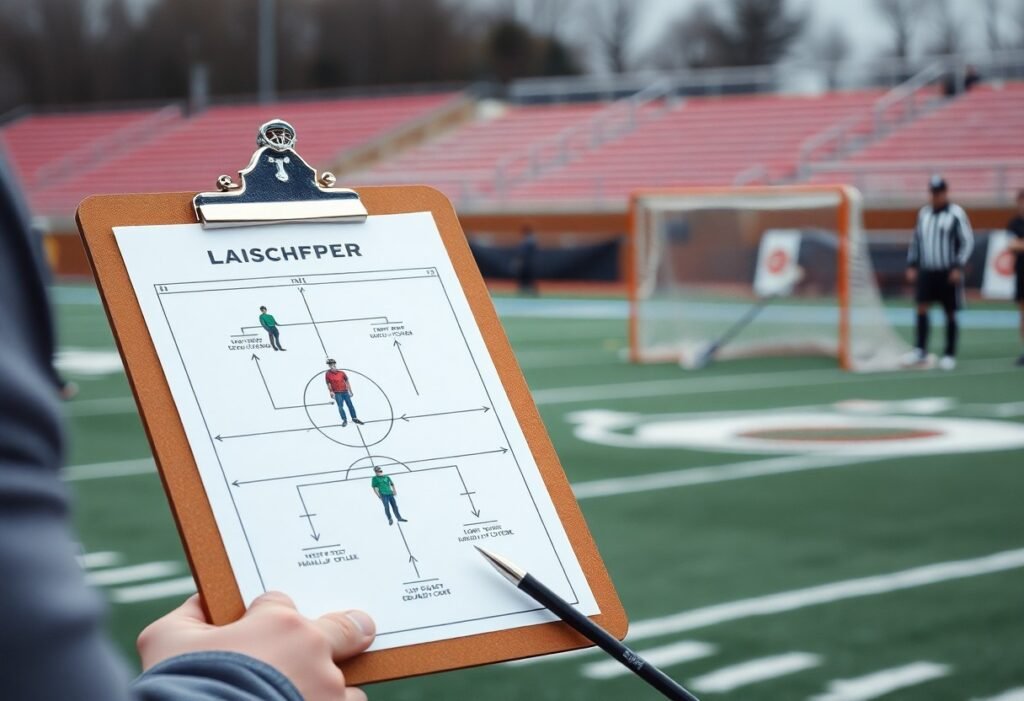
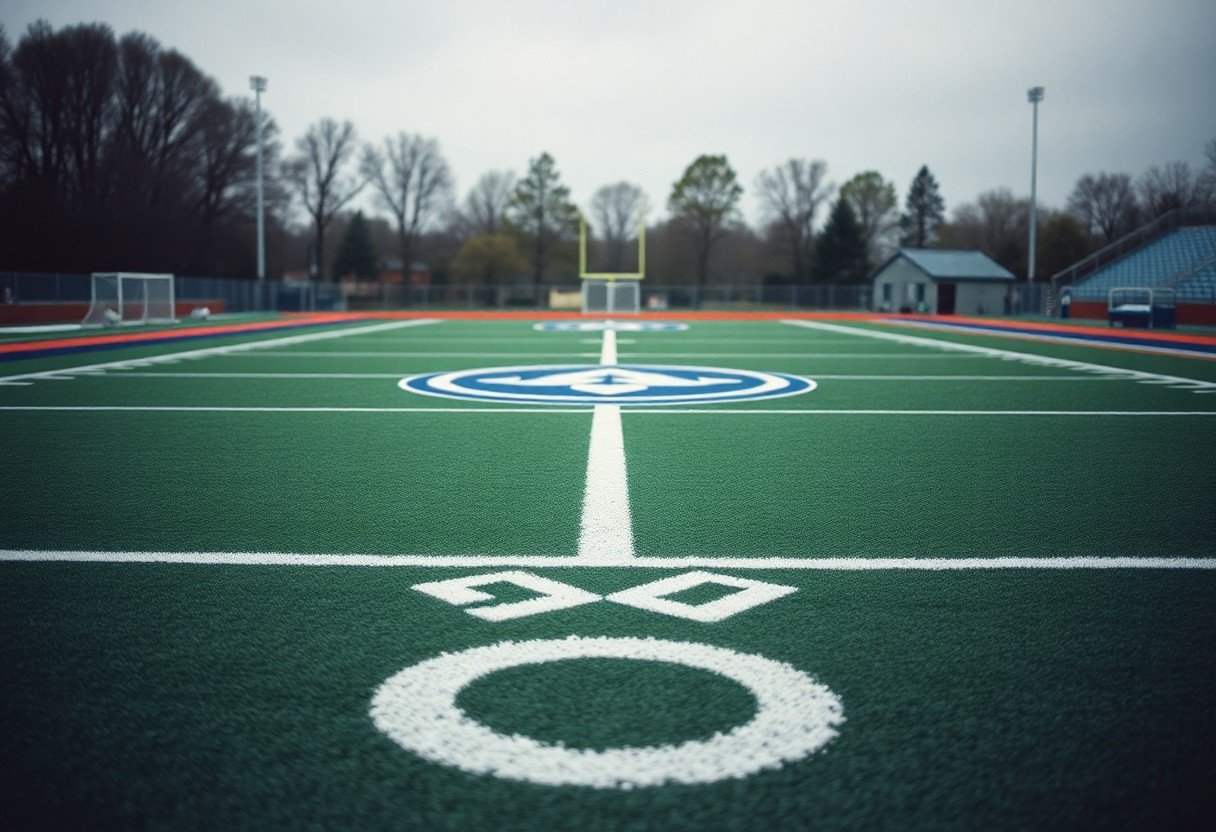
When you scan the field, the playing lines define who does what and where: the midfield line marks the center for face-offs, restraining lines split attack/defense responsibility, and the goal crease sets the last line of defense. In men’s field lacrosse there are typically 10 players per side (1 goalie, 3 attack, 3 midfield, 3 defense), so position lines directly shape substitutions and matchups – see the Lacrosse Field Diagram: Breaking Down the Key Zones …
Midfield Line
Placed at the exact center of the 110-yard field, the midfield line is where face-offs happen after each goal and at quarter breaks; you deploy your three midfielders to control transitions, sprint for ground balls, and cover both ends. In practice, teams that win a higher percentage of face-offs (often 60%+) convert more transition opportunities into quick goals, so your midfielders often dictate tempo and possession time.
Attack and Defense Lines
Attack lines sit inside the offensive half, with your three attackmen focusing on dodges, feeds, and creating shots inside the 9-foot crease, while defense lines protect the defensive half and force outside shots. You’ll see defenders communicate to slide on picks and use the restraining lines to keep structure during clears and settled offenses.
More specifically, your attackmen operate between the restraining line and the crease, leveraging picks and quick ball movement to get high-percentage shots; common strategies include a 2-2-1 motion or a feeder-post combo where one attacker draws a slide and another cuts to the crease. Defenders typically match up man-to-man or shift into zone packages on clears-teams that limit shots inside the crease to under 6 per game generally reduce high-danger chances significantly. Effective coaching drills focus on slide timing, recovery speed, and using the sideline as an extra defender to funnel attackers away from the crease.
Goal Areas
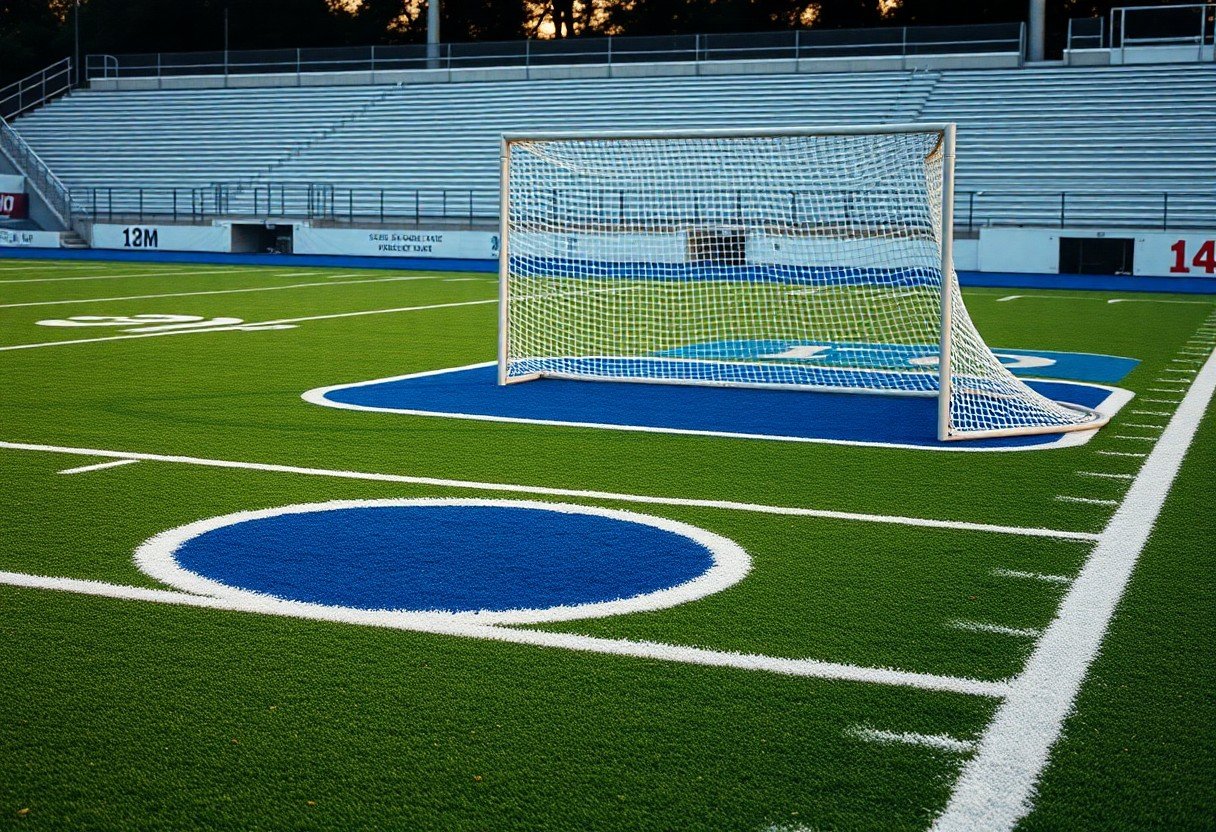
You’ll find the goal areas define how plays resolve around the net: the crease (protects the goalie), adjacent restraining lines that govern substitution and off-ball positioning, and the behind-goal space used for clears and rides. On most men’s fields the crease is a 9-foot radius circle and contact rules there are strictly enforced; in women’s play the radius is typically slightly smaller, changing how you time drives and recoveries.
Goal Crease
You must treat the crease as a protected zone: if you’re an attacker entering the circle you risk play stoppage and goal disallowance when you impede the goalie. For men’s rules the 9-foot radius creates a clear buffer for saves and rebounds, so position your cutters and feeders to shoot from outside the arc and use cradling or stick protection to avoid incidental contact that officials penalize.
Net and Goalposts
You’ll anchor a standard lacrosse goal frame that measures 6 feet wide by 6 feet tall; frames are usually steel or aluminum with nylon mesh. Proper attachment prevents dangerous deflections and ensures consistent rebound behavior, so you should check that the net is secured to the post and ground anchors are intact before play.
You should inspect nets and posts for wear and secure anchoring before every practice and game: loose ties, torn mesh, or bent posts change shot trajectories and can cause player injuries. Teams that log a pregame check (simple tension, anchor stakes, and a tug test) reduce equipment-related stoppages and safety risks, and you’ll want replacement nets on hand if holes exceed pinhead-size or stitching fails.
Zones of Play
On a standard field (110 yd by 60 yd) the midfield line splits play into two 55-yard halves; you’ll operate in an offensive or defensive zone depending on possession. In men’s 10-player lacrosse you commonly see 3 attackmen, 3 midfielders and 4 defenders (including the goalie), so your responsibilities change as you cross midfield-from creating scoring chances to shutting down lanes and protecting the crease.
Offensive Zone
When you enter the opponent’s 55-yard half you should set spacing to stretch defenders, keeping attackmen near the crease and midfielders on the wings for dodges and feeds. Run picks, quick ball reversal and isolations inside about 10-15 yards to generate high-percentage looks; on man-up situations you’ll exploit slide timing and use rapid passes to open the interior.
Defensive Zone
In your defensive half you prioritize protecting the goal by forcing play to the perimeter and communicating slide responsibilities; the four defenders plus goalie must coordinate to deny interior passes and close driving lanes. Stay compact around the crease, contest every feed, and make opponents take difficult outside shots rather than allowing uncontested looks near the goal.
Work on recovery and rotation drills-like 4v3 shelter rotations and slide-recover reps-to sharpen when you should hedge, slide or recover to wings; focus on cutting off passing lanes into the 9-foot crease and winning individual matchups, because allowing shots inside 10 yards substantially increases scoring probability for the opposition.
Penalty Areas
You’ll find the penalty box tucked between the team benches along the sideline, where officials log time and players serve penalties; when someone sits there your team is short-handed, which creates immediate defensive pressure and often forces a 1-on-1 clear or zone adjustments. Penalty durations vary by rule set-commonly 1-3 minutes-and the scoreboard/penalty clock controls release and substitutions, so your roster management during those minutes determines whether you survive the man-down sequence.
Major and Minor Penalties
Minor infractions, like offsides or crease violations, are typically short (often around 1 minute in collegiate rules) and cost you a brief numerical disadvantage; major fouls-slashing, illegal body checks, targeting-are longer (commonly 3 minutes) and frequently non-releasable, meaning your team stays down even if the opponent scores. When you commit a major, expect sustained pressure and plan defensive rotations to limit high-danger shots.
Substitution Box
The substitution box sits near midfield on the sideline between the restraining lines; you must enter and exit there for on-the-fly changes, tagging at that location to complete legal swaps. Efficient use of the box lets you ride matchups and preserve legs, while sloppy or off-location substitutions often draw a technical foul and a short penalty, handing the opposition an immediate advantage.
Teams train specific choreography for the box: you should stagger departures so a fresh player steps in within 2-4 seconds of the leaver, avoiding overlap that triggers an illegal substitution. Officials enforce interference strictly, and an illegal change usually yields a technical penalty (commonly 30-60 seconds depending on the league), so practicing quick, precise hops to and from the box gives your team a tactical edge and reduces turnover risk.
Field Markings
Your field combines fixed dimensions and precise marks: a standard men’s field is 110 yards by 60 yards, the crease is a 9-foot radius, and the goal opening is 6×6 feet. You should note how boundary lines, restraining marks, and substitution boxes interact with player movement and officiating. Clear, consistent markings cut disputes and speed up play while reducing risk in congested areas.
Line Colors and Types
Paint colors and line styles convey role: solid white for outer boundaries, dashed or thinner lines for restraining zones, and bright accents for substitution and coach boxes so you can read the field at a glance. Contrasting hues on natural grass versus turf matter for depth perception. After you identify each color, you’ll position players and officials more effectively.
- Sideline – outer boundary, typically white
- Goal line – defines scoring area, aligns with crease
- Center line – midfield division, used for faceoffs
- Crease – defensive circle, 9-foot radius
- Restraining line – limits off-ball positioning
| Sideline | Solid white – 110×60 yard limits |
| Goal line | Solid white – crease alignment, scoring reference |
| Center line | Solid or accented – faceoff axis |
| Crease | Contrasting circle – 9-foot radius, protected area |
| Restraining line | Dashed or colored – off-ball positioning control |
Importance of Visibility
Good visibility affects officiating, player safety, and flow: you’ll see fewer stoppages when lines contrast with turf under game lights, and clear marks help refs enforce the crease and restraining rules quickly. Poor contrast or faded paint raises collision risk in tight areas.
Practical checks include viewing lines from 30-40 yards, inspecting under wet conditions, and replacing worn paint each season so your crew and players can maintain reaction times and positional awareness; bright accents for substitution zones reduce bench errors and speed restarts.
Conclusion
So you can navigate a lacrosse field confidently by understanding the lines, zones, and goal areas; your positioning, transition options, and set plays depend on the crease, restraining lines, midfield, attack/defense areas, and substitution boxes, so mastering their functions sharpens tactics and improves decision-making during play.
FAQ
Q: What are the standard field dimensions and main boundaries?
A: A standard outdoor field lacrosse pitch is typically 110 yards long and 60 yards wide, bounded by two end lines and two sidelines. Each end line has a goal line where the goals are centered. Variations exist by age group, league and for box lacrosse (which uses a hockey rink or smaller indoor surface). Always check the specific rulebook for exact dimensions used in a competition.
Q: Which major lines appear on the field and what are their purposes?
A: Key lines include the center line (divides the field and is where the draw occurs), midfield/wing markings (help position players for draws and restarts), restraining lines (create the offensive/defensive areas that enforce offside and substitution positioning), the goal line (where the goal sits), sidelines and end lines (out-of-bounds). Additional painted marks identify substitution areas, coach boxes and the spot for face-offs or draws. Each line controls positioning, restarts and offside enforcement rather than marking scoring zones.
Q: What is the goal crease and what rules apply inside it?
A: The goal crease is a circular marked area around each goal that defines the goalie’s protected space. The crease radius is commonly 9 feet in men’s lacrosse (varies slightly by governing body) and is smaller in some women’s rulesets. Field players may not step into the crease to play the ball; goalies have special privileges for body positioning and stick use within the crease. Contact rules around the crease are strict to protect the goalkeeper and the ball, and specifics differ by league and gender rules.
Q: How do attack, defense and midfield zones work and how do they affect offside?
A: The field is conceptually divided into offensive, defensive and midfield areas by the center line and restraining lines. Offside rules require teams to keep a minimum number of players on each side of the center/ restraining lines so play remains balanced; if too many players cross into one half, an offside penalty is called. These zones also structure transition play: midfielders shuttle the ball between attack and defense, while restraining lines limit where players can linger before a draw or restart.
Q: What other markings or rule variations should players and coaches be aware of?
A: Important extra markings include substitution boxes (along the sideline), coach boxes, penalty bench areas, and face-off spots. Rule variations include different crease sizes and contact rules between men’s and women’s lacrosse, modified field sizes for youth levels, and entirely different layouts for box lacrosse indoors. Always consult the applicable competition rulebook for precise line widths, distances and procedural rules for draws, substitutions and penalties.