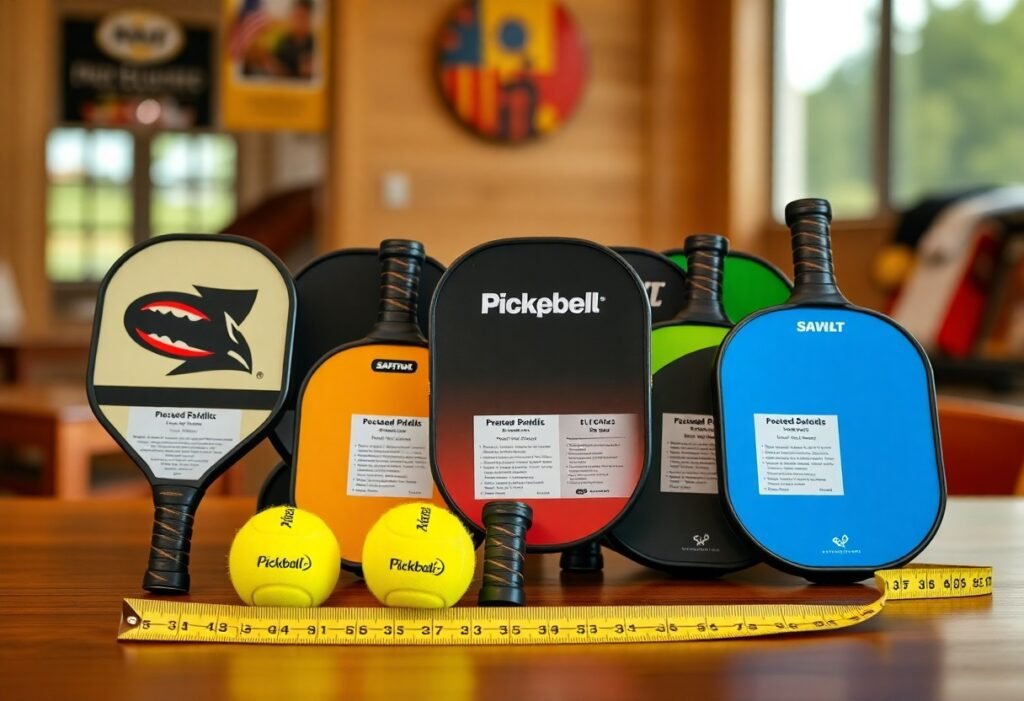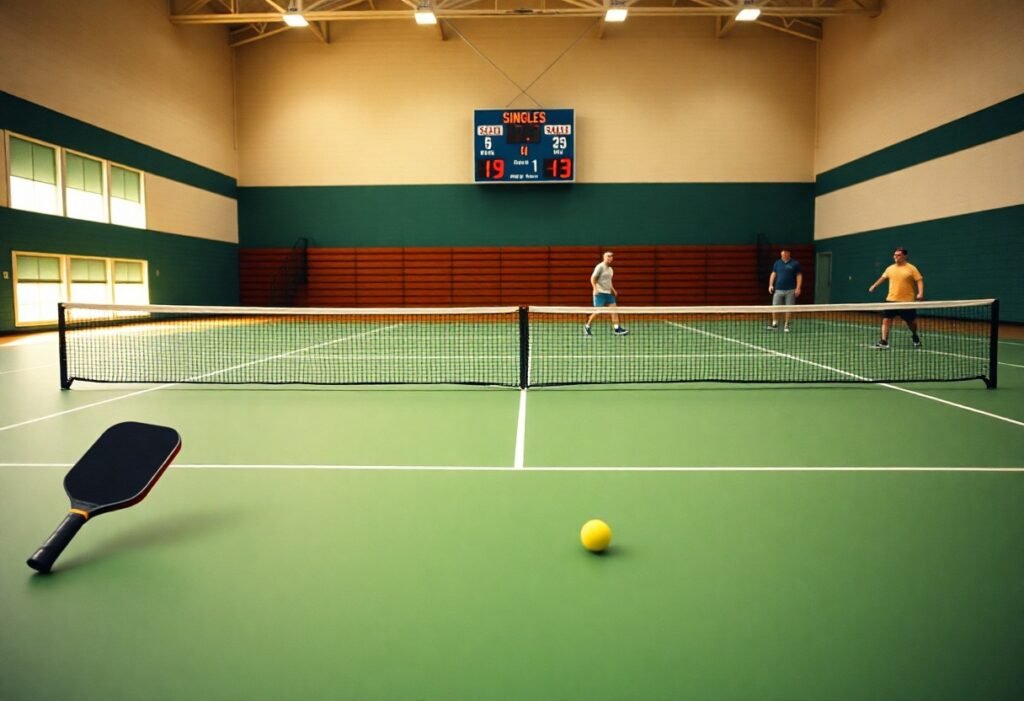

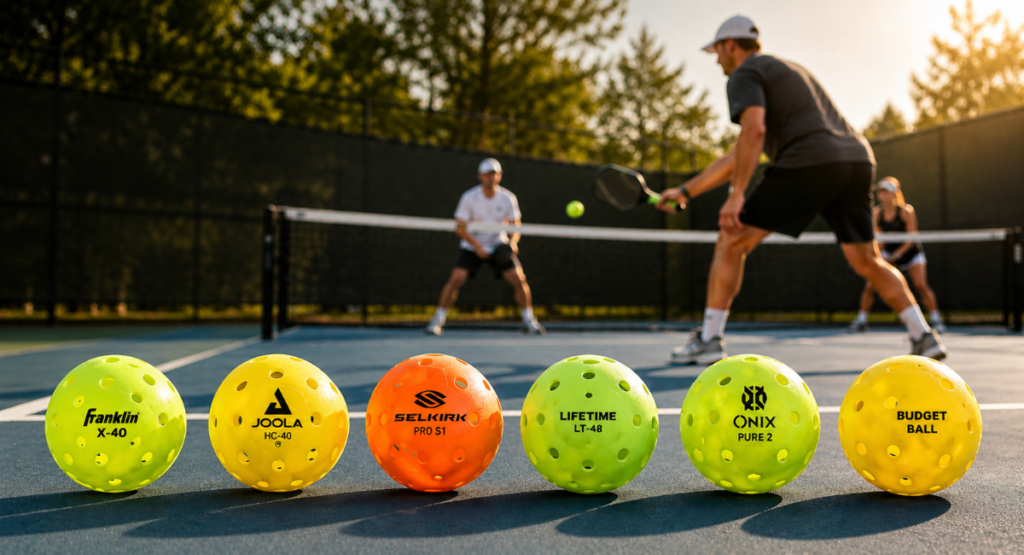
Last summer, my friend Dave showed up to our Sunday morning game with a shiny new pack of pickleball balls he had ordered online. The photos looked great. The price felt right. But the first rally told a different story — the ball wobbled through the air like it was confused. By game three, it had already cracked clean in half.
We all laughed. Dave did not.
That moment stuck with me, because it happens more often than people realize. The outdoor pickleball market is full of decent-looking balls that simply fall apart under real playing conditions. Therefore, I decided to test more than ten of the most popular options myself — on concrete, asphalt, and acrylic courts — and rank them honestly.
This guide gives you everything you need to buy the right ball the first time. No guessing. No wasted money.
⚡ Quick Answer: The best outdoor pickleball ball in 2026 is the Franklin X-40. It is USAPA-approved, used at the US Open Pickleball Championships, and delivers consistent bounce and stable flight on any hard court surface. For faster, more advanced play, the Lifetime LT Pro 48 is the top alternative. For cold weather, choose the Selkirk Pro S1.
Why Outdoor Pickleball Balls Are Different from Indoor Ones
Many beginners assume that “indoor” and “outdoor” simply describe where you play. In reality, the difference comes down to the court surface — and that changes everything about how a ball must perform.
Outdoor vs Indoor Balls — What Actually Changes
Outdoor balls are built for hard, rough surfaces like concrete, asphalt, and acrylic. Because these surfaces are abrasive and unforgiving, outdoor balls use a firmer, denser plastic. They also travel faster and bounce higher than indoor balls.
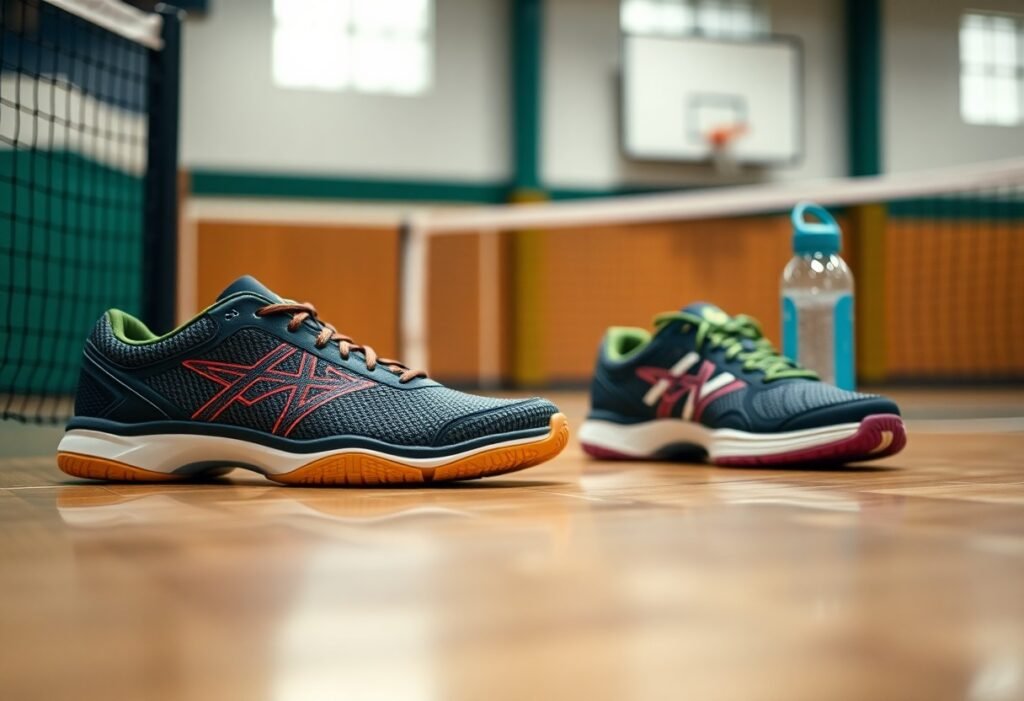
Indoor balls, on the other hand, suit smooth wooden gym floors. They are softer, slower, and give you more control during dink exchanges. However, most dedicated pickleball courts — even those inside facilities — now use hard court surfaces. Therefore, outdoor balls work on the majority of courts you will ever play on.
How Many Holes Should an Outdoor Ball Have?
USAPA regulations allow between 26 and 40 holes in a pickleball. Outdoor balls typically use 40 holes. More holes improve aerodynamic stability, which helps the ball cut through wind rather than drift off course. This matters a lot when you play outside on breezy days.
Does Ball Weight Matter Outdoors?
Yes — and more than most players expect. Outdoor balls weigh between 22 and 26 grams. Heavier balls resist wind better and maintain a truer flight path. Lighter balls feel faster off the paddle but can become unpredictable in outdoor conditions. The Franklin X-40 weighs exactly 26 grams, which makes it a reliable choice in both calm and windy weather.
Best Outdoor Pickleball Balls in 2026 — Our Top Picks
After testing these balls across multiple sessions on different court surfaces, here is my honest ranking. Each pick suits a specific type of player, so read through before you buy.
1. Franklin X-40 Outdoor Pickleball — Best Overall ⭐
Best for: All skill levels · All hard court surfaces · Tournament play
The Franklin X-40 is the most widely used outdoor pickleball on the market. Its seamless, rotationally molded construction and 40-hole design deliver a stable, predictable flight that works for every type of player. Major tournaments — including the US Open Pickleball Championships — rely on this ball, which tells you everything about its consistency.
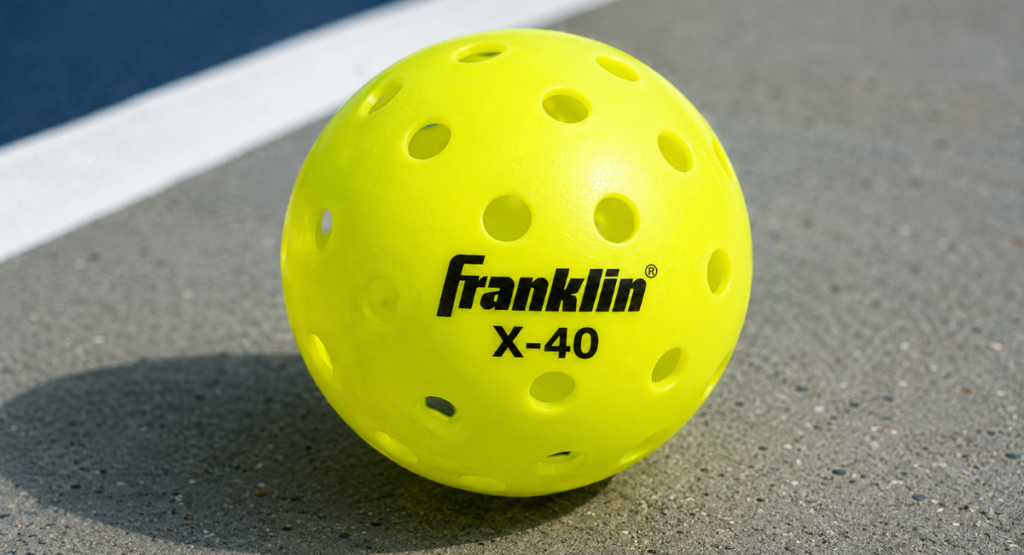
Because the X-40 does not travel too fast, it gives beginners enough time to react and build proper technique. At the same time, advanced players trust it for competitive club play, because the bounce stays consistent from the first point to the last. It weighs exactly 26 grams, which makes it reliable even on breezy outdoor courts.
Pros:
- USAPA approved and official US Open tournament ball
- Predictable, consistent bounce on all hard court surfaces
- Available in bulk packs of 3, 6, and 100
- 26 grams — ideal weight for outdoor wind resistance
- Very affordable per-ball cost when bought in bulk
Cons:
- Can soften slightly in hot weather over many sessions
- Not the longest-lasting ball on this list
Verdict: If you want one ball that simply works — on concrete, asphalt, or acrylic — start here. The X-40 earns its reputation every single time.
→ Check Price on Amazon
2. Lifetime LT Pro 48 (LT-48) — Best for Advanced Players 🏆
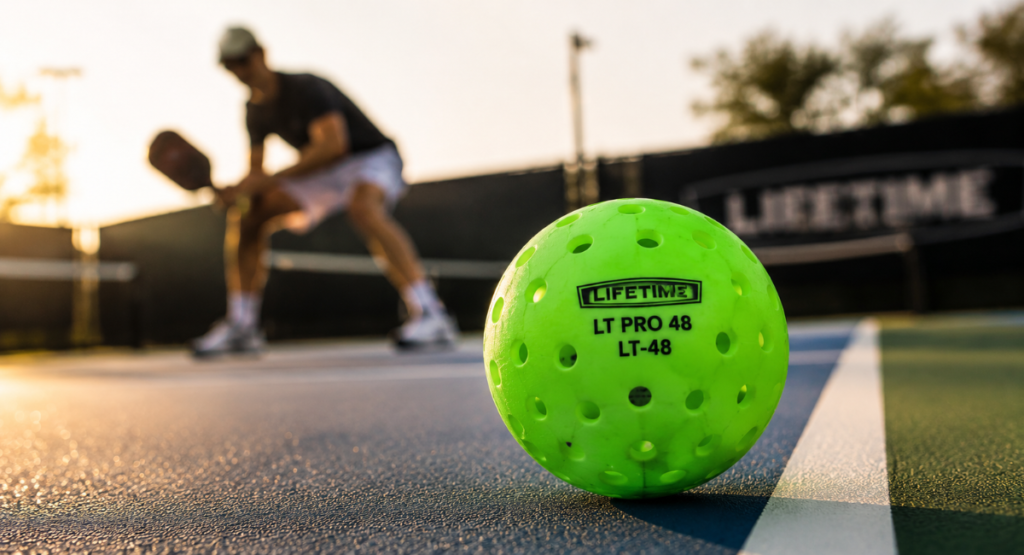
Best for: Competitive players · Fast-paced play · Warm weather courts
The LT Pro 48 is the official ball of the Professional Pickleball Association (PPA) Tour. Because of that, many competitive recreational players have migrated toward it. The 48-hole design generates a faster, livelier response that rewards sharp hands and quick reflexes.
Durability and shape retention are genuinely impressive. Moreover, the LT-48 performs especially well in warm weather, where many balls tend to soften. If you are looking to play at a higher pace and sharpen your game, this ball will push you in the right direction.
Pros:
- Official PPA Tour ball — used at the highest level of competitive play
- Excellent shape retention across many sessions
- Faster, livelier feel than the X-40
- Handles heat better than most competitors
- Rewards skilled players with precise feedback
Cons:
- Faster pace can overwhelm beginners
- Slightly higher price than the X-40
- Less available in local sports stores
Verdict: Advanced and intermediate players who want a faster, more reactive ball will love the LT-48. It rewards good hands and sharp reflexes.
→ Check Price on Amazon
3. JOOLA HC-40 Hardcourt Pickleball — Best Runner-Up 🥈
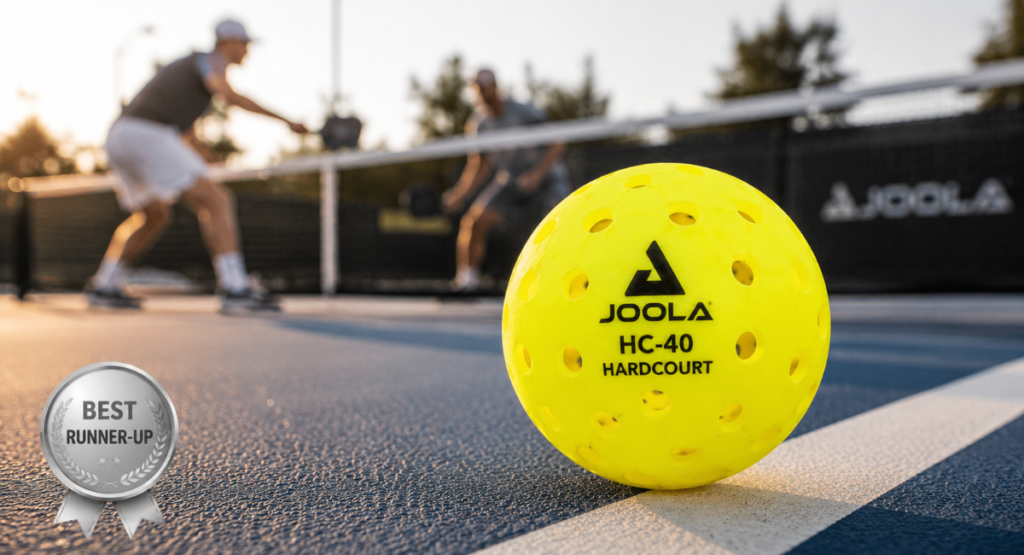
Best for: Value-conscious players · Dink-heavy recreational play
The JOOLA HC-40 surprised many players when it launched. It plays very similarly to the Franklin X-40 but often comes in at a lower per-ball price. Besides that, the bounce feel is slightly softer, which makes extended dink rallies a more comfortable and controlled experience.
JOOLA is a trusted brand across multiple racket sports, and that quality shows here. If the X-40 is out of stock or if you simply want to try something softer without sacrificing performance, the HC-40 is an excellent alternative that will not disappoint.
Pros:
- Very similar performance to X-40 at a lower per-ball price
- Slightly softer feel — ideal for dink-heavy play styles
- Consistent bounce across multiple sessions
- Widely available on Amazon
Cons:
- Not yet an official ball at major tournament events
- Slightly less durability than X-40 on rough concrete surfaces
Verdict: A smart choice if you want X-40-level performance at a friendlier price point.
→ Check Price on Amazon
4. Selkirk Pro S1 — Best for Cold Weather 🌡️
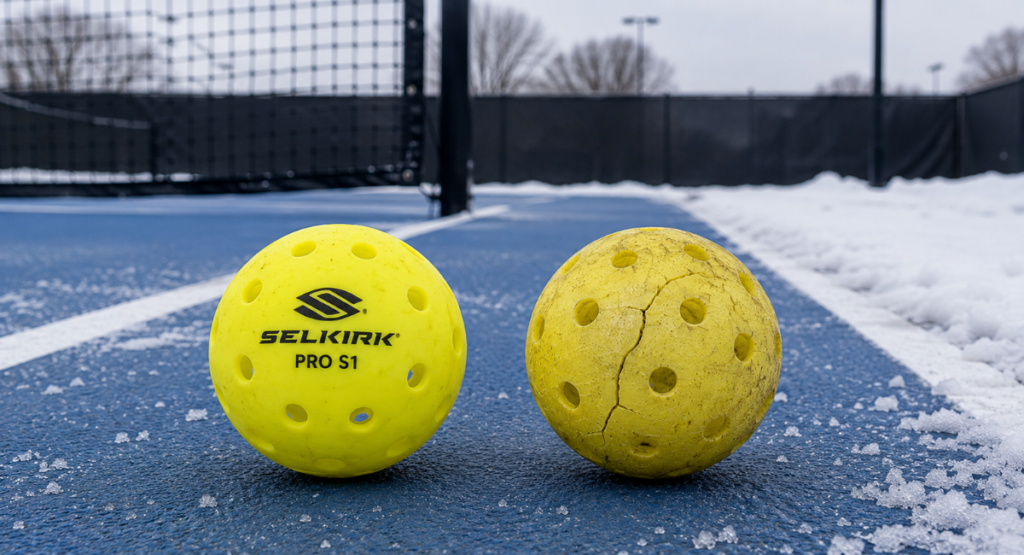
Best for: Fall and winter outdoor play · Players in cold climates
Cold weather is brutal on most pickleball balls. Standard balls crack far more frequently when temperatures drop below 45°F, because the plastic becomes brittle under the stress of hard impacts on cold courts. The Selkirk Pro S1 uses a softer polymer blend specifically designed to resist cold-weather cracking.
It also comes with a one-year no-crack warranty — a bold and confidence-inspiring promise that no other ball on this list offers. The S1 plays slightly slower than the X-40 in warm weather, but that is a very reasonable trade-off for players who refuse to stop playing when the temperature drops.
Pros:
- Softer polymer blend resists cracking in cold weather
- One-year no-crack warranty — unique on this list
- Works on both indoor hard courts and outdoor surfaces
- Consistent bounce even at low temperatures
Cons:
- Plays slightly slower than X-40 in warm weather
- Softer feel may not suit power-oriented players
Verdict: If you play outdoors through fall and winter, the Selkirk Pro S1 is the smartest investment on this list. Stop replacing cracked balls every week.
→ Check Price on Amazon
5. Onix Pure 2 Outdoor — Best for Windy Courts 💨
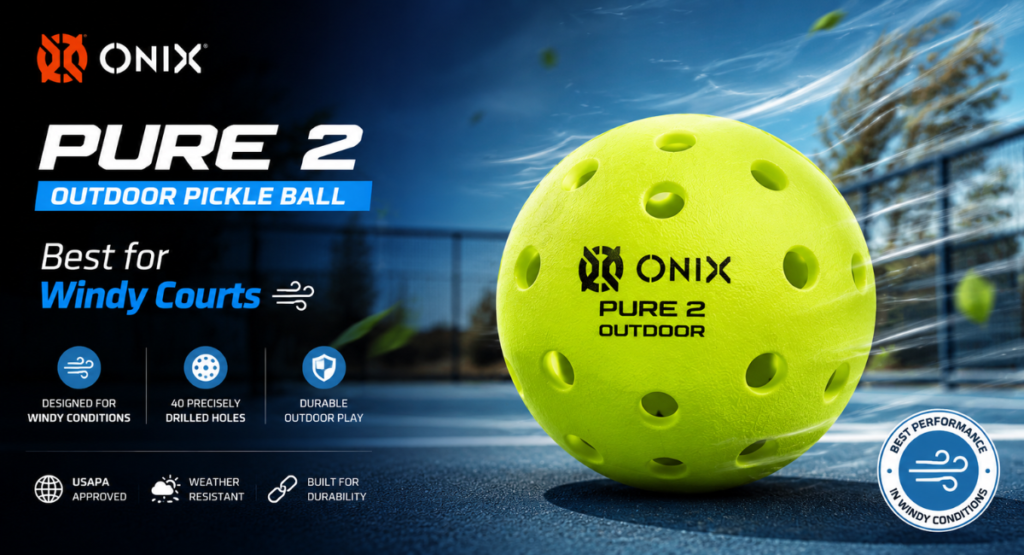
Best for: Exposed outdoor courts · Players dealing with wind regularly
The Onix Pure 2 uses True Flight technology — a precision-drilled hole pattern specifically designed to cut through wind more efficiently than standard 40-hole balls. Moreover, reinforced seam welding adds a level of durability that many balls at this price simply cannot match.
Because of this engineering focus, the Pure 2 is a firm favorite at open, exposed outdoor courts where wind is a constant challenge. If you have ever lost a point because the wind pushed your ball off course, switching to the Pure 2 will make a noticeable difference in flight consistency.
Pros:
- True Flight technology for straighter, more stable flight in wind
- Reinforced seam welding for added durability
- Slightly heavier design adds outdoor stability
- USAPA approved for tournament play
Cons:
- Slightly slower feel than the X-40
- Less available in large bulk packs
Verdict: The best choice for any player whose home court regularly deals with wind.
→ Check Price on Amazon
6. Navona / Asbocar Budget Balls — Best Value Under $0.75/Ball 💰
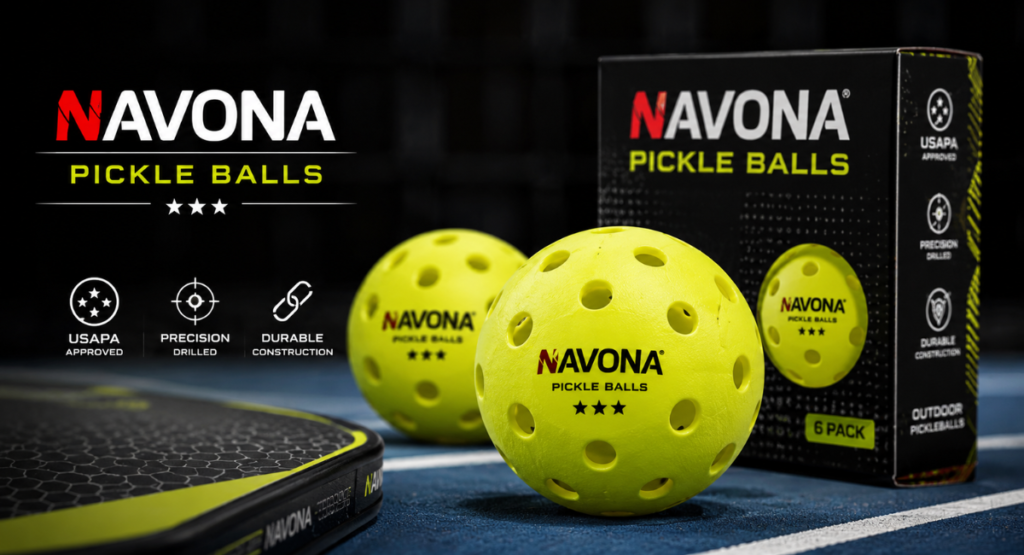
Best for: Practice sessions · Ball machines · Bulk buying on a budget
Not every player needs tournament-grade balls for a casual Saturday game or a drilling session. Budget balls from brands like Navona and Asbocar have improved significantly and now offer USAPA-approved designs at under $0.75 per ball when bought in bulk.
They scuff faster and crack sooner than premium balls — but at this price, replacing them feels painless. For players running a ball machine through 150 balls per session, budget balls are the only sensible option.
Pros:
- Under $0.75 per ball when purchased in bulk packs
- USAPA approved designs available
- Great for practice, drilling, and ball machine use
- Adequate bounce for all recreational play
Cons:
- Shorter lifespan than premium balls
- Less consistent flight compared to X-40 or LT-48
- Not suitable for competitive or tournament play
Verdict: Perfect for practice, ball machines, or anyone building a reserve of 50+ balls without spending a fortune.
→ Check Price on Amazon
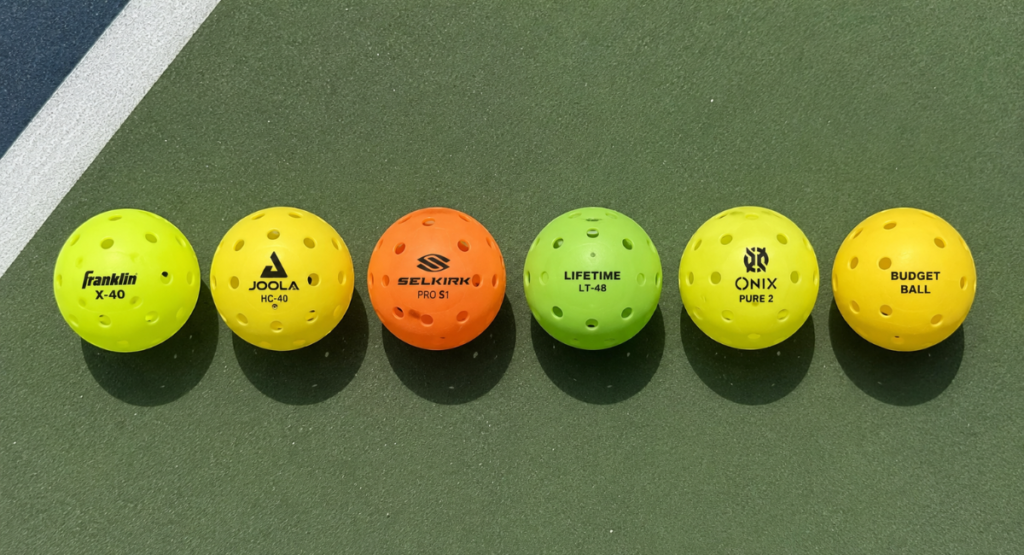
Quick Comparison — All 6 Balls at a Glance
| Ball | Best For | Durability | Price/Ball | USAPA |
|---|---|---|---|---|
| Franklin X-40 | Overall / All levels | ⭐⭐⭐⭐ | ~$2.50 | ✅ Yes |
| Lifetime LT-48 | Advanced players | ⭐⭐⭐⭐⭐ | ~$3.00 | ✅ Yes |
| JOOLA HC-40 | Value pick | ⭐⭐⭐⭐ | ~$2.00 | ✅ Yes |
| Selkirk Pro S1 | Cold weather | ⭐⭐⭐⭐⭐ | ~$3.50 | ✅ Yes |
| Onix Pure 2 | Windy courts | ⭐⭐⭐⭐ | ~$2.80 | ✅ Yes |
| Navona / Asbocar | Budget / Practice | ⭐⭐⭐ | ~$0.70 | ✅ Yes |
How We Tested These Balls
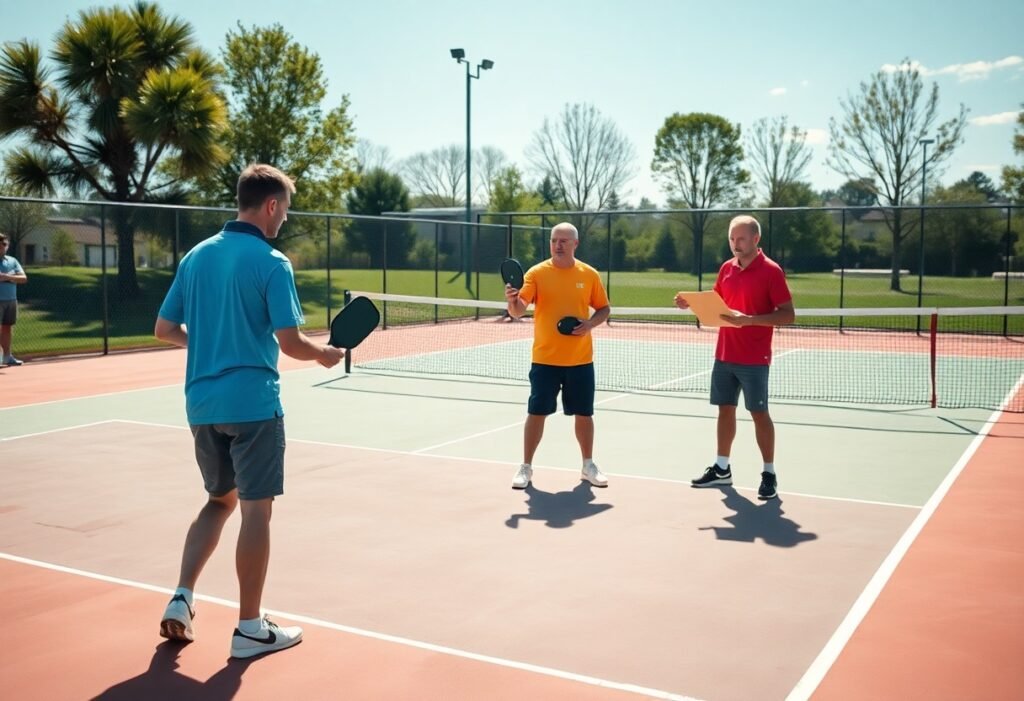
Testing pickleball balls fairly requires more than just hitting them around once. Therefore, I played each ball across at least five separate sessions on three different surfaces — concrete, asphalt, and acrylic hard court — before drawing any conclusions.
What We Looked For
- Bounce consistency — does the ball bounce the same height on every shot?
- Flight stability — does it drift or wobble, especially in wind?
- Durability — how many games before the ball softens, cracks, or goes out of round?
- Feel off the paddle — does it give clear feedback on dinks, drives, and drops?
- Cold weather performance — does it crack faster below 50°F?
How Many Games Did Each Ball Last?
Results varied significantly between brands. The Franklin X-40 and Selkirk Pro S1 consistently lasted between 10 and 15 games before showing meaningful softening. Budget balls averaged 4 to 6 games before performance dropped noticeably. The Lifetime LT-48 impressed the most — it maintained its shape and bounce through 15 or more sessions in warm conditions.
As a general rule, most outdoor pickleball balls deliver peak performance for 5 to 10 games. After that, the bounce becomes less predictable. Replace your balls when they feel noticeably softer or when you spot any cracking along the seam.
How to Choose the Right Outdoor Pickleball Ball
Buying the right ball comes down to four key factors. Match these to your situation, and you will not go wrong.
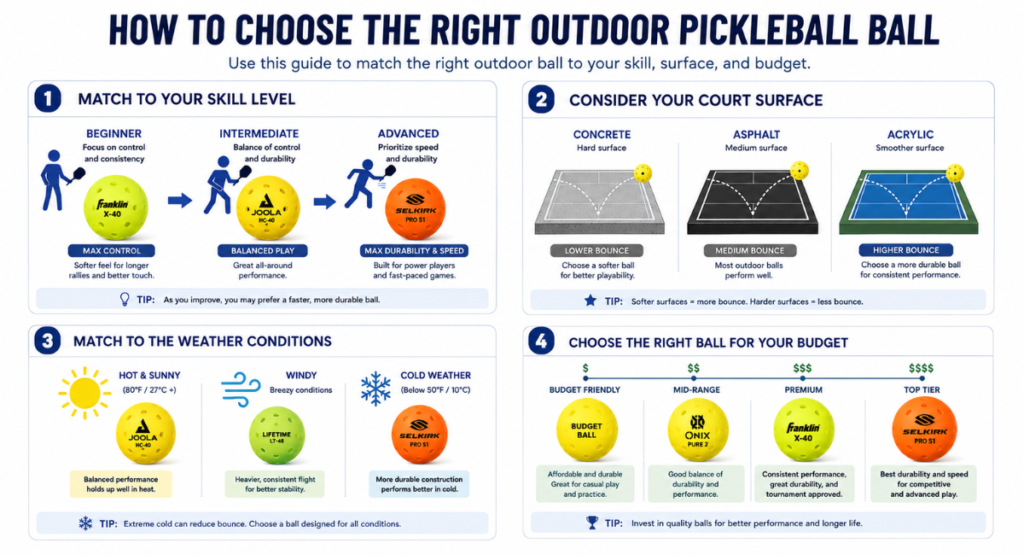
1. Your Skill Level
Beginners benefit most from a controlled, predictable ball like the Franklin X-40. Because it does not travel too fast, it gives you more time to react and build proper technique. Advanced players, on the other hand, often prefer the LT-48 or JOOLA HC-40 for a faster, livelier feel that rewards sharp hands.
2. Your Court Surface
Concrete and asphalt are rougher surfaces, so they wear through balls faster. On these courts, prioritize durability — the X-40, LT-48, and Selkirk S1 all hold up well. Acrylic surfaces are smoother, so most balls perform consistently on them regardless of brand.
3. Weather and Climate
Hot weather softens balls faster, particularly softer ones. Cold weather causes cracking, especially in thinner plastic shells. Therefore, if you play year-round outdoors, keep the Selkirk Pro S1 in your bag specifically for winter sessions. For summer play, the LT-48 and X-40 both handle heat well.
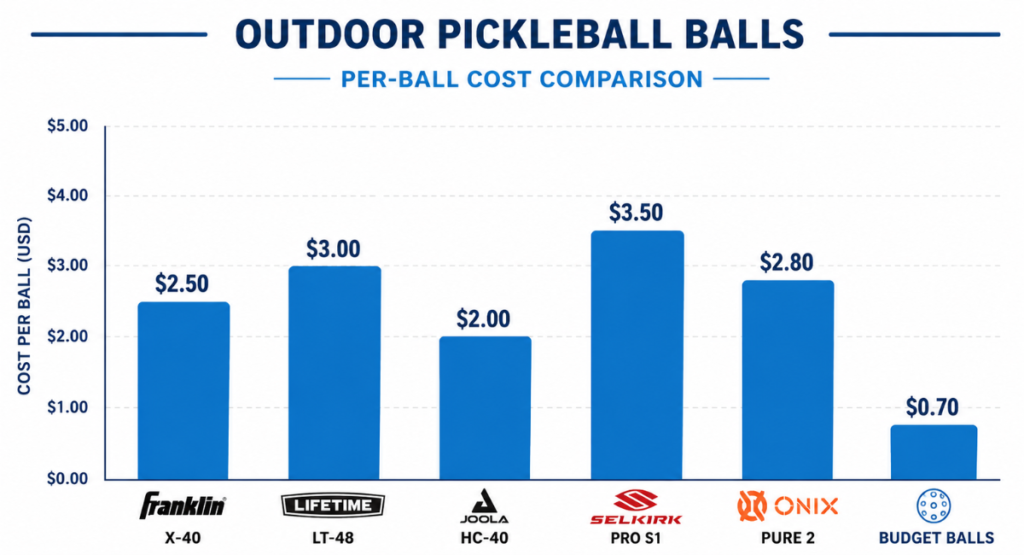
4. Budget — Per Ball Cost Breakdown
Premium balls run between $2.50 and $3.50 per ball. Mid-range options cost around $2.00. Budget balls drop below $1.00 per ball in bulk. Most recreational players find the sweet spot at around $2.00 to $2.50 per ball — good enough for consistent play without feeling painful when a ball cracks after one cold morning.
How Long Do Outdoor Pickleball Balls Last?
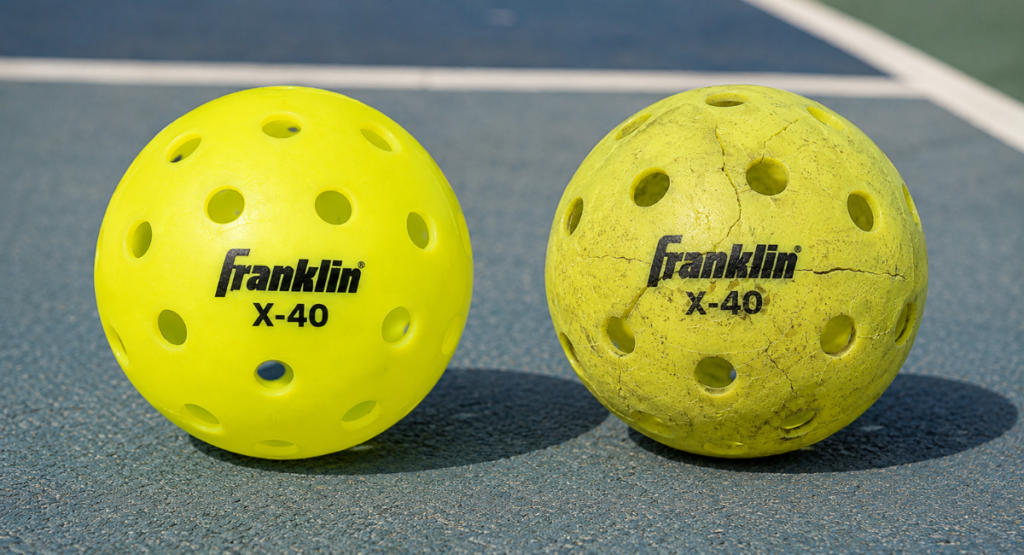
Most manufacturers and experienced players agree that outdoor pickleball balls deliver peak performance for 3 to 10 games. After that, the plastic gradually loses its firmness, and the bounce becomes inconsistent. However, many recreational players squeeze 15 or more games from a single ball without noticing a dramatic difference.
Signs Your Ball Needs to Be Replaced
- The bounce feels noticeably lower or softer than when the ball was new
- The ball has gone slightly out of round — it wobbles when you spin it on a flat surface
- You can see visible cracks, especially along the seam
- The flight path feels inconsistent even on calm, windless days
Pro Tips to Make Your Balls Last Longer
- In cold weather, keep a spare ball in your pocket to warm it up before use
- Store balls at room temperature — extreme heat and cold both shorten their life
- Rotate between two or three balls per session rather than using one ball continuously
- Avoid leaving balls in a hot car, which permanently softens the plastic
2026 USA Pickleball Rule Update — The Visible Ball Rule
USA Pickleball introduced an important rule change for the 2026 season that all tournament players should know about.
The Visible Ball Rule: Carrying a spare ball in your pocket where it is clearly visible to your opponent is now considered a fault. The reasoning is that a second yellow object can distract your opponent during fast-paced exchanges. Tournament players must keep spare balls fully tucked away or off the court entirely before each point begins.
This rule does not affect recreational play. However, if you compete in sanctioned events, be aware of where your spare ball sits before every single point.
Additionally, 2026 season rules continue to require optic yellow as the standard ball color for all sanctioned USA Pickleball events. Pink, orange, and glow-in-the-dark balls remain legal for recreational use only.
Frequently Asked Questions
What is the most popular outdoor pickleball ball in 2026?
The Franklin X-40 remains the most widely used outdoor pickleball ball in 2026. It is the official ball of the US Open Pickleball Championships and is trusted by millions of recreational and competitive players worldwide.
Are Franklin X-40 balls USAPA approved?
Yes. The Franklin X-40 is fully USAPA approved and meets all official size, weight, and bounce standards. Because of this, it is legal for use in all sanctioned tournament play.
Can I use outdoor pickleball balls indoors?
Yes — and most players do. Outdoor balls work well on indoor hard courts, which now make up the majority of dedicated pickleball facilities. However, avoid using outdoor balls on smooth wooden gym floors, because they will skid and bounce inconsistently on that surface.
What color pickleball ball is best for outdoor play?
Optic yellow offers the best visibility in outdoor conditions. It contrasts well against most backgrounds — blue skies, green fencing, and white court lines. Some players prefer bright orange in low-light conditions, but optic yellow remains the tournament standard for all sanctioned events.
How many holes does an outdoor pickleball ball have?
Most outdoor pickleball balls have 40 holes. USAPA regulations allow between 26 and 40 holes. The 40-hole design improves aerodynamic stability, which reduces wind drift during outdoor play.
What is the best pickleball ball for cold weather?
The Selkirk Pro S1 is currently the top performer in cold temperatures. Its softer polymer blend resists the brittleness that causes most balls to crack when temperatures drop below 45°F. The PCKL Elite 40 is another solid cold-weather option worth considering.
Final Verdict — Which Outdoor Pickleball Ball Should You Buy?
After testing everything on real courts, the answer for most players is simple: buy the Franklin X-40. It is reliable, consistent, tournament-approved, and widely available. Most importantly, it works on every court surface at every skill level.
Beyond that, your specific situation should guide your decision. Here is a quick summary:
- Best overall → Franklin X-40
- Best for advanced players → Lifetime LT Pro 48
- Best value runner-up → JOOLA HC-40
- Best for cold weather → Selkirk Pro S1
- Best for windy courts → Onix Pure 2
- Best budget / practice → Navona or Asbocar bulk balls
Most importantly, remember that the best ball is the one your court and regular group already uses consistently. Matching the ball your club plays with improves your timing and muscle memory faster than any other gear change.
Now get out there — and do not let a bad ball ruin your next Sunday game.