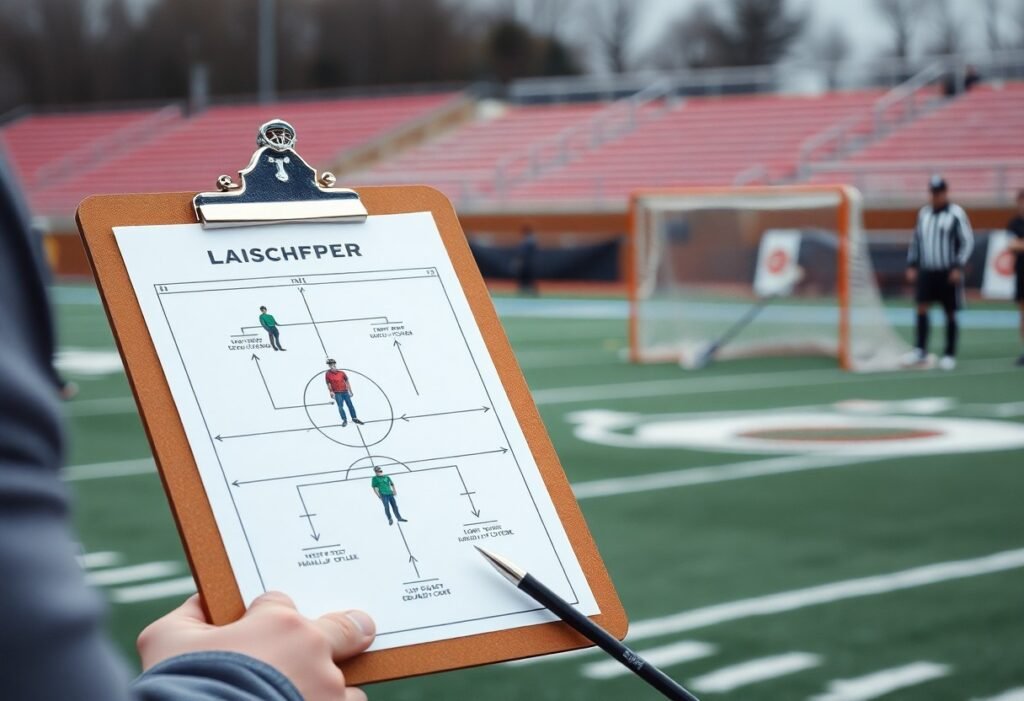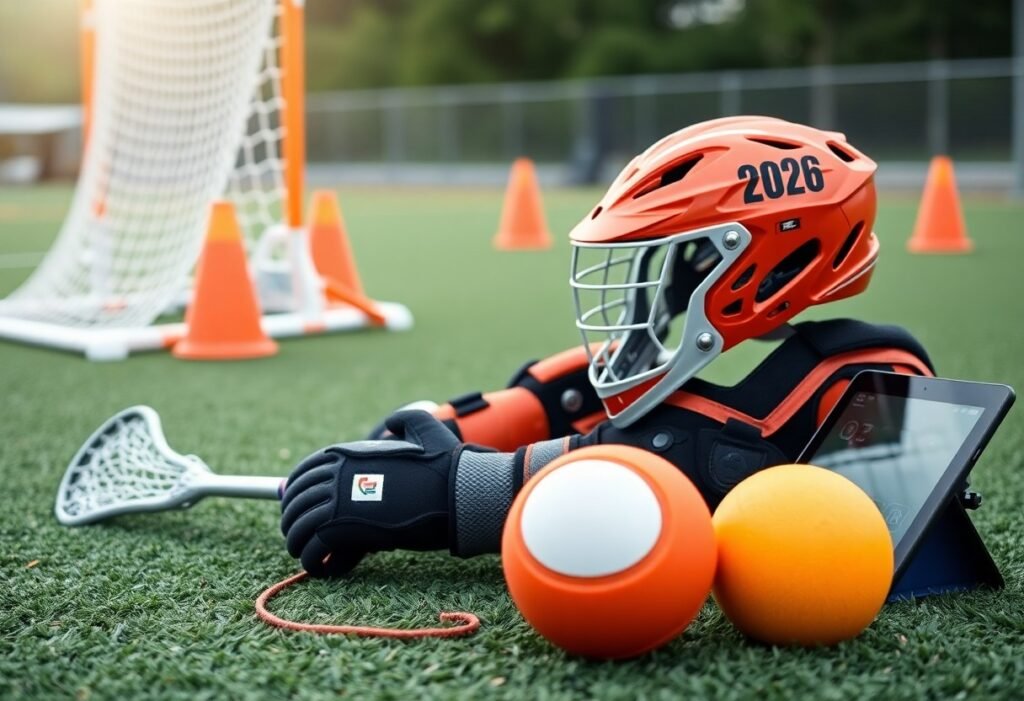

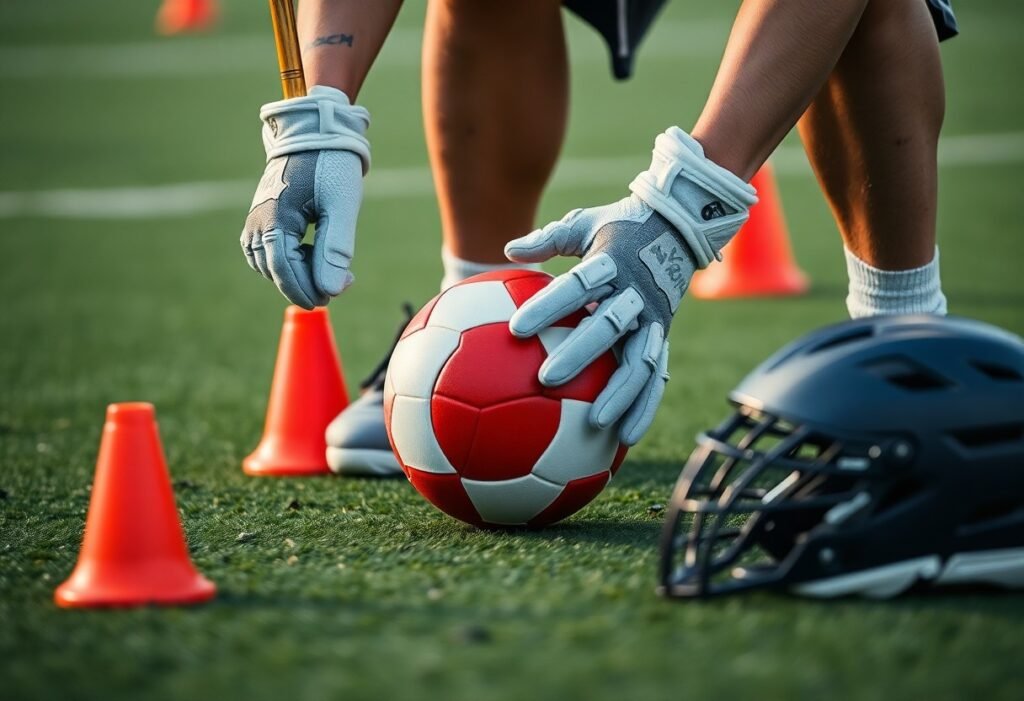
Skills in stick handling define how effectively you control the ball, react under pressure and create scoring chances; focus on repetitive drills that build stick control, hand speed and footwork so your movements become instinctive. Train to protect the ball and read defenders to reduce the risk of injury from collisions and forced turnovers, and develop situational awareness to boost confidence and decision-making in game situations.
Key Takeaways:
- Master fundamentals – consistent grip, strong cradle, soft hands and pocket awareness to improve retention and passing accuracy.
- Practice deliberately – daily wall-ball and partner drills, prioritize weak-hand repetitions, and progress from stationary to game-speed with varied angles and movement.
- Simulate game conditions – small-sided drills, decision-making under pressure, focused feedback and video review to transfer skills to match play.
The Importance of Stick Handling in Lacrosse
High-level play depends on your stick work: it dictates possession time, turnover rate, and shooting angles. By practicing wall ball, ground balls and partner drills-aiming for 300-500 quality reps per week-you build the hand speed and pocket feel that let you absorb checks and create space. Failure to control the stick under pressure leads to turnovers and defensive transition; conversely, elite handlers force defenders to react, opening lanes for teammates and high-percentage shots.
Fundamental Techniques
Your foundation is built on stable mechanics: a balanced cradle, consistent catching technique with soft hands, and two-handed passing for power and accuracy. Drill specifics include 10-minute daily wall-ball routines, 50 reps per drill of dominant and off-hand throws, and 200 weekly ground-ball pickups. Emphasize stick-to-body alignment, keeping the top hand mobile while the bottom hand controls whip and release.
Advanced Stick Handling Moves
Once fundamentals are automated, layer in moves like the split dodge, roll dodge, behind-the-back pass, and one-handed cradle control. Practice each move at game speed. Start at 50% intensity and progress to full speed over 2-4 weeks. Blend moves into live situations so you can execute under contact. Watch for turnovers when attempting flashy moves. Prioritize quick release and protective positioning.
- Progression: master each move unopposed for 3-5 sessions before adding passive defense.
- Repetition: perform 30-50 quality reps per move per session to ingrain motor patterns.
- Game simulation: add a defender after 7-10 days of reps; track success rate for each move.
- Video review: record 1-2 weekly reps to analyze stick angle and hand placement.
- Conditioning: combine handling drills with 20-40 yard sprints to simulate fatigue decision-making.
Advanced Move Progression
| Move | Drill / Rep Scheme |
| Split Dodge | Cone-to-cone drill, 40 reps; add defender after 5 sessions |
| Roll Dodge | Partner shadowing, 30 reps each side; progress to live closeout |
| Behind-the-Back Pass | Stationary target, 50 reps; then on-the-move 30 reps |
| One-Handed Control | Wall-ball strong-hand only, 60 reps; integrate into 2v2 |
| Quick Stick / Fake-and-Shoot | Timed reps with goalkeeper, 40 attempts per week |
When you refine advanced moves, focus on decision thresholds: know when to execute versus when to secure possession. Track measurable goals-such as lowering your turnover rate by 15% over four weeks or increasing successful roll-dodge completions from 40% to 70% in scrimmages-and prioritize moves that improve your field outcomes. Safety-wise, protect the ball with your off-arm and shoulder to reduce forced drops under contact.
- Common errors: high top hand, late pocket tuck, telegraphed fakes-address each with targeted drills.
- Correction drills: slow-motion repetition (20 reps), band-resisted cradles (3 sets), and mirror work for hand path.
- Performance metrics: log reps, success rate in drills, and turnover count per practice.
| Mistake | Fix / Drill |
| High top hand | Wall-ball with wrist-focused catches, 4 x 2 minutes |
| Late pocket tuck | Slow-motion tuck drill, 30 reps, then speed up to game tempo |
| Telegraphed fakes | Quiet shoulders drill with mirror, 3 sessions weekly |
| Poor off-hand control | One-handed wall-ball and partner passing, 100 reps weekly |
Skill Development Strategies
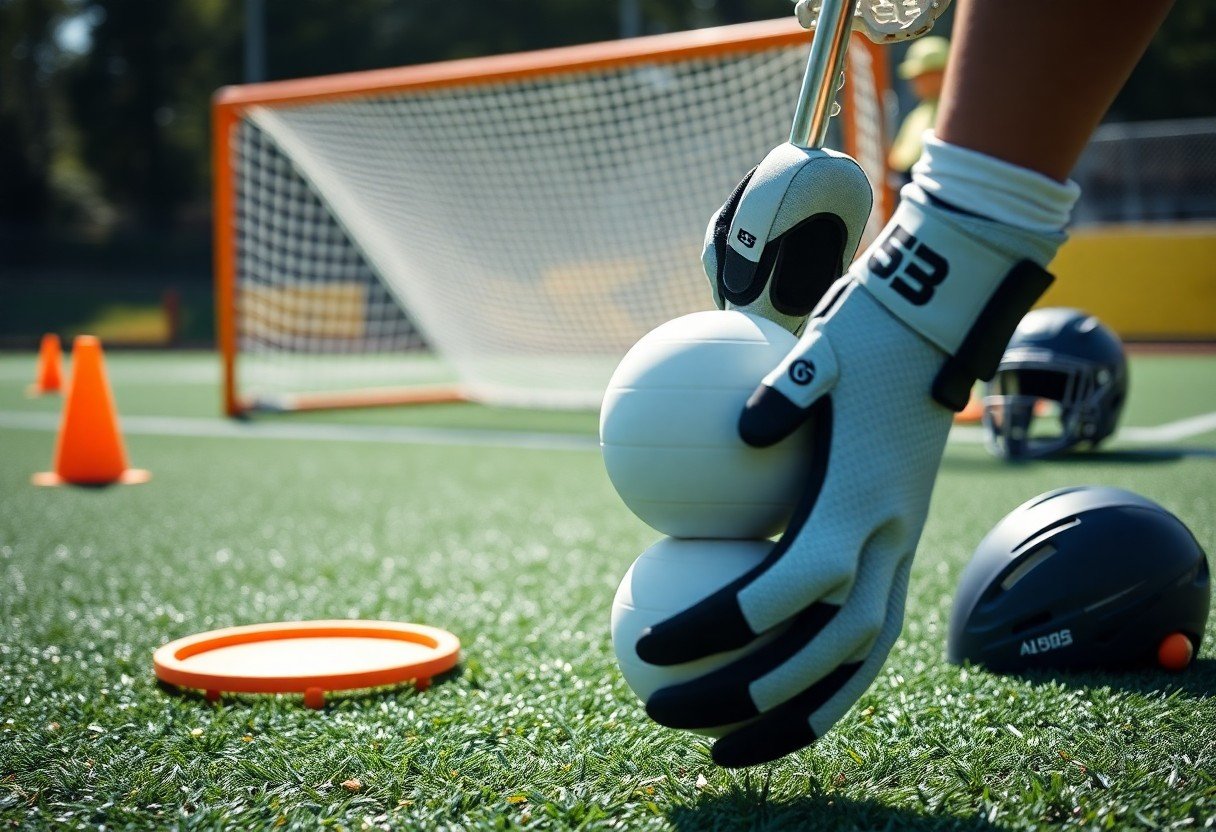
Mix high-rep stick work with decision-making under pressure so your skills transfer to games: plan 20-30 minute daily blocks, target 300 wall-ball reps weekly, and add 4 timed-release drills to hit sub-1.2 second shots. Use video review and the practice templates in Mastering Your Lacrosse Stick Skills to build measurable progress.
Drills for Individual Practice
Start with wall-ball progressions: 5 minutes stationary cradle, 10 minutes alternating-hand feeds, then 10 minutes quick-release shooting. Add figure-8s for 200 reps per hand and one-handed catch drills to lock pocket control. Time your receives and aim to reduce reaction-to-release by 0.3-0.5 seconds each month to track improvement.
Team-Based Skill Development
Use small-sided games and constraint drills to force reads: run 2v2 possession with 30-second clocks, 3v3 transition circuits for 10 reps each, and pressured clearing drills that simulate a 5-second ride. Rotate roles every 2 minutes so everyone practices decision-making; keep target pass-completion above 85% in sessions.
Structure team work with a weekly plan: two high-intensity skill sessions (20-30 minutes of contested feeds, 3v2/2v1 finishing), one tactical session (video + walk-through), and one recovery/light-touch day. Track metrics like pass completion, turnover rate (aim under 12% per drill), and shot-release time; if turnovers spike, cut full-contact reps and emphasize technique. Coaches should progressively add constraints-time limits, weaker-hand only, or zone overlays-to force adaptation while minimizing injury risk during high-volume drills.
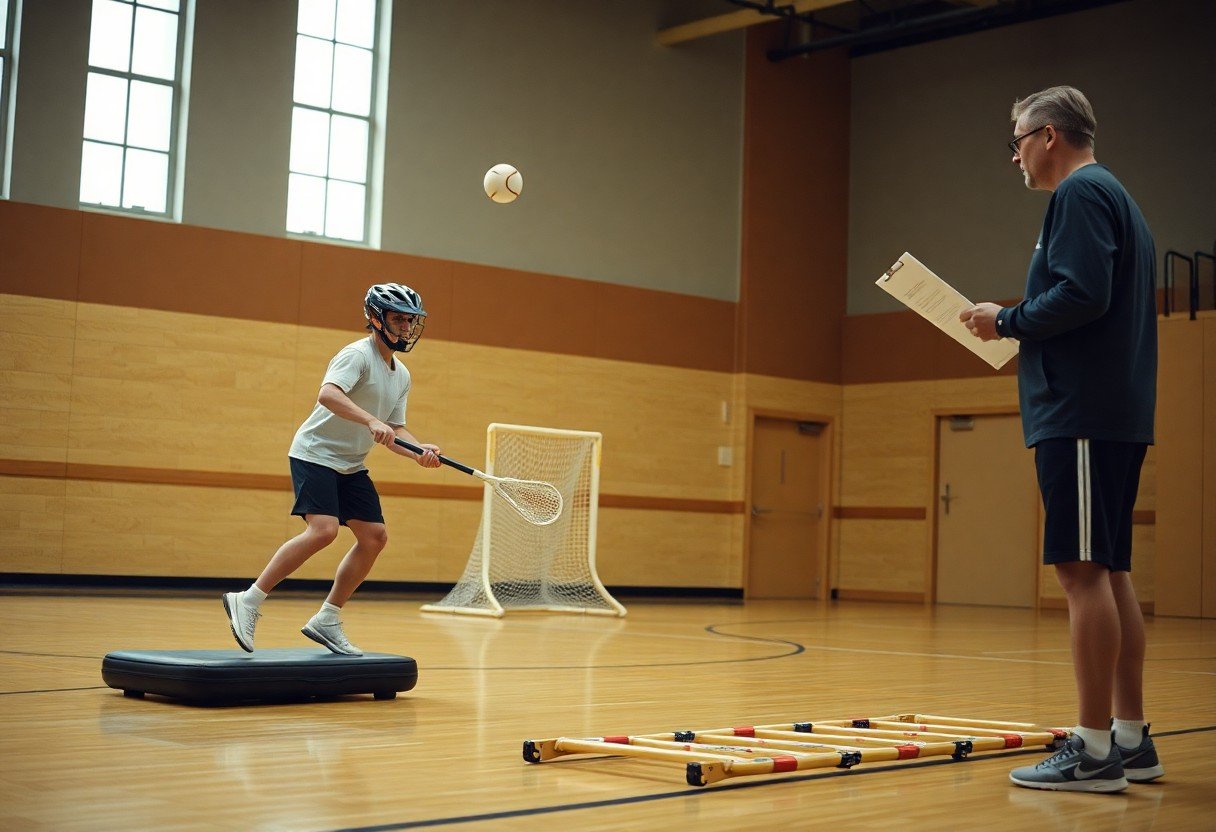
Using Visual and Kinesthetic Learning
Alternate visual cues with hands-on reps. Watch a 20-30 second clip, then perform 5-8 repetitions at 50-75% speed. This locks the pattern into your motor memory.
Many college programs structure sessions in 10-12 minute blocks. They combine slow-motion analysis, mirror work, and 3-on-3 live drills. This helps you translate observed mechanics into feel while reducing turnover rates during game-speed practice.
Video Analysis Techniques
Record 2-3 angles (side, behind, face) at 60-240 fps depending on your phone, then isolate 15-30 second sequences to study release, pocket collapse and hip rotation. Use frame-by-frame to mark 3 checkpoints-grip, top-hand snap, follow-through-and compare to a pro clip to spot a 10-20° shoulder delay or early wrist flick that costs you possession; annotate and practice the corrected motion immediately.
Learning through Demonstration
Have your coach or a high-level teammate demonstrate skills at full and half speed. Shadow the movement for 3-5 reps before attempting it yourself. This primes your motor system and cuts initial errors.
Ask for 2-3 verbal cues, such as “freeze the top hand” or “rotate hips first.” Repeat the demo-practice cycle in short, focused sets of 5-10 reps.
For deeper transfer, vary demonstrators. Watch a pro clip, then a teammate and a coach. Each highlights different details like pocket depth, hand spacing, or angle of approach.
Use 60-90 second slow-motion replays. Have the demonstrator stop at 2-3 key frames while you mimic exact hand positions. If you rush to full speed before nailing checkpoints, you risk reinforcing bad habits or injury. Progress from half-speed to game-speed across 4-6 sessions while tracking improvements.
The Role of Conditioning in Skill Development
Conditioning directly enhances your stick work by reducing fatigue-related errors and allowing higher-quality repetitions; schedule sessions so you do 30-40 minutes of skill work followed by 20-30 minutes of conditioning. Implement 2-3 HIIT sessions weekly (for example, 6-8 x 30s maximal sprints with 90s rest) to preserve hand speed late in games. Be aware that fatigue causes sloppy passes and turnovers, so prioritize recovery and progressive load to protect skill gains.
Physical Conditioning for Lacrosse Players
Focus on strength with two sessions weekly and 3-6 reps for compound lifts. Develop power with two sessions weekly using Olympic lifts or plyometrics, performing 1-5 reps or 3-6 jump reps. Train agility with 10-30 yard shuttle sprints, ladder work, and cone drills for 4-6 sets. Add one mobility and recovery day each week. Maintain proper technique under load because poor mechanics increase injury risk. Track volume carefully. Do not exceed 10-15% weekly increases in sprint distance or lift intensity.
Mental Conditioning Techniques
Use daily visualization (10 minutes imagining game-speed stick moves and pressure scenarios), pre-shot breath control (box breathing 4-4-4-4), and process-focused goals to keep attention on execution instead of outcome. Practice short, high-pressure routines in training-simulate a cleared clock or hostile crowd-to make calmness automatic. Those habits translate into steadier hands and faster decision-making when defenses compress space, with measurable gains in clutch performance.
Start a compact mental routine: 3 minutes diaphragmatic breathing to lower arousal, 10 minutes guided imagery (feel the pocket, hear teammates), then 3 simulated pressure reps (crowd noise, time constraint) before drills. Consider cognitive training apps like NeuroTracker or reaction-timing drills 15 minutes twice weekly to shave milliseconds off release time. Neglecting this work often produces inconsistent play under stress, so treat mental drills as part of your weekly load.
Common Challenges and Solutions
Many players hit issues like inconsistent catches, weak off-hand play, and slow decision-making; you fix these with targeted practice: 20-30 minute daily wall-ball sessions (200-500 reps), 10-minute isolated off-hand blocks, and 3×5-minute game-speed drills to simulate pressure. Track makes out of 50 to quantify improvement, film reps for technique tweaks, and prioritize rest to avoid overuse injuries while maintaining daily reps.
Overcoming Frustration
When your progress stalls, set micro-goals such as 40/50 clean catches or 10 consecutive one-hand catches and use timed 5-minute focus blocks to rebuild momentum. Log each session so you see small wins, employ breathing cues between reps, and step back for a day if you feel persistent soreness to prevent setbacks and preserve long-term gains.
Building Consistency and Confidence
Create a weekly routine with 3-4 sessions: warm-up, 200-300 wall-ball reps, then 10-15 minutes of pressure simulation (defender shadowing, quick-release drills). You should track make-percentage and aim to increase reps ~10% per week; that steady overload develops reliable mechanics and boosts game-day poise.
For deeper progress, rotate specific drills: two-ball wall work, figure-8 cradles, shuttle passes, and 1v1 stick-check simulations. Example progression: Week 1 = 200 reps, Week 2 = 220, Week 3 = 242, adding defensive pressure in sessions 2-3 each week. Combine this with film review and pre-shot cues so you build both consistency and repeatable confidence under stress.
Resources for Continued Learning
You should use a mix of periodicals, clinics, and deliberate practice plans to keep improving your stick skills. Follow Inside Lacrosse and US Lacrosse Magazine for film breakdowns and drills, attend at least one college coach clinic per season, and commit to structured reps – for example, a daily 20-minute wall-ball session totaling 500+ throws per week to maintain retention and progress.
Recommended Books and Articles
You’ll benefit from articles that break down mechanics and decision-making; subscribe to Inside Lacrosse and US Lacrosse for weekly tactical pieces and drill libraries. Seek out coaching articles with video analysis and sample progressions (e.g., 10 drills × 3 sets, 5 days/week). Also scan peer-reviewed sports biomechanics papers on overhand throwing to refine release angle and reduce strain.
Online Courses and Workshops
You can enroll in webinars and modular courses led by collegiate coaches and trainers-many run 2-6 hour modules with film sessions and Q&A. Prioritize platforms offering live video breakdowns and practical homework; US Lacrosse often posts affordable webinars, while NCAA coach-led clinics provide in-depth situational drills and strategy sessions.
When choosing a course, pick ones that let you upload video for coach feedback, include weekly progressions (typical format: 6-week programs with 30-60 minute lessons), and prescribe measurable homework like wall-ball routines and small-sided drills. Aim to submit 3-5 clips per week for critique so your technique changes are tracked and corrected promptly.
Summing up
Drawing together stick handling and skill development, you solidify your fundamentals through deliberate, varied practice, game-speed decision-making drills, and feedback-driven adjustments. Prioritize consistency, situational awareness, and targeted drills to transfer practice gains into competition. By tracking progress and refining technique, you ensure continual improvement and reliable performance on the field.
FAQ
Q: How should a daily stick-handling progression be structured for steady improvement?
A: Begin with 10 minutes of focused wall-ball to reinforce catching and soft hands (short throws, alternating hands). Follow with 10-15 minutes of static stick-handling drills (figure-8s, quick taps, middle-rolls) at varying speeds to build hand speed and coordination. Add 15-20 minutes of dynamic drills: stationary dodging while moving the stick through different planes, then full-speed shuttle dodging with a partner or cones. Finish with 10 minutes of game-speed transitions (receiving on the move, quick ball protection, outlet passes). Use progressive overload: increase reps, speed, and decision-making stimuli weekly, and record one measurable metric (e.g., number of successful catches in 1 minute) to track progress.
Q: What are the most effective drills to develop a strong off-hand?
A: Prioritize high-repetition, isolated off-hand work. Start with wall-ball using only your weak hand for sets of 50-200 throws depending on level. Perform quick-tap drills where you tap the net or wall 30-60 times per set focusing on wrist flick and fingertip control. Integrate weak-hand cradle while jogging and doing figure-8s around cones. Progress to weak-hand passing and catching on the move, and finish with weak-hand dodges into a shot or pass. Train weak-hand at least three times weekly, increasing speed and complexity (defender presence, live reaction) before integrating into two-handed skill combinations.
Q: How can I increase ball speed and accuracy when shooting after dodging?
A: Combine technical refinement with power-transfer drills. First, isolate mechanics: work on lower-body drive, hip rotation, and weight transfer in dry reps without the ball, then add the ball and practice the same movement at three-quarter speed. Use step-in and crow hop progressions to synchronize footwork with stick whip. Perform repetitive shot clusters (5-10 shots from same approach) focusing on hitting a specific target spot in the net. Add resisted medicine-ball rotational throws and band work for core and shoulder strength twice weekly. Track velocity with a radar or perceived speed scale, and prioritize clean release and follow-through over raw arm speed to maintain accuracy.
Q: What common technical faults degrade stick control and how do I correct them?
A: Faults include gripping too tightly, using only wrist motion, poor head placement of the stick, and failing to use the lower body. Correct by cueing relaxed grip and light fingertips contact, then practice soft-handed catches on the wall. Teach full-arm cradle and forearm rotation drills to reduce reliance on single-joint motion. Ensure the pocket faces the ball on catches and practice catching with the head slightly open to absorb force. Integrate footwork drills to coordinate hips and shoulders with stick movements so power is generated from the whole body. Use video feedback to spot persistent errors and set small, specific corrections per session.
Q: How do I transfer isolated stick skills into game situations and design weekly practice to support that transfer?
A: Use a three-phase weekly template: acquisition (skill isolation and repetition), application (drills with pressure and decision-making), and synthesis (game-like scenarios). For acquisition days, do wall-ball, weak-hand work, and technique reps. Application days add defenders, timed possessions, and reaction drills (coach calls, live closeouts). Synthesis occurs in controlled scrimmages, transition drills, and situational play where players must use trained skills under fatigue and crowding. Allocate at least two sessions per week to application/synthesis combined with film review of decision-making. Progress intensity and complexity each week, and measure transfer by tracking successful execution rates in scrimmages (turnovers, successful dodges, completion percentage).