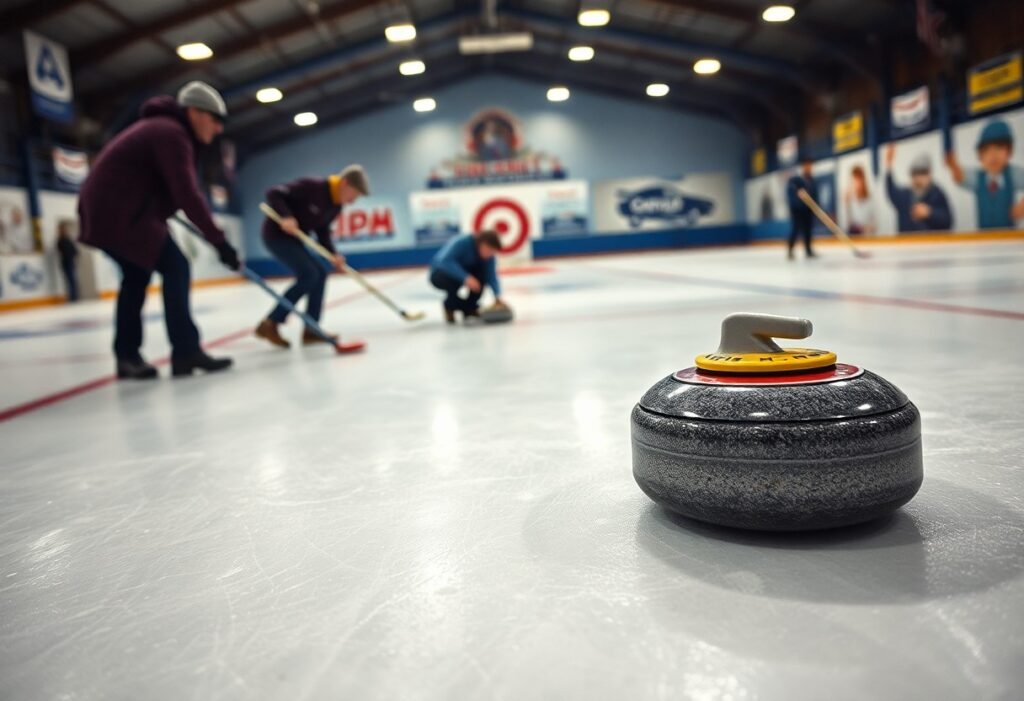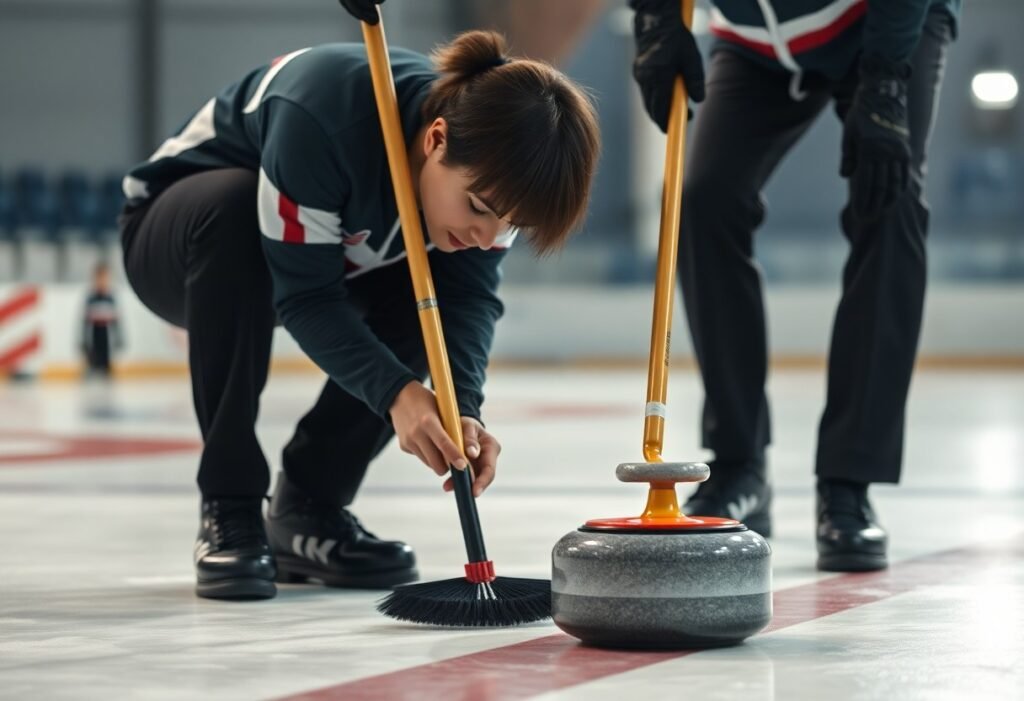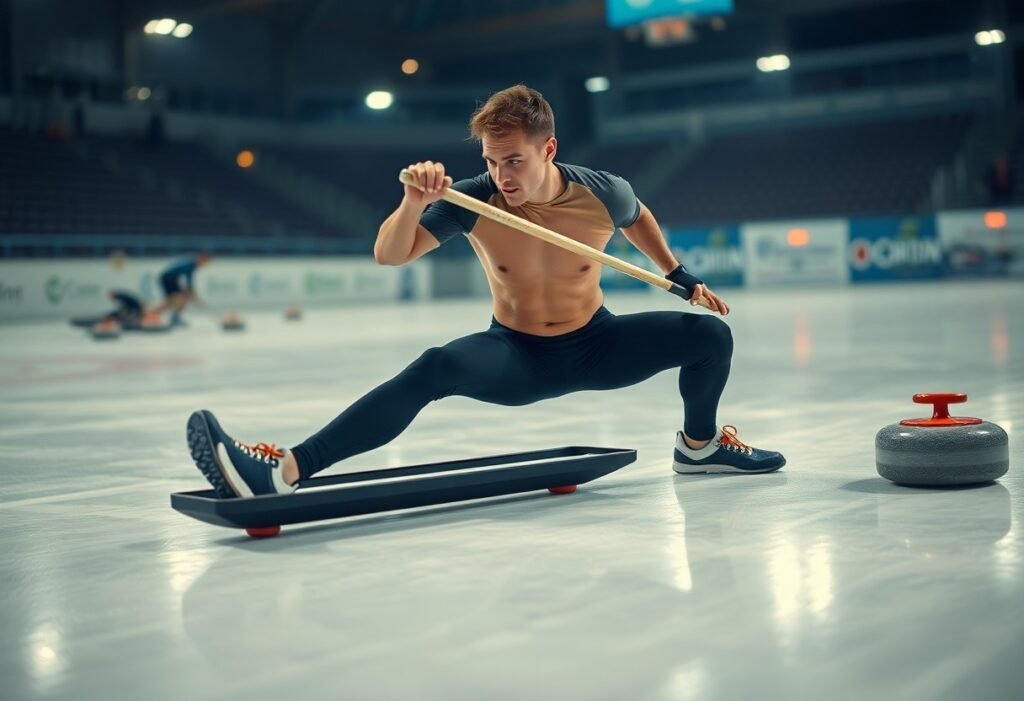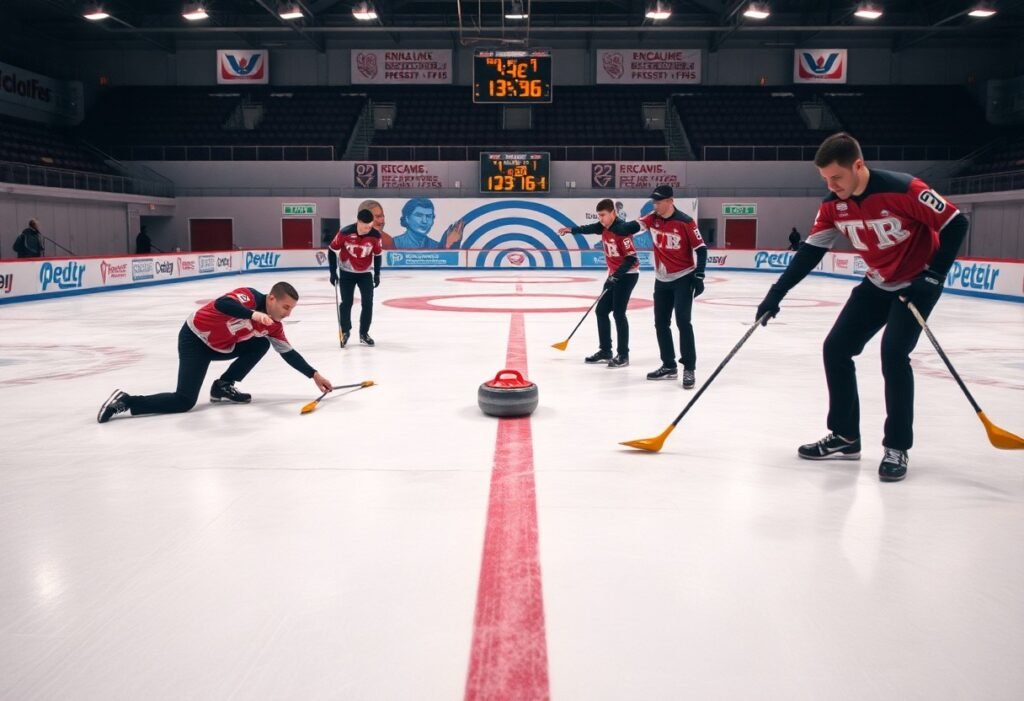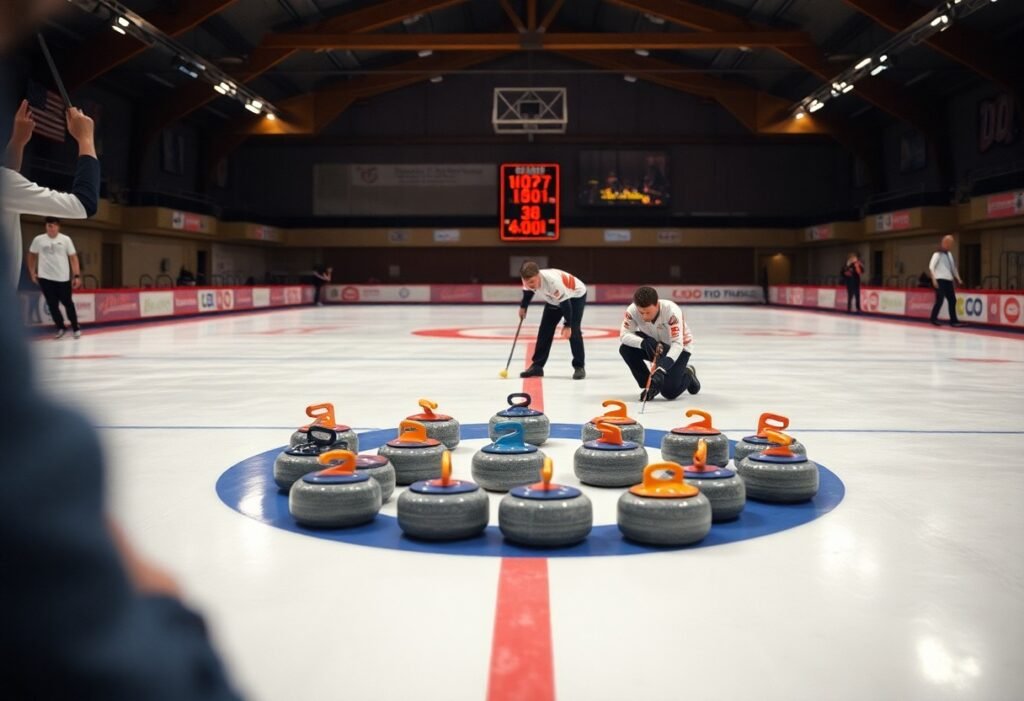

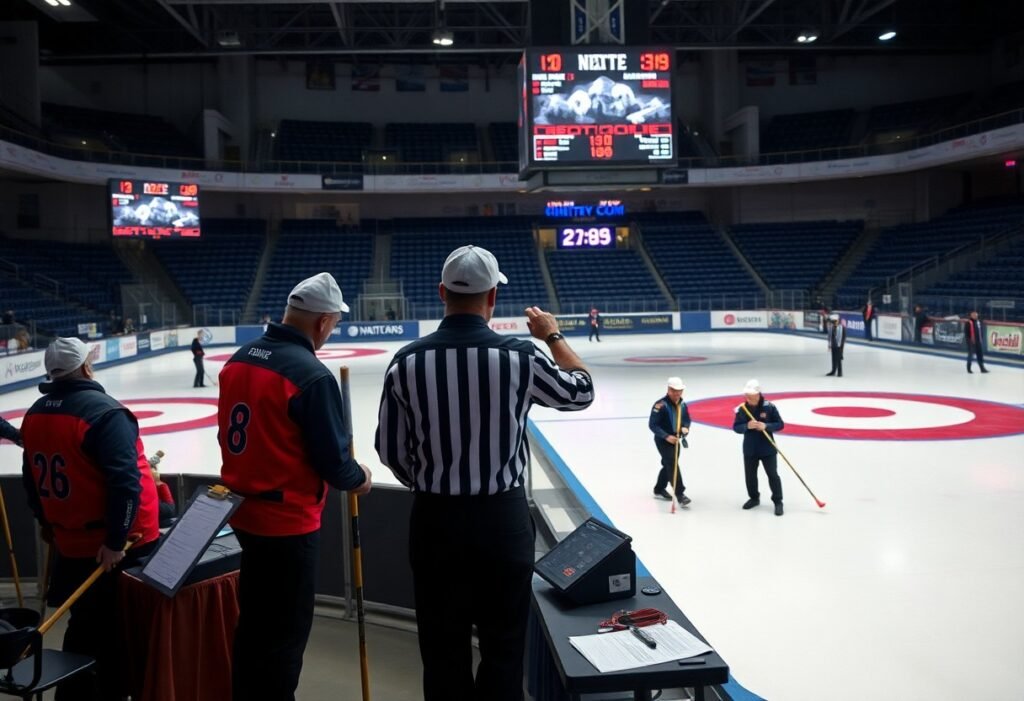
Curling events demand meticulous planning-secure ice time, rentals, and certified ice technicians, and set your rules and schedules. You must inspect ice regularly, provide grippers and helmets, and have emergency medical support on hand to mitigate slipping and cold-related injuries. Assign trained ice and game officials, arrange warming areas and refreshments, and promote fair play and community-building for a memorable, safe experience.
Key Takeaways:
- Plan logistics early: book a suitable rink, confirm ice maintenance and technician availability, secure permits/insurance, and create a clear competition schedule with format and registration details.
- Prioritize ice quality and equipment: verify ice prepping, stones, and timing/score systems are available, set up warm-up and safety zones, and have spare gear on hand.
- Staffing and participant experience matter: recruit trained volunteers/officials, communicate rules and schedules to teams, arrange concessions/awards, and prepare contingency plans for travel or facility issues.
Planning Your Curling Event
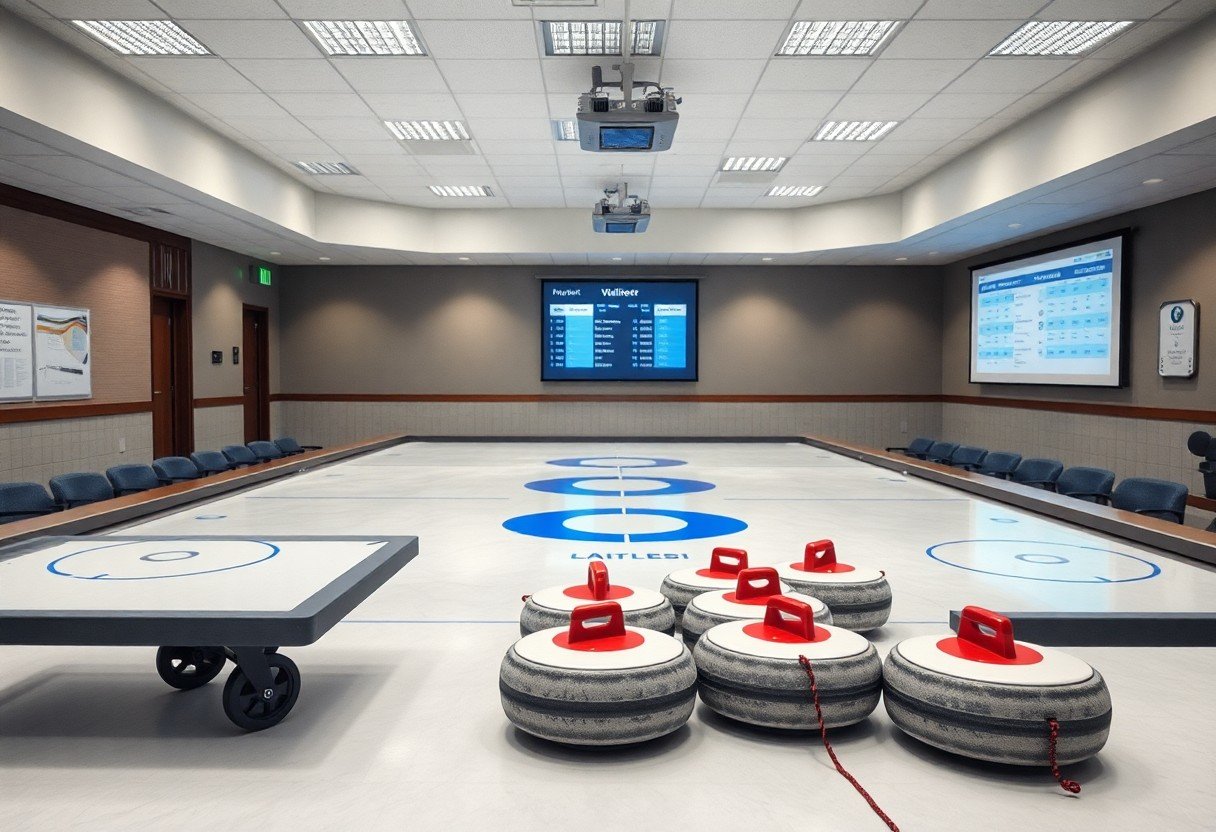
When planning your curling event, lock in ice time 3-6 months ahead for local rinks and 9-12 months for regional championships; reserve 1 certified ice technician per 2 sheets and plan for 4-8 sheets depending on a 8-32 team field. Allocate budget lines for rink rental, technician fees, stone and broom rentals, timing devices, and event insurance. Confirm parking, seating, and on-site medical coverage to mitigate injury risks.
Setting a Date and Venue
Choose weekend dates to maximize attendance and avoid major holidays or national championship windows; book venues offering consistent ice blocks (minimum 3-hour sessions), storage, and warm-up space. Aim for facilities with 4-8 sheets and spectator seating of 100-800; verify accessible parking and public transit. Negotiate contracts that include scheduled ice maintenance and guaranteed technician availability, and consider community rinks to reduce costs for charity events.
Understanding Curling Basics
You need to know each team has four players-lead, second, vice-skip, and skip-and plays 8 or 10 ends, with matches typically lasting 2-3 hours. Each team delivers 8 stones per end (16 on the sheet total); stones weigh ~44 lb (20 kg). Key rules include hog-line release and the free-guard-zone that bars removing opponents’ guards during the first four stones. Sweeping alters speed and curl, so train volunteers on safe sweeping and sheet etiquette.
For strategy and operations, plan around the FGZ: you should place guards early because opponents can’t remove them for the first four stones. Use measuring devices to resolve scoring disputes quickly. As an example, a 24-team bonspiel can run on 6 sheets with four draws per day using timed 8-end games. Enforce sweeping safety, clear warm-up protocols, and certified officials to reduce disputes and accidents.
Equipment and Supplies
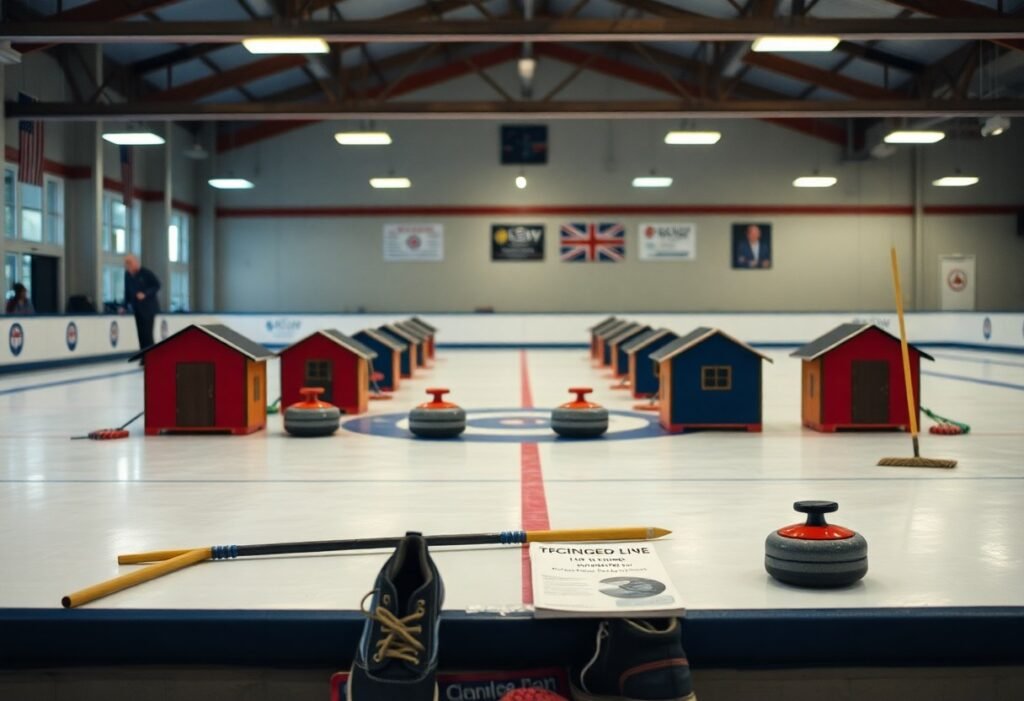
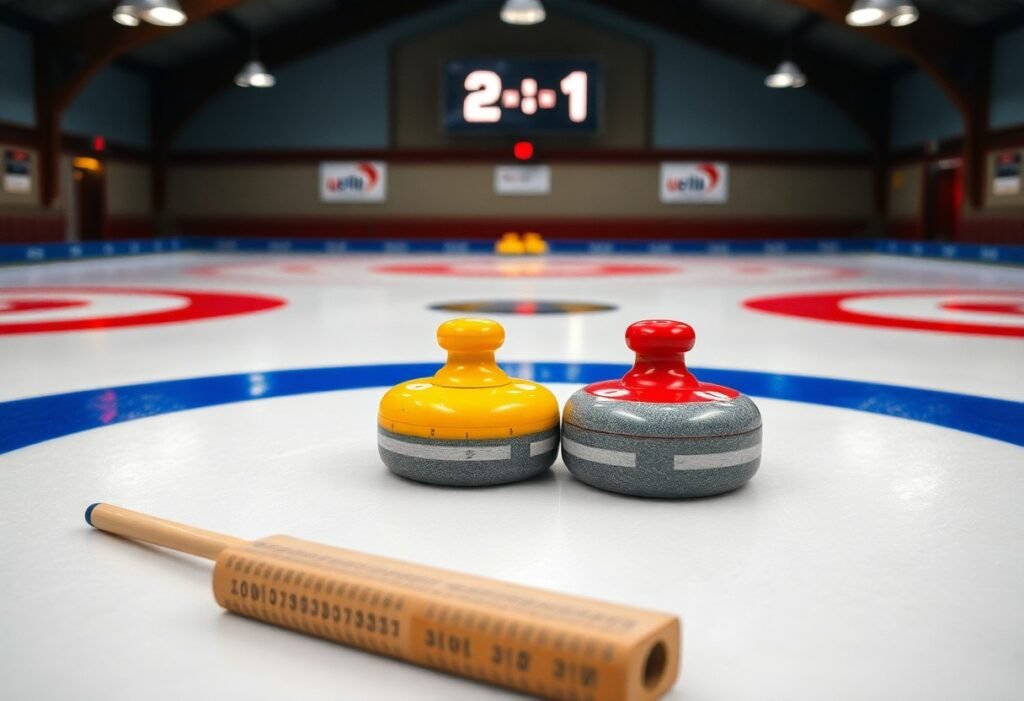
When stocking the rink, plan for full sets plus spares. A standard sheet uses 16 stones, so keep at least 2-4 extras and replacement handles. Additionally, include scoreboards, shot clocks, measuring sticks, ice scrapers, and spare broom heads. Size your supplies to the number of sheets, typically one set of tools per sheet plus backups. Furthermore, label storage clearly and keep consumables like tape and sanitizer on hand. Finally, configure a kit list so volunteers can restock between draws.
Essential Curling Gear
Stones should meet the 38-44 lb range. Verify weight and handle condition before play. You’ll need brooms, including a mix of horsehair and synthetic for varied ice. Additionally, provide sliders and grippers sized for each player. Install reliable hacks anchored to the ice. Keep at least two spare brooms and one extra slider per sheet. Finally, have a calibrated measuring device and stopwatch for accurate scoring and timing.
First Aid and Safety Equipment
Equip your event with a fully stocked first-aid kit and an on-site AED. Additionally, provide ice cleats for staff and visible slip-resistant mats at entrances. Assign an emergency contact list and post rink evacuation routes. Because falls are common on ice, ensure gloves, cold packs, and sterile dressings are readily accessible. Finally, maintain a clear plan for ambulance access.
Include supplies for musculoskeletal injuries. Stock SAM splints, triangular bandages, and instant cold packs. Additionally, provide sterile gauze, adhesive tape, nitrile gloves, and a CPR mask.
For larger events, include at least one certified First Aid responder per 50 participants. Enforce a remove-and-refer concussion protocol. Any suspected head injury should be withdrawn from play and evaluated by a clinician.
Promoting Your Event
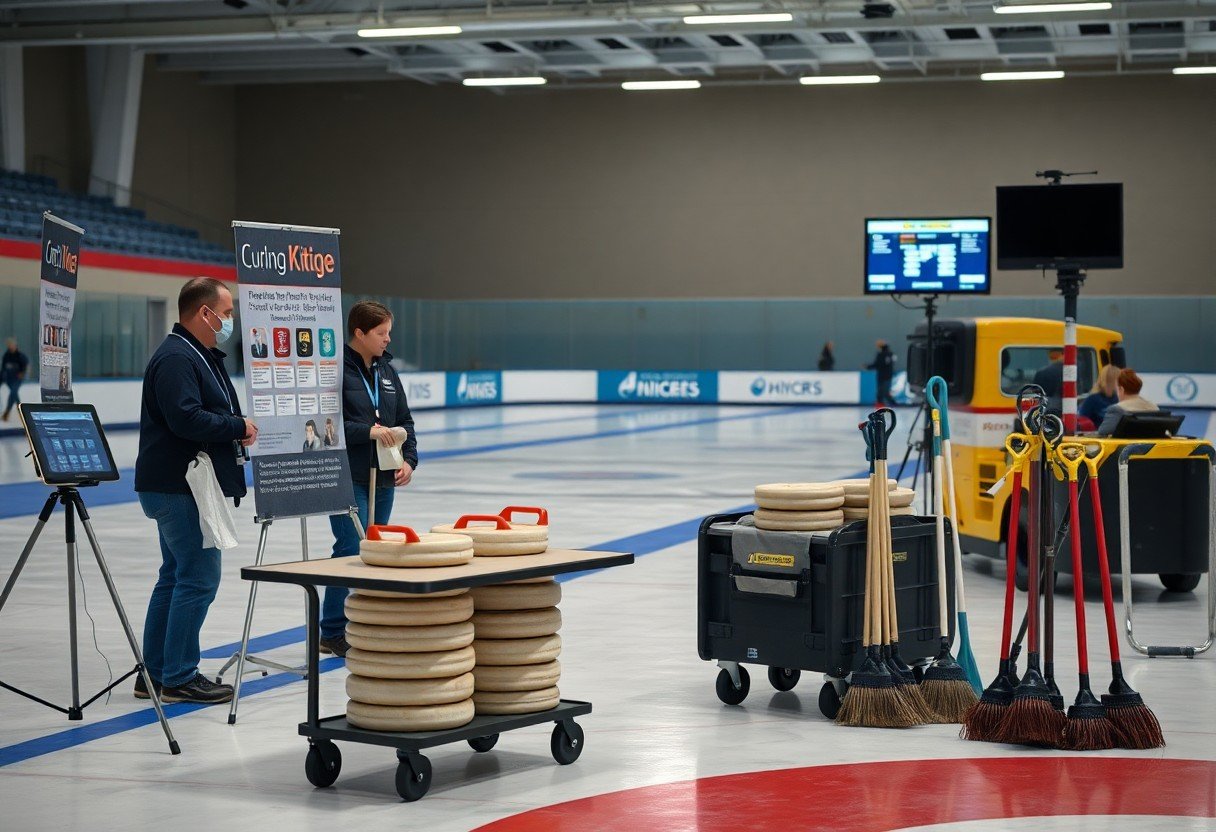
Start promotion 6-8 weeks before the event and layer outreach: email lists, local press, partner clubs, posters at community centers and targeted online ads. You should set clear capacity and ticket cutoffs to avoid overselling; a small rink often maxes at 80-120 players. Use partners (schools, corporate teams) to push registrations and allocate a modest ad budget ($50-$200) to boost opening-week visibility.
Creating Engaging Marketing Material
Use high-contrast action photos, a simple event logo, and a single clear call-to-action (register now) on every asset. Produce printable posters at 11×17 and social images at 1080×1080, include a QR code linking to registration, list fees, schedule, and safety procedures, and craft a 15-25 word headline that states date, location, and entry fee.
Utilizing Social Media Channels
Create a Facebook Event and post 3-5 times weekly across Facebook, Instagram, TikTok, and Nextdoor. Mix announcements, player spotlights, and short clips. Use hashtags like #Curling along with geo-targeted ads to reach users within 20-40 km. Finally, allocate small boosts of $50 or more for posts with the highest engagement to convert interest into registrations.
Build a two-week content calendar before registration opens. Plan 15-30 second Instagram Reels showing stone delivery. Additionally, share daily behind-the-scenes Stories and a live-streamed final. Post primarily between 6-9pm and on weekend mornings. Run A/B tests on creative, then monitor CTR and comment volume. Focus ad targeting by radius and interests. Finally, use geo-targeted ads plus a prominent call-to-action for the best local conversion.
Registration Process
You should set up an online form that collects player and club names, emails, emergency contacts, and a signed waiver link. Cap the event at 16 teams, close registration two weeks before the first draw, and maintain a waitlist to replace cancellations. Charge a $20 late fee for entries after the deadline and send automated confirmation emails. Require proof of club membership where applicable and direct clubs to Ideas for Growing Your Club for recruitment.
Setting Fees and Payment Methods
Set clear fees. Typical examples include $160 per four-person team or $200 including catered lunch. Offer a 10% early-bird discount that ends three weeks out. Define a refund policy, such as 50% refund until 14 days prior and no refunds within 48 hours. Accept credit cards via Stripe or PayPal, plus cash at check-in and invoicing for clubs. Use secure processors and attach receipts to registrations.
Managing Participant Registrations
You should keep roster limits to four players plus up to two alternates and impose a roster freeze 48 hours before the first draw. Verify membership status and eligibility during registration, cap entries at 16 teams, and use tools like Eventbrite, ClubExpress, or a shared Google Sheet to track payments, waivers, and emergency contacts. Automated reminders reduce no-shows and speed check-in.
You should run a tight check-in: open the desk 60 minutes before the first draw with at least three volunteers for a 16-team event, verify waiver signatures, confirm payments, issue wristbands, and hand out printed schedules. Contact the top waitlist entry within 24 hours of a cancellation and update brackets immediately. Use conditional-format spreadsheets or tournament software to keep rosters, ice assignments, and emergency info synced.
Running the Event
During play, stay hands-on: monitor ice quality, scoreboard accuracy, and player flow so delays stay under control. Plan for standard 8-end games (~90-120 minutes) and offer 6-end options for club socials; provide a visible schedule and designate an on-site ice technician and a staffed first-aid kit to reduce risk of slip hazards. Use volunteers for warm-up marshaling and to escort teams to and from the lounge to keep timing tight.
Scheduling Matches and Activities
For draws, set firm start times with a minimum of 15 minutes buffer between matches for ice prep and team turnover; a 4-sheet facility can typically run three draws per day (morning, afternoon, evening). Use scheduling tools like CurlingZone or SportAdmin to auto-assign sheets, include 10-minute warm-ups, and block 30-45 minutes for medal games or exhibitions so spectator activities don’t delay competition.
Officiating and Rules Enforcement
Assign at least one certified official per two sheets and a head referee for disputes; apply World Curling Federation rules for measurement, hog-line violations, and time management. Require scorecards signed by both team captains, post immediate results, and train volunteers on when to call for an official to avoid contested ends. Enforce safety rules consistently to prevent injuries.
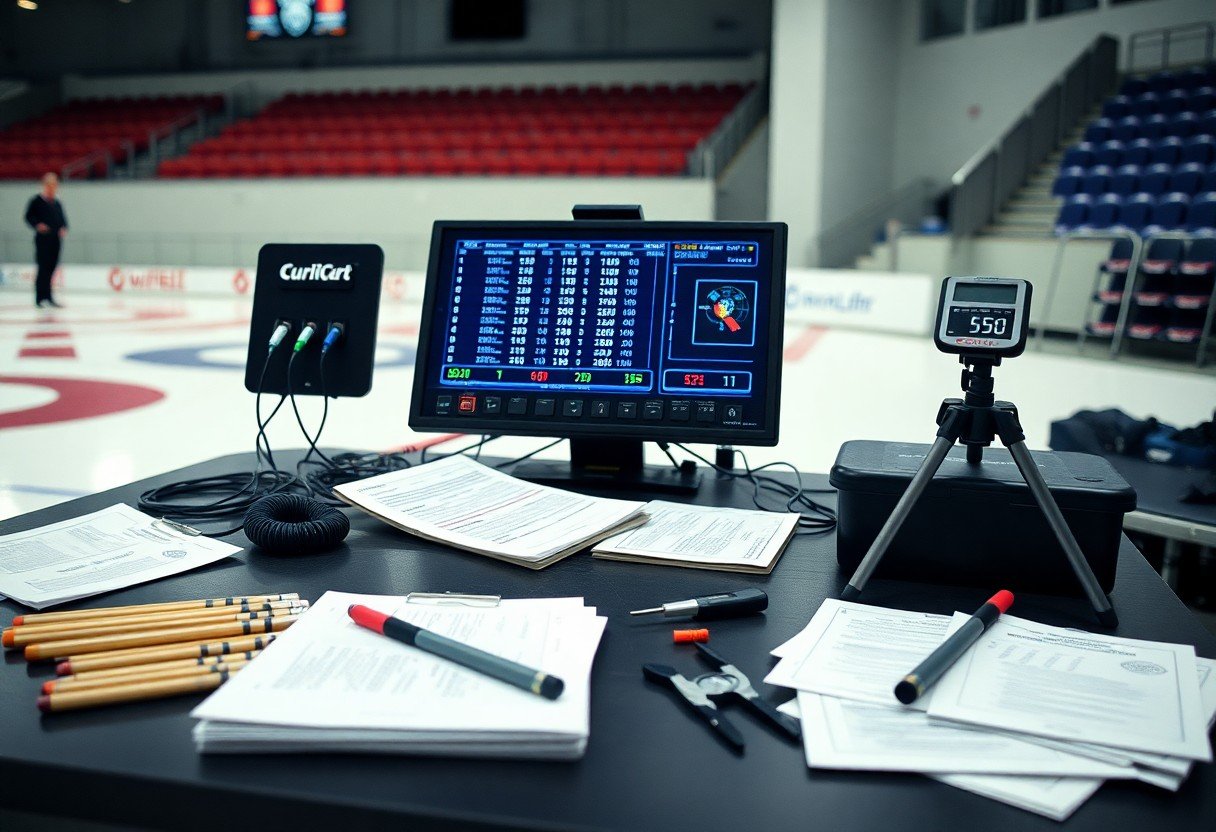
Use clear procedures: equip officials with measuring devices, visible shot clocks (e.g., 30-60 seconds per shot), and a written protest protocol that mandates immediate notification and a ruling within 10 minutes. Log infractions and sanctions, provide briefings for ice marshals, and if available, record final-end footage for review; this reduces disputes and keeps the event on schedule while protecting competitors.
Tips for a Successful Event
Streamline operations with clear roles, timed draws, and a single-run sheet per sheet so you can run on schedule; enforce a 10-minute forfeit window and pre-stage spare gear to cut delays. Use a compact volunteer roster-1 volunteer per 12 players-and assign an on-ice safety lead.
- Ice maintenance: fresh pebble between draws, resurfacing every 3-4 games.
- Safety: anti-slip mats, first-aider at 1 per 100 players.
- Equipment: 2 spare brooms and 1 spare stone per sheet.
- Schedule: cap games at 8 ends or 90 minutes.
Recognizing that contingencies save time and reputation, pre-plan replacements and escalation steps.
Engaging Participants and Spectators
Keep crowds involved with continuous scoring updates on a visible scoreboard, live PA commentary for key ends, and short intermission activities like a 45-second skills contest (closest to button) with small prizes; stream highlights to your social media channels and post real-time photos, and provide a family zone with simple demo throws so you keep both competitors and fans invested.
Handling Unexpected Challenges
Prepare standard responses for common issues-power outage, ice flooding, or a player injury-by listing contacts (ice tech, building manager, EMS), securing a backup generator (5-10 kW), and keeping an emergency kit on-site so you resolve incidents within the hour when possible.
Drill your team on a three-step incident flow: assess, communicate, act; keep a printed and digital run-sheet with phone trees, an SMS alert list, and a PA script. Monitor ice temperature and humidity every 30 minutes (aim ~−4°C surface), log readings, and have an on-call ice technician; stage 2-4 spare stones and spare sliders, and insure the event for liability so you can recover quickly from costly disruptions.
Final Words
Summing up, when you host a curling event you plan ice time, safety, and scheduling meticulously, communicate clear rules and roles to volunteers and teams, secure proper equipment and officiating, and build a welcoming atmosphere for players and spectators; by staying organized, proactive, and attentive to needs, you ensure smooth gameplay, positive experiences, and lasting interest in your event.
FAQ
Q: What are the first steps to plan a curling event?
A: Define the event scope (number of teams, competitive level, single- or multi-sheet), set a realistic budget and date, and confirm venue availability. Secure insurance and any required permits, contact the host curling club or arena to confirm ice time and facility services, and determine sanctioning or affiliation with local curling associations. Create a high-level timeline for promotion, registration opening/closing, team confirmations, volunteer recruitment, and ice preparation milestones.
Q: How do I secure and prepare the rink and ice for play?
A: Book a facility with the right number of sheets and adequate seating, and coordinate with the ice technician to schedule ice installation and pebbling at least 24-48 hours before competition. Ensure correct sheet markings, hacks, tee lines, and hog lines are applied; confirm arena temperature and humidity targets with the technician; arrange practice-ice sessions for teams; and allocate time on event day for final pebbling, brushing, and a test game to verify consistent curl and speed. Plan for protective measures for spectator areas and warm-up spaces to avoid ice contamination.
Q: What equipment and staffing are required to run a smooth event?
A: Provide or confirm availability of stones, brooms, sliders, scoreboards, timers, and measuring devices (tape or sliding calipers). Staff roles should include ice technician, games/competition manager, head official/umpire and on-ice officials, registration desk, scoreboard operators, timers, volunteer sweepers if needed, and medical/first-aid personnel. Arrange for signage, PA system, hospitality staff for concessions, and a central info/technical desk for resolving equipment or schedule issues. Plan volunteer shifts and a short training/orientation before play begins.
Q: How should I design the competition format and match schedule?
A: Choose a format that fits team numbers and time available: round-robin for guaranteed games, pool play with playoffs for larger fields, or straight knockout for shorter events. Define game length (typically 6-10 ends), tiebreaker rules, time controls (thinking time or clocks), and tie-resolution procedures (draw shots, extra ends). Build a draw schedule with buffer periods for ice maintenance, warm-ups, and possible overtime; publish schedules and practice-ice blocks in advance and maintain a real-time board or app for updates. Include contingency plans for delays, including revised draw formats or condensed playoff formats if needed.
Q: What registration, safety, and promotional tasks should be handled before and during the event?
A: Implement an online registration system with clear entry fees, team contact details, waivers, and payment processing; set registration deadlines and cutoffs. Secure event insurance and create an emergency response plan with on-site first aid and clear evacuation routes. Communicate rules, schedule, and parking/venue instructions to teams and officials in advance. Promote the event via local clubs, social media, community calendars, and sponsors; prepare sponsor recognition, signage, and prize structure. During the event, provide a staffed information desk, handle disputes through officials, collect feedback after play, and document results and media (photos, streaming) for post-event promotion and evaluation.